The Language of Korean Skin Aesthetics and Why the World Keeps Borrowing It
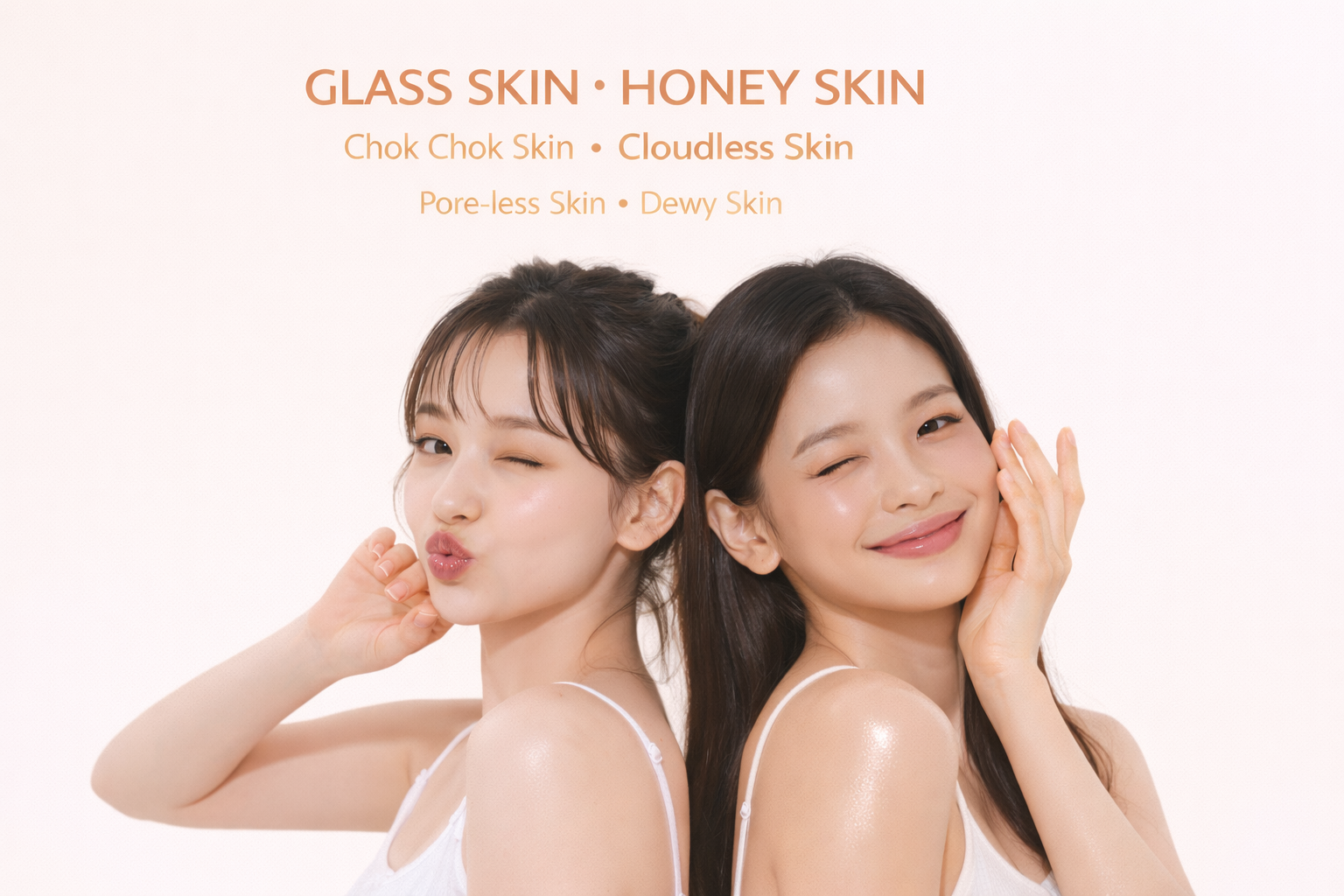
Korea has a particular talent for naming things that previously had no name. Glass skin. Honey skin. Chok chok skin. Cloudless skin. Pore-less skin. Dewy skin. Each term describes a slightly different quality of complexion, a slightly different ideal of what healthy skin looks like — and each term, once coined in Korea, tends to travel.
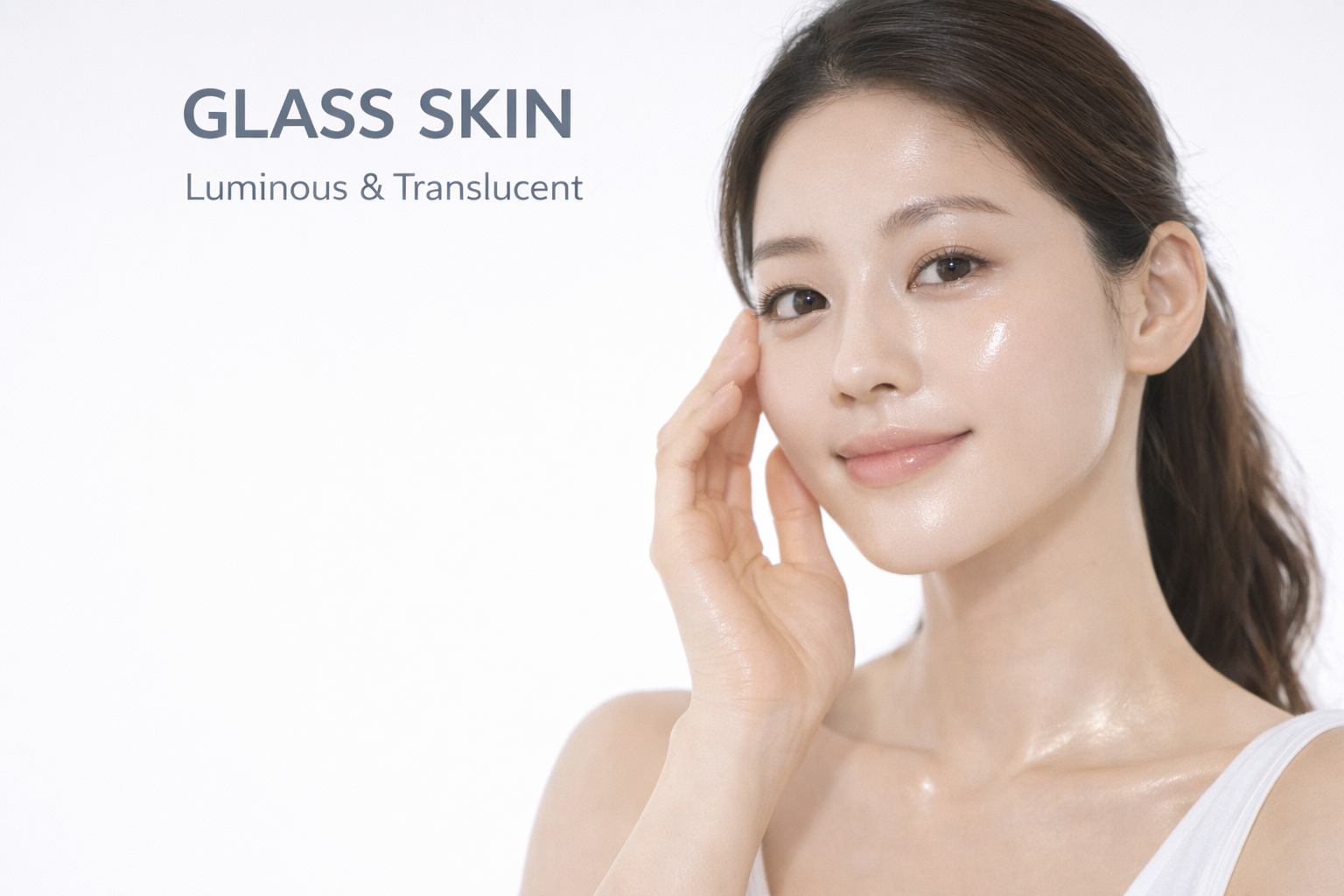
Glass skin emerged as a concept around 2017 and spread rapidly through beauty communities worldwide. The term described skin so luminous, so even in tone, and so thoroughly hydrated that it appeared almost translucent — like glass. It was not about a flawless, matte finish. It was about a quality of light emanating from within the skin, the visual evidence of deep hydration and a healthy barrier. The glass skin ideal was not achievable through makeup alone; it required consistent skincare investment over time.
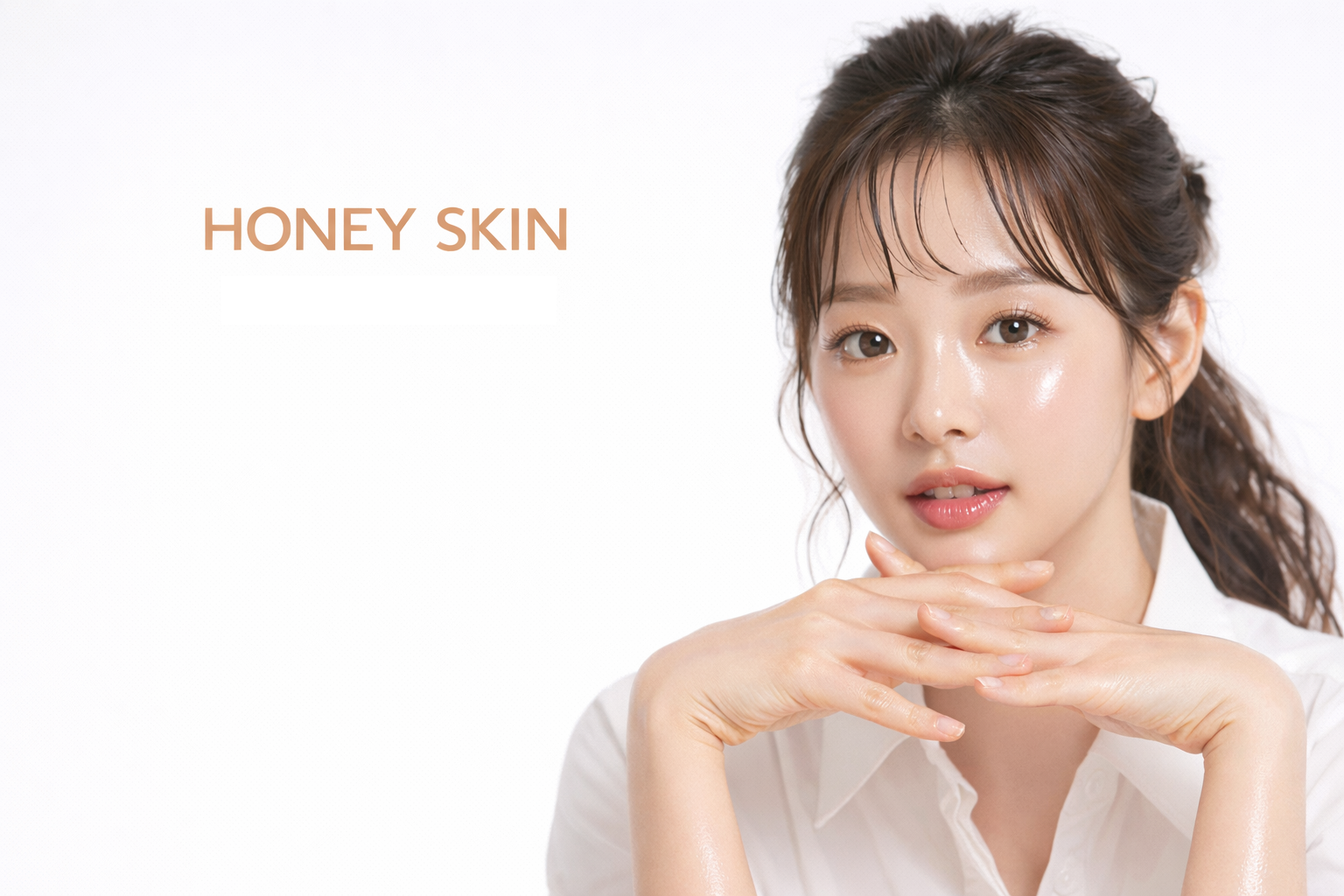
Honey skin followed with a slightly warmer connotation — skin that was luminous but also soft, plump, and supple, the way honey looks as it moves. Chok chok, a Korean onomatopoeic term, describes skin that is so bouncy and well-hydrated that it feels springy when touched. These terms communicate qualities that don't have clean equivalents in English beauty vocabulary, which is partly why they travel as loanwords rather than translations.
What's interesting about this pattern is what it reveals about Korean beauty's relationship with ideals. Rather than promoting a single fixed standard, Korean beauty culture continuously generates new terms for new nuances of skin quality. The conversation stays alive. There is always a new ideal to work toward, a new dimension of skin health to explore. This keeps the industry innovative and keeps consumers engaged — not anxiously, but with genuine curiosity about what their skin can become.
The global adoption of these terms has also shifted how people outside Korea talk about their skin goals. A decade ago, most skincare conversations in English revolved around fixing problems — acne, dryness, wrinkles. Korean beauty introduced a vocabulary of aspiration — not just clear skin, but luminous skin; not just hydrated skin, but glass skin. The shift from corrective to aspirational language is one of Korean beauty's more quietly significant cultural exports.
#GlassSkin #HoneySkin #KBeautyTrends #KBeauty #KoreanSkincare #SkinAesthetics #KoreanBeauty #SkincareGoals