The thing about cafes in Seoul right now is that the bag on the seat next to you tells you more than the drink in front of you. A canvas tote, a paperback in Korean, AirPods in the front pocket, and somewhere in there, almost always, a tumbler. Usually steel. Usually a little dented. Often the same one its owner has been carrying since 2022.
This is the part of Seoul cafe culture nobody put on a moodboard. And it is, weirdly, the part the city has decided to subsidize.
■ The 500-won nudge that is actually working
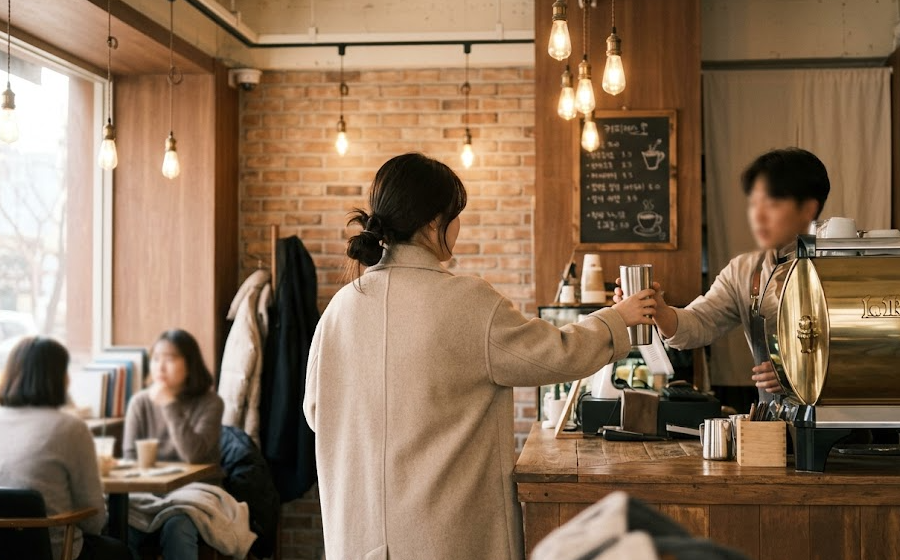
As of May 18, the Seoul Metropolitan Government's personal cup discount program is open to a much wider pool of cafes than before. Bring your own cup, and the cafe knocks at least 100 won off your drink while the city kicks in another 400. That is a minimum of 500 won back in your pocket per coffee, for the simple act of not asking for a paper cup. The previous Seoul Pay membership rule for stores is gone, which means smaller neighborhood cafes that never bothered registering can now join.
The headline number sounds modest. The aggregate is not. The city has logged roughly 260,000 personal-cup uses since the pilot launched in 2023, and the curve is bending the right way.
There is also a thing called Tumbler Day, which sounds like a school event and functions like a small holiday for the chronically caffeinated. Each participating cafe picks one day a month, and on that day, a tumbler order gets you 2,500 won off, capped at 50 drinks per store. For context: that is roughly half the price of a standard cafe Americano in Seoul, which now hovers between 5,000 and 7,000 won. People plan around it.

■ Why the cafes were already halfway there
To understand why this policy is landing, look at where Seoul's cafe scene has been quietly drifting. Seongsu-dong, the old shoe-factory district turned warehouse-cafe capital, has been pushing reusable everything for a while. So has Yeonnam-dong, the leafy, low-rise grid behind Hongik University. The 2026 cafe trend that local writers have been calling the "B.E.Y.O.N.D" shift puts sustainability right alongside community and personalization, not as a marketing badge but as the basic operating system.
Some places have gone further than the city ever asked. IO3 in Itaewon does not discount tumblers. It charges an extra 1,000 won if you want a disposable cup. The message is not subtle. A bakery cafe in Yeonnam wraps everything in 100% recycled pulp paper bags and offers a "bag return box" where bringing back yesterday's bag earns you a free pastry. None of this is performative. It just reads as the neighborhood doing the neighborhood thing.
Which is the cultural piece the discount alone cannot buy. The tumbler in Seoul is not a virtue prop. It is a piece of daily kit, like the umbrella you keep in your backpack from June to August because Seoul rain has opinions. Once a habit is that mundane, the 500 won is just the bonus.
■ How the whole thing works if you actually want to try it
Finding a participating cafe is genuinely the easy part. Seoul runs an interactive map called Smart Seoul Map, which pins every registered store. Walk in, order, hand over your cup, and the discount applies at the register without any membership scan. If the cafe is also a Seoul Pay merchant, you can pay through the Seoul Pay app and get the savings as reward points instead of an on-the-spot discount, which is useful if you are the type who actually tracks loyalty points.
Cafes that want to join apply through Seoul's eco-tumbler partner, [email protected], or a Google form on the city's website. Sign-ups have been rolling since May 6 and run until the budget runs out. The only catch on the cafe side is that they have to chip in at least 100 won themselves and have a point-of-sale system that can apply the discount instantly. No paper coupons, no after-the-fact rebates.
■ The real reason this matters
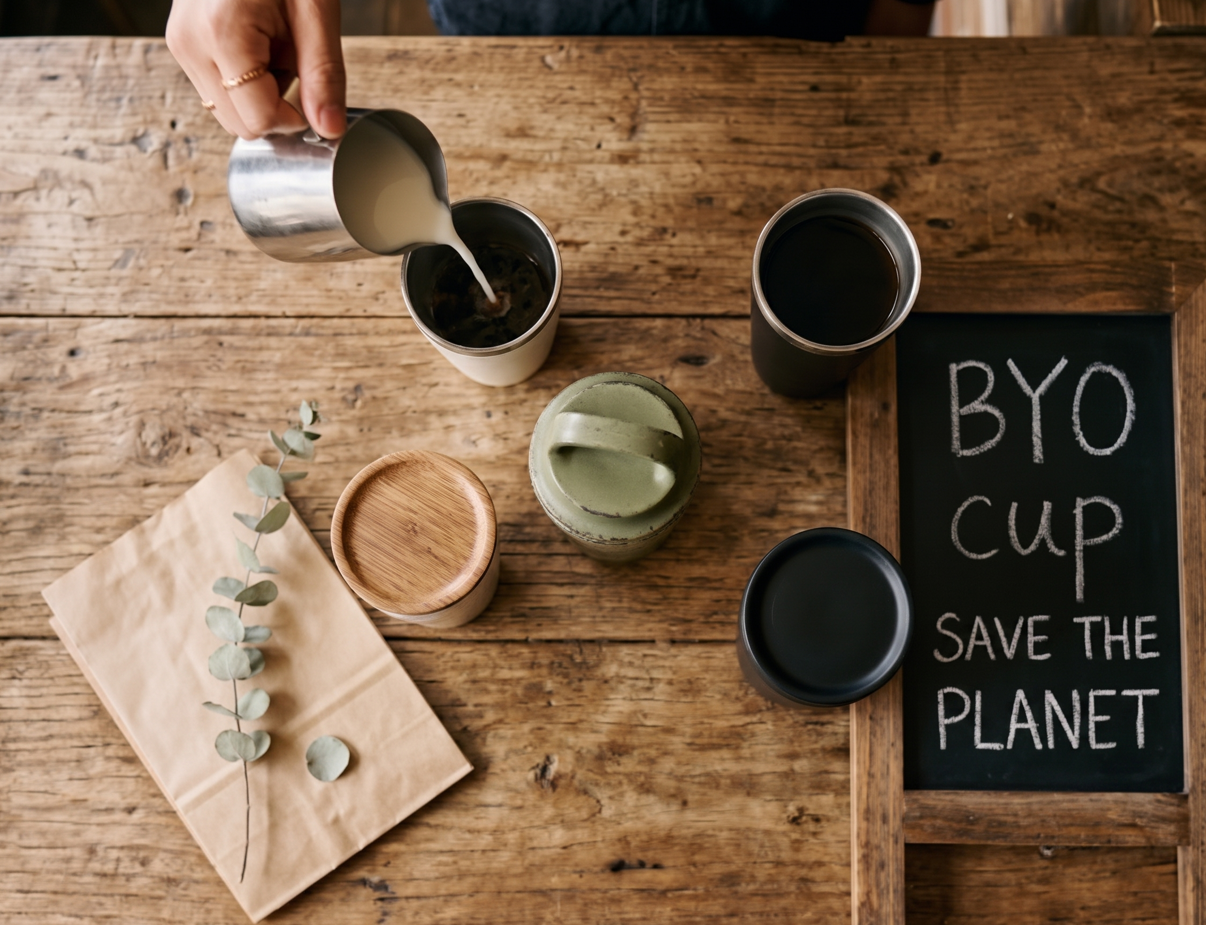
Disposable cups are not the biggest plastic problem Seoul has. Everyone knows this. The point of the program is not to solve waste in one move. The point is to make the eco choice the cheapest, easiest, most embarrassingly obvious choice at the register, then let the habit do the rest. A tumbler stops being a statement the moment it stops being unusual.
By that standard, Seoul is doing fine. The cafes are listening. The tumblers are out. The dent on the side of mine is now a feature, not a bug.
And the line at the counter moves a little faster when nobody has to ask for a lid.
#SeoulCafes #ZeroWasteSeoul #TumblerDay #SustainableSeoul #KoreaTravel #SeoulLifestyle #BYOCup #EcoFriendlyKorea