Seoul doesn't slow down at night. It shifts gears.
The city that spends its days in glass office towers and packed subway carriages undergoes a visible transformation once the sun goes down. Streets that were moving fast begin to move differently — more slowly in some places, more intensely in others. The lights multiply. The sounds change. And the city reveals a version of itself that daytime visitors often miss entirely.
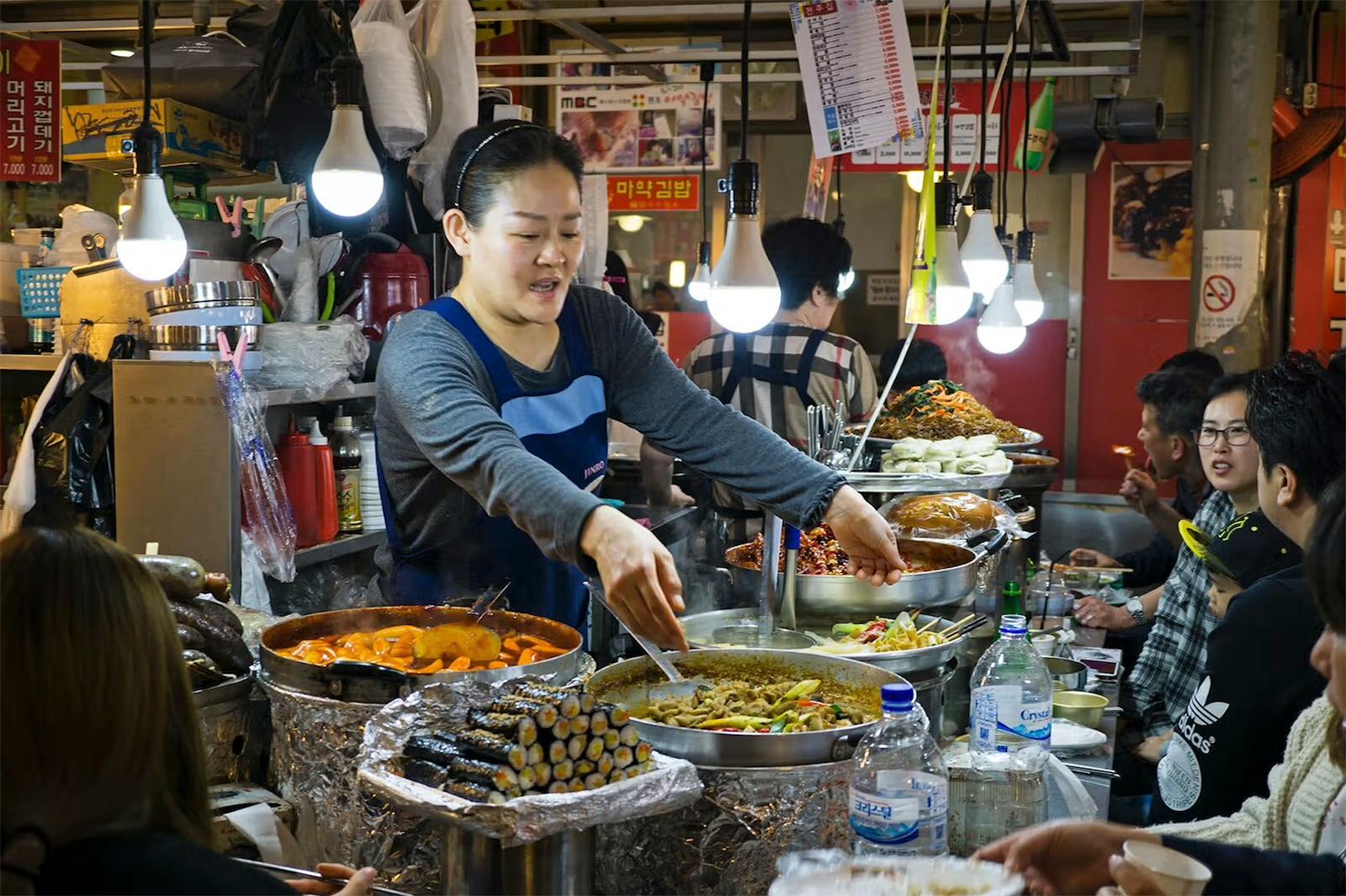
The most visible expression of Seoul at night is the pojangmacha — the tent stall. These orange-tarp covered structures appear along sidewalks, under bridges, and in alleyways across the city as evening falls. Inside, a handful of stools surround a small counter where an owner serves tteokbokki, eomuk, sundae, and soju to anyone who pulls back the plastic curtain and sits down. There is no reservation system. No dress code. Just a low stool, a warm counter, and whoever happens to be sitting next to you.
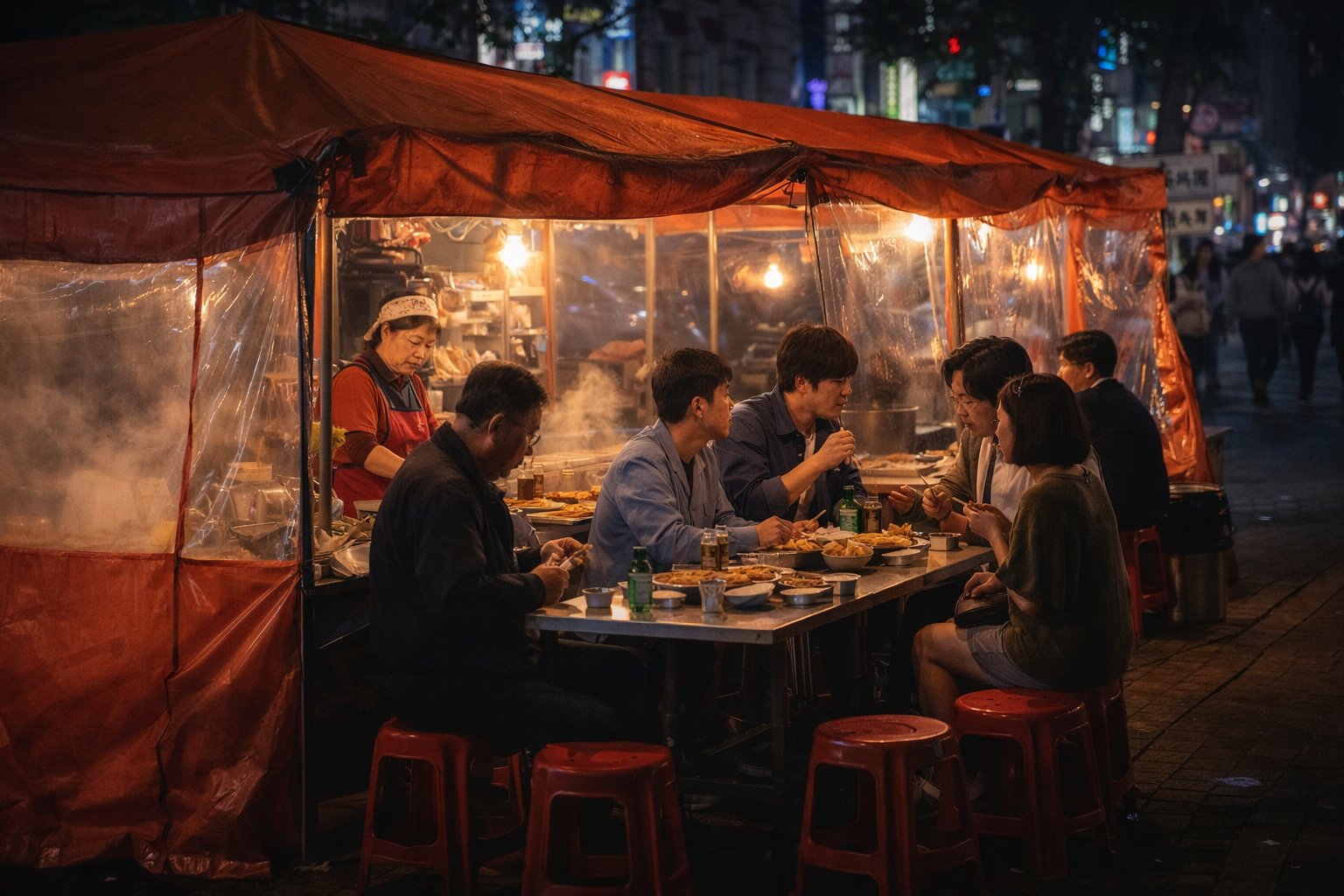
The pojangmacha has a particular place in Korean cultural memory. It is where people go after something significant — after a long shift, after a difficult conversation, after a celebration that needed to keep going somewhere. Korean cinema and television have used it as a setting for decades precisely because it captures something true about how Koreans decompress: communally, informally, often with something warm and spicy.
A few neighborhoods define Seoul's nightlife, each with its own character. Hongdae, built around the energy of Hongik University's art school, is loud and young — live music spills out of small venues, street performers work the crowded plazas, and the bars stay open past dawn. Itaewon sits on a hill above the city and has long been the neighborhood where different cultures meet, with restaurants and bars pulling from every tradition. Euljiro, once a working industrial district of print shops and hardware stores, has quietly become one of the most interesting late-night destinations in the city — its old buildings now home to bars and spaces that feel genuinely unlike anywhere else in Seoul.
The norebang — karaoke room — is perhaps the most distinctly Korean contribution to nightlife culture. Unlike the open-stage karaoke that exists in many other countries, a norebang is a private room rented by the hour. Your group gets a room with a screen, a song catalogue, tambourines, and a microphone. You sing badly or well — it doesn't matter, because nobody outside your room can hear. It is an institution: a space for office workers after a company dinner, for friends on a birthday, for anyone who needs to be loud somewhere safe.
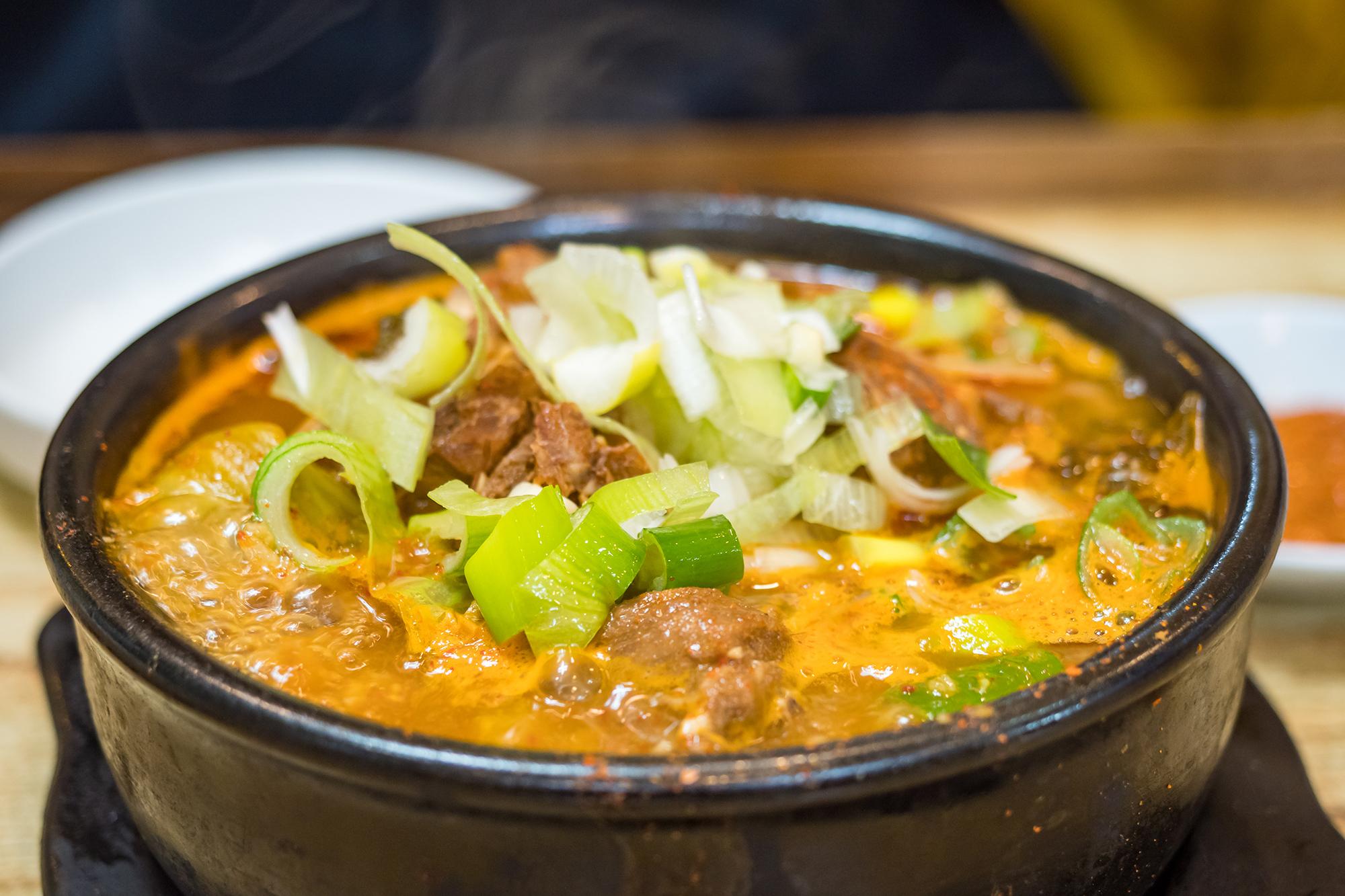
And then, as the night deepens, there is the haejang — the hangover recovery meal. Haejangguk is a hearty, deeply savory soup traditionally eaten in the early hours to settle the stomach and restore energy. Certain restaurants in Seoul open specifically for this purpose, doing their best business between two and six in the morning. Sitting in a bright, warm restaurant at four a.m. with a bowl of soup and a pile of rice while the city begins to wake around you is one of those Seoul experiences that visitors rarely plan but never forget.
Seoul after dark is not a second city. It is the same city, seen from a different angle — more honest, more relaxed, and more itself.
#SeoulNightlife #VisitSeoul #Pojangmacha #Norebang #SeoulTravel #KoreaTravel #SeoulAtNight #KTravelTips