Every culture has its snacks. But in Korea, snacks are not just something you eat between meals. They are the language of childhood, the currency of friendship, and sometimes, the quiet way adults say what words cannot. If you grew up in Korea — or grew up watching Korean dramas — chances are you already know the names. Choco Pie. Pepero. Saewookkang. These are not just products on a shelf. They are memories pressed into packaging.
ㅤㅤㅤㅤ
The Corner Store as a World
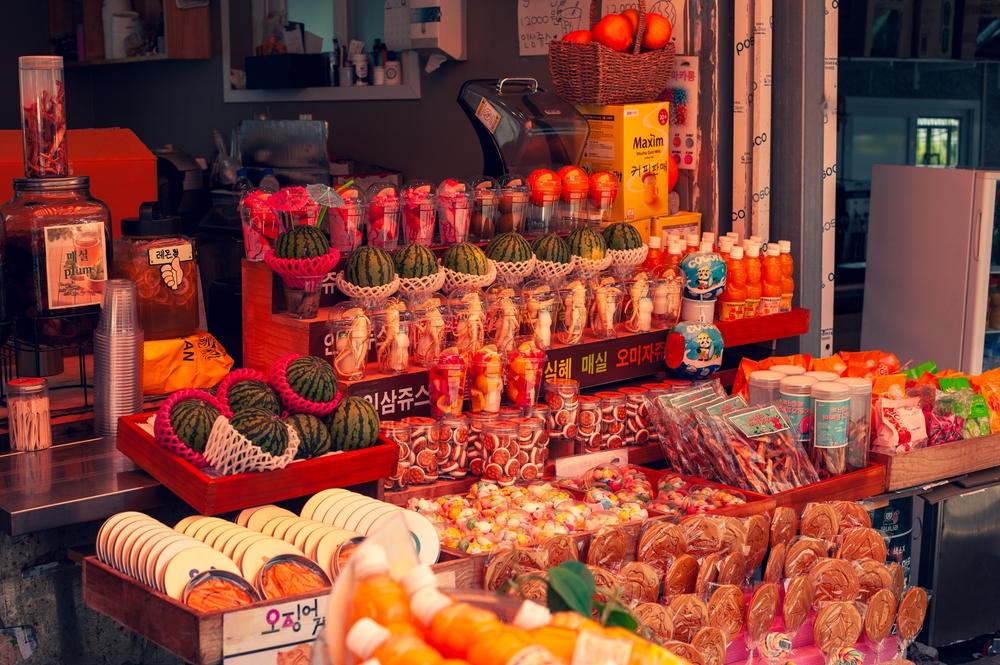
Before convenience store chains took over every block, Korean children had the bunshik stand and the small neighborhood snack shop — gwajajeom (과자점) — tucked near the school gates. This was hallowed ground. The coins in your pocket determined the entire emotional arc of the afternoon.
The ritual was deeply social. You did not just buy a snack and eat it alone. You pooled resources with friends, shared pieces, and debated which combination of crackers, gummies, and spicy dried squid offered the best value. The selection was vast, the prices tiny, and the joy enormous. Korean children of the 1980s, 90s, and early 2000s grew up with a shared vocabulary of flavors and brand names that still functions today as a kind of shorthand for nostalgia.
Ask any Korean adult to name their favorite childhood snack and you will get an answer in under three seconds — and probably a story attached to it.
ㅤㅤㅤㅤ
Choco Pie: More Than a Chocolate-Covered Marshmallow
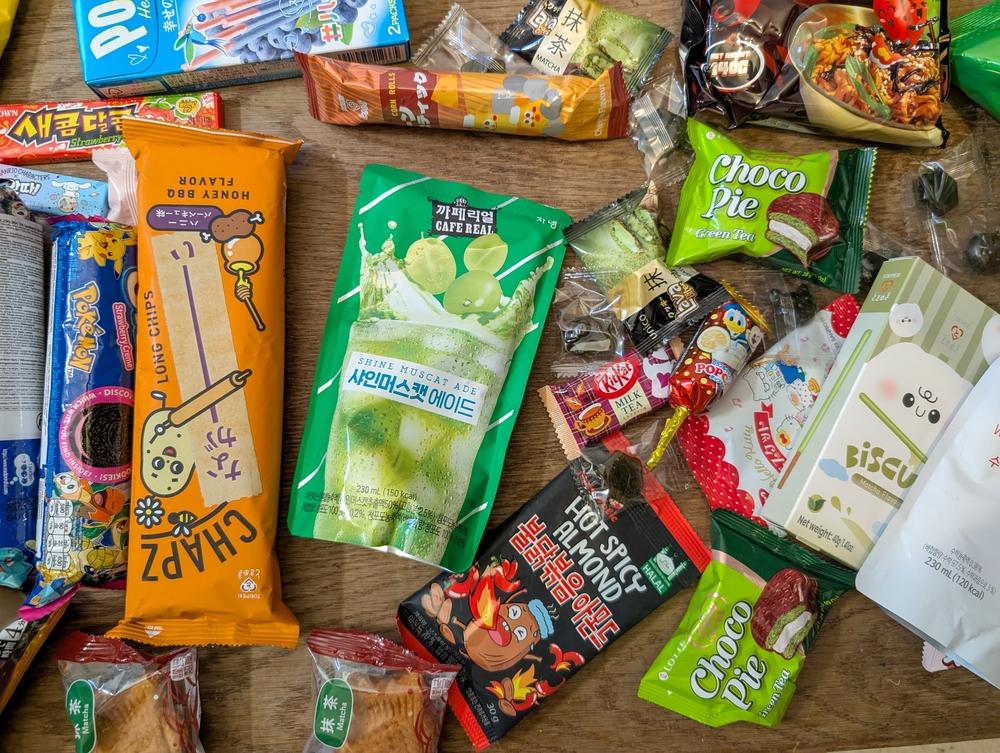
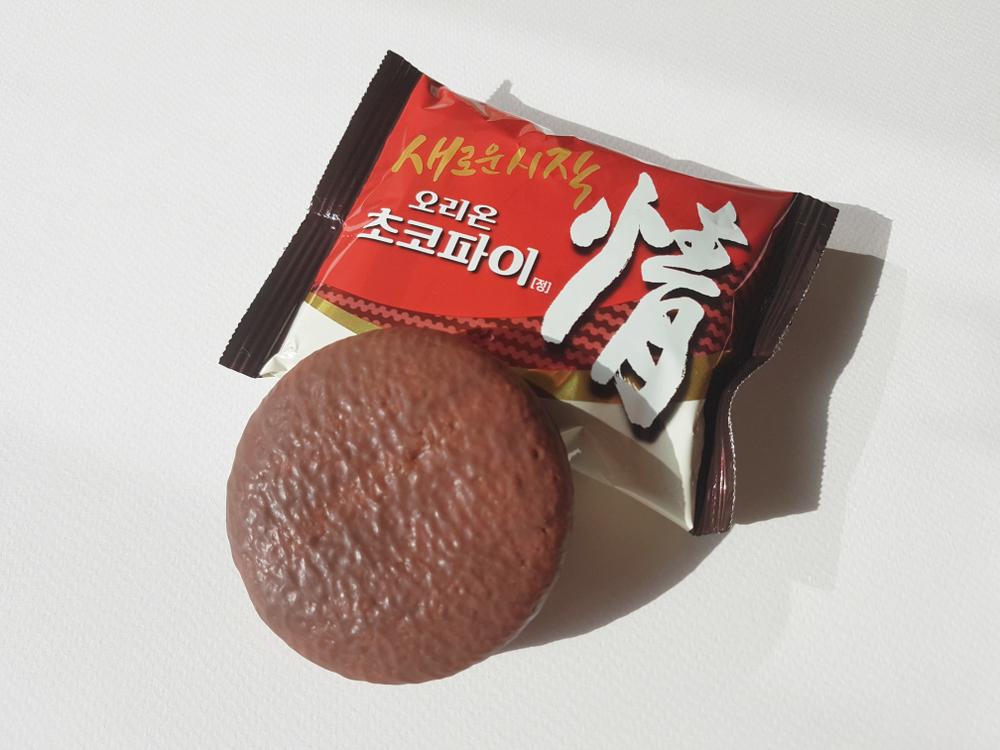
Few Korean snacks carry as much emotional weight as the Choco Pie (초코파이). First introduced by Orion in 1974, it is a modest thing on the surface: two soft cake layers, a marshmallow filling, all coated in chocolate. Simple, sweet, slightly soft in a satisfying way.
But Orion did something clever in the 1980s. They rebranded the Choco Pie with a single Korean word printed on every box: jeong (정). As mentioned in a previous post on Korean food culture, jeong is that untranslatable sense of deep warmth and connection — love that accumulates quietly over time between people who share experiences. Linking a chocolate snack to one of Korea's most emotionally resonant concepts was a masterstroke of marketing. It worked because it was not entirely untrue. Sharing a Choco Pie with someone — at school, at work, after a long day — really did feel like a small act of care.
The Choco Pie's cultural reach eventually extended far beyond Korea's borders. It became one of the most sought-after luxury goods in North Korea, smuggled across the border and reportedly sold for many times its original price. Factory workers at South Korean companies in the Kaesong Industrial Complex were famously given Choco Pies as bonuses — a detail that briefly made international news and revealed just how powerful a simple snack can be as a symbol of what lies on the other side of a border.
ㅤㅤㅤㅤ
Pepero: The Snack That Became a Holiday
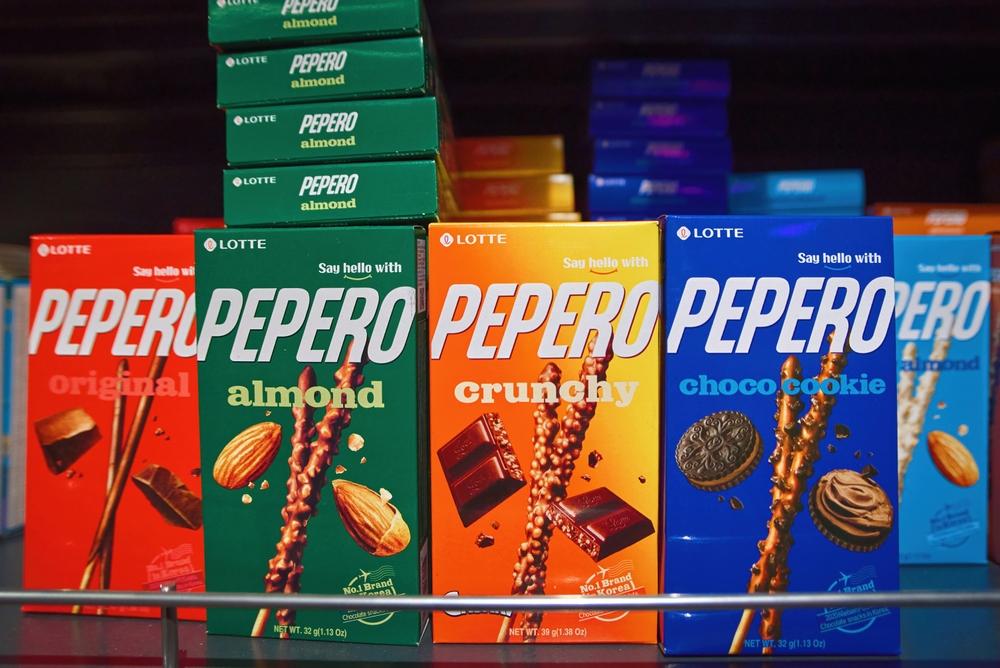
If Choco Pie is the snack of jeong, then Pepero (빼빼로) is the snack of performance and affection — and also of one of the more charming marketing-turned-cultural-phenomena in Korean history.
Pepero is a thin breadstick dipped in chocolate, first sold by Lotte in 1983. For most of its early existence, it was simply a popular snack. Then something happened organically — or so the story goes — in the early 1990s. Schoolgirls in Busan reportedly started exchanging Pepero sticks on November 11th, because the date — 11/11 — looks like four Pepero sticks standing upright. The idea spread. Lotte noticed, and leaned in enthusiastically.
Today, Pepero Day on November 11th is a genuine cultural event. Shops are stocked with special gift sets weeks in advance. Couples exchange elaborately wrapped boxes. Friends give each other small bags of sticks as tokens of affection. It sits alongside Valentine's Day and White Day in Korea's calendar of snack-mediated affection — a holiday born from a visual pun and accelerated by clever marketing, now fully embedded in popular culture.
There is something distinctly modern and Korean about Pepero Day — the way it combines commercial instinct with genuine social warmth, turning a thin chocolate-covered breadstick into a vessel for expressing feelings that might otherwise go unsaid.
ㅤㅤㅤㅤ
Saewookkang: The Snack That Never Changes
While Choco Pie carries jeong and Pepero carries sentiment, Saewookkang (새우깡) carries something else entirely: permanence.
Launched by Nongshim in 1971, Saewookkang — literally "shrimp snack" — is a puffed shrimp cracker with a light, savory flavor and a texture that has remained essentially unchanged for over fifty years. It is one of Korea's oldest continuously produced snack foods, and its longevity is almost bewildering in a market that regularly produces new products at dizzying speed.
Saewookkang is not flashy. It has no particular gimmick. Its packaging has been updated occasionally but never dramatically reinvented. And yet, generation after generation of Korean children has grown up tearing open that familiar bag and eating the orange puffs one at a time — or by the fistful.
The endurance of Saewookkang speaks to something important about Korean snack culture: the comfort of the familiar. In a society that has undergone extraordinary change over the past half-century — rapid industrialization, economic transformation, technological upheaval — there is something deeply reassuring about a snack that tastes exactly the way it did when your parents were young. Eating Saewookkang is, in a small way, an act of connection across time.
Nongshim has cleverly leaned into this heritage in recent years, positioning Saewookkang as a retro icon — something to feel proud of, not embarrassed by. It has appeared in limited-edition collaborations and pop culture references, becoming cool in the way that only genuinely old things can become cool again.
ㅤㅤㅤㅤ
The Unspoken Rules of Korean Snack Sharing
Understanding Korean snacks means understanding how they were shared — because in Korea, a snack is almost always shared.
There is a specific social choreography to Korean snack culture that outsiders might miss. When someone opens a bag of chips or crackers in a group setting, the assumption is that everyone present is offered some. Eating a snack entirely by yourself in front of others without offering is mildly transgressive — not a crime, but noted. Children learn this early. Snacks become one of the first lessons in the give-and-take of communal life.
School field trips had a particular snack economy. Children were given small amounts of spending money, and the afternoon involved careful negotiation: what to buy, what to share, who owed whom a bite of something. The snacks consumed on those trips — Choco Pies from a shared bag, Saewookkang passed around in a circle on the bus — are often the most vividly remembered details of the entire day.
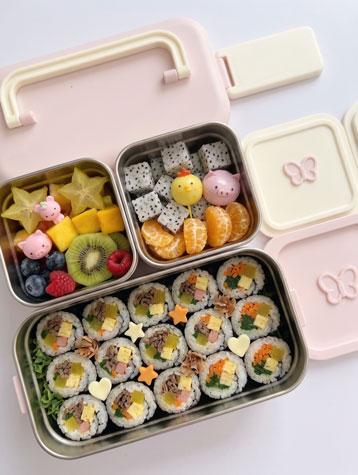
The lunchbox, or dosirak, frequently included a small snack tucked in alongside the rice and side dishes. A Choco Pie wrapped in a paper bag, placed there by a parent before school, was not just a sweet. It was a small act of love that a child would unwrap in the afternoon and understand, without being told, exactly what it meant.
ㅤㅤㅤㅤ
When Korean Snacks Went Global
The global spread of Korean pop culture has brought Korean snacks along for the ride. Saewookkang is now available in Korean grocery stores across North America, Europe, and Southeast Asia. Pepero is sold in specialty shops and Asian supermarkets internationally, spiking in sales every November. Choco Pie has become a global product, manufactured in multiple countries and marketed across Asia, the Middle East, and beyond.
What makes Korean snacks appealing to international audiences is not just the flavor — though the balance of sweet, savory, and lightly spiced is genuinely appealing — but the stories attached to them. Knowing that a Choco Pie carries the word jeong on its packaging, that Pepero Day started with a visual pun among schoolgirls, that Saewookkang has been eaten by Korean grandparents and their grandchildren alike: these stories transform a snack into a cultural artifact.
And that, ultimately, is what Korean snacks are. They are artifacts of a particular time and place, pressed into familiar shapes and flavors, handed from one generation to the next. When a Korean adult living abroad tears open a bag of Saewookkang, they are not just eating a shrimp cracker. They are reaching back toward something — a school gate, an afternoon with friends, a Choco Pie tucked into a lunchbox by hands that cared.
Some things taste better than food.
ㅤㅤㅤㅤ
ㅤㅤㅤㅤ
#KoreanSnacks #ChocoPie #Pepero #KFoodCulture #KoreanFood #KoreanChildhood #PeperoDay #Saewookkang