
Korea's Month of Gratitude — A May Like No Other
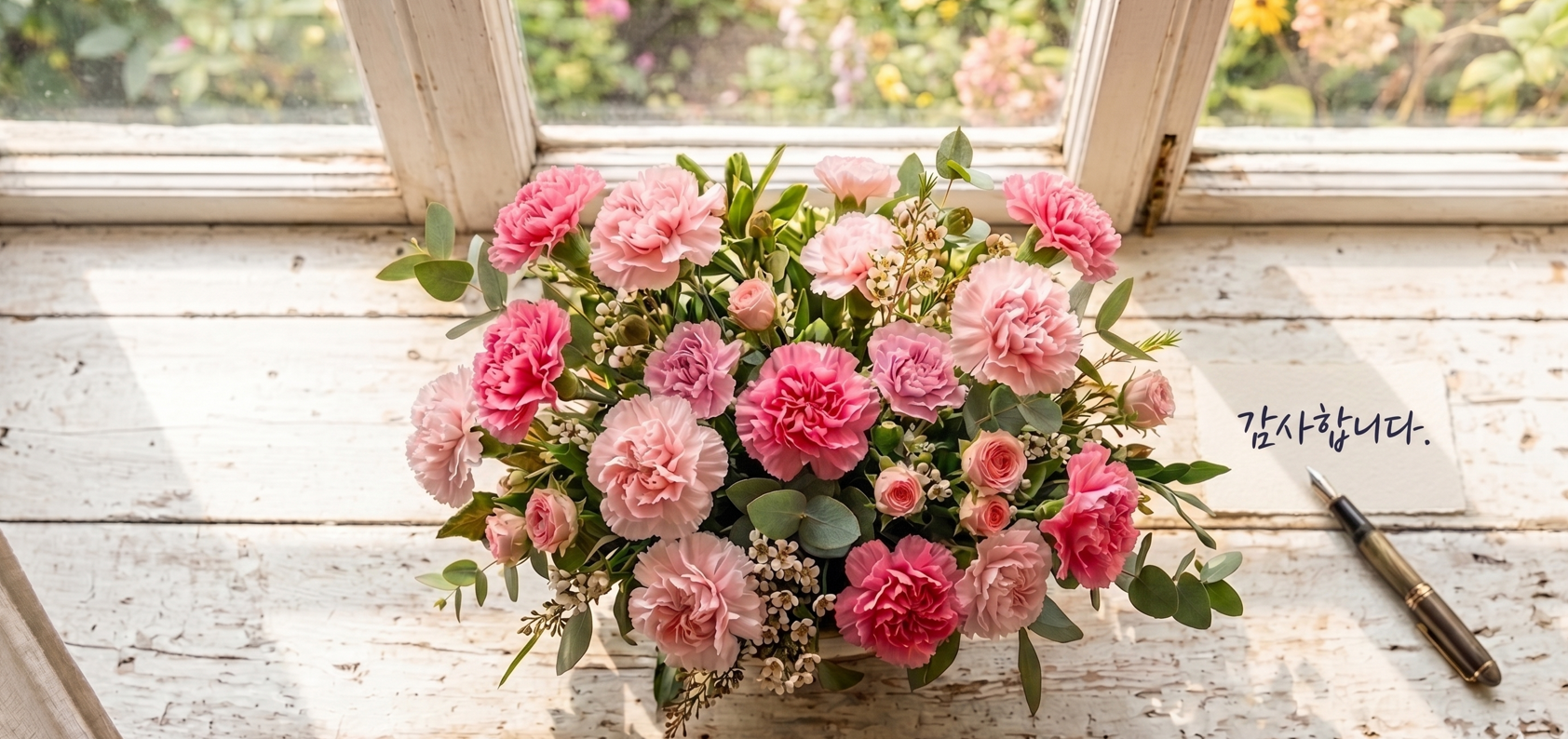
If you think of May in Korea, think of carnations. Think of children laughing in parks, parents beaming with joy at the door, and teachers receiving flowers with delight from students who finally found the words to say thank you.
Koreans treat May as an annual gratitude project, moving through it with purpose. One by one, they pause to honor every generation around them. It's something that doesn't quite exist elsewhere in the world, and once you understand it, it's hard not to wish it did.
The Flowers That Connected My Family
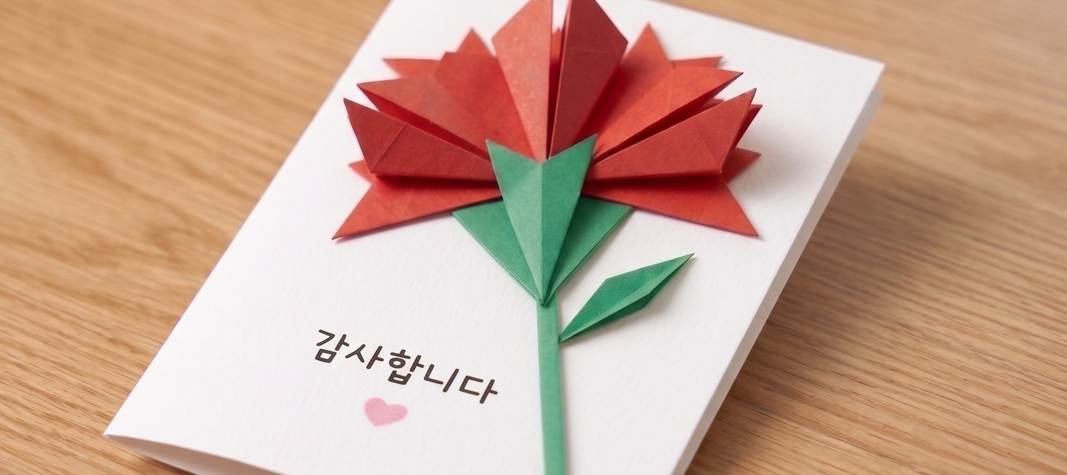
When I look back at my childhood, the most vivid image from May isn't a fancy gift or a festive party. It's a small, vibrant red carnation — made entirely from paper and glue, with hands that were more than a little messy, and a heart that was completely full.
At school, we made these paper carnations every year for Parents' Day. But my family's situation was a little different from most of my classmates'. My parents were away in another city, working hard to build a better future for us. So I grew up living with my grandmother — the quiet anchor of my world.
On Parents' Day, I would carefully pin that paper flower to her blouse, right over her heart. And for my parents who were far away, I'd save another flower, or fold my feelings into a letter and send it off hoping it would arrive in time.
What I didn't understand then, but feel so clearly now, is what my grandmother did next. She wore that paper flower all day. All day, with a proud, beaming smile — as if it were the most precious thing she'd ever received. That image taught me something I've carried ever since: love isn't about being in the same place. It's about being in each other's hearts.
May 5 — Children's Day
Korea's gratitude season opens with the youngest generation. On May 5th, the entire country stops for children — a national holiday where families head to parks, open fields, and amusement parks together. Streets fill with balloons and laughter. The message is simple and radical at the same time: children deserve to be celebrated not as future adults, but exactly as they are, right now.
For Americans, the closest feeling might be a really wonderful Saturday — but stretched across the whole country, all at once.

May 8 — Parents' Day
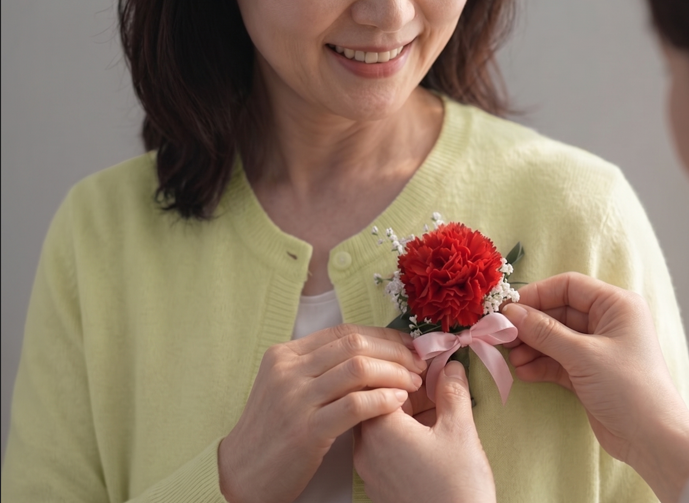
Three days later, the focus shifts. May 8th is Parents' Day in Korea, and the symbol is unmistakable: a carnation, pinned gently to a parent's chest. Pink for warmth, red for deep respect. Children of all ages — from elementary schoolers to grown adults — find a way to come home, or at the very least, to call.
What strikes people from outside Korea is how unselfconscious it all is. Honoring your parents isn't embarrassing or old-fashioned here. It's simply what you do. Koreans call this spirit 효 (hyo) — but the feeling itself needs no translation. It's gratitude for the people who gave you your roots, whether they were right beside you growing up, or loving you from a distance.
No matter where you are in the world, May 8th is a good day to reach out. Celebrating our parents — and the people who stood in for them — is never out of season.
May 15 — Teachers' Day
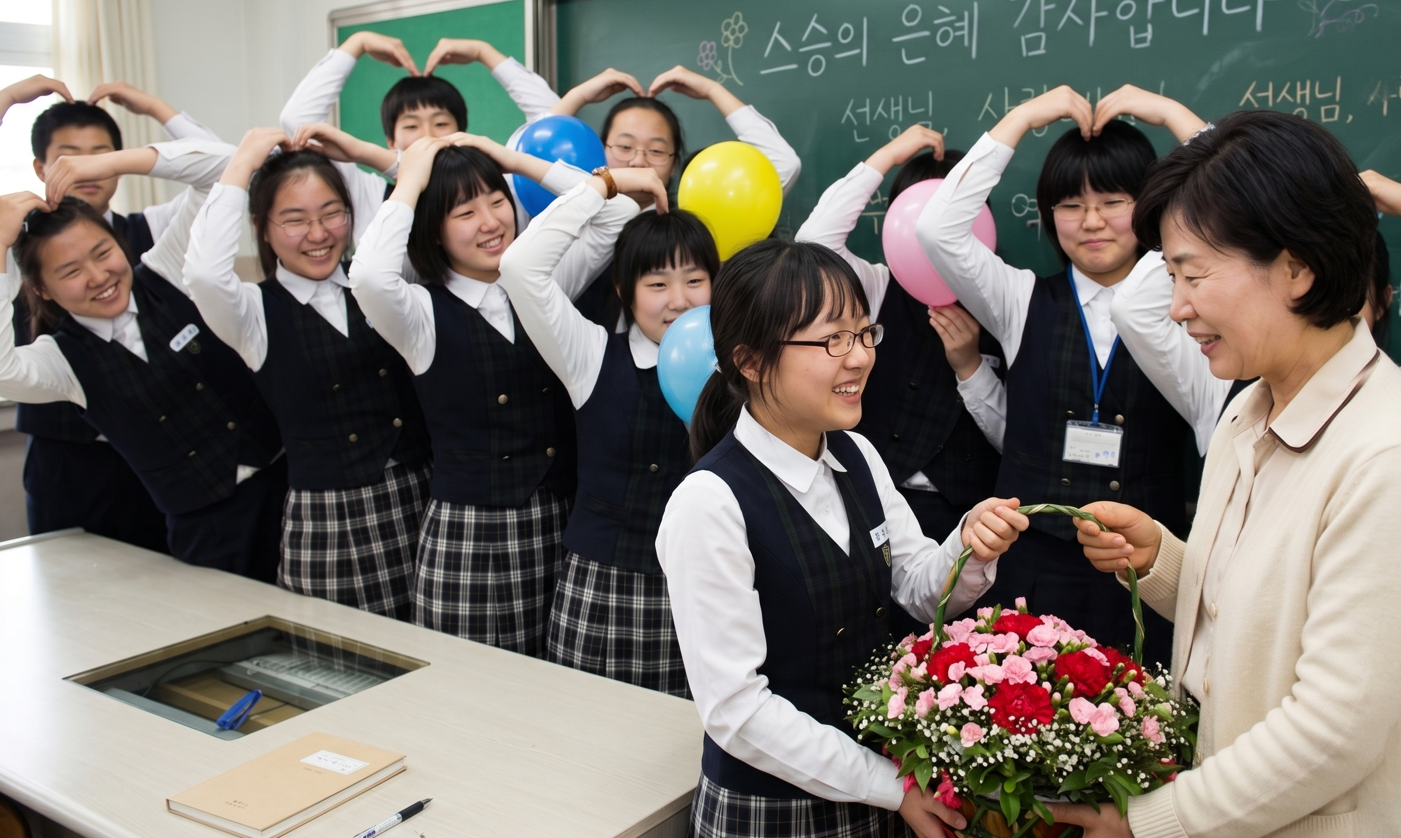
By the third week of May, the gratitude turns to something quieter and more personal. May 15th is Teachers' Day in Korea — a day to think back on the people who saw potential in you before you saw it in yourself.
The tradition is beautifully simple: students bring carnations to school and pin them to their teachers' lapels. No grand ceremony, no obligatory gift cards. Just a flower and a moment of genuine acknowledgment. For many teachers, it is one of the most meaningful days of the year.
Interestingly, the United States celebrates Teacher Appreciation Week during the first week of May — so the timing overlaps almost perfectly. Whether you're in Seoul or San Francisco, May is apparently the month the world remembers its teachers. Who in your life deserves a carnation this month?
The Art of Staying Connected
What makes Korea's May so distinctive is the intentionality behind it. Each celebration asks you to look outward — at a child, at a parent, at a mentor — and to do something about the gratitude you feel, instead of just quietly holding it inside.
In a world where everyone is busy, that's a radical act. Koreans don't wait for the right moment. They built the right month.
Modern Koreans have found new ways to express this care. Alongside the classic carnation, a thoughtfully chosen skincare set, a linen-bound journal, or a piece of handcrafted home décor now carries the same message: I thought of you specifically. That's the spirit of Korean gifting — never about the price, always about the intention.
Check In This May
There's something quietly powerful about a culture that says: this month, we stop. We look around at the people who shaped us — the children we're raising, the parents who raised us, the teachers who believed in us — and we tell them so.
My grandmother is the reason I understand this. She wore a paper flower made by a child's clumsy hands as though it were the most beautiful thing in the world. Because to her, it was. Not because of what it looked like, but because of what it meant: you are in my heart, no matter how far apart we are.
You don't have to be in Korea to carry that spirit with you. This May, reach out. Send the letter. Make the call. Say the thank you you've been meaning to say.
Gratitude doesn't expire. It just waits.
#KoreanCulture #MonthOfGratitude #KoreaMay #ChildrensDay #ParentsDay #TeacherAppreciation #TeacherAppreciationWeek #KoreanHolidays #CarnationFlower #ThoughtfulGifting #KoreanLifestyle #StayConnected #HonorYourRoots #GratitudePractice #CulturalExchange #VisitKorea #KBeautyGifts #MeaningfulGifts #KoreaBlog #KoreanSpring
Recommended Products

Look at me
KSBC Look at Me Teen Again Eye Cream, Anti-Aging Line Smoothing Skin Care Treatment, Wrinkle Care, Cruelty Free, for Women and Men 0.84 fl. oz, 25ml
$13.60
Shop Now
Look at me
Look At Me Hydrogel Eye Patch, Vitamin C & Citrus Fruits, Eye Masks for Dark Circles & Puffiness, Eye Firming Skin Treatment for Men & Women, 5 Pairs (2 g / 0.07 oz) – Made in Korea
$7.50
Shop Now
Elishacoy
Elishacoy Skin Refining Snail Eye Cream 15g
$15.00
Shop Now