From Birthdays to New Homes — the Rice Cake That Marks Every Milestone
There is a moment in many Korean lives when the smell of freshly steamed rice cake means that something important is about to happen. Tteok — Korean rice cake — is not everyday food. It is ceremonial food, the kind that marks the transitions and celebrations that shape a life.
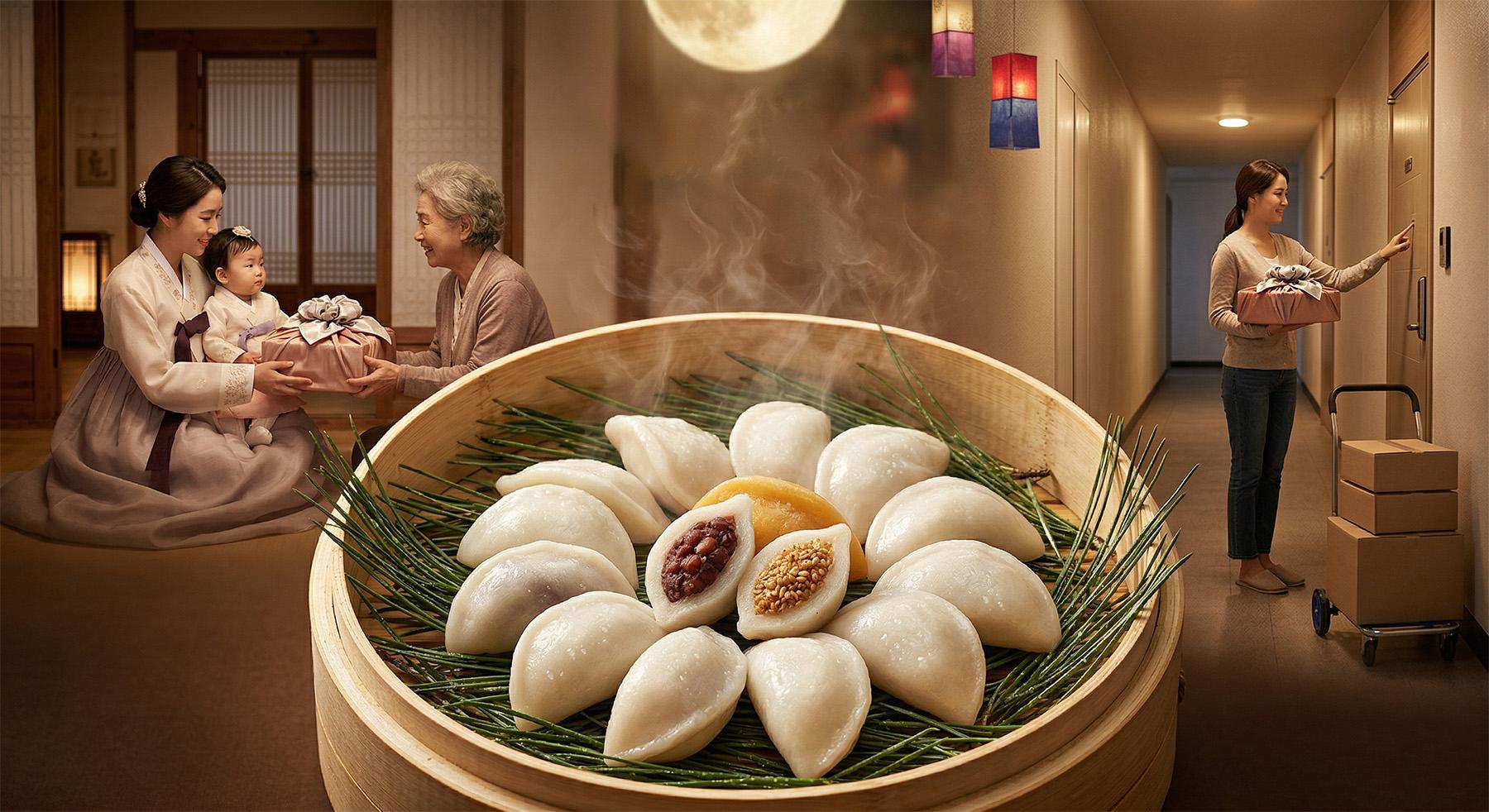
When a Korean baby turns one hundred days old, tteok is prepared and shared with neighbors. When someone moves into a new home, they bring tteok to the neighboring households — a gesture of introduction and goodwill that is still practiced widely today. At Chuseok and Seollal, the major holidays that anchor the Korean ceremonial calendar, specific rice cakes appear: songpyeon at Chuseok, shaped like small half-moons and filled with sesame or sweet bean paste, steamed over a bed of fragrant pine needles. The smell of the pine stays in the rice cake, faint but present, a detail that feels like it was designed by someone who understood that celebrations should involve all the senses.
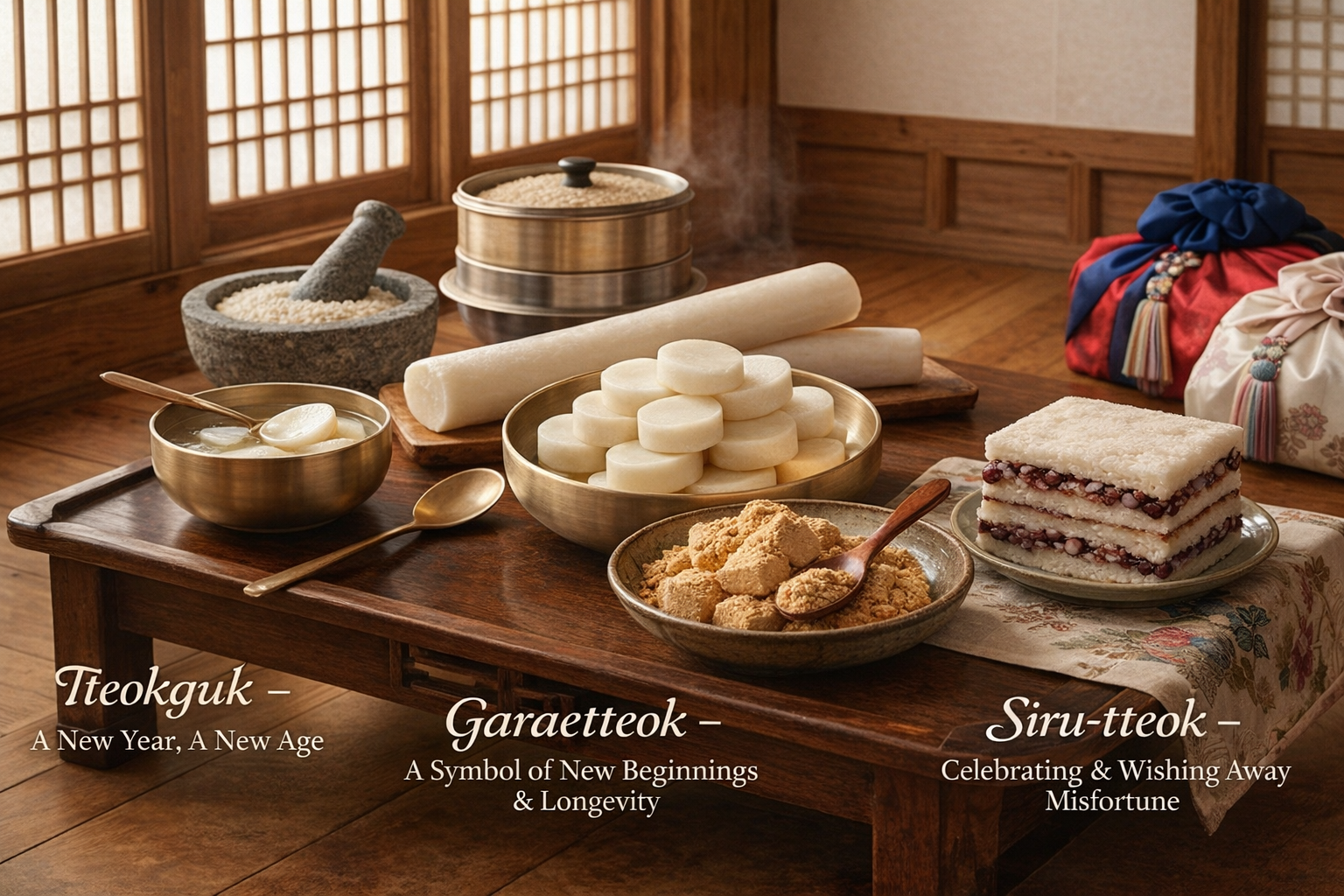
Tteok is made from rice — glutinous or non-glutinous depending on the type — that is soaked, ground, and then steamed, pounded, or both. The variety is extraordinary. Garaetteok is the long white cylinder used in tteokguk, the rice cake soup eaten on New Year's Day, whose sliced rounds symbolize a fresh start and the gaining of a new year. Injeolmi is pounded until sticky and soft, then rolled in roasted soybean powder. Sirutteok is layered with red beans, whose color has traditionally been associated with driving away misfortune — which is why it appears so often when Koreans want to mark a new beginning with good intentions.
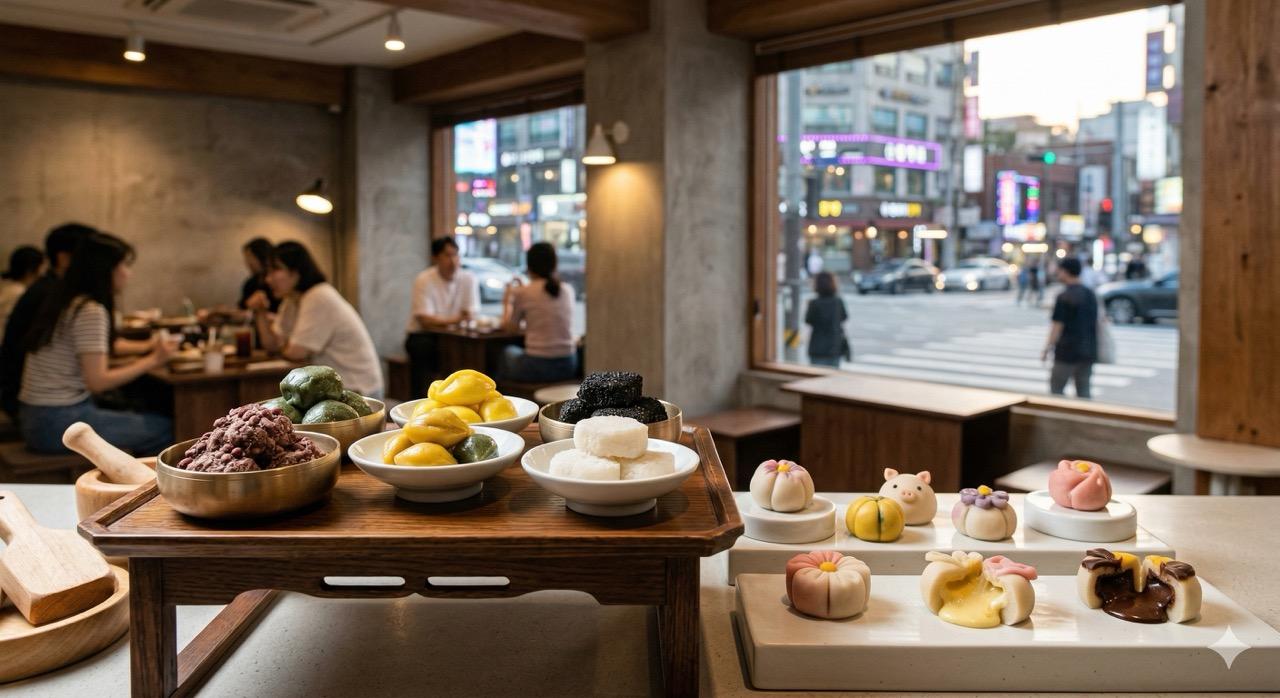
The colors of tteok are not accidental. Red beans, green mugwort, yellow gardenia, black sesame, white rice — these are the five colors of Korean traditional aesthetics, rooted in the philosophy of obangsaek, which connects colors to directions, seasons, and elements. A table of tteok arranged in these colors is not just visually beautiful; it is an expression of balance and wholeness. It says that whoever prepared this thought carefully about what they were making and why.
What has changed in recent decades is not the significance of tteok but its form. Tteok cafes have become popular in Korean cities, offering creative variations — tteok filled with cheese or chocolate, tteok designed as miniature art objects — that bridge the traditional and the contemporary. The ceremonial core remains intact. But tteok has found its way into everyday life in new forms, which is perhaps what every good tradition eventually does: it adapts without disappearing.