Hotteok is a Korean street snack: a yeasted wheat dough sealed around brown sugar and pressed flat on a griddle until the center melts into syrup. Here is what it tastes like, how it is made, and what makes Busan's seed-filled version different.
What is hotteok? Hotteok is a Korean street snack made by sealing a sweet filling inside a round of dough, then pressing it flat on a hot, oiled griddle until both sides turn golden. In English it usually goes by "Korean sweet pancake," and the name is useful as long as you hold it loosely. American pancakes are usually made from a pourable batter and often served with syrup on top. A hotteok carries its sugar on the inside, hidden in the center of the dough, where it melts as the pancake cooks.
That one difference explains most of what follows: how the dough is built, why the center turns to syrup, and how it is often served on cold afternoons.
The dough and what goes inside
A typical hotteok starts with a wheat-flour dough that has been given time to ferment, usually with yeast, which is why the finished pancake sits closer to a flattened bread than to a crepe. Some makers also work glutinous rice flour into the wheat dough. It is a common way to push the texture toward a springier, chewier bite, though not every hotteok includes it, and doughs vary from stall to stall and mix to mix.
The filling is simpler than most people expect. The base sweetness comes from brown sugar. Depending on who is making it, the sugar may be joined by cinnamon, or by finely chopped peanuts or other nuts, which add a little texture and keep the sweetness from turning one-note. These additions are common rather than universal; plenty of hotteok hold little more than sugar.
How it is cooked, and why the center turns to syrup
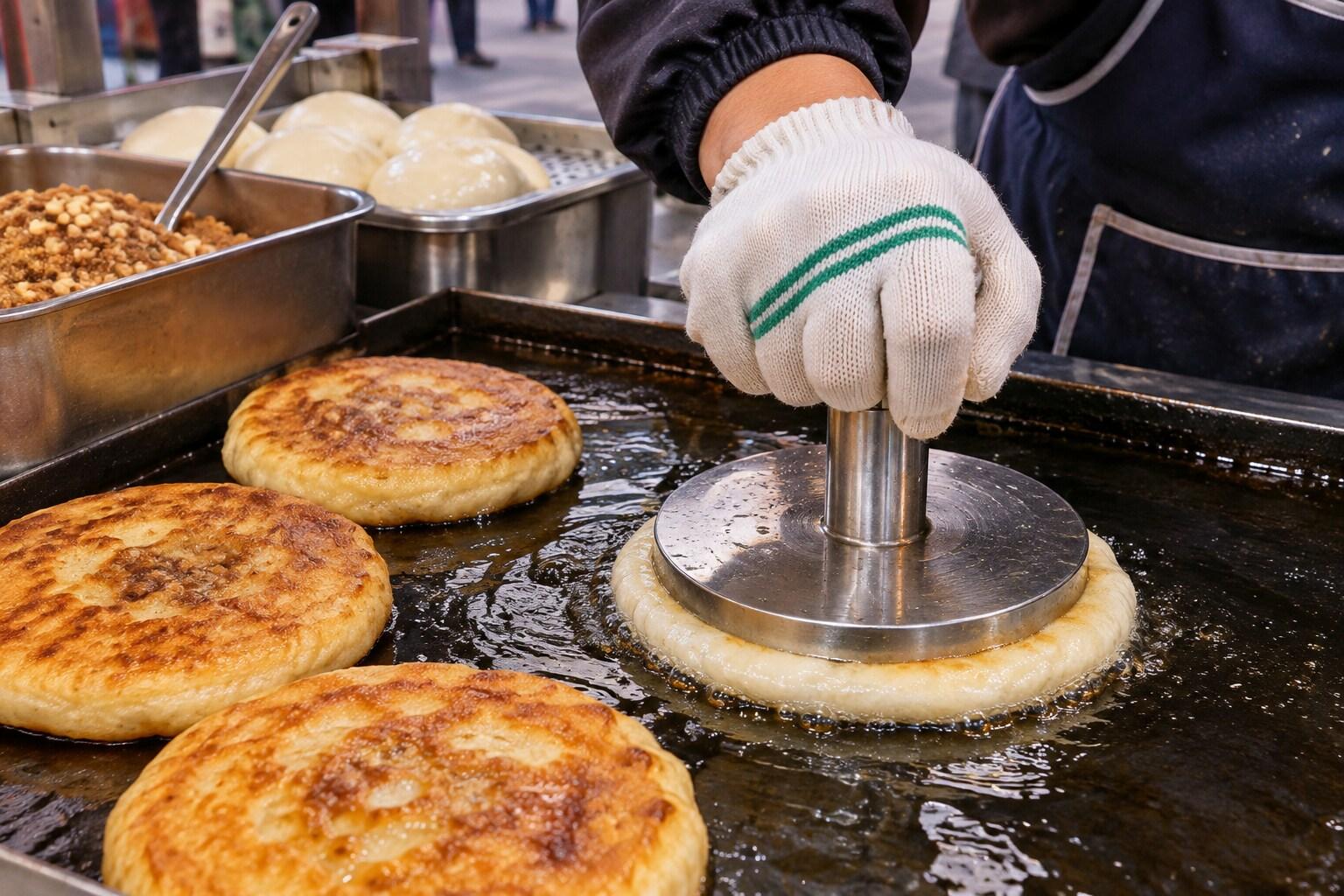
Watching a hotteok vendor work is half the pleasure of ordering one. The maker flattens a ball of dough in one hand, spoons the sugar mixture into the middle, and pinches the dough closed around it so the filling is fully wrapped. The sealed ball goes onto a griddle filmed with oil. Then comes the signature move: a flat metal press, pushed down firmly, turns the ball into a wide disc. The pancake cooks on both sides until the surface is browned and lightly crisp.
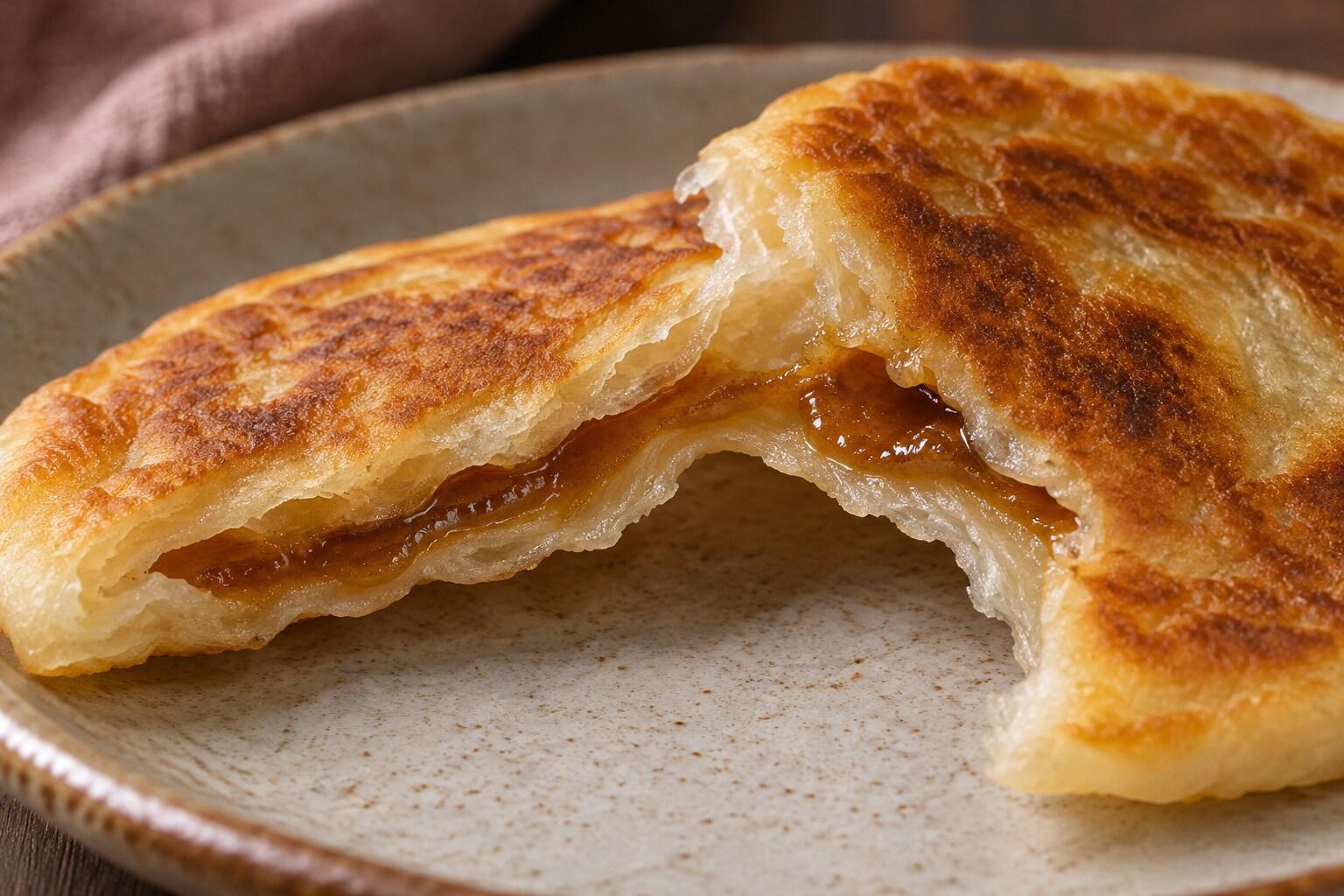
Here is the part that surprises first-timers. Tear a warm hotteok in half and you may see a glossy layer of syrup between the two sides. The brown sugar filling turns syrupy as it heats inside the dough. In some pancakes it stays thick; in others it runs toward the torn edge.
What eating one is actually like
A good hotteok offers three layers in a single bite. The outside, where dough met oil and hot metal, is toasted and faintly crisp. Just beneath it, the dough is soft and chewy, with the gentle, bready flavor of fermentation. At the center sits the warm, sweet filling, sometimes loose enough to run toward the edge if you tilt the pancake.
Hotteok is most at home in cold weather. The classic scene is a winter market or a street cart: steam rising off the griddle, a short line of people with their hands in their pockets, and a vendor handing over each pancake folded into a paper cup to make it easier to hold. You can eat it standing beside the stall while the next batch browns.
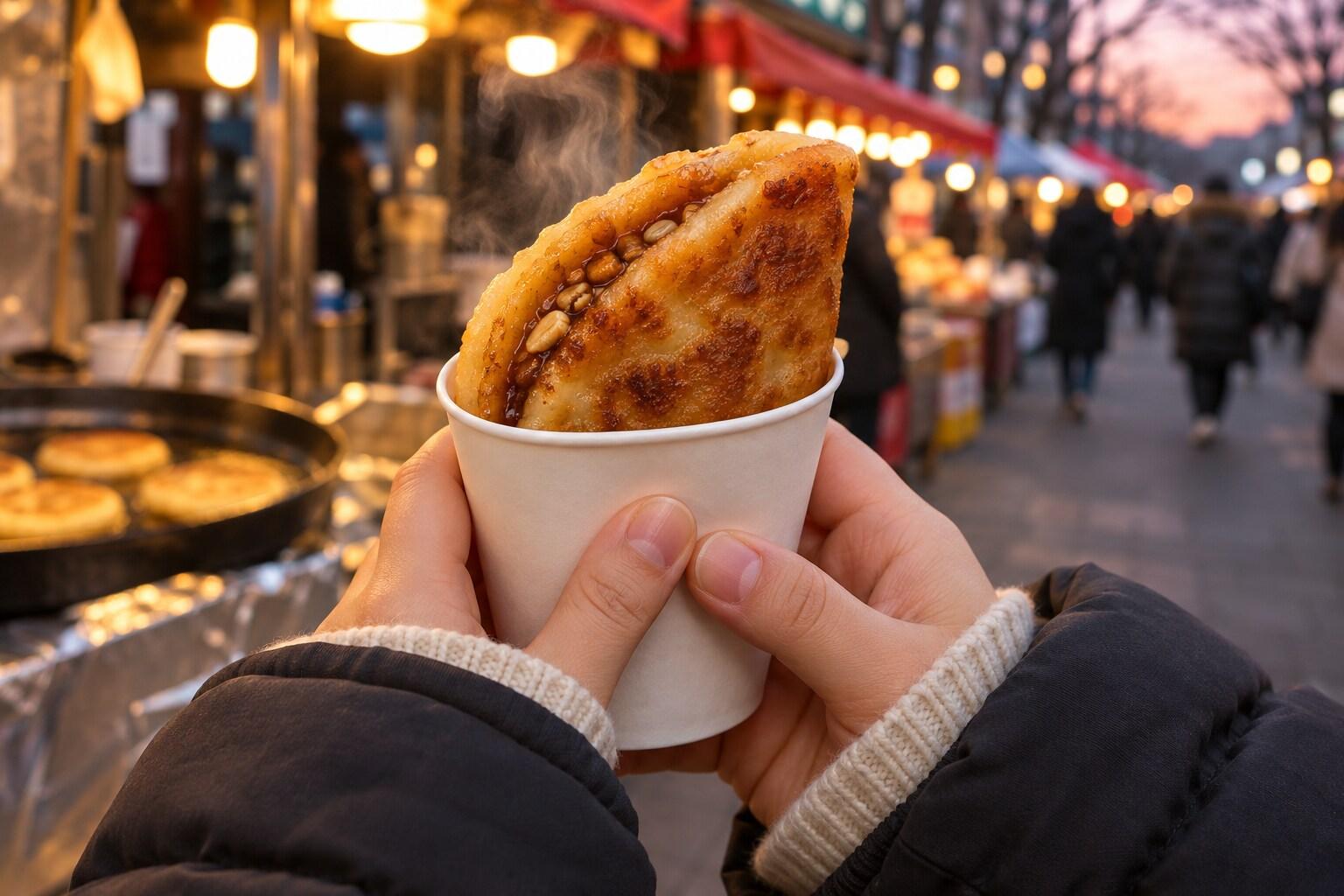
The melted sugar can still be very hot after the outside has cooled. A hotteok that feels comfortable in the hand can still be scalding in the middle. Let it cool a little, then start from the edge and work inward, letting the filling cool as you go.
Ssiat hotteok, the Busan variation
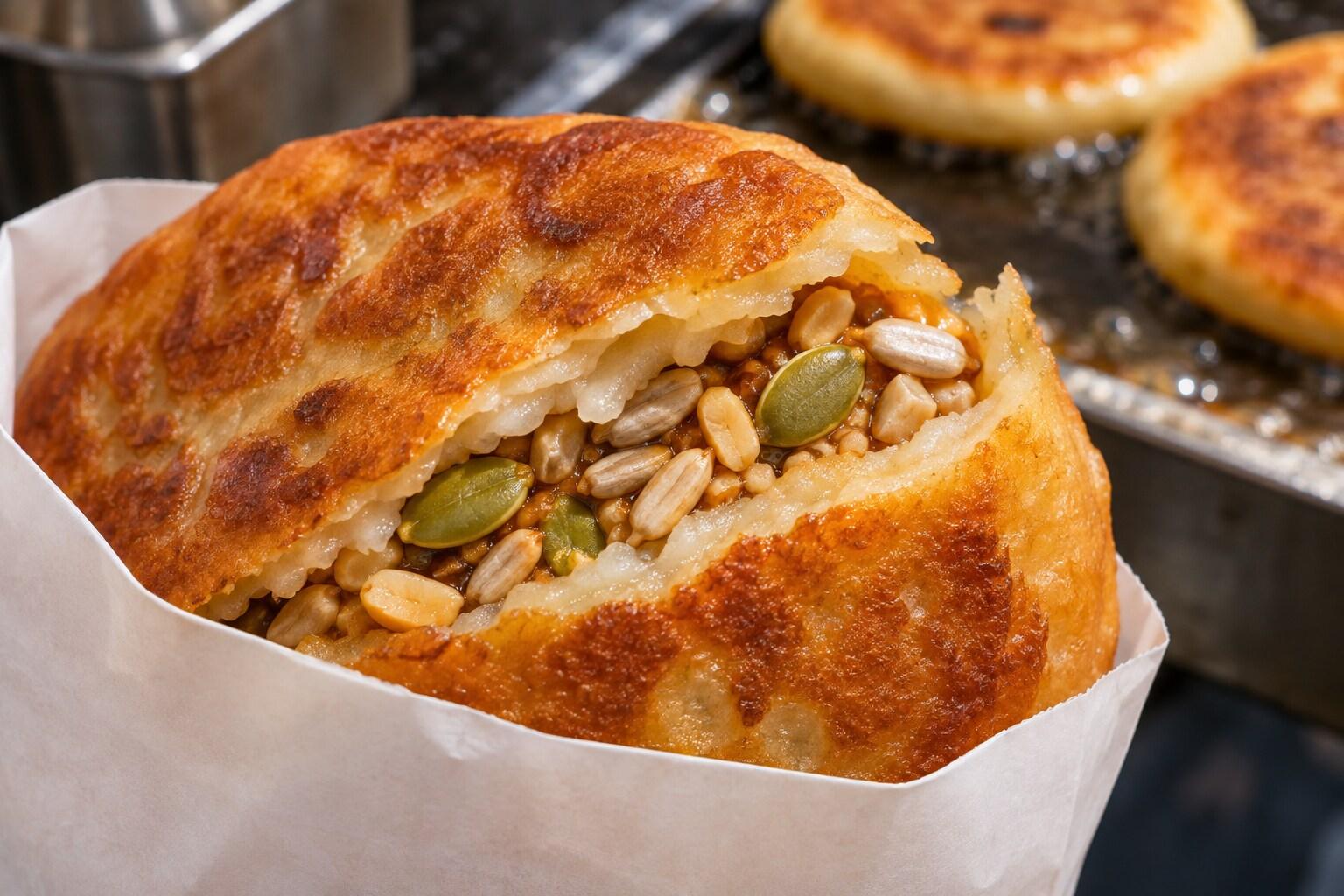
One well-known regional variation comes from Busan, the port city on Korea's southeast coast. Ssiat hotteok takes its name from ssiat, the Korean word for seeds, and the name is literal. One way to serve it is to split the cooked pancake open and spoon seeds and nuts inside. Pumpkin seeds and sunflower seeds are typical, peanuts appear often, and the exact mix changes from stall to stall. The result is a hotteok in which the sweet, syrupy filling comes with a real crunch, and it has become one of Busan's signature street foods, with versions now sold well beyond the city.
One last point for anyone who avoids wheat, peanuts, or tree nuts. Hotteok is, as a rule, a wheat-flour food, and nuts appear unpredictably: sometimes in the filling, sometimes added at the end, sometimes not at all. Recipes differ between street stalls, and again between packaged mixes and frozen versions sold abroad. Ask the vendor about the ingredients and possible cross-contact, or check the ingredients and allergen information on the package. A dough made with glutinous rice flour may still contain wheat flour.
A hotteok, in the end, is a modest construction: dough, sugar, heat, and a press. That the result adds up to more than those parts is something best confirmed in person, on a cold day, standing close enough to the griddle to hear it.