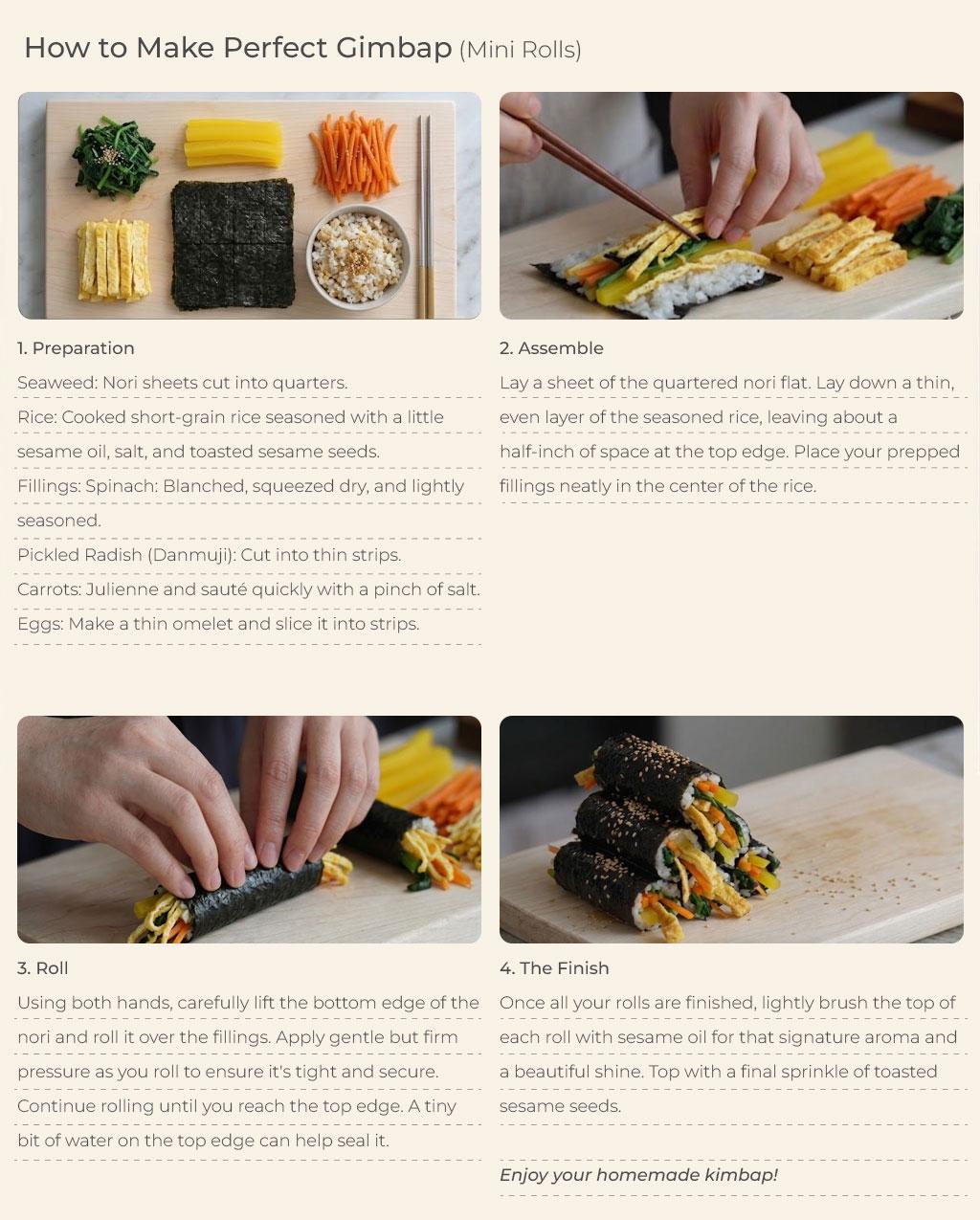
Walk into any Korean convenience store, street market, or mom-and-pop lunchbox shop — bunsik-jeom — and you'll find it front and center: a tightly rolled cylinder of seasoned rice wrapped in dark green seaweed, sliced into satisfying little coins.
That's Gimbap, and it might just be the most perfectly engineered on-the-go meal in the world.
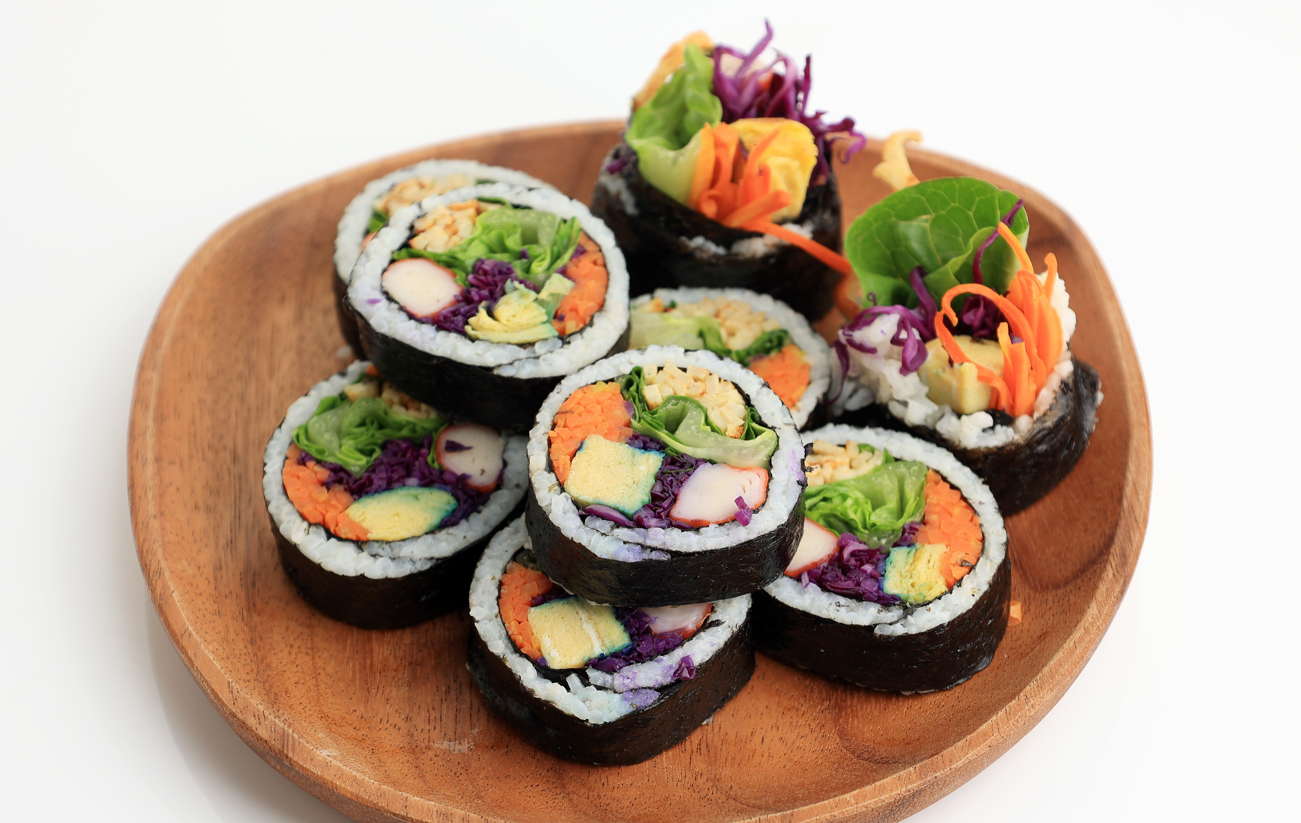
Not Your Average Sushi Roll
Americans who've only encountered sushi rolls might think they're looking at something familiar. But Gimbap is its own thing entirely—with a flavor profile, history, and cultural weight that's completely distinct.
- The Rice: Unlike sushi’s tangy vinegar base, Gimbap uses toasted sesame oil and a pinch of salt. It’s nuttier, warmer, and more savory.
- The Fillings: While sushi is famous for raw fish, Gimbap is almost entirely cooked ingredients. This makes it an incredibly approachable "comfort food" for everyone.
- The Experience: You don't usually dip Gimbap in soy sauce. It’s already perfectly seasoned. You just grab a piece and enjoy the harmony of flavors in one bite.
A Glimpse into History: Traditional Roots vs. Modern Evolution
Where did this delightful roll come from? It’s a blend of ancient tradition and cultural exchange.
- The Traditional "Bokssam" Theory: Koreans have a centuries-old tradition called Bokssam, where they wrapped rice in various leaves (like kelp or gim) for good luck. Some say Gimbap is simply the modern evolution of these "luck wraps."
- The Cultural Exchange: Others point to the influence of Japanese Norimaki during the early 20th century. However, Koreans completely transformed it—swapping vinegar for sesame oil and filling it with beloved Korean side dishes (banchan), creating a flavor profile that is 100% Korean.
A Gimbap Full of Memories
For many Koreans, Gimbap is not just a meal; it’s a memory.
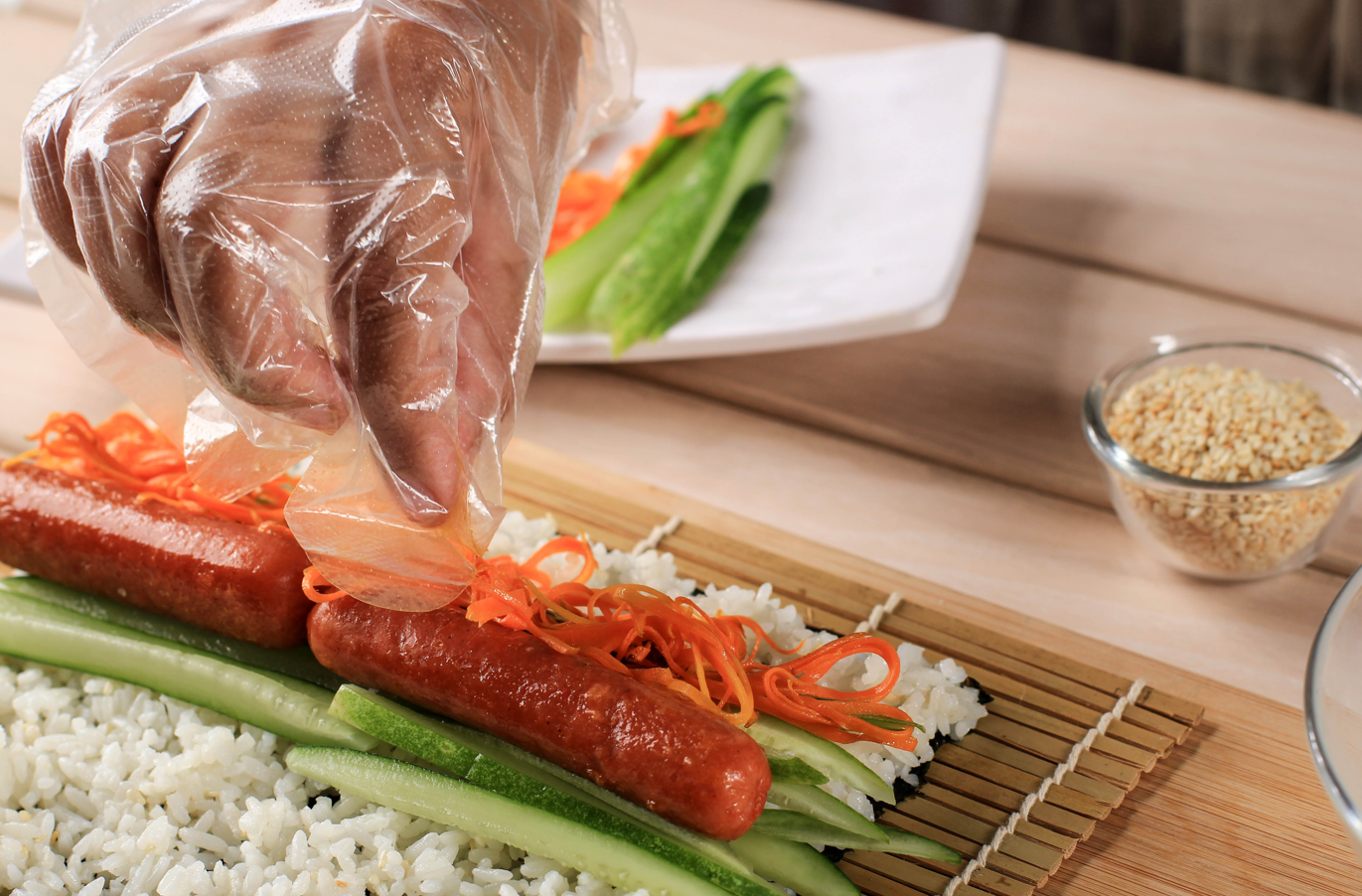
I remember living in the countryside with my grandmother. On field trip days, she would wake up at the crack of dawn to roll Gimbap for me. Her secret? Pink Sausage (분홍 소시지). Back then, that simple, nostalgia-filled sausage was the ultimate treat. That savory smell of sesame oil filling the morning air is a scent I’ll never forget.
In Korea, we even have a term called "Gimbap Day." It refers to school field trips because that’s when parents would pack these rolls with love. Ask any Korean adult, and they’ll tell you about the joy of eating slightly squished, foil-wrapped Gimbap on a school bus.
Why You'll Love It
Beyond the nostalgia, Gimbap is incredibly practical for a modern lifestyle:
- Balanced Nutrition: You get carbs, protein, and fiber all in one slice. It’s literally "wrapping a rainbow."
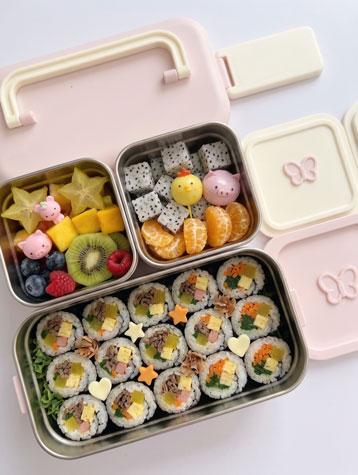
- Highly Customizable: From Bulgogi Gimbap to Vegan Tofu Gimbap, or even the trendy Keto Gimbap (rice-less), there is a version for everyone.
- Global Ambassador: From K-dramas to Netflix’s Street Food Asia, Gimbap is taking the world by storm. It’s the perfect healthy alternative to a sandwich or a burrito.
Are You Ready to Roll?
Gimbap is a testament to the Korean love for balance, color, and communal joy. It’s a meal that carries the warmth of a grandmother’s kitchen and the efficiency of a modern city.
Whether you're grabbing a roll at a convenience store or trying your hand at rolling one at home, you're not just eating rice and seaweed—you're tasting a piece of Korean soul.
Have you tried Gimbap yet?What would you put in your "Dream Roll"?Share your thoughts in the comments below!