Vertical Scroll, Weekly Chapters, and the Pipeline Feeding the World's Screens
The way stories are told is changing, and South Korea is leading the change. Webtoons — digital comics designed specifically for vertical scrolling on a smartphone screen — have moved from a Korean internet curiosity to a globally significant storytelling format, and the numbers behind them are no longer small.
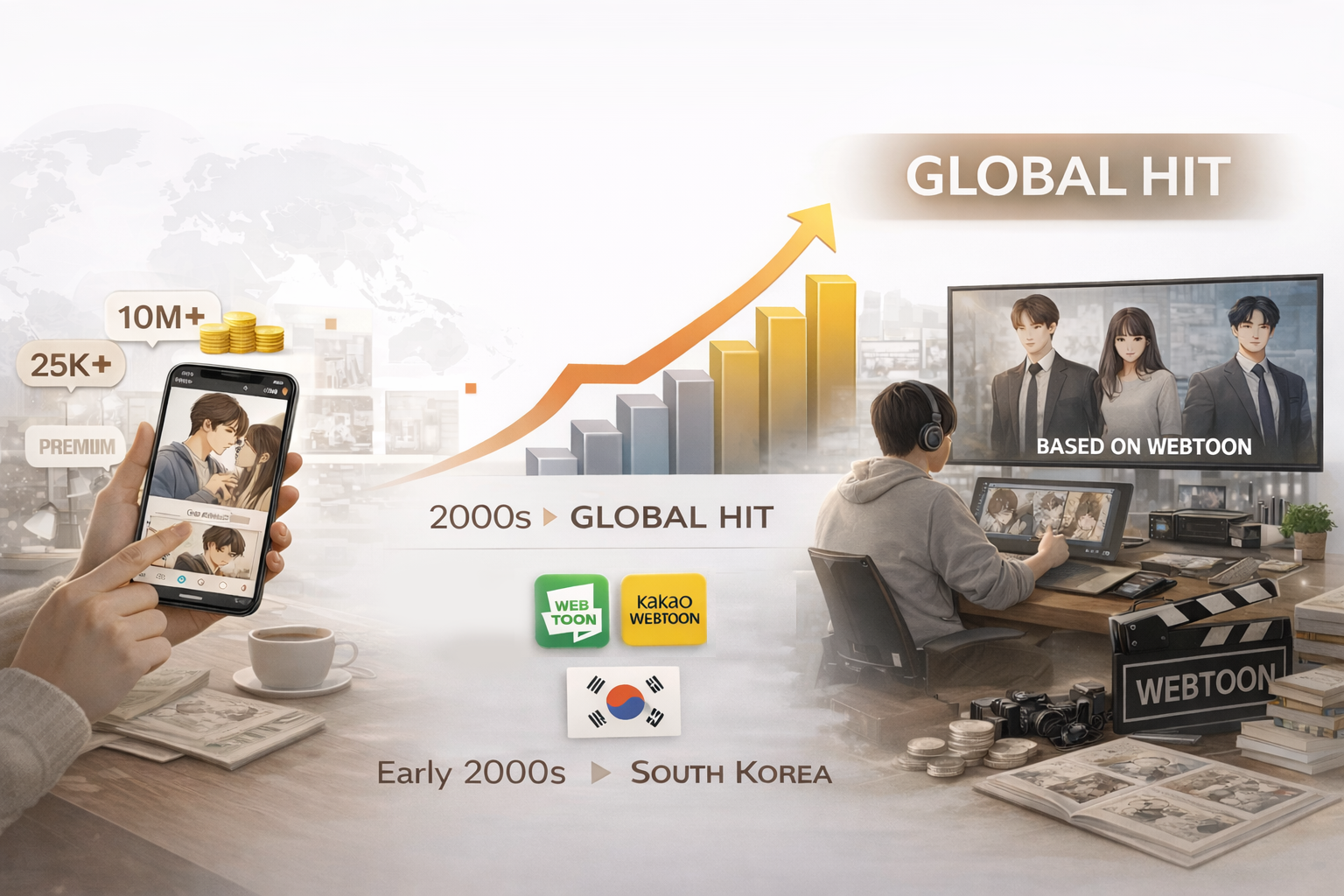
Webtoons originated in South Korea in the early 2000s, when portal sites like Naver began publishing comics in a format optimized for web browsers rather than printed pages. The format's logic was simple and proved to be powerful: deliver chapters for free, build a readership, monetize through premium content and merchandise. The shift from print to digital removed the barriers to entry that had kept comic creation exclusive, and a new generation of Korean storytellers began producing work at a pace and scale that print could never have accommodated.
Today, Naver Webtoon — which operates globally under the name Webtoon — reports hundreds of millions of users across multiple countries. Kakao Webtoon has built its own international presence. The genres that Korean webtoon creators have developed range from romance and fantasy to thriller, horror, and what has become a distinctly Korean specialty: the fantasy reincarnation genre, in which a character from the modern world is transported into the world of a novel or game they already know. The narrative logic of this genre — an ordinary person navigating an extraordinary world with inside knowledge — has resonated with audiences globally.
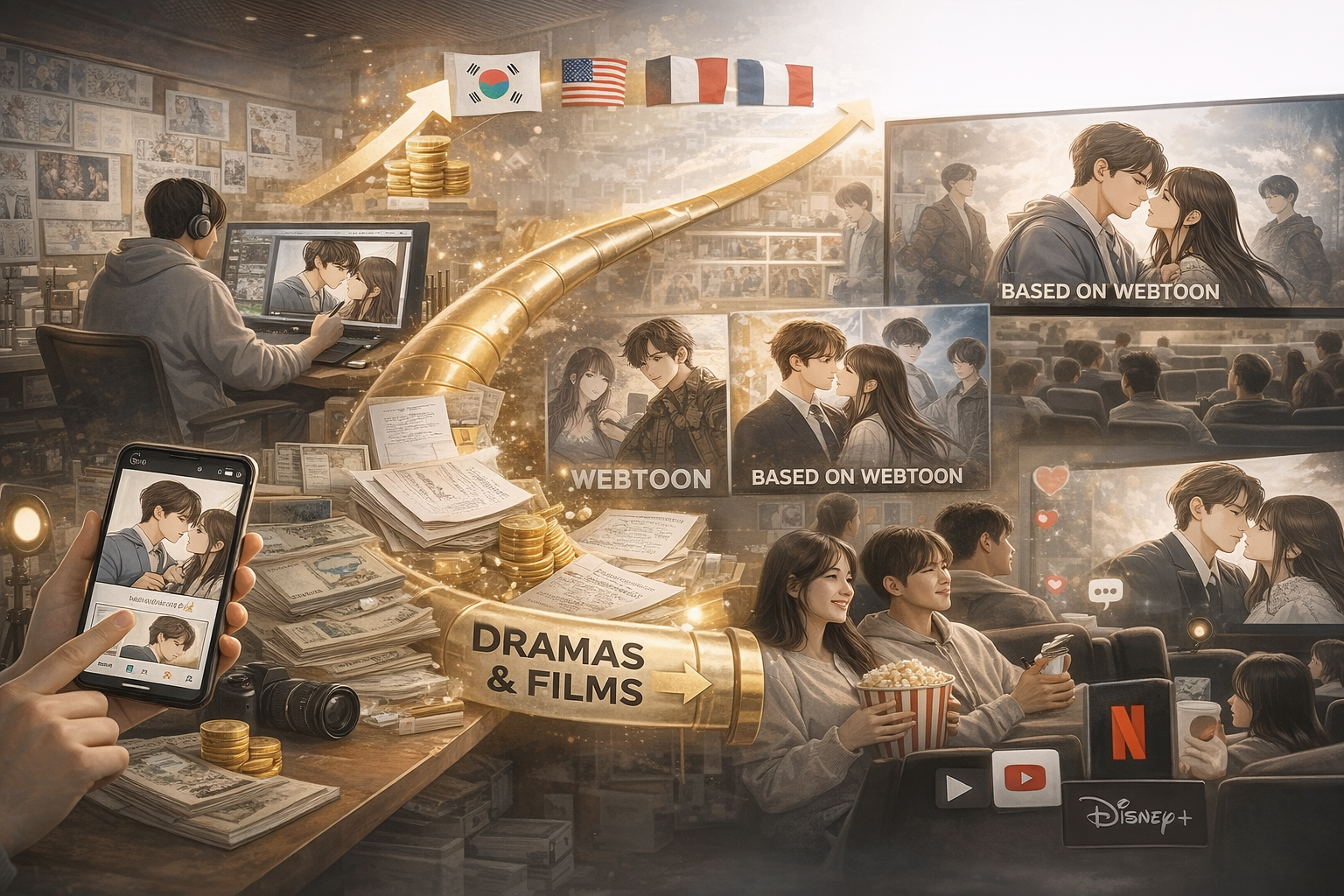
What has accelerated webtoons' cultural relevance is the pipeline they now feed. Korean dramas and films based on webtoon source material have become a significant and growing category. Shows adapted from webtoons arrive with built-in audiences who already know the story and are invested in seeing it realized. The adaptation creates a feedback loop: the drama brings new readers to the webtoon, the webtoon brings existing fans to the drama, and both grow.
For the readers and creators involved, webtoons represent something beyond entertainment. The format's accessibility — free to read, serialized, released weekly, consumable in a commute — makes it a natural part of daily life rather than an occasional leisure activity. Korean readers develop multi-year relationships with ongoing series, following characters through storylines that unfold in real time. When a beloved series ends, communities mourn. When one returns, they celebrate.
The vertical scroll, it turns out, was not just a technical adaptation. It was the beginning of a new way of experiencing narrative.
#KoreanWebtoon #WebtoonKorea #NaverWebtoon #KoreanComics #KDramaWebtoon #KoreanStory #DigitalComics #KVibe