
Remote Work, Digital Nomads, and the Changing Geography of Korean Productivity
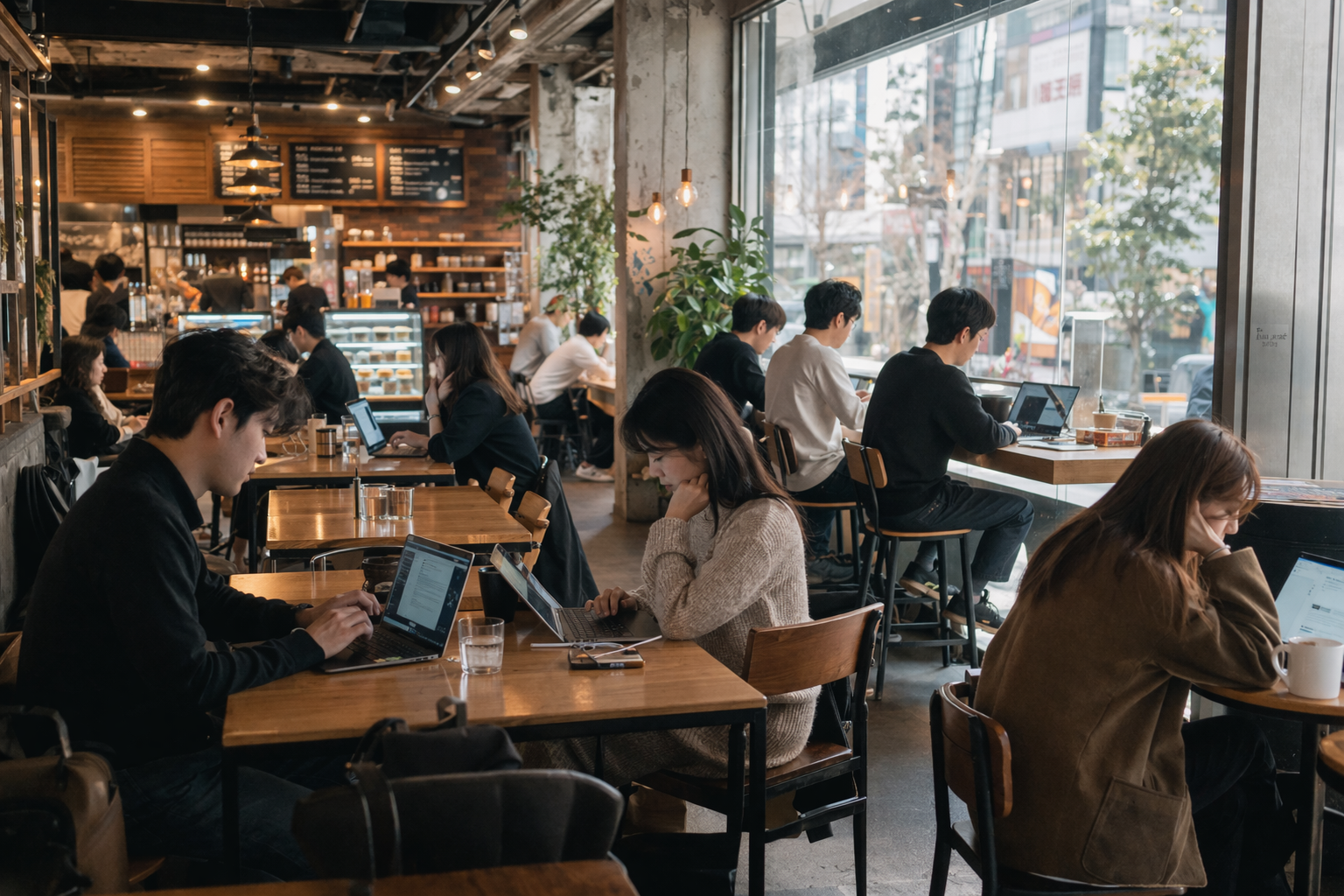
Something shifted in the way Koreans work. Walk through any neighborhood in Seoul on a Tuesday afternoon and you'll notice it: people with laptops open at café tables, working through the afternoon with a coffee going cold beside them. Not students. Not freelancers, necessarily. Office workers, remote employees, people whose job exists wherever their laptop does.
The workation — a hybrid of work and vacation — has moved from novelty to expectation in South Korea over the past few years, and the country has embraced it with a thoroughness that reflects both its technological infrastructure and a broader rethinking of what productive work actually looks like.
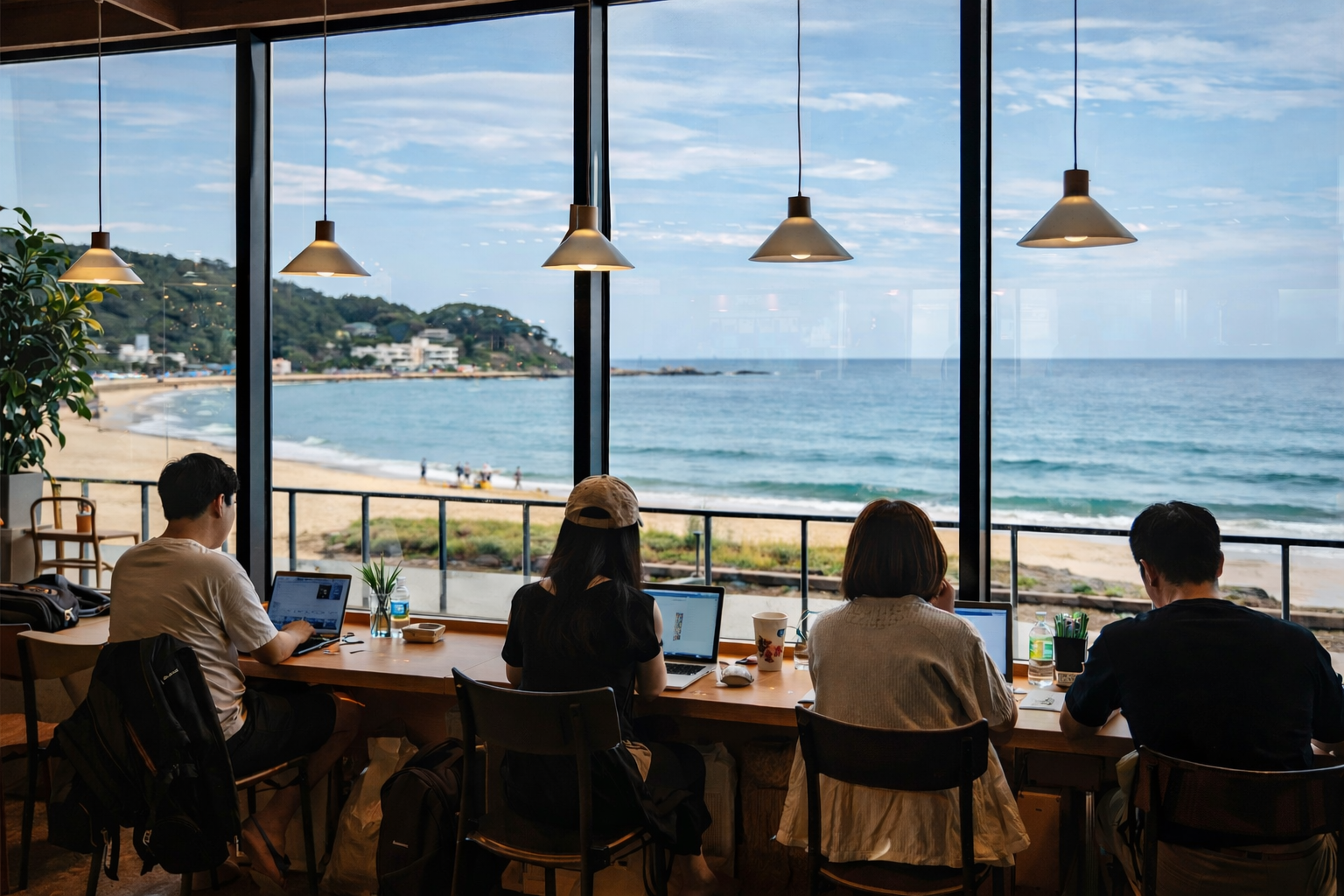
South Korea's internet speed and digital infrastructure made the transition easier than it might have been elsewhere. The country consistently ranks among the world's fastest for broadband connectivity, and the physical environment adapted quickly: coworking spaces multiplied across Seoul's trendier neighborhoods, and cafés that might once have frowned at laptop users competing for outlet space have increasingly oriented their layouts around exactly that kind of customer.
Beyond Seoul, cities like Gangneung on the east coast and the island of Jeju became early centers of the Korean workation movement. Local governments recognized the economic opportunity and began actively courting remote workers with dedicated programs, subsidized accommodations, and infrastructure investments aimed at digital nomads. Gangneung's combination of sea air, independent coffee shops, and reliable Wi-Fi built a particular reputation among Seoul-based workers looking to escape the city without losing their connection to it.
For the generation now occupying mid-career positions in Korean workplaces, the shift carries meaning beyond convenience. The rigid office culture that defined Korean professional life for decades — the expectation of presence, the visible hour-counting, the reluctance to leave before one's senior colleagues — has been under pressure since the pandemic, and remote work gave it the push it needed. Many companies that initially resisted flexible arrangements found that productivity held, talent stayed, and younger employees were specifically asking about remote work policies when evaluating job offers.
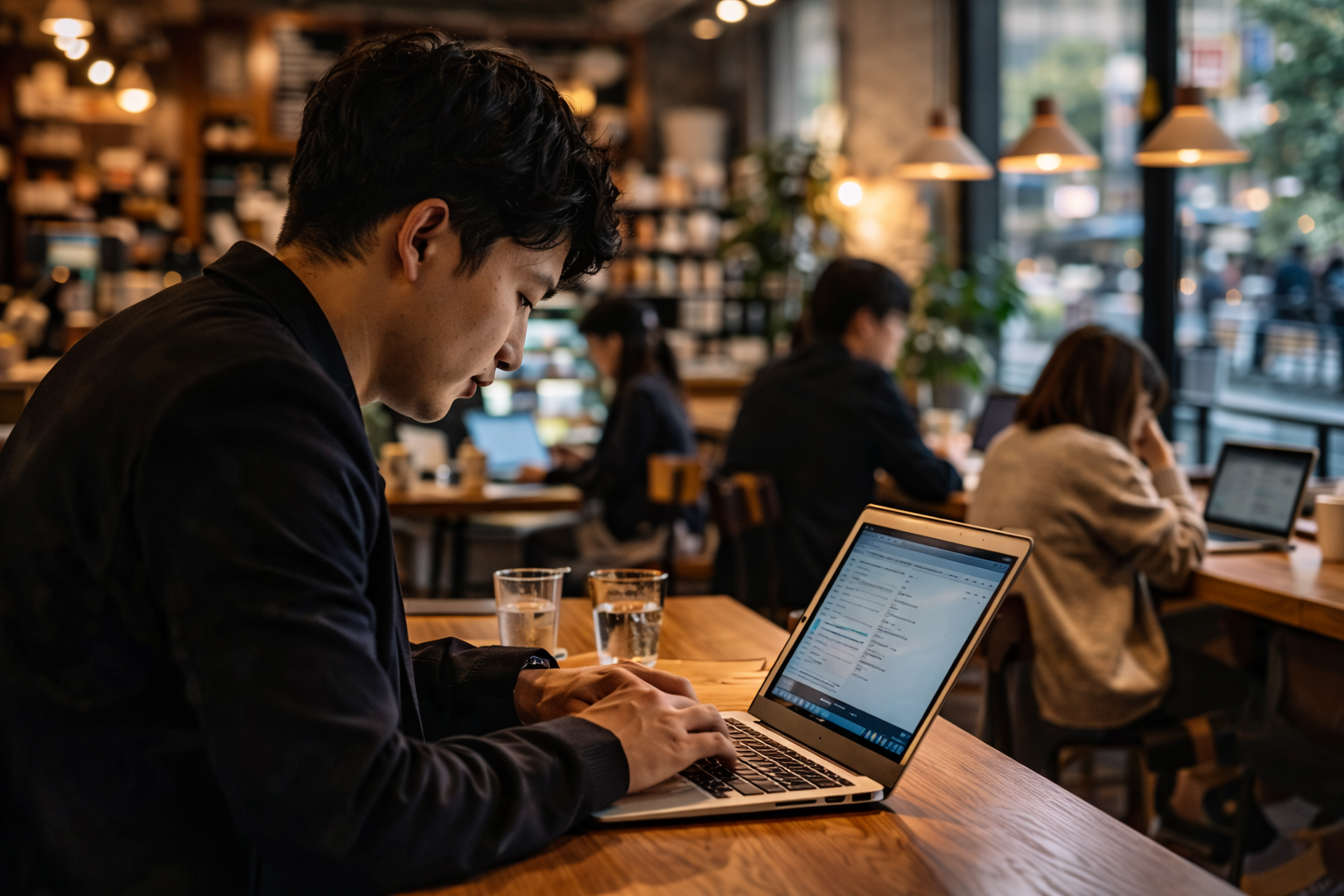
The café as office is not, of course, uniquely Korean. But Korea's version of it carries specific local flavors: the meticulously maintained café atmosphere, the particular quality of Korean coffee shop design that manages to feel both stimulating and calming at once. Working from a café in Seoul is an experience with its own aesthetics, its own rhythms, and its own kind of productivity.
The workation wave is still building. For a country that once measured commitment by hours logged at a desk, the shift toward measuring output instead is significant — and the landscape of where Koreans choose to do their best work is still being redrawn.
#KoreaWorkation #DigitalNomadKorea #RemoteWorkKorea #SeoulCafe #KoreanWorkCulture #WorkFromAnywhere #KoreaLifestyle #KVibe