There's a refrigerated case at the back of every Korean hypermarket that most visitors stroll right past on the way to the snack aisle. Big mistake. This is where the store quietly cooks your dinner.
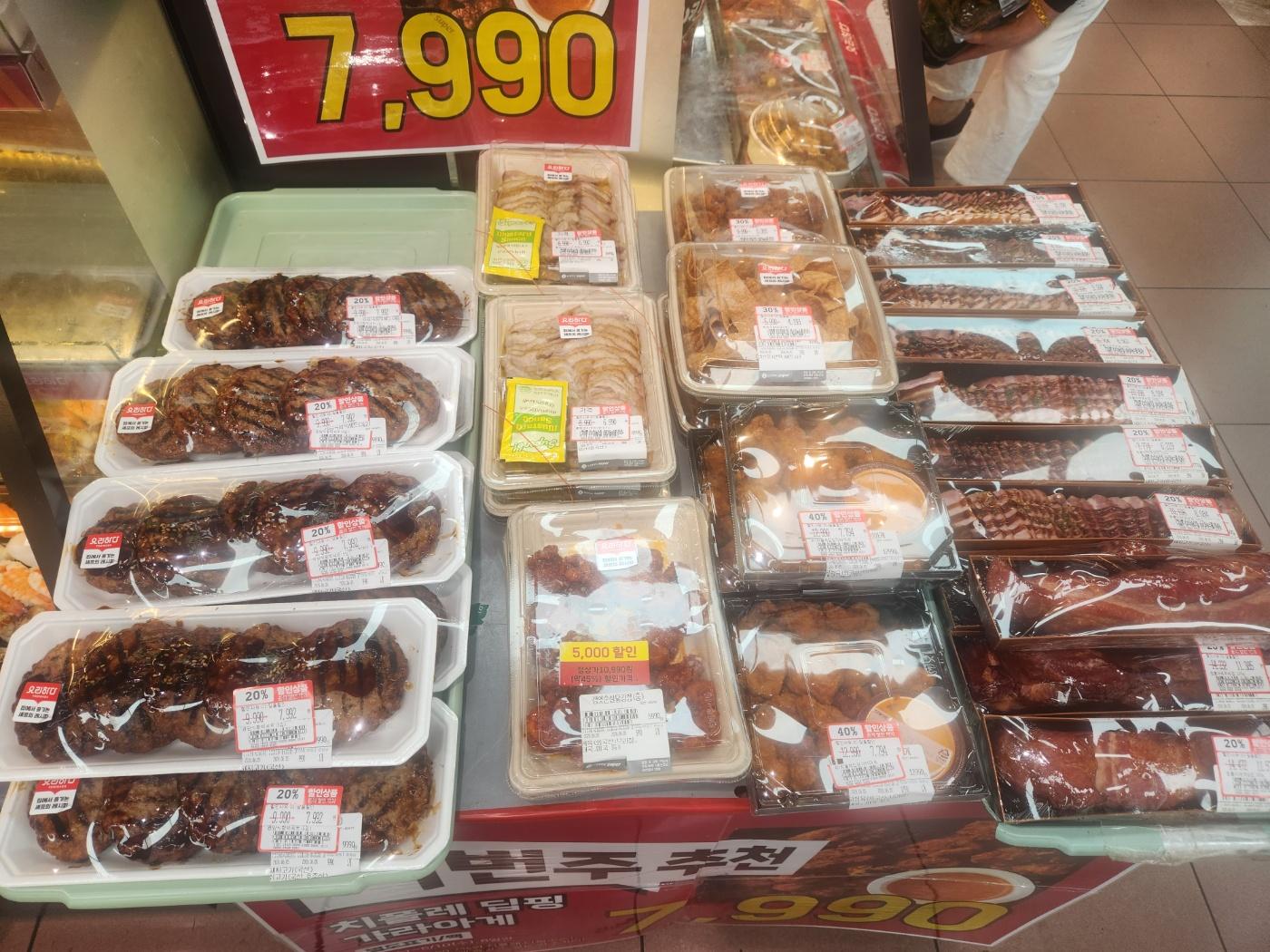
The little maroon shelf tags all say Yorihada, which is Lotte Mart's house line of ready-to-eat food. The name translates to roughly "chef's recipes you can make at home," except you are not making anything. The recipes come out of Lotte's own test kitchen, the trays arrive pre-browned, and your only job is to carry one to the register before somebody else does.
What's in the case on a normal afternoon: grilled marinated short rib, those flat seasoned beef-and-pork patties called tteok-galbi, sticky sweet dakgangjeong, plain fried chicken, sliced Jeju black-pork bossam, and an entire wall of sushi. The hot-meat tray in the photo up there is 7,990 won. That's about six US dollars for enough grilled beef to feed two people who are not being honest with themselves about portion sizes.
The sushi situation is genuinely unhinged
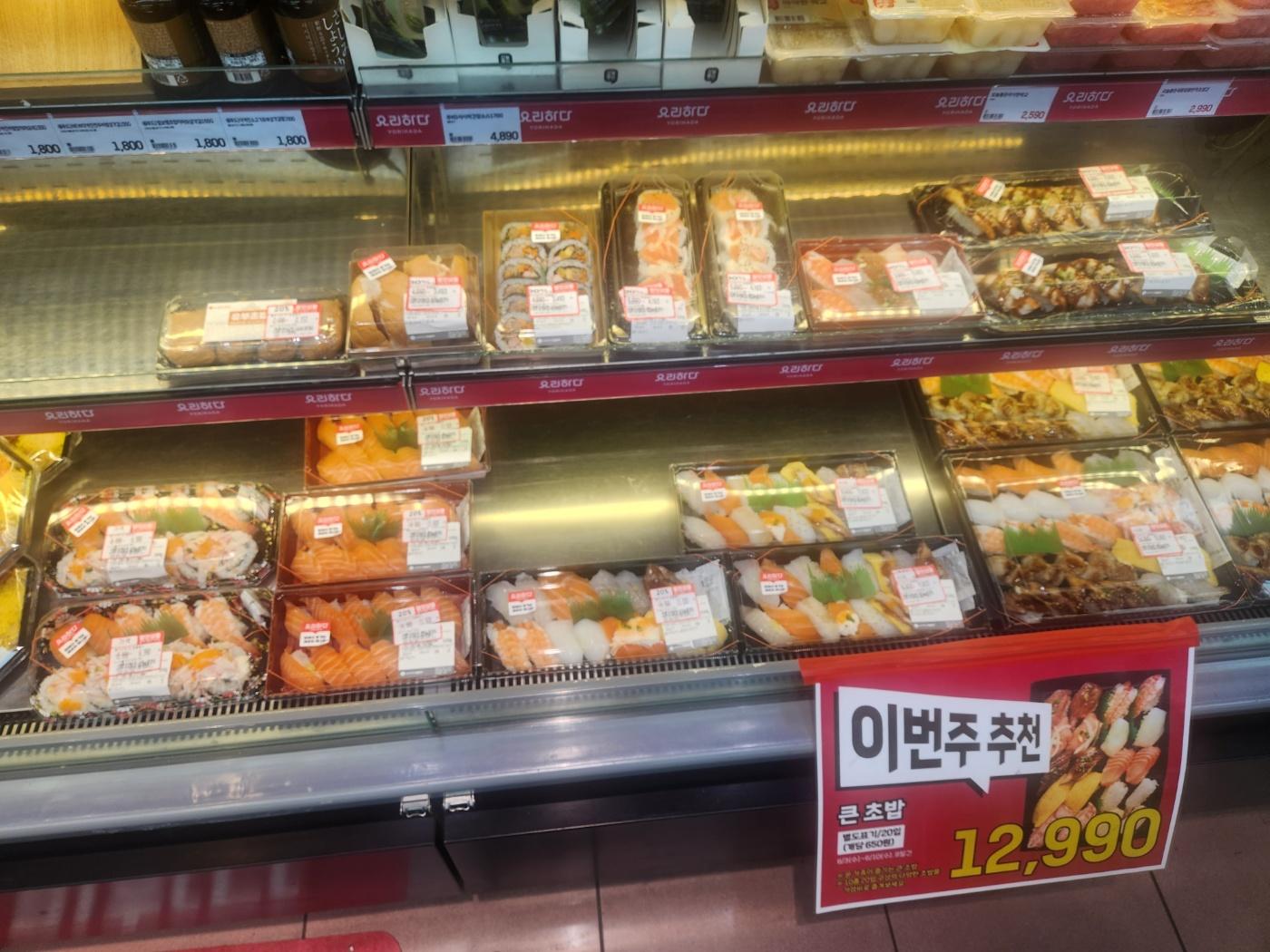
Korean grocery sushi has no business being this good, and yet. The "big sushi" set the store is pushing this week is 12,990 won for twenty pieces. Salmon, shrimp, tamago, eel, the lot. Do the math and that's 650 won a piece, around fifty US cents, which is a price for sushi that simply does not exist anywhere a human being would actually want to eat it.
Is the rice a touch firm by evening? Of course. You're getting twenty pieces for under ten bucks. Drop your standards by precisely one notch and you will be a very happy person. The store officially calls this format supermarket omakase, a phrase doing an enormous amount of quiet work.
Now about those stickers
Look closely at any tray and you'll spot them. Little white tags pasted over the original price: 20%, 30%, 40%, sometimes a flat 5,000 won off. These are not a sale. They're a countdown.
Korean grocery delis run a tiered markdown through the evening. Early on, perishables get a polite 10 or 15 percent. As closing creeps closer, the prepared food slides to 30 or 40. In the final stretch before the lights cut, sushi and bento can hit 50 percent or more, because the store would honestly rather pay you to take it than bin it. Regulars know the exact window for their branch and they time the trip down to the minute. Somewhere around 8:45 p.m. there is a silent, fully understood competition happening in the prepared-food aisle, and the prize is half-price jokbal.
Why the case is half empty by 9 p.m.
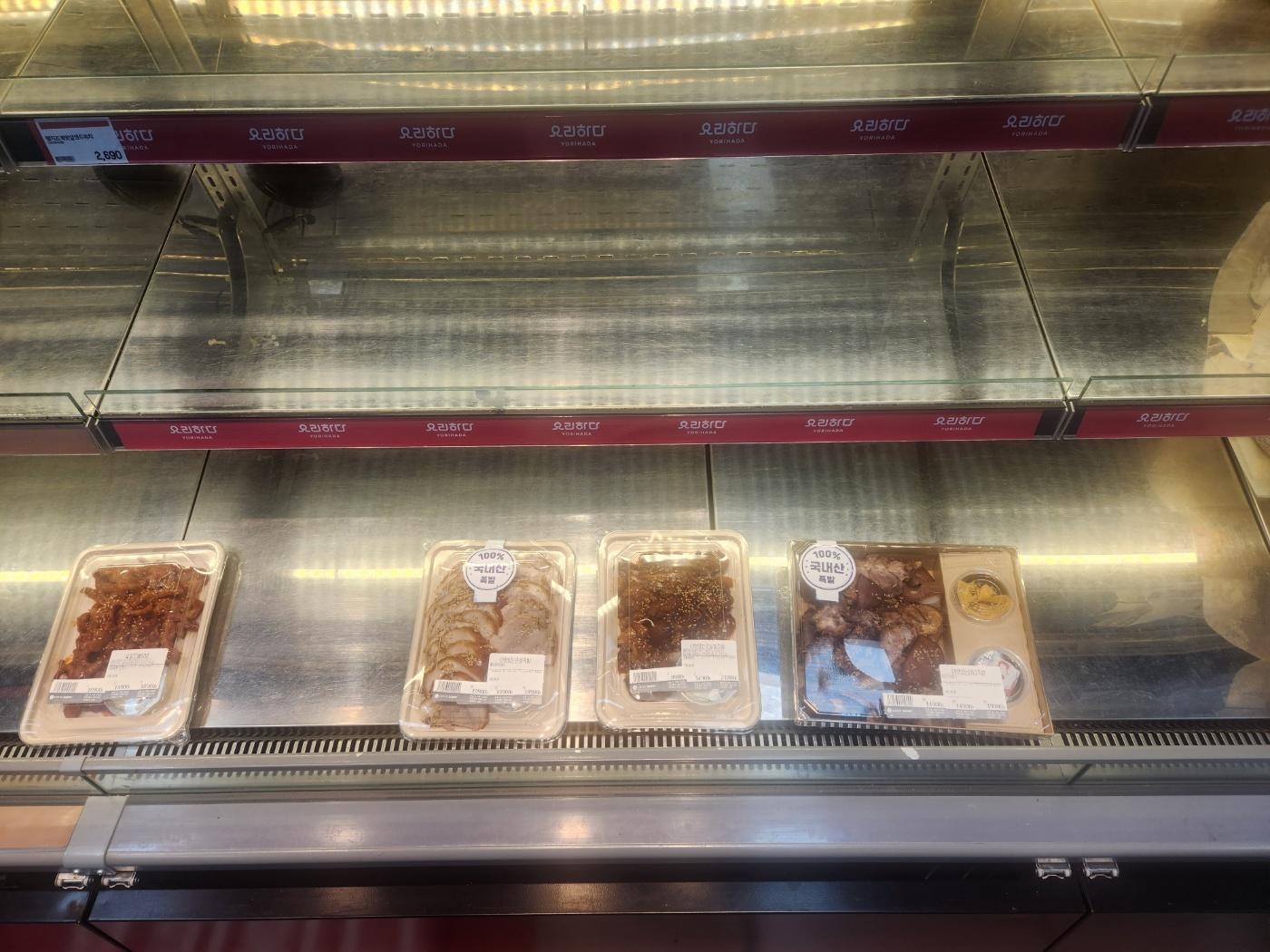
That gleaming, mostly empty case isn't a store that failed to stock up. That's a store that's winning. By the end of the night the only thing left is usually the black pork, sitting there in its "100% domestic" packaging, holding out for someone who knows what it's worth. An empty deli case at closing is the whole business plan working exactly as designed.
The part the photos don't show
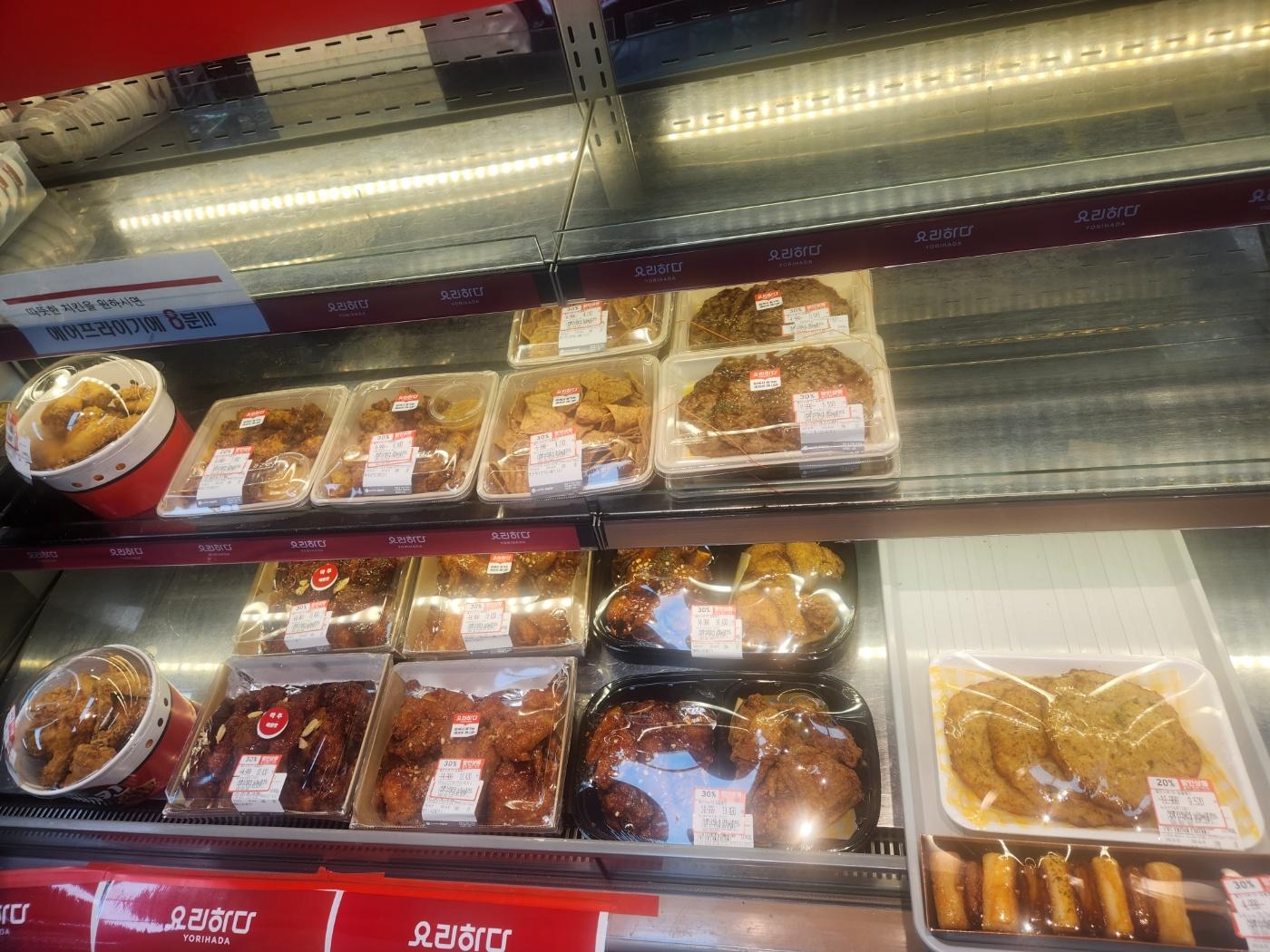
Taped to the chicken case is a small sign that says, in effect, "want it hot? eight minutes in the air fryer." That's the entire trick. The food is cooked, then chilled, then sold, and the air fryer back home handles the resurrection. Nearly every Korean apartment has one of those countertop ovens now, which is not a coincidence. The deli counter and the air fryer grew up together. One browns it, the other re-browns it, and somewhere in that handoff a 6,000 won tray of dakgangjeong becomes a perfectly respectable dinner you can pretend you made.
This is also why the ready-meal economy this whole case belongs to is worth somewhere around five trillion won in Korea. People aren't buying convenience because they're lazy. They're buying it because the math is ridiculous, the food is good, and the alternative is grilling galbi on a Tuesday, which nobody is doing.
So next time you're in a Korean supermarket and you see a wall of glistening meat with stickers stacking up like parking tickets, don't keep walking. Check the time. The case is counting down, and dinner is on the clock.