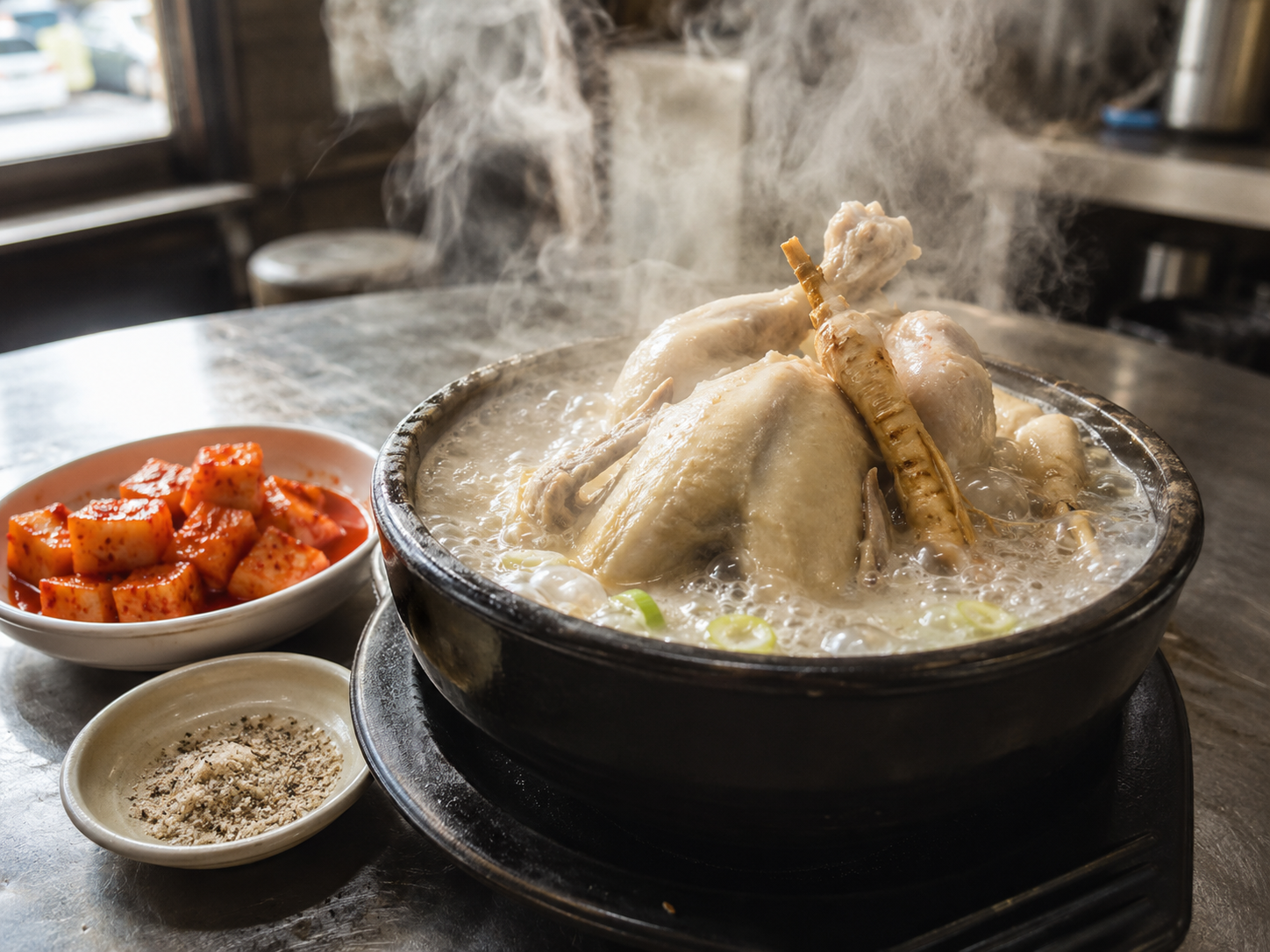
Samgyetang arrives still bubbling in a black earthenware pot, with kkakdugi and a dish of salt on the side.
The Korean calendar designates three specific days as the hottest of the year. They are called sambok (삼복), they land between mid-July and mid-August, and on each of them the air sits above 30 degrees Celsius, high 80s Fahrenheit, with the kind of humidity that makes putting on a shirt a decision.
On all three, there is a line outside the chicken soup restaurant. The soup arrives still bubbling, in a stone pot, and people order it on purpose.
The phrase for this is 이열치열 (iyeolchiyeol), controlling heat with heat. It sounds like something a coach shouts. It is actually a medical argument, and it has been running for centuries.
The theory says your insides go cold in summer
In Korean medicine, summer is when your yang energy floods out to the surface of the body. Fine for your skin. Bad for your core, which gets left behind comparatively depleted and cool. Pour iced americanos and cold noodles into that cool core for six weeks straight and you get cramps and sluggish digestion. Warm food goes in to hold the center steady.
There is an old analogy for it. Well water runs cold in July and warm in January, and your body does the same thing in reverse. The Dongui Bogam (동의보감), Korea's 17th-century medical compendium, filed chicken under warming ingredients for this exact reason. What you are looking at is a gut health argument that was written four hundred years before anyone said the words gut health.
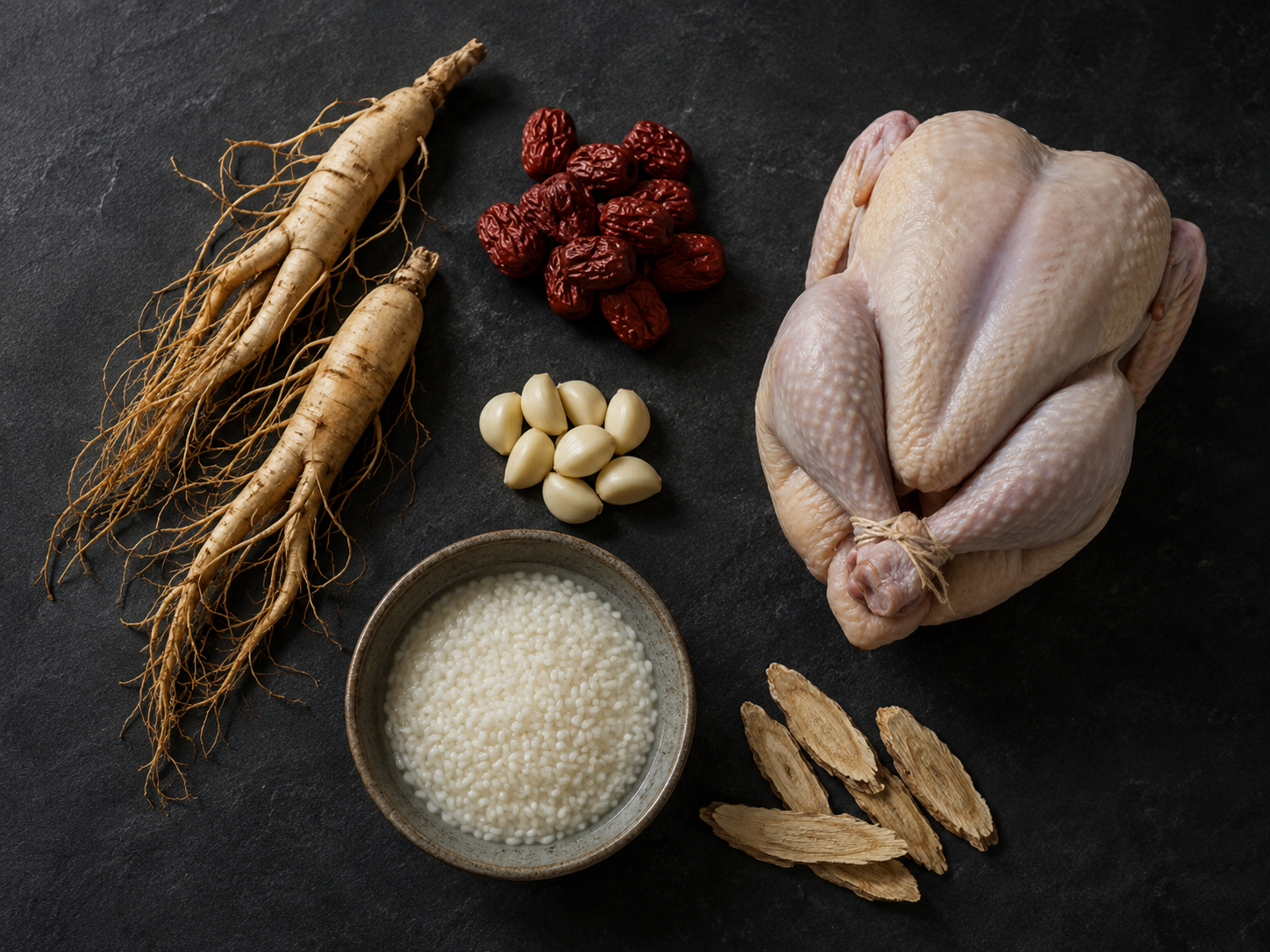
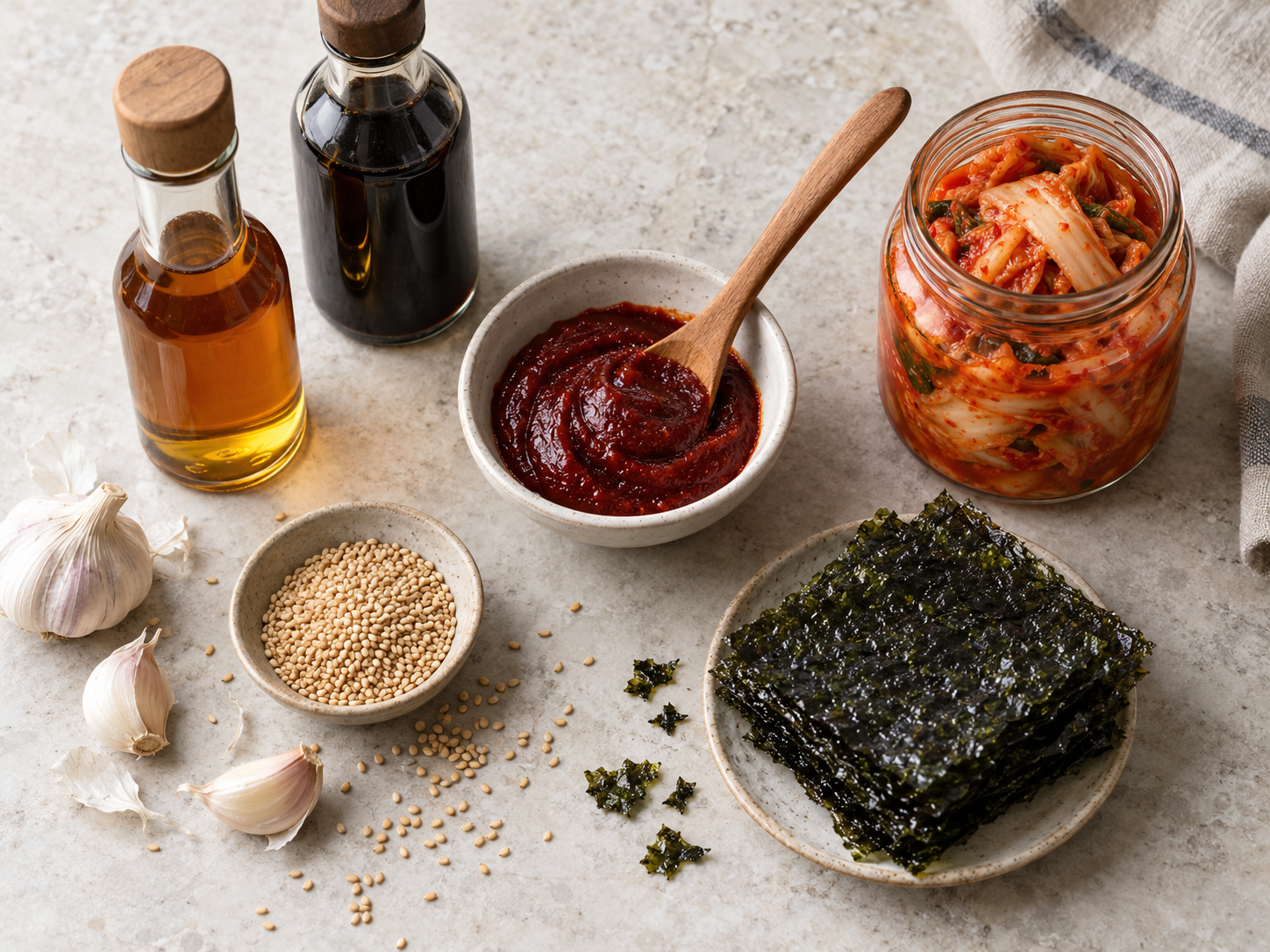
Fresh ginseng root, dried jujube, garlic, glutinous rice and astragalus, before the pot goes on.
The science is partly on board, in a wind tunnel
Here is where it gets fun. In 2012 a physiologist named Ollie Jay put nine cyclists on bikes and gave them water at temperatures ranging from near-freezing to 50 degrees Celsius. The hot water made them sweat disproportionately more, and they finished having stored less heat overall. Tradition vindicated.
Except there is a catch, and it is a large one. The extra sweat has to evaporate for any of that to work. Jay's cyclists had a fan blowing on them. A Korean August has no fan and enough humidity that the sweat just sits there, and Jay himself has said plainly that he does not recommend hot drinks on hot days. So the thermodynamics are close to a wash.
What survives is duller and more useful. A bowl of warm broth is water plus salt replacement after a day of sweating heavily, and a whole young chicken is a real quantity of protein and collagen at the point in the year when heat has flattened your appetite. Worth knowing too: Korean medicine does not claim this dish suits everybody. Under the four-constitution system, doctors here will tell someone who already runs hot that it can hand them a headache and a bad night rather than energy. Duck is the usual reroute.’’
The dish is younger than the Beatles
Now the part that surprises Koreans as well. This is not an ancient recipe. Joseon cookbooks barely mention it. Wealthy households under Japanese occupation began stirring ginseng powder into chicken soup, and restaurants in the 1940s and 1950s sold the result as 삼계탕 (Samgyetang), chicken first, ginseng second, because the chicken was understood to be the medicine.
Then refrigeration reached the country in the 1960s, fresh ginseng could finally travel, government policy pushed poultry farming hard, and somebody flipped the name to 삼계탕, ginseng first. That reorder was marketing and it worked. The first specialty shop opened in Myeongdong in 1960, where the founder standardized the earthenware pot the soup still shows up in. It only became the default food of the sambok days after the 1970s, which in culinary terms is roughly yesterday.
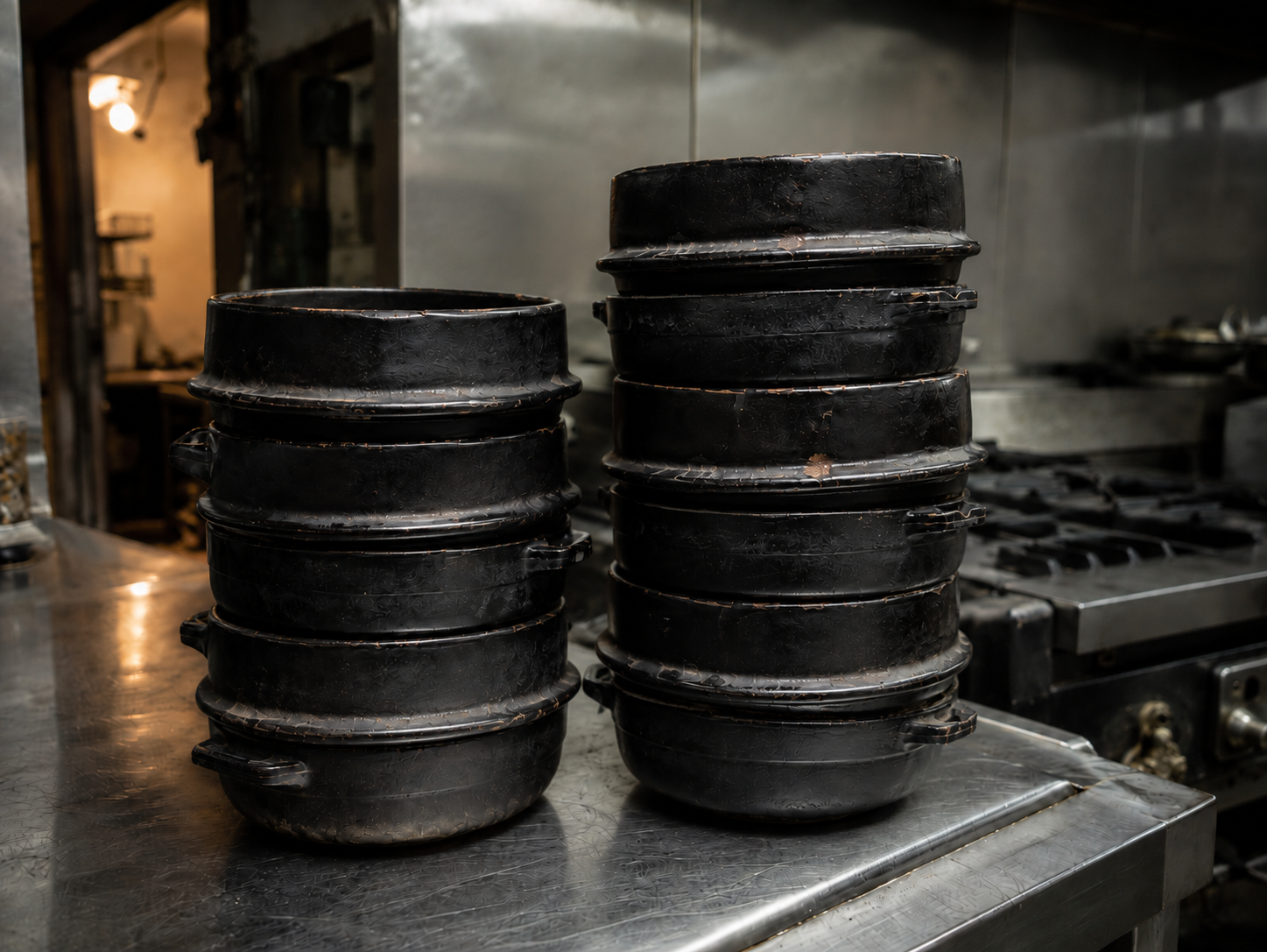
Stacked ttukbaegi in an old Seoul kitchen. The pot itself was standardized in Myeongdong in 1960.
What is in the pot, and what it costs
A young bird (영계), about 28 days old and 800 grams, packed with glutinous rice and simmered with ginseng, jujube, garlic and astragalus root until the meat gives up on the bone. The literal reading of the name is Korean ginseng chicken soup, and the broth reaches you unsalted on purpose. Salt and pepper come on the side. Mix a little in the small dish, dip the meat, and do not season the whole pot. The kkakdugi (깍두기) next to it is not a garnish, it is the counterweight to twenty minutes of extremely rich broth.
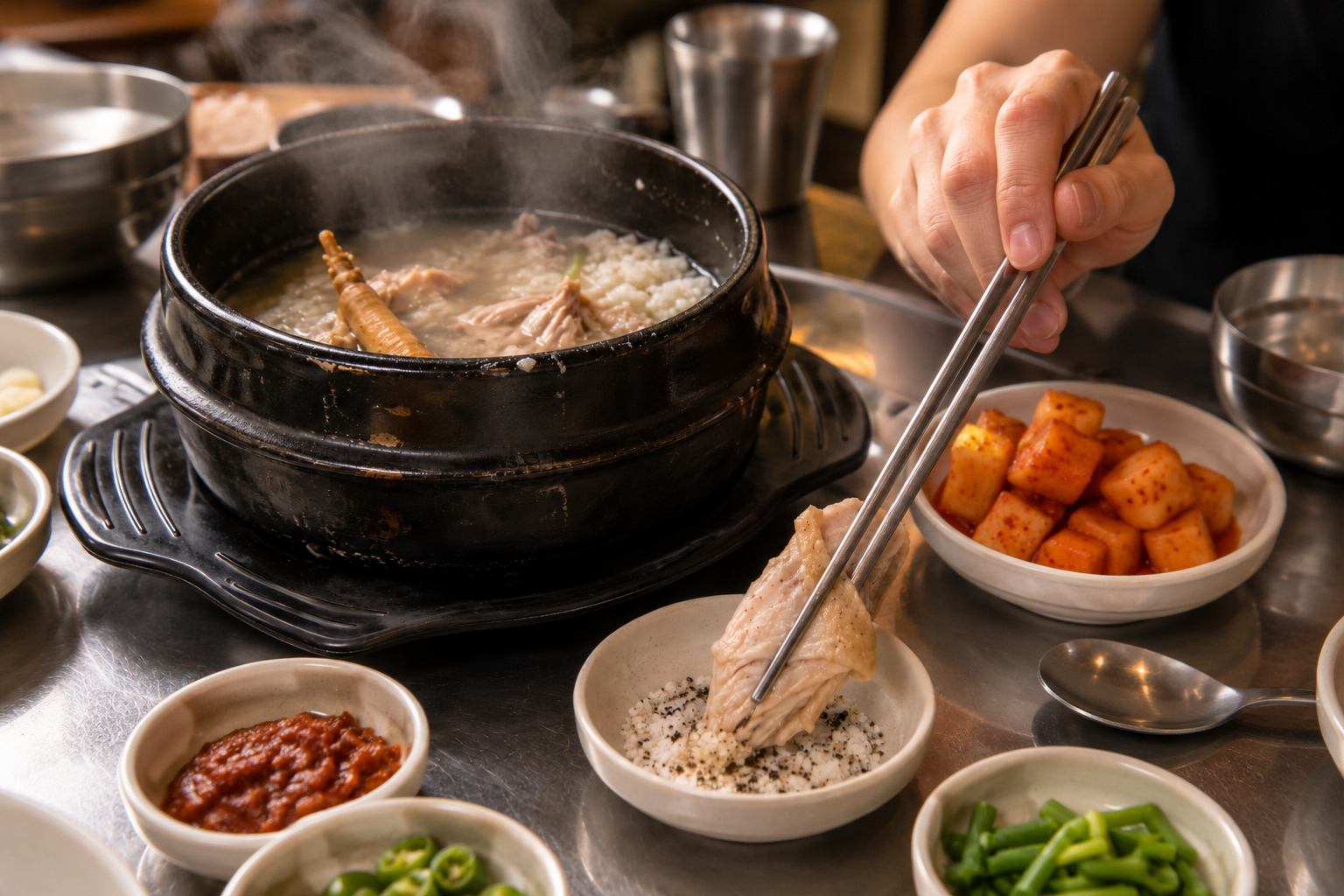
The broth comes unsalted. You season a small dish and dip, rather than salting the pot.
In Seoul the average bowl was 18,150 won as of May 2026, roughly 13 dollars, and the famous places clear 20,000. That is up 27 percent in five years, which locals complain about the way Americans complain about eggs.
Eating samgyetang in summer is not really a thermodynamics decision. It is fifty million people agreeing to be uncomfortable on the same afternoon, in the same way, on the theory that it is good for them. Then you walk back out into it, and the heat somehow reads as less.
#Summer wellness #Gut Health #Korean ginseng chicken soup #summerfood #samgyetang korea #Sambok #Warm food #A young bird (영계) #Samgyetang in summer