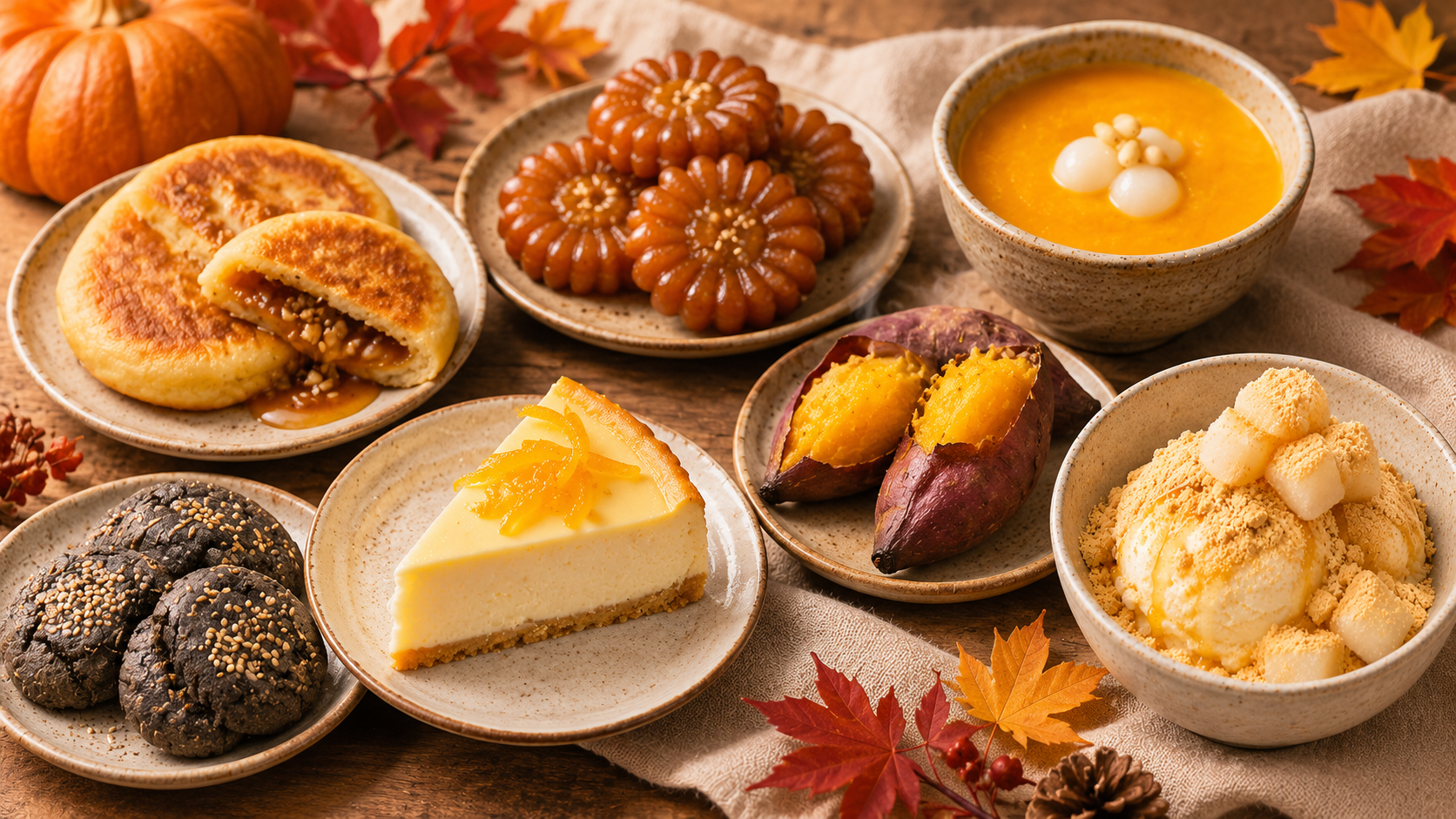
Seven Korean-inspired Thanksgiving desserts, from honey-soaked yakgwa to yuja cheesecake, with simple methods, make-ahead timing, and allergen notes for every one.
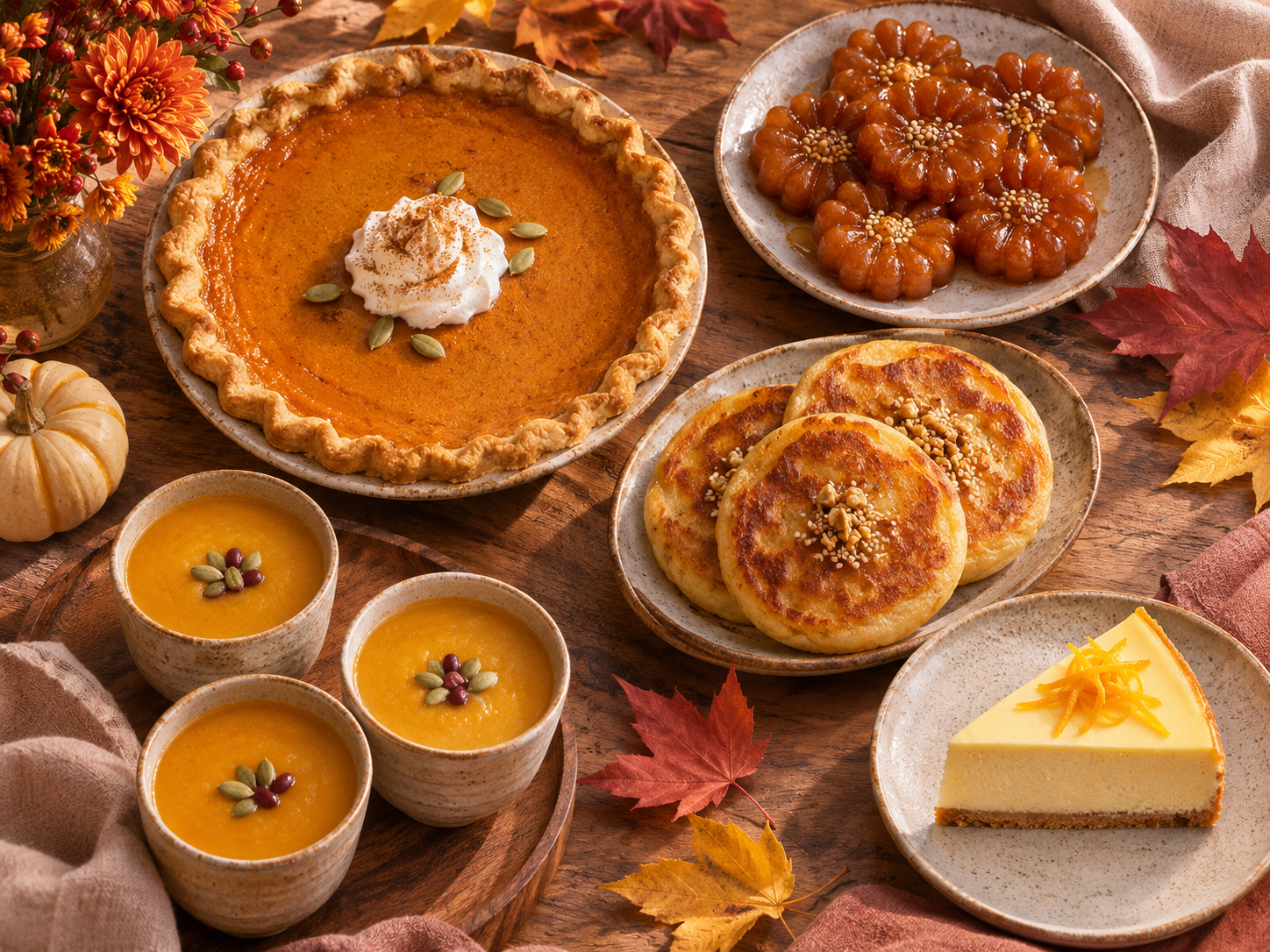
Pumpkin, pecan, apple, and a cheesecake if somebody's cousin is feeling ambitious. That is the American Thanksgiving dessert table, more or less, and it has earned its spot. But if you're hunting for desserts for Thanksgiving that taste like fall without being a fourth pie, the Korean pantry has more to offer than you'd guess.
Below are seven ideas. Three are traditional Korean sweets. Four are fusion desserts that drop Korean ingredients into formats Americans already bake. None of them are Thanksgiving traditions in Korea, which has its own fall harvest holiday, Chuseok. They're just good ideas for a November table.
Thanksgiving lands on November 26 this year. That leaves exactly enough time for a test batch.
Why Korean Flavors Make Sense After Turkey
Here's the thing: a lot of Korea's favorite sweet ingredients are cousins of what's already on your table.
Kabocha squash, called danhobak (단호박) in Korean, is denser and naturally sweeter than most pumpkins, and it's the base of Korea's pumpkin porridge. Korean sweet potato, goguma (고구마), has purplish red skin and pale yellow flesh with a mild chestnut flavor, which puts it in a different lane from the orange sweet potato hiding under the marshmallows. Yuja (유자), the fragrant citrus better known in the U.S. as yuzu, usually shows up here as yuja-cheong, a thick sugar preserve Koreans stir into hot water for tea. On a heavy dessert plate, it does what cranberry does for turkey. It wakes everything up.
Black sesame and roasted soybean powder, two nutty staples of old-school Korean sweets, have been reborn in Korean cafes as lattes, waffles, and shaved ice. They sit just fine next to pecan pie.
One practical note before the list. Several of these desserts contain sesame, soy, wheat, tree nuts, or dairy. Sesame has been one of the nine major food allergens under U.S. labeling law since January 1, 2023, so it's worth a heads-up to guests. Each dessert below lists what it contains.
7 Korean-Inspired Desserts for Thanksgiving
1. Hotteok (Traditional): Brown Sugar Filled Pancakes
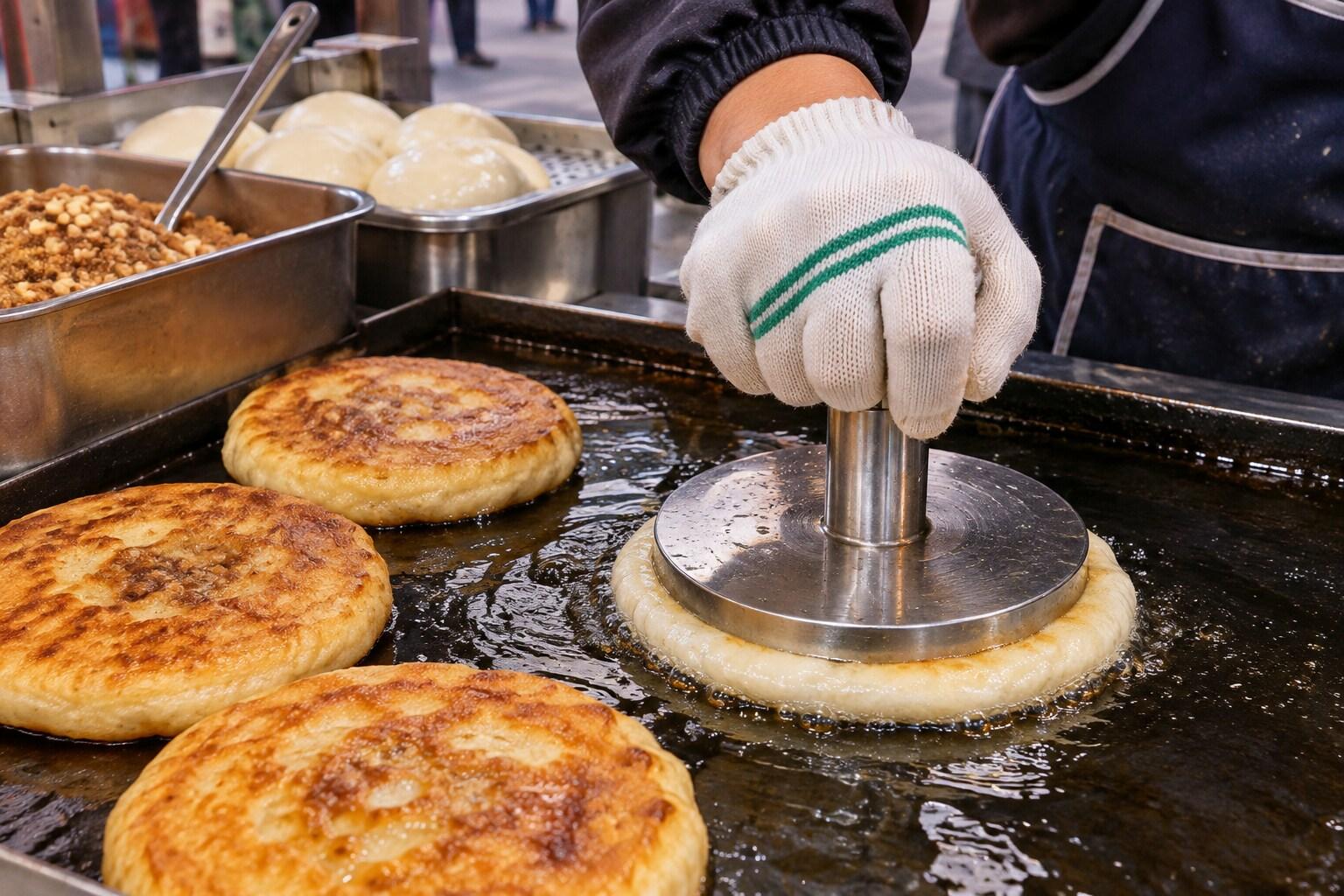
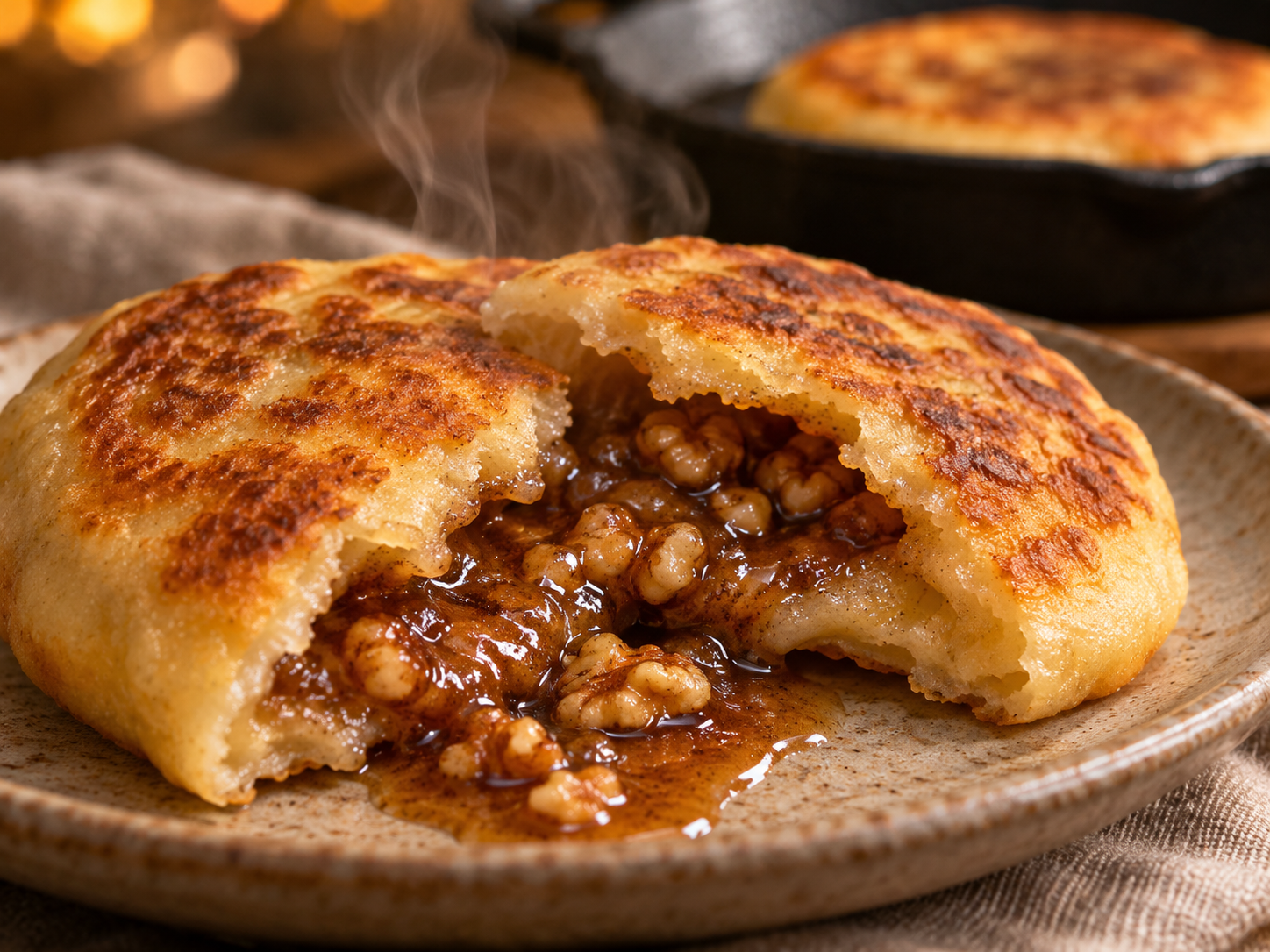
Hotteok (호떡) is Korea's winter street snack. A soft yeasted dough gets wrapped around brown sugar, cinnamon, and chopped nuts, then pan-fried and pressed flat until the filling melts into syrup. The idea is usually traced to Chinese merchants whose pancakes were mostly savory. Koreans swapped in sugar and never looked back.
How to make it: Mix flour, yeast, a little sugar, salt, oil, and warm water into a soft, sticky dough and let it rise. Wrap each piece around a spoonful of brown sugar, cinnamon, and walnuts, pinch it shut, and fry in an oiled pan, pressing it flat with a spatula after the first flip. Finish over low heat with a lid on so the sugar fully melts.
Time and effort: A little over two hours start to finish, and most of that is the dough rising. Moderate.
Make ahead: Mix the dough in the morning. Fry right before dessert, because hotteok is a hot-off-the-pan food. Warn people about the filling. It is molten.
Contains: wheat, tree nuts. Sunflower or pumpkin seeds make a nut-free filling.
2. Yakgwa (Traditional): Honey Cookies Soaked in Ginger Syrup
If any dessert here has real holiday credentials, it's this one. Yakgwa (약과) has long been made for feasts, holidays, and ancestral rites in Korea. It's a fried cookie built from wheat flour, sesame oil, honey, and ginger, then soaked in syrup until every layer turns glossy and a little chewy.
How to make it: Rub sesame oil into flour the way you'd work butter into pie dough. Add a mix of honey, ginger juice, and soju or rice wine, press it into a dough, and cut it into small shapes. Fry low and slow until deep brown, then drop the hot cookies into a ginger syrup made with rice syrup or honey and let them soak.
Shortcut: Korean grocery stores sell packaged yakgwa, usually in the bakery or rice cake section. A plate of store-bought yakgwa next to the pie needs no apology.
Time and effort: Roughly an hour of active work, plus soaking time. Moderate, mostly because of the frying.
Make ahead: Yes. Make it a day or two early. It keeps well, and leftovers can be frozen.
Contains: wheat, sesame. Pine nuts, a common garnish, are a tree nut. The dough also uses a splash of soju or rice wine.
3. Hobakjuk (Traditional): Kabocha Pumpkin Porridge
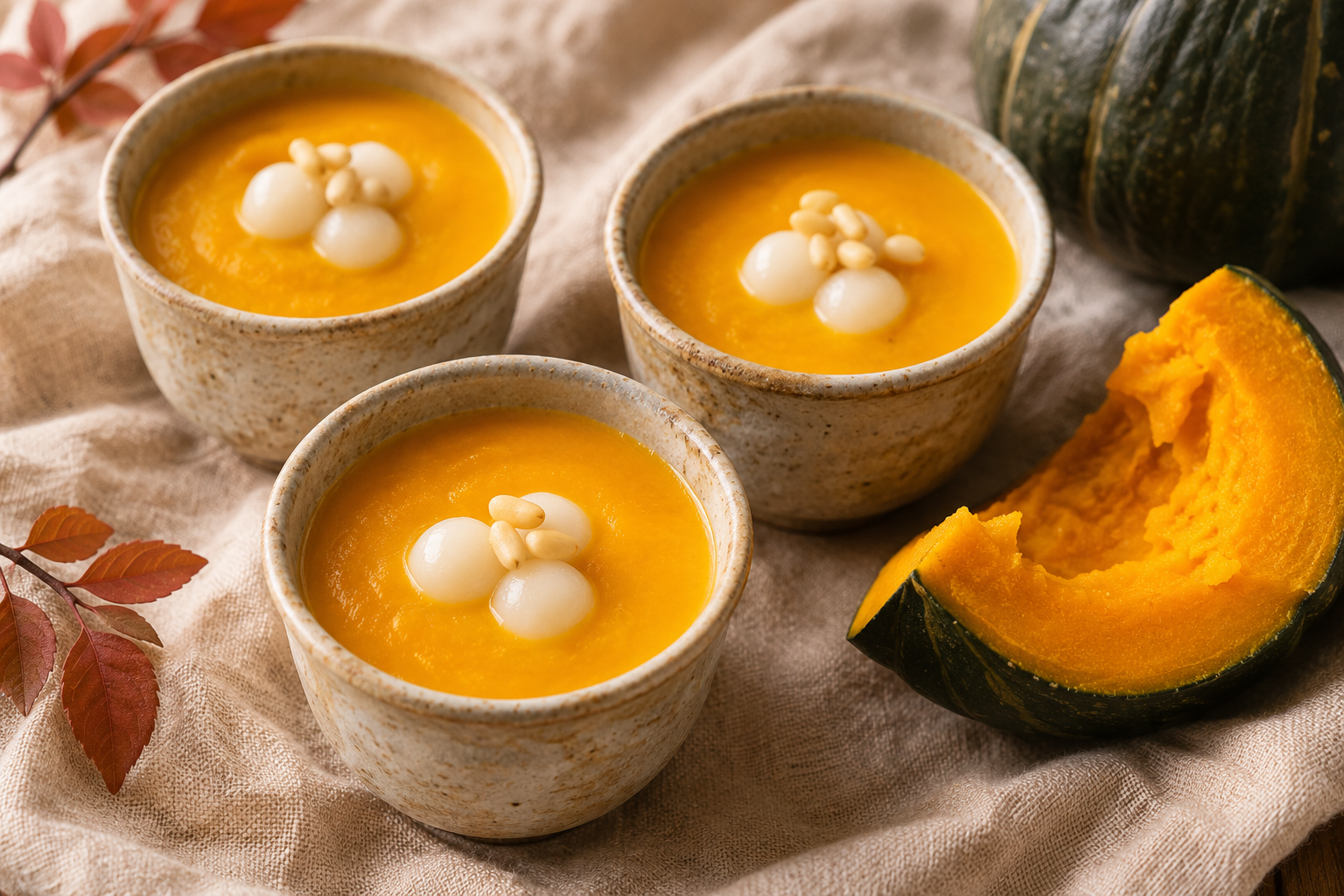
Pumpkin, but make it a spoon dessert. Hobakjuk (호박죽) is a smooth, golden porridge of kabocha cooked down and thickened with sweet rice flour, often dotted with chewy little rice balls. In Korea it's comfort food, traditionally served to people who are recovering or elderly, and eaten as a snack, a dessert, or even breakfast. Serve it in small cups after dinner and the pumpkin pie loyalists will understand immediately.
How to make it: Simmer or steam peeled kabocha chunks until soft, then blend them with some of the cooking water. Stir in sweet rice flour mixed with a little water, simmer until thick, and season with sugar and a pinch of salt. Butternut squash works if the kabocha bin is empty.
Time and effort: Under an hour if you use sweet rice flour. Easy.
Make ahead: It's good warm or chilled, so make it the day before. Loosen it with a splash of water when you reheat.
Contains: none of the major allergens in the basic recipe. Sweet rice flour is gluten-free despite the "glutinous" name. Skip the pine nut garnish for nut-allergic guests.
4. Black Sesame Cookies (Fusion)
Black sesame, heukimja (흑임자) in Korean, tastes toasty, nutty, and faintly bitter. Black sesame porridge has been around for generations, and the flavor has picked up a younger fan base through Korean cafes and packaged desserts. A butter cookie is the easiest way to get it onto a Thanksgiving table.
How to make it: Toast black sesame seeds, let them cool, and grind them fine, or buy black sesame powder. Replace a portion of the flour in your favorite shortbread or slice-and-bake sugar cookie recipe with the ground sesame, then roll the dough logs in whole seeds before slicing.
Time and effort: Same as whatever base recipe you pick. Easy.
Make ahead: Slice-and-bake dough freezes well, and baked cookies travel better than anything else on this list.
Contains: sesame, wheat, milk, and usually eggs, depending on the base recipe.
5. Yuja Cheesecake (Fusion)
Cheesecake is already a Thanksgiving regular. Yuja-cheong makes it the brightest thing on the table. Yuja-cheong is yuja fruit preserved in sugar, often at close to a one-to-one ratio, and Goheung, on Korea's southern coast, is among the fruit's best-known growing regions.
How to make it: Start with any classic baked cheesecake recipe. Chop the peel in a few spoonfuls of yuja-cheong and stir it into the batter, then spread more over the top once the cake has chilled. A little lemon zest in the filling sharpens things up if your jar runs sweet.
Where to buy: Look for jars labeled "citron tea" or "yuja tea" at Korean grocery stores. The English label says citron, but the fruit inside is yuja.
Time and effort: Moderate. Cheesecake is mostly waiting.
Make ahead: Yes, and it should be. Bake it the day before so it can chill overnight.
Contains: milk, eggs, and wheat if you use a graham cracker crust.
6. Korean Sweet Potato Tart (Fusion)
Roasted sweet potatoes are a classic winter snack, and goguma mattang, chunks of fried sweet potato in a crackly sugar glaze, is a favorite treat. This tart takes that roasted, chestnut-like flavor and gives it a crust.
How to make it: Roast Korean sweet potatoes until soft and caramelized at the edges. Mash the flesh with butter, a little sugar, cream, and an egg, pour it into a prebaked tart shell (store-bought is fine), and bake until set. Finish with chopped roasted chestnuts or a drizzle of honey.
Where to buy: H Mart and other Korean or Asian markets carry Korean sweet potatoes. Japanese sweet potatoes are the closest swap, since they share the purple skin and pale flesh.
Time and effort: Moderate.
Make ahead: Bake it the day before and serve at room temperature.
Contains: wheat, milk, eggs. Add tree nuts to the list if you use chestnuts.
7. Injeolmi Ice Cream (Fusion)
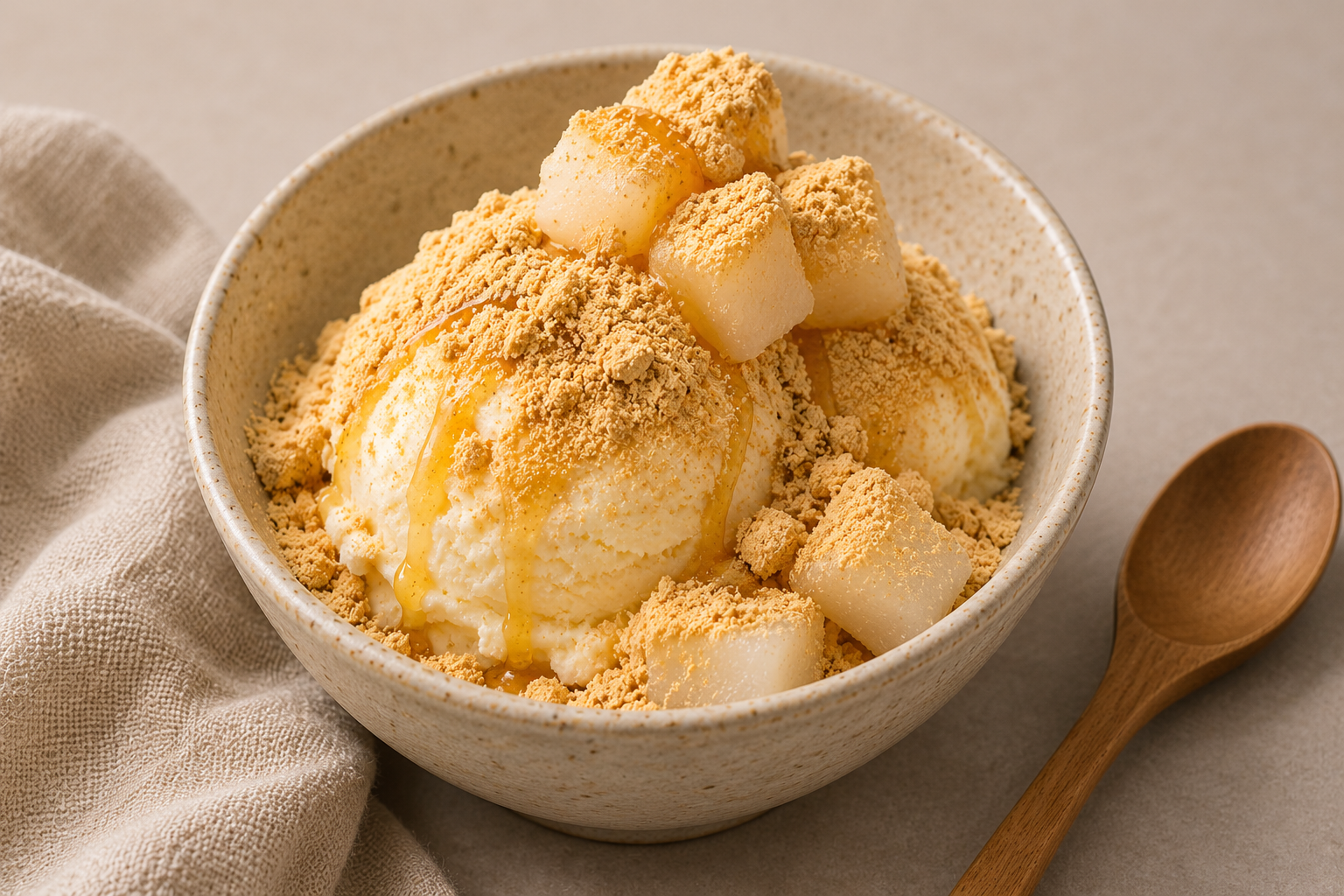
Injeolmi (인절미) is chewy glutinous rice cake rolled in roasted soybean powder, konggaru (콩가루), which tastes a little like peanut butter's quieter cousin. Korean cafes have put the flavor on everything from bingsu to toast. This version is the laziest dessert on the list, in the best way.
How to make it: Soften a tub of vanilla ice cream, fold in konggaru sweetened with a little sugar, and refreeze. Scoop it into bowls and top with bite-size pieces of injeolmi, an extra dusting of powder, and a drizzle of honey. Store-bought injeolmi works. Homemade takes sweet rice flour, water, and a microwave.
Time and effort: Easy. It's mostly assembly.
Make ahead: Mix the ice cream days ahead. Add the rice cake right before serving, because it hardens in the cold. Cut it small for young kids and older guests, since it's very chewy.
Contains: milk, soy.
Tips for Preparing Korean-Inspired Thanksgiving Desserts
A Korean grocery store like H Mart carries nearly everything on this list: sweet rice flour, konggaru, black sesame, yuja-cheong, rice syrup, kabocha, and Korean sweet potatoes. If there isn't one nearby, these swaps hold up:
- Kabocha: butternut squash
- Korean sweet potatoes: Japanese sweet potatoes
- Korean sweet rice flour: mochiko, the Japanese sweet rice flour
- Rice syrup in yakgwa: honey or corn syrup
- Soju: rice wine
Timing matters more than technique, and most of these can be made early:
- Several days out: mix the injeolmi ice cream and freeze the black sesame cookie dough.
- The day before: yakgwa, yuja cheesecake, sweet potato tart, and hobakjuk.
- Thanksgiving morning: make the hotteok dough.
- Right before dessert: fry the hotteok, cut the rice cake, and warm the porridge.
Pick by crowd. For a big group, black sesame cookies and yakgwa scale easily and don't even need plates. For a small table, hotteok straight from the pan is the most fun you can have with a skillet. Bringing dessert to someone else's house? Go with the cheesecake, the tart, or the cookies, and leave anything that needs a stove at home.
One last tip: put a small card next to each dessert with its name and main allergens.
Bring a Taste of Korea to Your Thanksgiving Table
You don't have to replace the pie. Put a plate of yakgwa beside it, or a pot of hobakjuk next to the pumpkin, and let the table sort it out. Someone will ask what the sticky honey cookie is. Someone else will go back for a third hotteok and pretend they didn't.
The pie will be fine. It always is.