A step-by-step japchae recipe for four: how to find the right sweet potato starch noodles, cook each vegetable separately, tell when the noodles are done, fix bland or clumped noodles, and store leftovers safely.
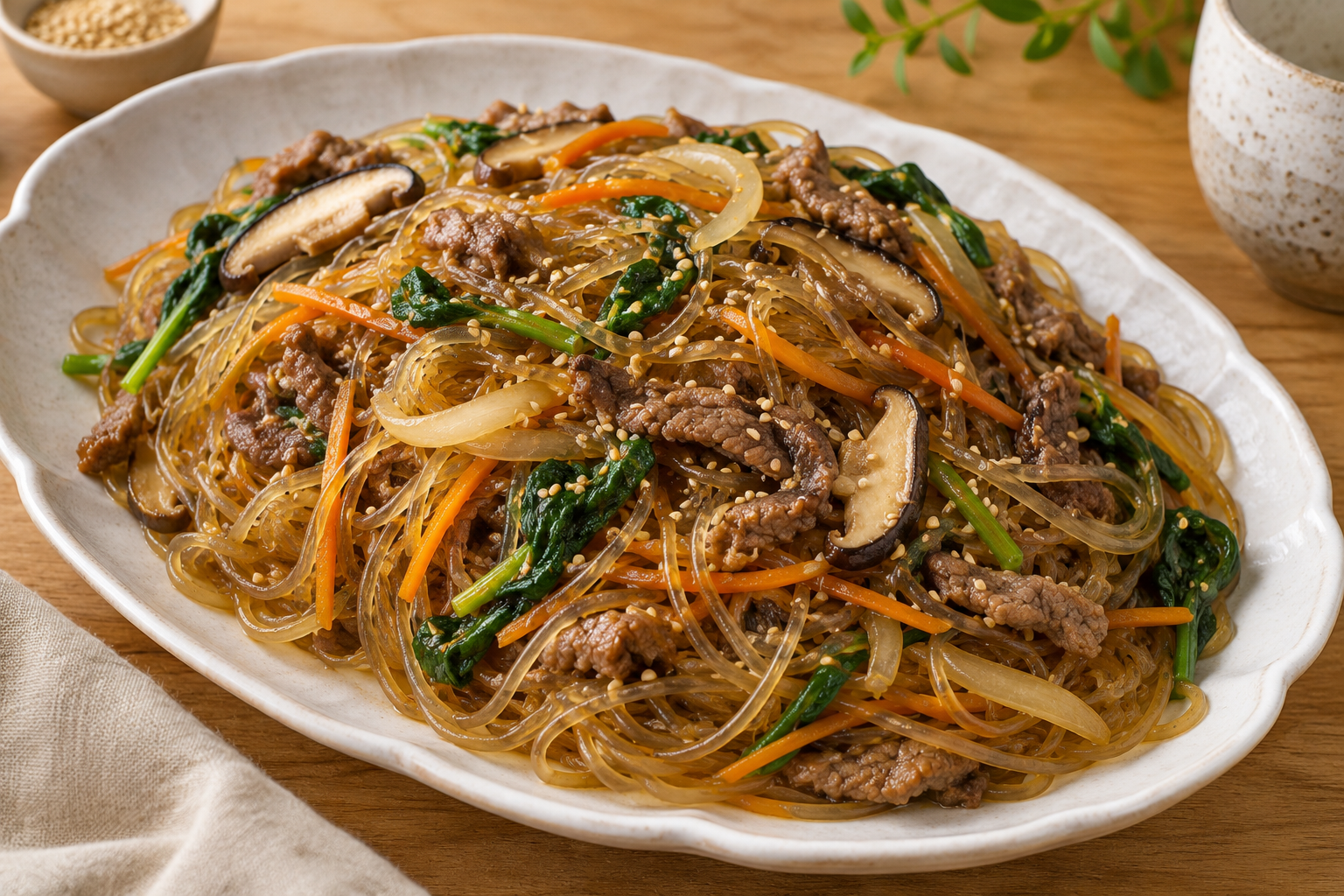
Japchae is a Korean dish of sweet potato starch noodles tossed with stir-fried vegetables, mushrooms and, if you like, thin strips of beef, all seasoned with soy sauce and sesame oil. If you have never eaten it, the texture is the first thing you notice. The noodles are springy and chewy, closer to a gentle bounce than to soft pasta. The seasoning is savory with a gentle sweetness, and toasted sesame oil gives the bowl a nutty aroma before you take the first bite.
This japchae recipe makes one standard batch: four servings as a side dish, or two to three as a main. Each vegetable is cooked on its own, and every step describes what "done" should look and feel like, because noodle thickness and stove heat vary too much for a timer to tell the whole story.
Start With the Right Noodles
The noodles are the one ingredient you may need to look for. In American stores they are usually labeled Korean sweet potato starch noodles, sweet potato glass noodles, or by their Korean name, dangmyeon. Some packages also say "japchae noodles" or "sweet potato vermicelli." Dry, they are grayish, stiff and slightly translucent. Cooked, they turn clear and glossy.
Be careful with packages that only say "glass noodles." That name covers transparent noodles made from several starches, including mung bean, potato and tapioca, and mung bean "bean thread" noodles in particular are thinner and softer than dangmyeon. They will not cook the same way or give the same chew. Turn the package over and read the ingredient list: for this recipe, sweet potato starch should be the main ingredient.
Ingredients
Serves 4 as a side dish, or 2 to 3 as a main
Estimated prep time: 25 minutes
Estimated cook time: 30 minutes
Estimated total time: 55 minutes (add about 5 minutes for the optional egg garnish)
For the japchae:
7 oz (200 g) dried Korean sweet potato starch noodles (dangmyeon)
6 oz (170 g) fresh spinach
1 medium carrot (about 3 oz / 85 g)
1 medium yellow onion (about 5 to 6 oz / 140 to 170 g)
4 oz (115 g) fresh shiitake mushrooms
2 1/2 tbsp neutral cooking oil, such as canola or vegetable oil, divided
About 1/2 tsp kosher salt, used in pinches
1 tbsp toasted sesame seeds
For the sauce:
1/4 cup (4 tbsp) regular soy sauce
2 1/2 tbsp sugar, white or light brown
2 tbsp toasted sesame oil
1 tbsp minced garlic (about 3 cloves)
1/2 tsp ground black pepper
Optional beef:
6 oz (170 g) ribeye or sirloin steak
The beef is seasoned with 1 tablespoon of the sauce above, so it needs nothing extra. If you leave it out, that tablespoon goes into the final toss instead.
Optional egg garnish:
1 large egg
1 small pinch kosher salt
1/2 tsp neutral cooking oil
Before You Turn On the Stove
Mix the sauce first. Stir the soy sauce, sugar, sesame oil, garlic and black pepper together in a small bowl until the sugar has mostly dissolved. You will use it in three places: 1 tablespoon for the beef, 2 tablespoons for the noodles right after they drain, and everything that is left for the final toss. Measure the beef portion into a separate bowl with a clean spoon before it touches the raw meat. Keep the remaining sauce separate, and stir it again before each use.
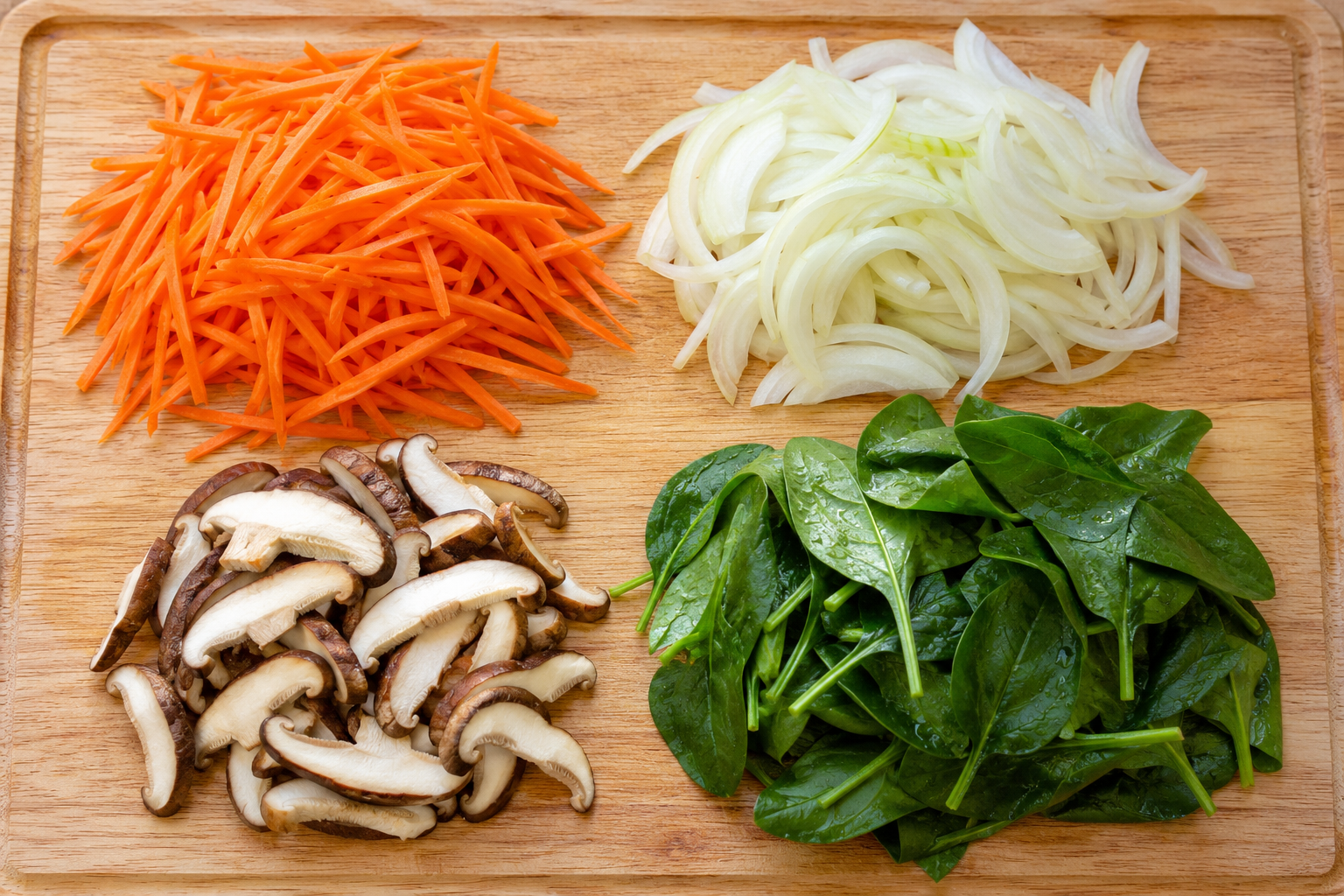
The cutting matters more than it might seem. Japchae is eaten in tangled bites, and vegetables cut to roughly the length of a short piece of noodle mix in evenly instead of sinking to the bottom of the bowl.
Carrot: peel and cut into matchsticks about 2 1/2 inches long and 1/8 inch thick.
Onion: halve it through the root end, then slice into strips about 1/4 inch wide.
Shiitake: remove the tough stems and slice the caps 1/4 inch thick.
Spinach: rinse well and trim off any thick stem ends. Leave the leaves whole for now.
Beef, if using: slice across the grain into pieces about 1/8 inch thick, then cut those into strips about 2 1/2 inches long. Cutting across the grain shortens the muscle fibers, so thin strips stay tender after a quick sear. Toss the strips with 1 tablespoon of the sauce and keep them covered in the refrigerator while you prepare everything else.
How to Make Japchae
This recipe cooks each vegetable separately. It takes a few extra minutes, but onion, carrot, mushrooms and beef cook at different speeds. An overcrowded pan makes it harder to control each vegetable’s texture and evaporate the liquid released by the mushrooms. Water is the quiet problem in homemade japchae. Spinach that has not been squeezed, or vegetables carried over with their juices, thin out the sauce and leave the noodles slippery and soft instead of chewy, so several steps below are really about keeping water out of the bowl.
1. Make the egg garnish, if using. Beat the egg with the pinch of salt. Heat the 1/2 teaspoon of oil in a nonstick skillet over low heat, pour in the egg and tilt the pan so it spreads into a thin sheet. Cook until the top is no longer wet, flip it and cook until both sides are set, then slide it onto a cutting board. Once it cools, roll it up and slice it into thin strips. This thin egg garnish is called jidan.
2. Blanch the spinach. Bring a large pot of water to a boil. You will use the same water for the noodles later, so keep a lid nearby. Add the spinach and cook for 30 seconds to 1 minute, just until the leaves wilt and turn bright green. Lift it into a bowl of cold water with tongs or a slotted spoon, then cover the pot and keep the water hot. When the spinach is cool, squeeze it hard with both hands, then squeeze again. It should feel like a compact, damp ball with no water dripping from it. Cut it two or three times and toss it with a small pinch of salt.
3. Cook the onion and carrot. Heat 1/2 tablespoon of the cooking oil in a large skillet over medium-high heat. Add the onion with a pinch of salt and cook for 2 to 3 minutes, stirring, until the strips look translucent at the edges but still bend with a little resistance. Move them to a large plate or sheet pan and spread them out rather than piling them up. Add another 1/2 tablespoon of cooking oil and the carrot with a pinch of salt. Cook for 1 to 2 minutes, until the color brightens and the sticks are flexible but still have a slight crunch, then spread them out next to the onion.
4. Cook the mushrooms. Add 1 tablespoon of cooking oil and the shiitake with a pinch of salt. Cook for 2 to 3 minutes, until they soften and darken. Mushrooms release liquid as they cook, so keep stirring until that liquid has cooked off and the pan looks dry again before moving them to the plate.
5. Cook the beef, if using. Add the last 1/2 tablespoon of cooking oil and the marinated beef. Spread it in a single layer and cook for 2 to 3 minutes, stirring once or twice, until cooked through. Use a thin-tip food thermometer to check the thickest strip for at least 145°F (63°C), then allow a 3-minute rest before eating. Color alone cannot confirm a safe temperature. Transfer the strips to a clean plate using clean tongs and leave any liquid behind in the pan.
6. Cook the noodles. Bring the pot of water back to a full boil and add the noodles. Some dangmyeon cooks in about 6 to 8 minutes, but thickness varies by brand, so follow the package and start testing a minute or two early. Pull out a strand, let it cool enough to taste, and bite it. The noodles should be tender and chewy throughout, with no hard center. Their glossy, translucent appearance is a useful visual cue, but tasting a strand is the better check. If the center still feels firm, cook for another minute and test again.
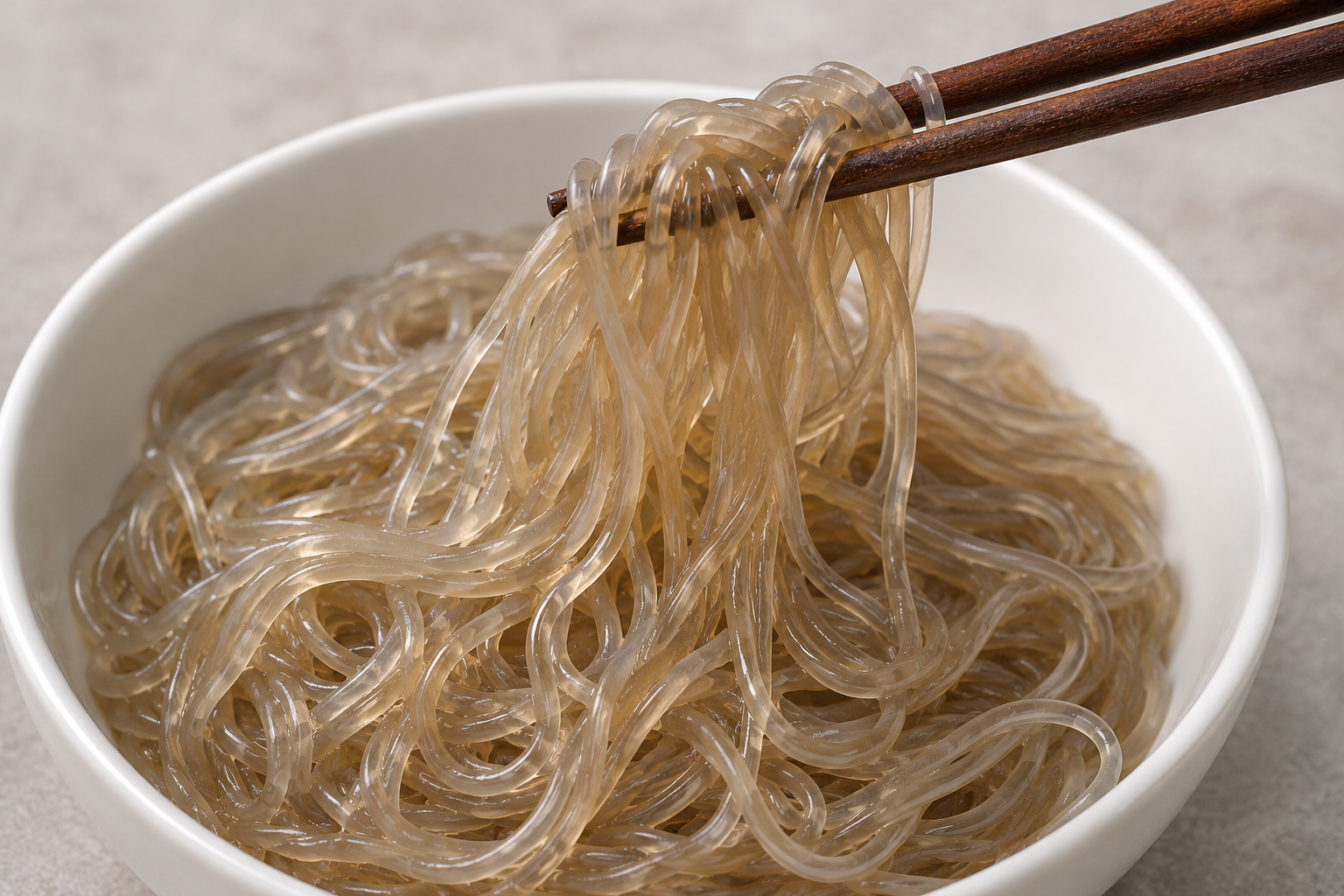
7. Rinse, cut and season the noodles. Drain the noodles, rinse them briefly under cold running water to wash off surface starch, and shake the colander until they stop dripping. Snip through them two or three times with kitchen scissors so they are easier to mix and eat. Put them in a large bowl and toss them right away with 2 tablespoons of the sauce. The sesame oil in the sauce helps coat the strands and reduce sticking.
8. Toss everything together. Add the spinach, onion, carrot, mushrooms and beef to the noodles, leaving behind any liquid that has collected on the plate. Pour in the rest of the sauce and add the sesame seeds. Toss with tongs, or with gloved hands, lifting and loosening rather than pressing down, until the vegetables are spread evenly through the noodles and every strand looks glossy and lightly brown. Taste a bite with some vegetables in it, adjust if needed, and top with the egg strips just before serving.
If It Tastes Flat or the Noodles Clump
Taste before adjusting. If it needs more saltiness, add 1/2 teaspoon of soy sauce beyond the amount listed. If it needs more sweetness, add 1/2 teaspoon of sugar. Toss thoroughly and taste again after each addition. Adding a large splash at once is the quickest way to make the dish too salty, which is much harder to correct.
If the noodles have stuck together, do not pull at the clump, because the strands tear easily. Loosen it gently with your fingers or two forks while the noodles are still pliable. If freshly made noodles have stiffened, gently warm them in a skillet over medium-low heat with a teaspoon or two of water, then toss again. For refrigerated leftovers, follow the reheating temperature below.
Vegetarian, Vegan and Gluten-Free Versions
For a vegetarian japchae, skip the beef and step 5. Use 2 tablespoons of cooking oil in total instead of 2 1/2, and add the tablespoon of sauce you would have used on the beef to the final toss.
For a vegan version, leave out the egg garnish as well, and read the labels on your soy sauce and any other bottled seasoning you use to make sure nothing in them is animal-derived.
For a gluten-free version, the noodles are only part of the question. Choose noodles specifically labeled gluten-free and check the other packaged ingredients too. Regular soy sauce is usually brewed with wheat, so use a soy sauce or tamari that is specifically labeled gluten-free, since not every tamari is. Check any other packaged seasoning the same way.
Serving It, and Storing Leftovers
As a side dish, japchae goes on the table in a modest portion alongside rice and other banchan, the small shared dishes of a Korean meal, and it is good warm or at room temperature. For a one-dish meal, serve a larger portion, with or without beef, and add rice and kimchi on the side if you want more on the plate.
For leftovers, divide the japchae into shallow containers and refrigerate within 2 hours, or within 1 hour if the surrounding temperature is above 90°F (32°C). Keep the refrigerator at 40°F (4°C) or below, cover the containers, and eat the leftovers within 3 to 4 days. The noodles firm up and lose their gloss in the fridge, which is normal. Reheat in the microwave, covered, with a teaspoon of water sprinkled over the top, stirring partway through, or in a skillet over medium heat. Either way, use a food thermometer to check that it reaches 165°F (74°C) in several places.
Japchae asks for order more than skill. Once the vegetables are cut and the sauce is mixed, the rest is a series of short steps, and the noodles will tell you when they are ready if you take a bite.