A practical guide to bibimbap ingredients: which vegetables, proteins, and sauces to use, what must be cooked, easy U.S. grocery swaps, and how to build vegan or non-vegan bowls from what you already have.
Bibimbap means "mixed rice": bibim refers to mixing, and bap means cooked rice. The basic formula is a bowl of warm rice topped with several vegetables, usually a protein, a sauce, and a few finishing touches, all stirred together just before eating. There is no fixed list of bibimbap ingredients that every bowl must include. A good bowl can be built from what is already in your refrigerator, as long as each ingredient is prepared properly and the flavors are balanced.
For a home bowl, start with the rice and safely stored vegetables or side dishes you already have. The useful skill is knowing how to prepare each ingredient and how to combine them so the bowl tastes balanced rather than random.
The five building blocks of a bibimbap bowl
Rice. Korean short- or medium-grain white rice is a familiar base because it stays soft and slightly sticky when mixed. Brown rice and mixed-grain rice also work. Safely stored leftover rice is another option; reheat it thoroughly before serving.
Vegetables. Choose a few kinds with different textures and colors. Preparing and lightly seasoning them separately helps each keep its own character, but there is no required number.
Protein. Beef, egg, and tofu are common. A separate protein topping is optional, and a bowl can be built without meat or eggs.
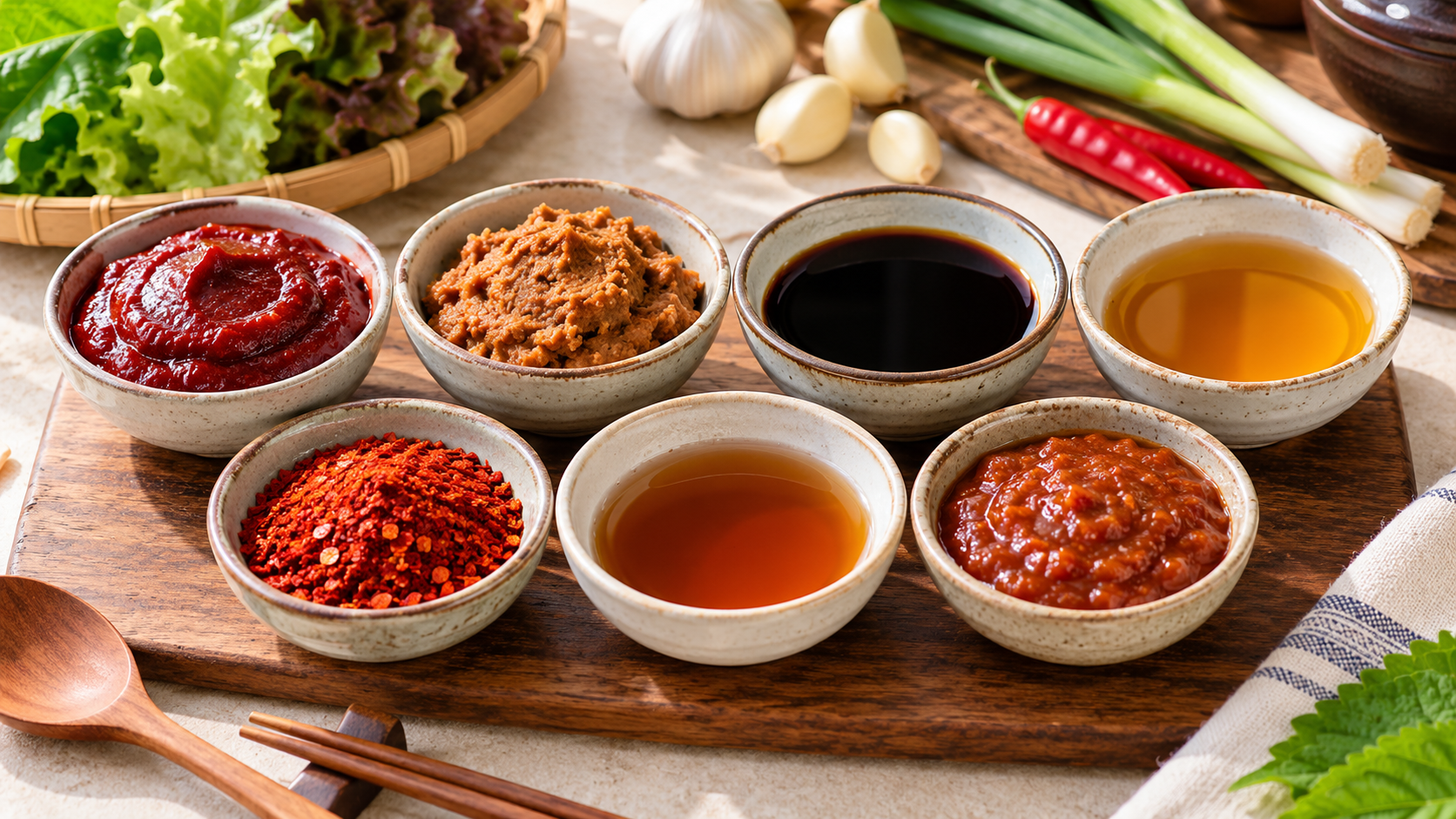
Sauce. A gochujang-based sauce is the most familiar, but a soy and sesame sauce is a good alternative when you want less heat.
Garnish. Toasted sesame seeds, a drizzle of sesame oil, sliced scallions, or strips of roasted seaweed (gim) add aroma at the end.
Common bibimbap vegetables and how to prepare them
Many familiar bibimbap toppings are cooked and lightly seasoned. Namul refers to seasoned vegetable dishes, which may be blanched, sautéed, or prepared in other ways depending on the ingredient. Salt, garlic, and sesame oil are common seasonings, not a required formula for every vegetable. Here are some useful starting points.
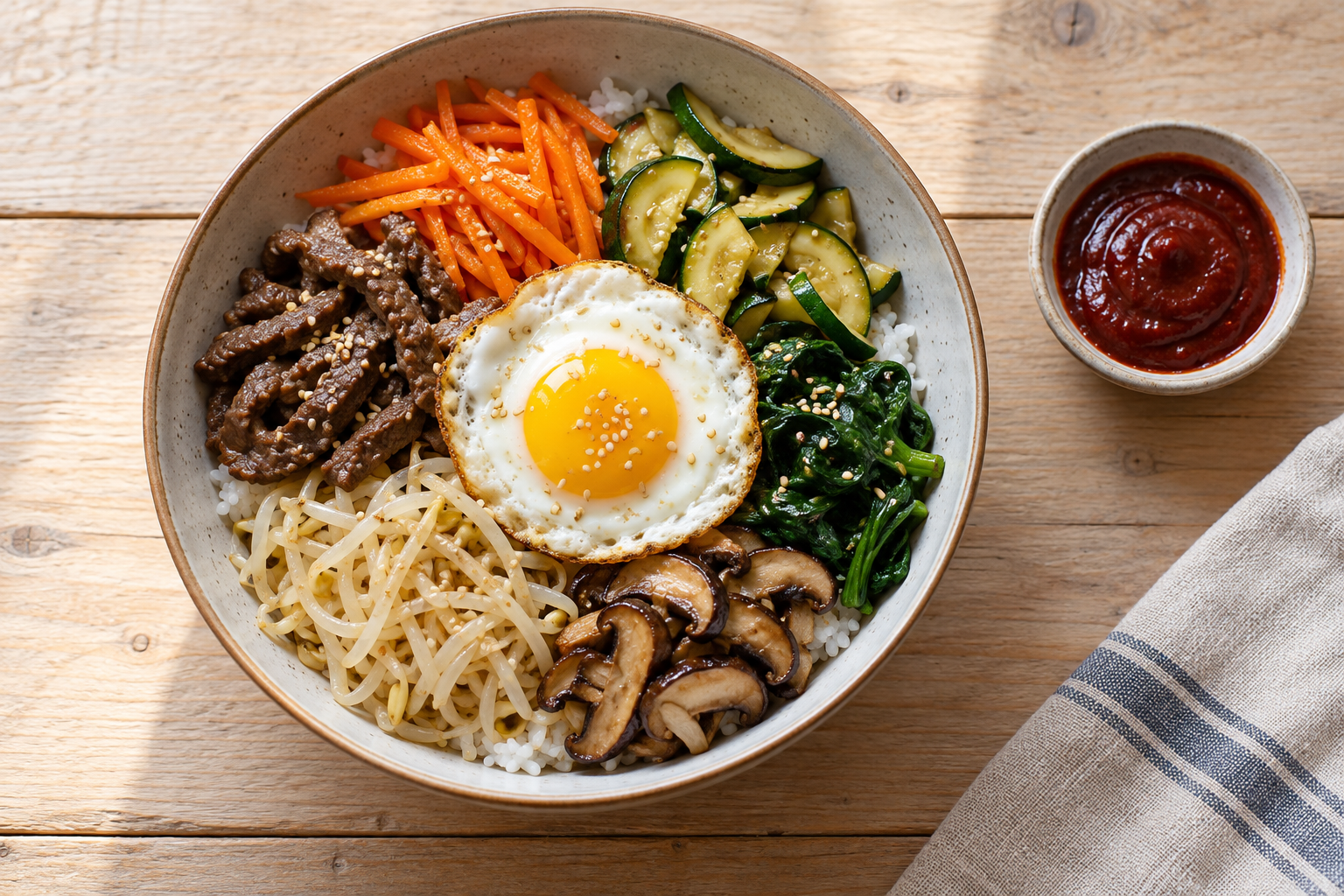
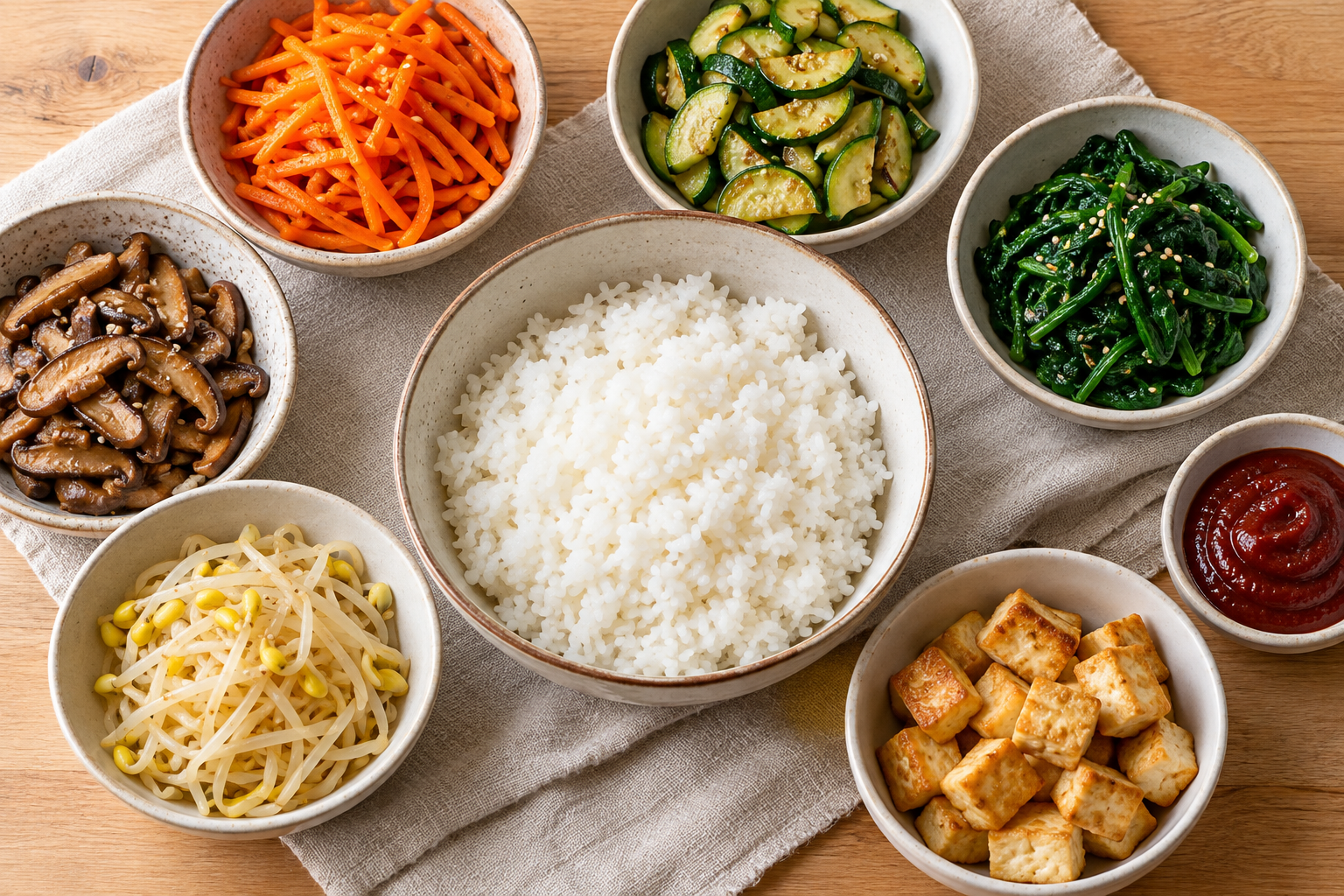
Spinach. Blanch just until wilted, rinse in cold water, then squeeze out excess water before seasoning. Baby spinach is an easy substitute for larger spinach leaves; adjust the cooking time to the leaves rather than following a fixed number of seconds.
Carrot. Cut into thin matchsticks and sauté briefly with a pinch of salt until just tender. Carrot can also be used raw if it is cut very thin.
Korean squash or zucchini. Korean squash, often labeled aehobak, is available at Korean grocery stores; regular zucchini is an easy substitute. Cut into matchsticks or half-moons and sauté quickly so it stays firm.
Mushrooms. Shiitake are traditional. Cremini or white button mushrooms from a regular grocery store are easy swaps. Sauté until their liquid has cooked off.
Bean sprouts. Korean cooks usually use soybean sprouts (kongnamul), which have a large yellow head and are sold at Korean and many Asian grocery stores. Mung bean sprouts can replace them and may be available at a nearby supermarket or Asian grocery store. For this guide, cook either kind thoroughly before adding it to the bowl.
Other options. Cucumber, lettuce, radish, cabbage, kale, bell pepper, or broccoli can all fit, depending on what you have.
Which ingredients can be raw and which must be cooked
Fine to use raw: cucumber, lettuce and other salad greens, and very thinly sliced carrot or radish. Wash fresh produce under running water first.
Ready to eat as is: kimchi and roasted seaweed.
Cook thoroughly: soybean and mung bean sprouts. Spinach, zucchini, and mushrooms are usually cooked in this style of bibimbap for flavor and texture. Washed spinach and thinly sliced zucchini can also be used raw; sautéing common culinary mushrooms is an easy option for this bowl. Dried gosari requires separate preparation; follow the product instructions.
Use cooked meat and eggs in these home-bowl examples. U.S. guidance sets 145°F (63°C), with a 3-minute rest, for beef steaks, roasts, and chops; ground beef needs 160°F (71°C). Cook eggs until both the white and yolk are firm.
Raw or lightly cooked sprouts can carry harmful bacteria. The FDA advises children, older adults, pregnant people, and people with weakened immune systems to avoid them. Thorough cooking reduces that risk.
Some versions use seasoned raw beef or raw egg yolk. Freshness alone does not remove the risks of raw animal foods, so the examples here use cooked meat and fully cooked eggs.
Choosing a protein, or skipping it
Beef. Thinly sliced steak or ground beef, seasoned with soy sauce, garlic, a little sugar, and sesame oil, is a familiar choice. Leftover bulgogi works especially well.
Egg. A fried egg is a familiar topping. Some versions use a runny yolk, but this guide follows the fully cooked egg guidance above.
Tofu. Extra-firm tofu, pressed and pan-fried until golden, gives a meat-free bowl substance. A little soy sauce adds seasoning; check the label if you need a gluten-free version.
Other leftovers. Cooked chicken, pork, or shrimp can also go into a home bowl.
A separate meat, egg, or tofu topping is optional. For a meat-free bowl with a protein-rich topping, tofu is a useful choice, while mushrooms add savory flavor and texture.
How to combine ingredients so the bowl works
Not every combination works automatically. Four things decide whether a bowl tastes balanced.
Color. Korean cooking pays attention to color in this dish. A mix of green, orange, white, and dark ingredients usually also means a mix of flavors.
Texture. Pair soft ingredients like spinach and zucchini with something crisp, such as bean sprouts, cucumber, or carrot. A crispy fried egg edge or crunchy seaweed helps too.
Seasoning. Each vegetable should be seasoned lightly. Most of the final flavor should come from the sauce, which you add at the table.
Moisture. Water dilutes the sauce and makes rice mushy. Squeeze blanched spinach, cook mushrooms until dry, drain sprouts well, and leave kimchi juice in the jar.
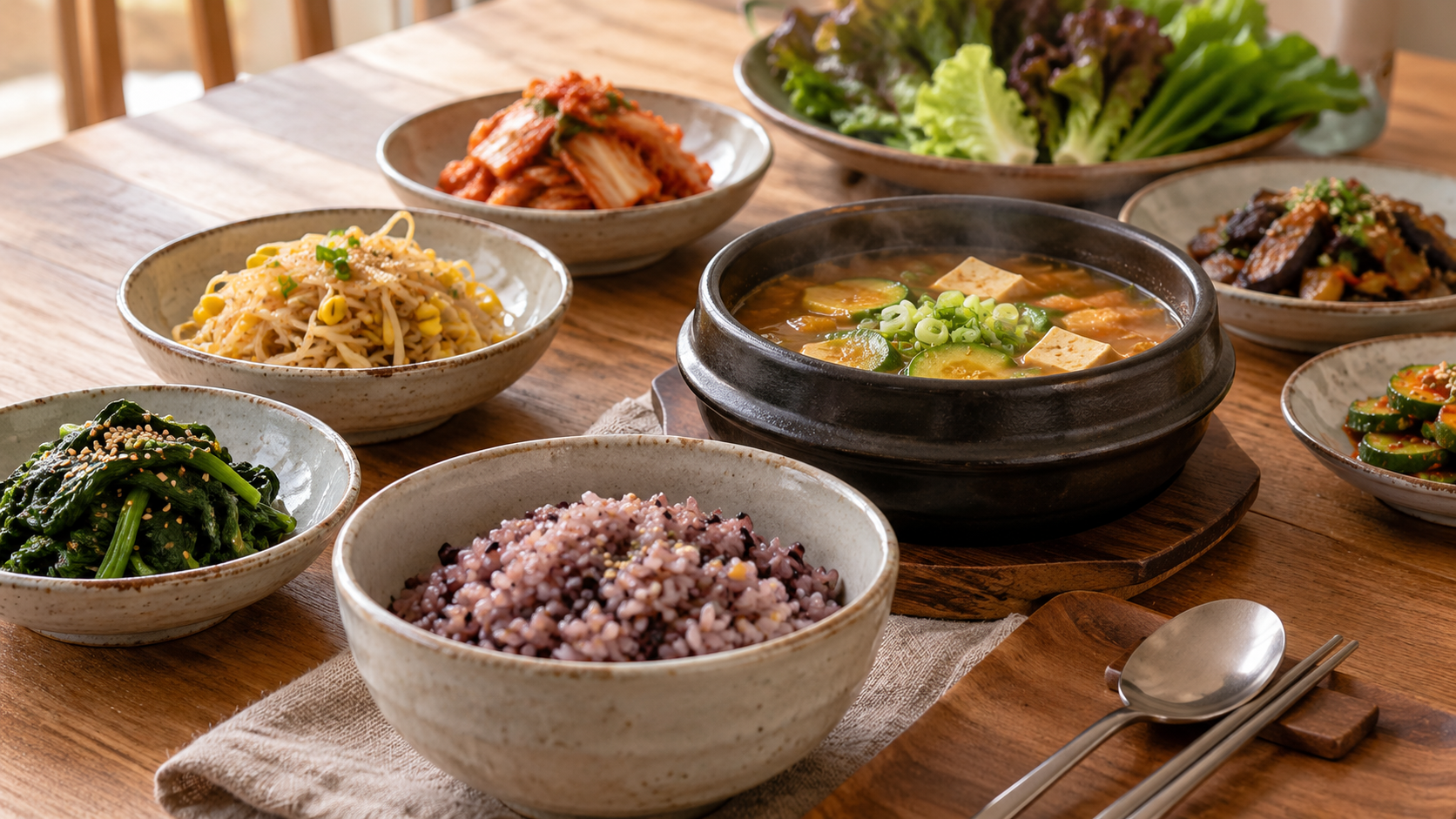
Using banchan that is already seasoned
If you are using leftover banchan, or Korean side dishes, from a meal or store-bought namul, remember that each one already carries salt and seasoning. Their saltiness varies, so taste them before adding more seasoning. In that case, use little or no extra salt when preparing the remaining toppings, start with about half the usual sauce, mix, taste, and only then add more. Strongly flavored banchan such as kimchi is better used in small amounts so it does not overpower everything else in the bowl.
A simple gochujang sauce
This makes enough for about two bowls.
2 tablespoons gochujang
1 tablespoon toasted sesame oil
1 tablespoon water
2 teaspoons sugar or maple syrup; honey is another option for non-vegan bowls
1 teaspoon rice vinegar
1/2 teaspoon minced garlic
1 teaspoon toasted sesame seeds
Stir everything in a small bowl until smooth. Add more water, a teaspoon at a time, if you want a looser sauce that mixes into the rice more easily.
For a less spicy bowl, choose a milder gochujang, start with less sauce, and serve extra on the side. Check the product label for any heat-level guidance. Adjust water, sweetness, and sesame oil to taste; the bowl will still contain chili if you use gochujang. For a no-chili option, use the soy and sesame sauce below.
If you do not want gochujang at all, try a soy and sesame sauce: 1 tablespoon soy sauce, 1 tablespoon toasted sesame oil, 1 teaspoon sugar, 1 teaspoon toasted sesame seeds, and a tablespoon of chopped scallion. It is savory rather than spicy and works well with mushrooms, tofu, and egg.
Three combinations to try
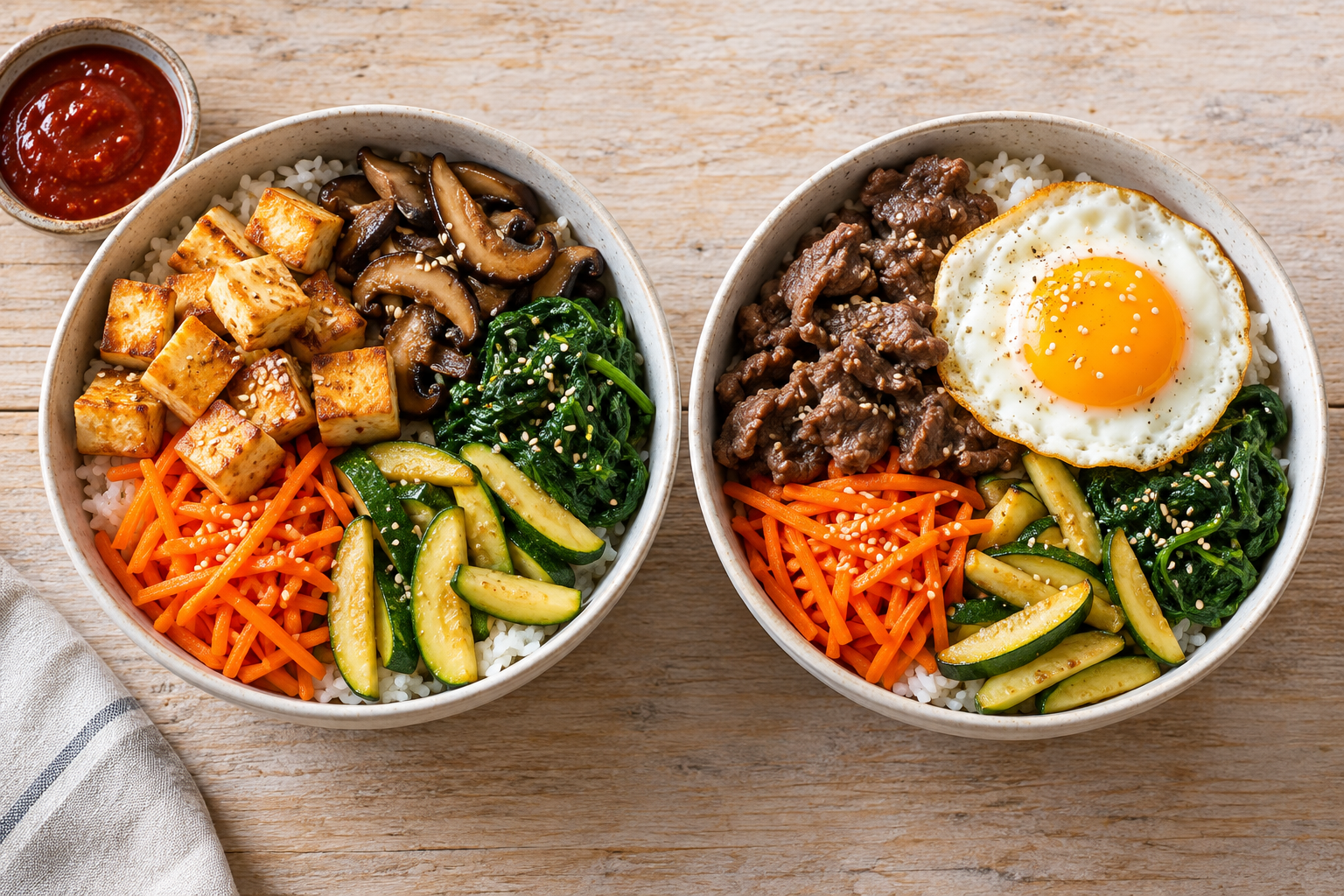
A basic bowl: rice, spinach, carrot, zucchini, shiitake, bean sprouts, seasoned beef, a fried egg, and the gochujang sauce. This is close to what many people picture when they order bibimbap at a restaurant.
A leftover bowl: rice, last night's bulgogi or roast chicken, sautéed greens, raw cucumber, a little kimchi, and a fried egg, with about half the usual sauce because the leftovers are already seasoned.
A meat-free bowl: rice, pan-fried tofu, sautéed mushrooms, spinach, carrot, bean sprouts, and either sauce. For a vegan version, omit egg, use sugar or maple syrup instead of honey, and check every sauce and seasoning for animal-derived ingredients.
Before using leftovers, check storage time and temperature. Refrigerate cooked rice and other perishable leftovers within 2 hours, or within 1 hour above 90°F (32°C), in a refrigerator at 40°F (4°C) or below. Use refrigerated leftovers within 3 to 4 days and reheat to 165°F (74°C), checking with a food thermometer. Normal smell or appearance does not prove safety; discard food with an uncertain storage history.
Do you need gosari, beef, egg, or a stone bowl?
No. These are common in traditional and restaurant bibimbap, but none of them is required.
Gosari, also called bracken or fernbrake, is used in some versions for its earthy flavor and texture. If you buy it dried, follow the package instructions for soaking and thorough cooking. A pre-soaked product may still need cooking; check its directions. It is optional, and a first-time home bowl does not need it.
Beef and egg are popular, and a bowl without them is still bibimbap.
Dolsot bibimbap is served in a heated stone bowl that crisps the rice on the bottom and keeps the dish hot longer. A regular bowl works perfectly well at home.
Traditional and restaurant versions often follow a recognizable set of vegetables and toppings. Everyday home versions vary with the season, the refrigerator, and personal taste, and they also vary from household to household in Korea. The combinations in this guide are home-style examples, not a claim that one ingredient list is the only authentic version.
Making bibimbap vegan, or not
Bibimbap works for vegans and non-vegans at the same table when the rice, toppings, sauces, and seasonings are chosen for each person’s dietary needs. For a vegan bowl, build around tofu, mushrooms, and vegetables. For everyone else, add beef, egg, or another protein to individual bowls according to preference.
Removing meat and egg is the obvious step. The sauces and seasonings need the same attention.
Kimchi is often made with fish sauce, salted shrimp, or other fermented seafood (jeotgal). Look for kimchi labeled vegan, or leave it out.
Marinades and store-bought sauces can include fish sauce, oyster sauce, or beef stock.
Honey is used in some sauces. Swap in sugar or maple syrup.
Gochujang and soy sauce vary by product. Read the ingredient list rather than assuming.
The same caution applies to gluten. Gochujang may contain wheat or barley-derived ingredients, and many regular soy sauces contain wheat. For a gluten-free bowl, choose appropriately labeled sauces and check the other ingredients and preparation surfaces for cross-contact. A meat-free or vegan bowl is not automatically gluten-free.
Frequently asked questions
What are the basic ingredients in bibimbap?
Rice, several cooked and seasoned vegetables, an optional protein such as beef, egg, or tofu, a sauce, and a garnish like sesame seeds or seaweed. Spinach, carrot, zucchini, mushrooms, and bean sprouts are among the most common vegetables.
Can you put raw vegetables in bibimbap?
Some, yes. Cucumber, lettuce, and thinly sliced carrot or radish can be used raw. Cook soybean and mung bean sprouts thoroughly. Spinach, zucchini, and common culinary mushrooms are usually cooked in this style of bibimbap for flavor and texture; washed spinach and thinly sliced zucchini can also be used raw.
What can I use instead of gochujang?
A soy and sesame sauce is a simple non-spicy alternative. For less heat rather than no heat, choose a milder gochujang and start with less sauce.
Can I make bibimbap with leftovers?
Yes, as long as the leftovers have been refrigerated promptly and are still within a safe window, generally 3 to 4 days. Reduce the sauce if the leftovers are already seasoned.
Is bibimbap vegan?
It can be, but it is not automatically vegan. Remove meat and egg, and check the kimchi, sauces, and seasonings for animal-derived ingredients.