If you've ever watched someone spend $200 on ten copies of the same album, you might have raised an eyebrow. But if you're a K-pop fan, you understand completely. K-pop albums are not simply about the music disc tucked inside — they are collectible packages, surprise boxes, and emotional artifacts all at once. In an age where streaming has made music nearly free, K-pop has quietly redefined what a physical album is even for.
ㅤㅤㅤㅤㅤㅤㅤㅤ
What's actually inside a K-pop album?
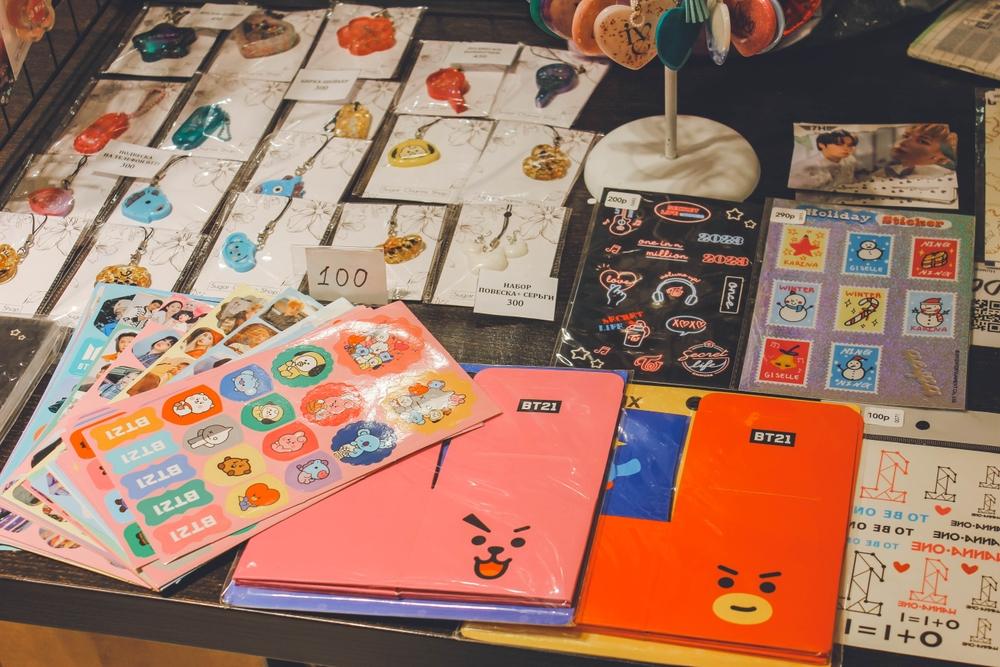
Open a standard K-pop album and you'll find considerably more than a CD. A typical release includes a photo book (anywhere from 80 to 200 pages of professionally shot photography), one or more photocards (small, credit-card-sized images of individual members), a lyric booklet, a folded poster, and a rotating selection of extras that vary by version — standees, stickers, mini-posters, fabric patches, polaroid-style cards, scratch postcards, and more. Some deluxe editions include USB drives with mini-films, scented inserts, or even hand-written lyric facsimiles. The music itself, in other words, is just one layer of a carefully designed experience.
ㅤㅤㅤㅤㅤㅤㅤㅤ
The multi-version strategy: collecting by design
Here's where it gets interesting — and intentional. Most major K-pop albums are released in multiple versions simultaneously. BLACKPINK's Born Pink shipped in four editions. BTS's Love Yourself: Answer had four versions. aespa's albums routinely arrive in multiple packaging variants. Each version features a different photo book design, unique cover art, and — most importantly — a different pool of possible photocards. Buying one version doesn't guarantee the full picture. Fans who want all versions, or who want to maximize their chances of pulling a specific member's card, buy multiple copies. This is not a coincidence. The multi-version system is a deliberate commercial architecture, and it works remarkably well.
ㅤㅤㅤㅤㅤㅤㅤㅤ
Photocards: the small cards with outsized power
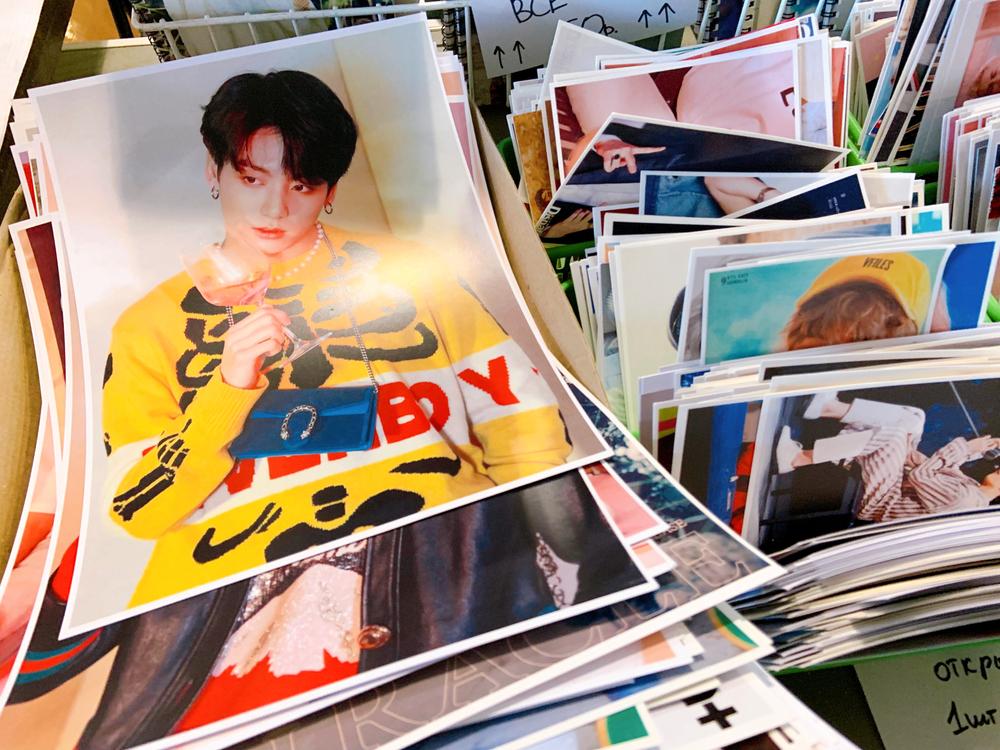
Photocards deserve their own discussion. These printed collectibles — roughly the size of a standard business card — feature individual member photos from each album's concept shoot, and they have become one of K-pop's most cherished and most scrutinized elements. Here's the catch: each album contains one randomly selected photocard from a full set. You don't know which member you'll get until you open it. Want a specific member's card? Your options are to buy more albums, trade with other fans, or turn to the secondary market.
The secondary market for photocards is genuinely enormous. Rare photocards — limited print runs, special editions, or versions exclusive to specific retailers — can command astonishing prices. Sought-after BTS member photocards have been listed on eBay and Korean resale platforms for well over $500. Dedicated apps like Poca Market, Photocard Market, and Karrot facilitate millions of trades and sales every month. Fan communities on Twitter, Reddit, and Discord organize "PC trades" — international swaps where fans from different countries exchange photocards by mail. There are detailed grading systems (Near Mint, Very Good, Good) used to assess a small printed card with the same seriousness applied to vintage baseball cards or rare coins. Completionists who build "full sets" — every member's card from every album release — can spend thousands of dollars and years of effort on a single group's discography.
ㅤㅤㅤㅤ
Unboxing culture: the ritual of opening
Perhaps the most unique cultural phenomenon K-pop has generated around its physical product is the unboxing video. YouTube and TikTok host millions of them. Fans film themselves opening albums in real time — examining the packaging, paging through the photo book, revealing the photocard, and reviewing every included item in careful detail. These are not niche videos. Popular K-pop unboxing channels have millions of subscribers, and individual unboxing videos regularly accumulate hundreds of thousands of views. The genre has developed its own conventions: slow, deliberate reveals, ASMR-quality handling sounds as packaging is carefully peeled back, and synchronized "pull-out" moments where the photocard is eased from its sleeve.
Why does this resonate so deeply? Unboxing videos serve multiple functions at once. They deliver vicarious satisfaction — the viewer experiences the ritual of opening an album without the purchase. They function as product research — fans watch to compare versions before deciding what to buy. And they create shared communal moments that tighten fandom bonds. When a creator pulls a rare card or the exact member photo they needed, the comment section erupts in celebration. It feels, somehow, like a collective win.
ㅤㅤㅤㅤ
The album as art object
K-pop companies invest substantially in album design as a standalone creative discipline. SM Entertainment's albums have received international design recognition. BTS's Map of the Soul: 7 shipped as a box set with multiple concept booklets, a full-size art book, and mini-films. Stray Kids, through their own creative unit, oversees album concept development directly. aespa's MY WORLD packaging drew from the group's extended metaverse narrative, making the physical object part of the group's storytelling universe.
The photo books are particularly significant. Shot by acclaimed photographers — sometimes internationally recognized names in fashion and fine art — these 100-page-plus volumes document a concept, a mood, and a visual world built specifically for that release. They function simultaneously as fashion editorial, fine art photography, and visual narrative. Many fans display them on shelves alongside art books and coffee table publications, not in a music collection.
ㅤㅤㅤㅤ
Buying albums as an act of community support
Beyond collecting, album purchases function as acts of solidarity within a fandom. Physical sales directly influence music show rankings (Gaon Chart, Hanteo Chart) and year-end awards. Buying multiple copies is, in this context, not simply about owning extras — it is a deliberate expression of support for an artist. Fans coordinate mass purchase events around release days, monitoring real-time chart positions and organizing themselves to maximize sales velocity. BTS's Map of the Soul: 7 sold over 4 million copies in its first week — a record at the time, driven substantially by coordinated fan-organized bulk buying. The chart position matters. The award matters. And every copy counts.
ㅤㅤㅤㅤ
The environmental conversation
K-pop's physical album industry has not escaped criticism. The multi-version system and the random photocard mechanic effectively encourage over-purchasing, generating significant plastic and paper waste. After major releases, images of fans discarding the actual music disc while keeping the photocards circulate online — and they tend to provoke real debate. Some companies have begun responding: HYBE introduced a "Weverse Album" format for select BTS releases, offering a QR-code-based digital album that preserves all the photocard and packaging content without a physical disc. Other labels have explored recyclable materials and reduced plastic packaging. Critics argue, reasonably, that these steps remain modest relative to the overall production volume, and that the fundamental incentive structure still drives overconsumption.

ㅤㅤㅤㅤ
How K-pop's album model changed the entire industry
K-pop's approach to physical albums has quietly reshaped expectations across global pop music. Taylor Swift — the most prominent example — adopted multi-version album strategies with variant covers, exclusive photo booklets, and retailer-specific content starting in earnest around 2022. Her Midnights arrived in four vinyl variants with different photography, a move that drew direct comparisons to K-pop methodology. Olivia Rodrigo, SZA, and Harry Styles have all released albums with version-exclusive content. Photocard-style inclusions have appeared in Western pop, country, and hip-hop releases. What was once regarded as a quirk of a niche genre is now a template.
The reason this template works is something K-pop understood long before the rest of the industry caught on: in an era where music itself is nearly free on streaming platforms, the physical object needs to earn its existence for reasons beyond audio. A K-pop album succeeds not as a delivery mechanism for music, but as an experience — something to unwrap, examine, collect, trade, display, and bond over. Every random photocard is a small lottery ticket. Every new version is a reason to return. And every unboxing video is proof that the act of opening one is worth watching, over and over again.
ㅤㅤㅤㅤ
ㅤㅤㅤㅤ
#KpopAlbum #Photocard #KpopUnboxing #KpopMerch #KpopCollecting #KpopCulture #KpopFandom