Dawn Bells, Bowing Rituals, and a Different Way of Moving Through a Day
Korea moves fast. Its cities are loud, its schedules are dense, and its culture places a high value on productivity and pace. Which makes it all the more striking that somewhere in the mountains above those cities, ancient wooden temples have been quietly offering the opposite for over a thousand years.
(Source: 템플스테이 Korean Templestay)
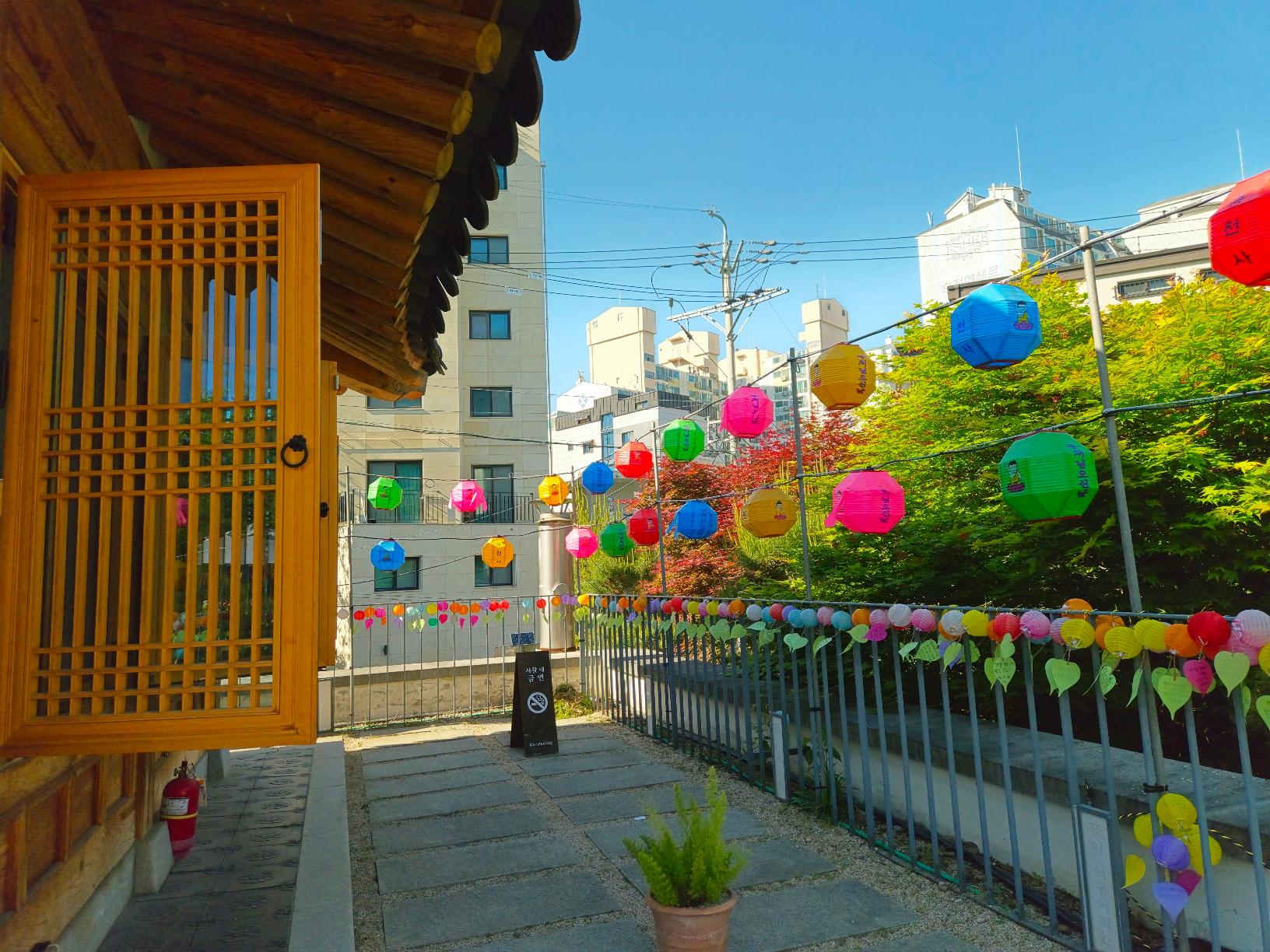
The temple stay program — officially established in 2002 to open Korea's Buddhist temples to visitors — has become one of the most distinctive travel experiences in the country. It is not a spa retreat or a luxury escape. It is something closer to a genuine encounter with a different way of living, structured around the daily rhythms of monastic life.
A typical temple stay begins in the late afternoon, when participants arrive, exchange their clothing for the loose grey uniforms provided by the temple, and receive an orientation. The schedule that follows is built around the temple's own routines rather than any tourist convenience. Wake-up comes before dawn — sometimes as early as three in the morning — when the sound of the moktak, a wooden percussion instrument, signals the beginning of the day.
(Source: 템플스테이 Korean Templestay)
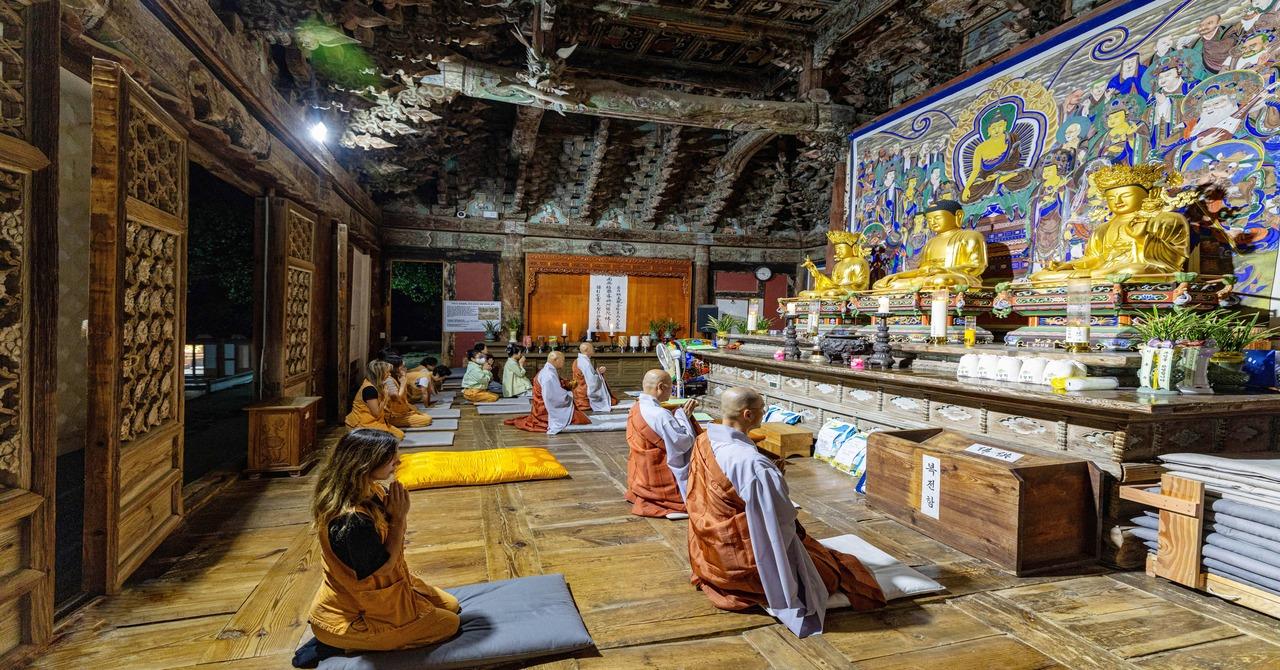
The morning ritual is the 108 prostrations, a meditative practice in which participants bow slowly, one hundred and eight times, in the temple's main hall. In Korean Buddhist tradition, each bow corresponds to one of the desires or sufferings that cloud the human mind. Physically, it is demanding — a sustained, rhythmic exercise that produces heat and focus simultaneously. Most participants who arrive skeptical find, somewhere around the fortieth bow, that the skepticism has been replaced by something quieter.
(Source: 템플스테이 Korean Templestay)
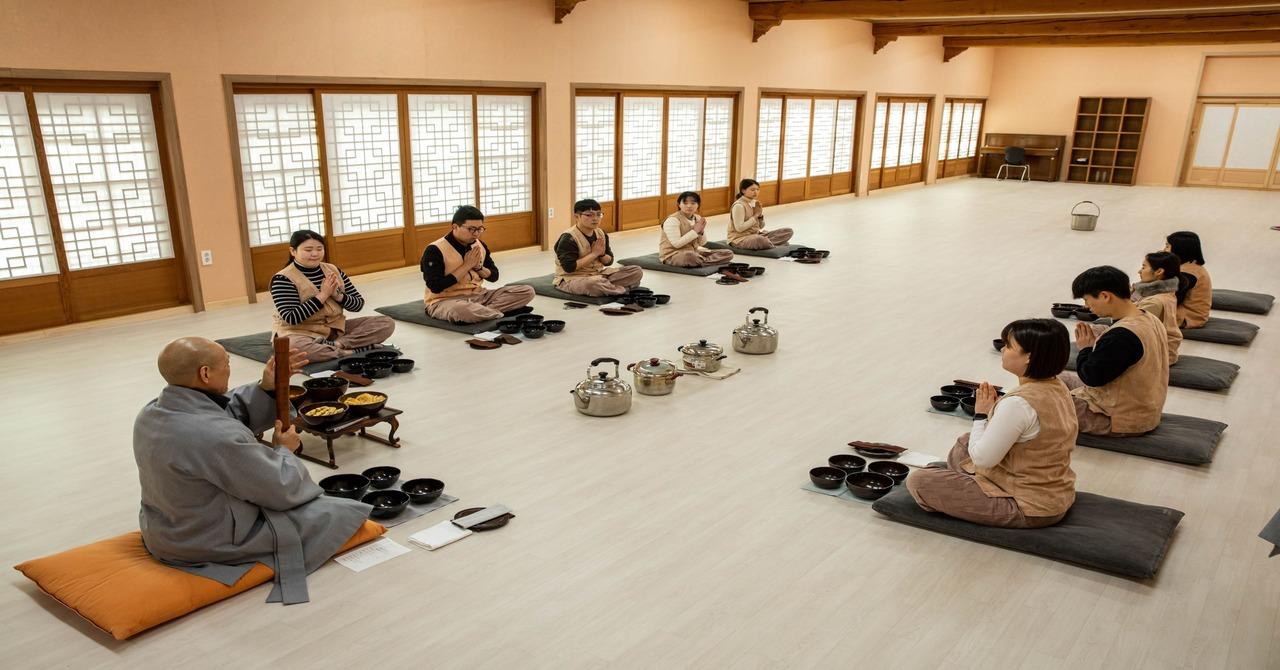
Meals at a temple stay follow the practice of baru gongyang — the formal monastic meal. Each person receives four lacquered bowls, which are filled and eaten in sequence. Talking is not permitted. The food is entirely vegetarian, prepared according to principles that include using every part of each ingredient and leaving nothing to waste. What makes baru gongyang memorable is not the food itself, which is simple, but the experience of eating in complete silence with full attention — a practice that makes an ordinary meal feel, somehow, significant.
The temples that offer the most established programs include Jogyesa in Seoul, Haeinsa in the mountains of South Gyeongsang, and Tongdosa near Busan. Each has its own character. The Haeinsa experience includes proximity to the Tripitaka Koreana — the complete collection of Buddhist scriptures carved onto approximately eighty thousand wooden printing blocks in the thirteenth century — which lends the visit a particular historical weight.
Many people arrive at a temple stay expecting to find it difficult. They are usually right. Waking at three in the morning, bowing in a cold hall, eating in silence — none of this is comfortable in the conventional sense. But comfort is not the point. The point is something harder to describe: the experience of a single day lived at a pace that is entirely different from the one most of us maintain, and the discovery that this other pace is not only possible but, for a time, deeply restoring.
#TempleStay #KoreaTravel #KoreanBuddhism #Haeinsa #SlowTravel #MindfulTravel #KoreaSpiritual #VisitKorea