Visited the National Museum of Korea on a busy weekend — the world's 3rd most-visited museum in 2025. A walk through gold crowns, bronze daggers, and Kakao Friends installations, followed by a bowl of kalguksu in Myeongdong.
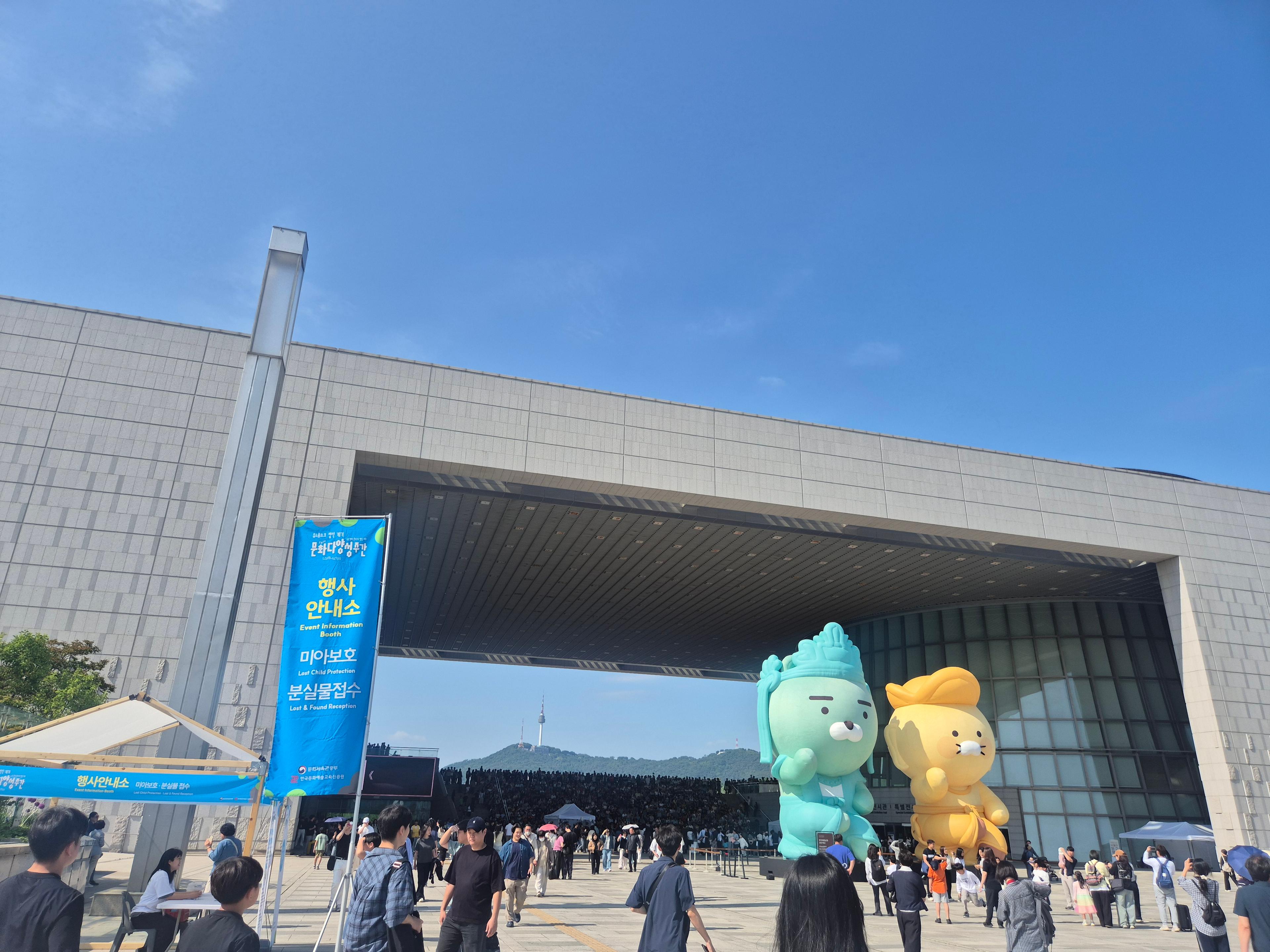
I visited the National Museum of Korea on May 23rd, a weekend. The forecourt was already packed when I arrived.
The crowds weren't just because of the Kakao Friends collaboration. It feels more like a combination of factors — the global spread of Korean culture, K-content of all kinds drawing people toward the roots of it, the museum itself meeting that moment with well-produced exhibitions that blend traditional artifacts with modern presentation, immersive digital content, and hands-on programs for families. It's working. Foreign visitors have been coming in numbers that would have been hard to imagine a few years ago, and domestic visitors are showing up in force too.
The Kakao Friends installation was fun, though. Two large inflatable characters, Ryan and Choonsik, were set up at the entrance — dressed as traditional Korean artifacts. Ryan was styled after the Bangasipji Bodhisattva, the half-smiling gilt bronze statue that's one of the museum's most iconic pieces. People were lining up to take photos with them.
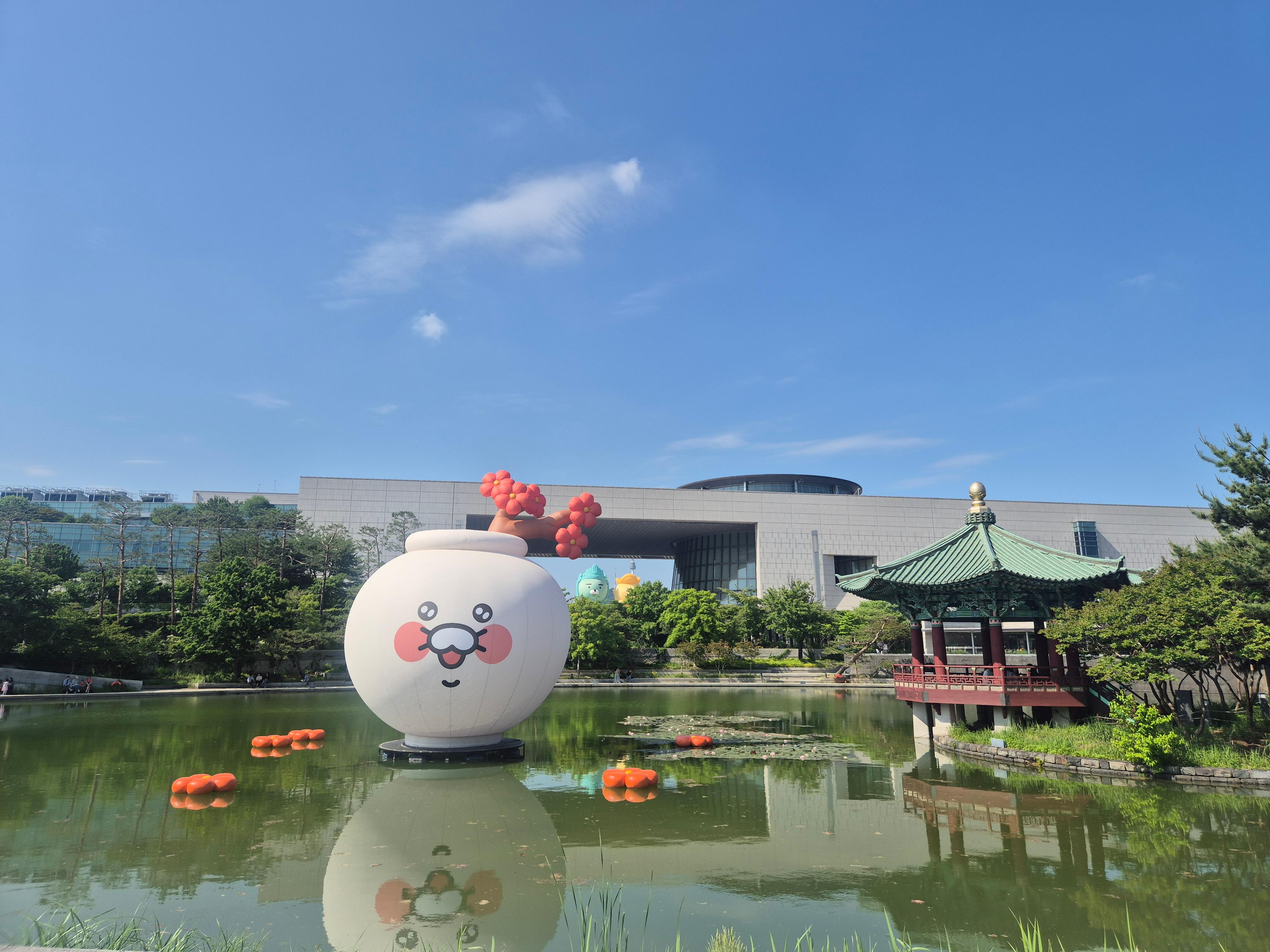
Before going inside, I walked around to the mirror pond. A large white moon jar — cartoon face and all — was floating on the water, with a traditional pavilion in the background. The reflection was nice. The sun was very strong by then.
Getting In
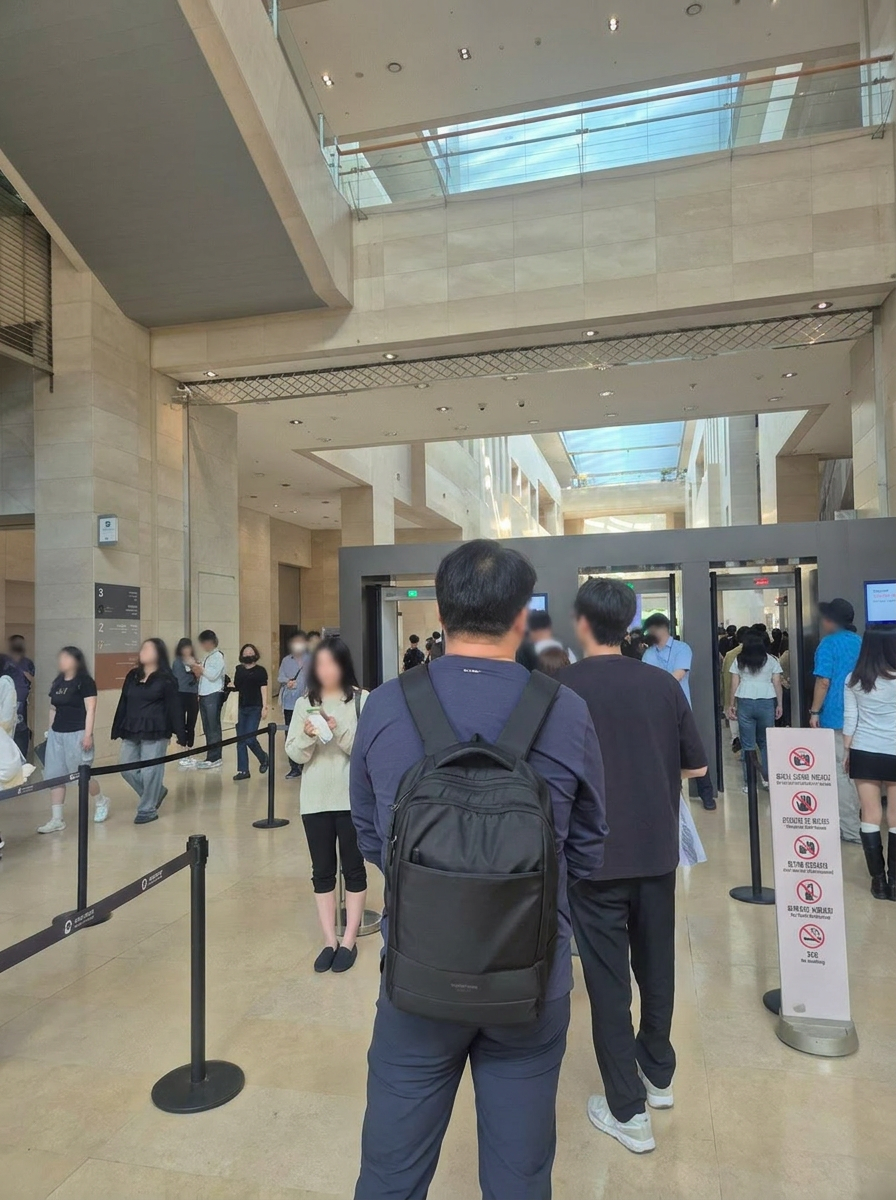
Entry requires a security screening — bags on a conveyor belt, airport-style. I don't remember this being there before, but it seems standard now. The line moved steadily.
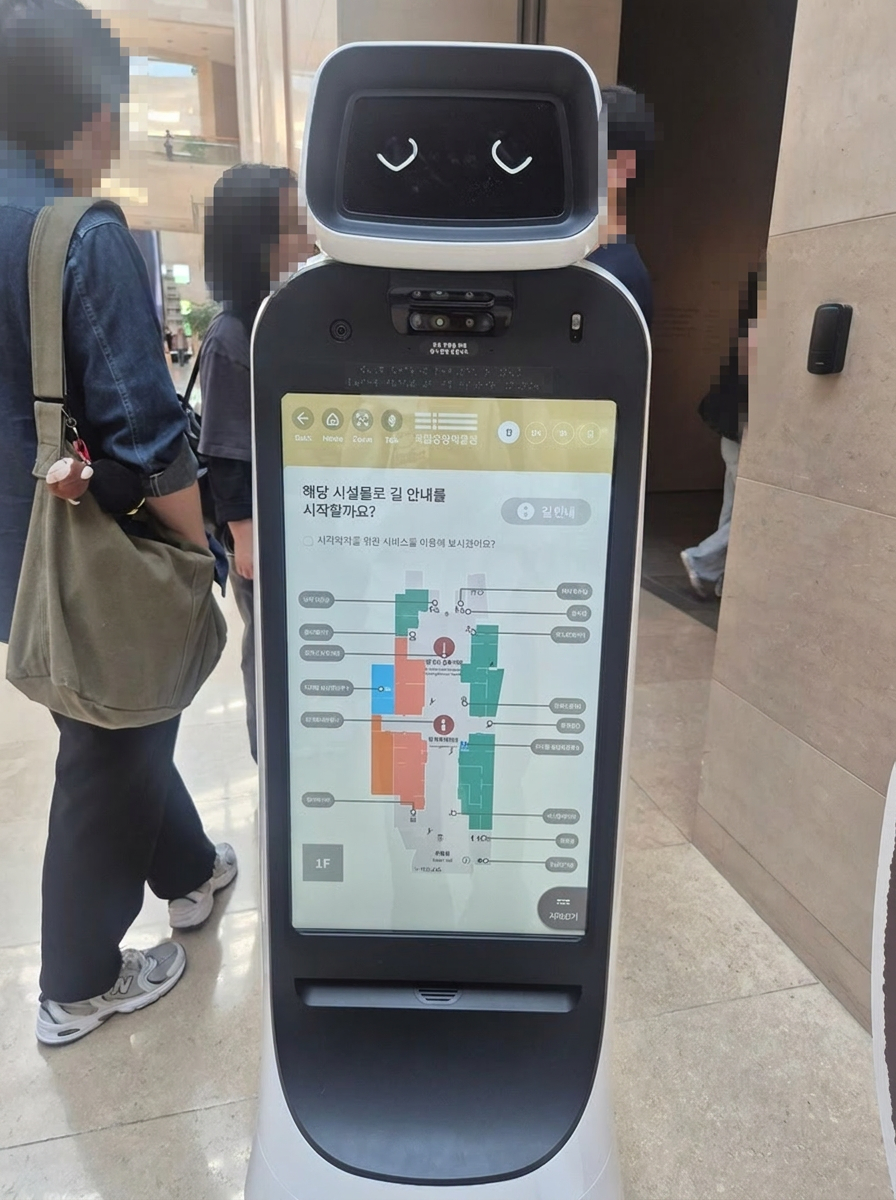
Inside, a guide robot near the entrance displays a floor map and can direct you to different galleries.
I also learned that day that the National Museum of Korea ranked 3rd in the world for museum attendance in 2025, with 6.5 million visitors — behind only the Louvre and the Vatican Museums, ahead of the British Museum and the Met. A 70% increase from the year before. Walking around that day, it felt completely believable.
The Collection
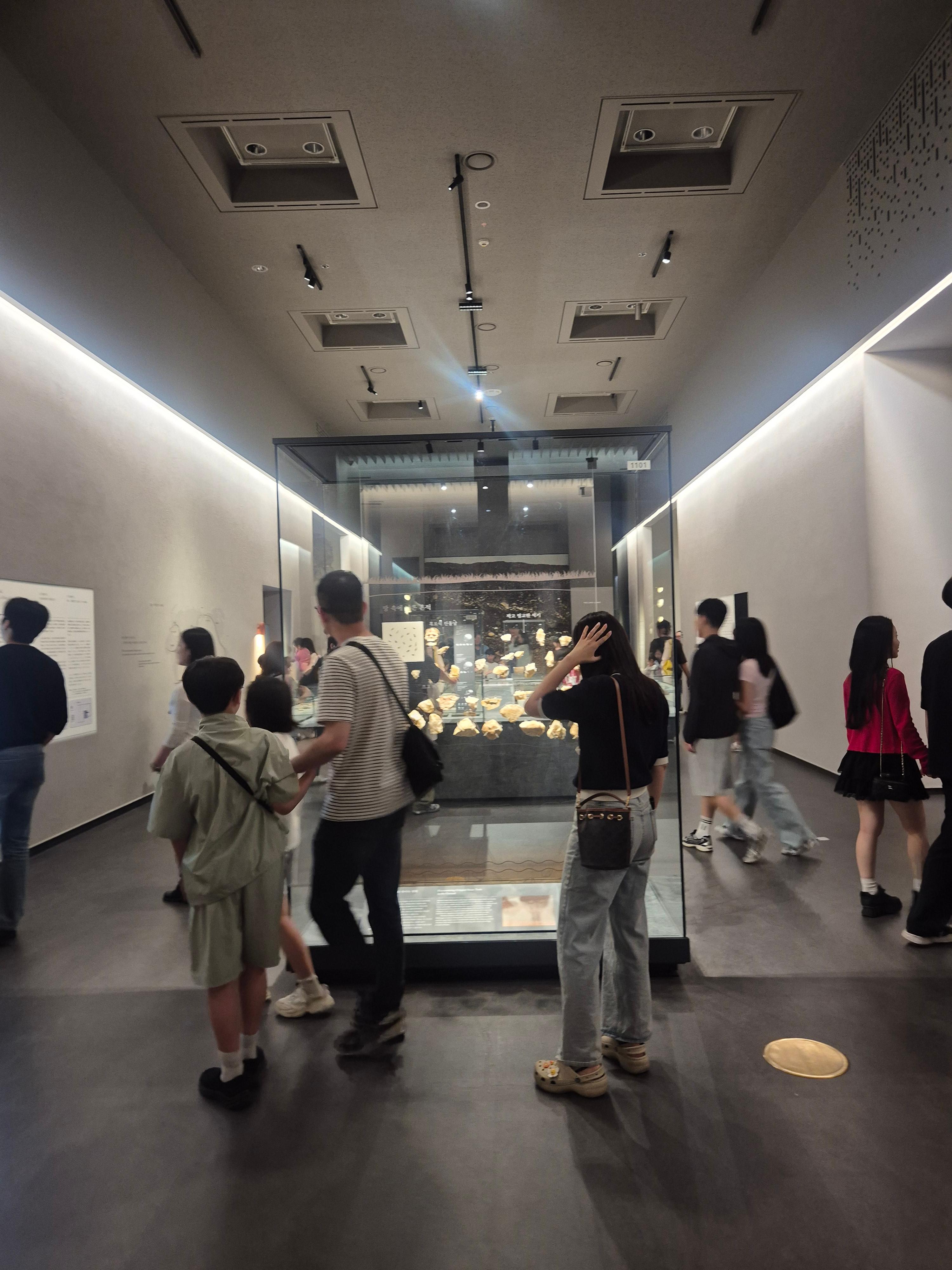
I only made it through the first floor — not because there wasn't more to see, but because I was fully engaged with everything on it. I took my time with each piece, and by the end I was genuinely exhausted. The second and third floors will have to wait for next time. I really did want to see them, and I'll be back.
A few things that stayed with me:
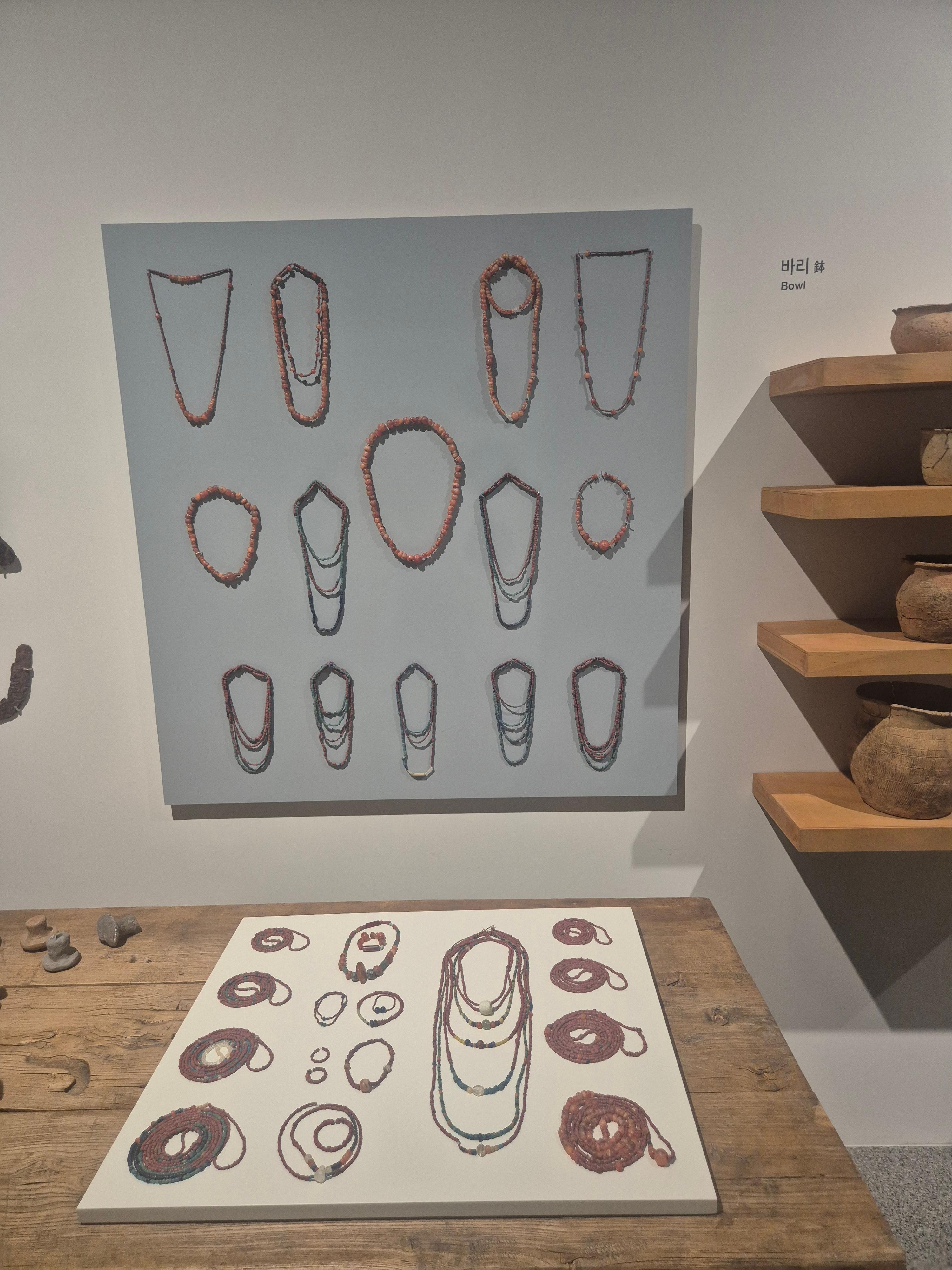
The bead necklaces. A whole wall of reconstructed prehistoric necklaces, laid out in rows. Simple objects, but something about seeing them all together was striking.
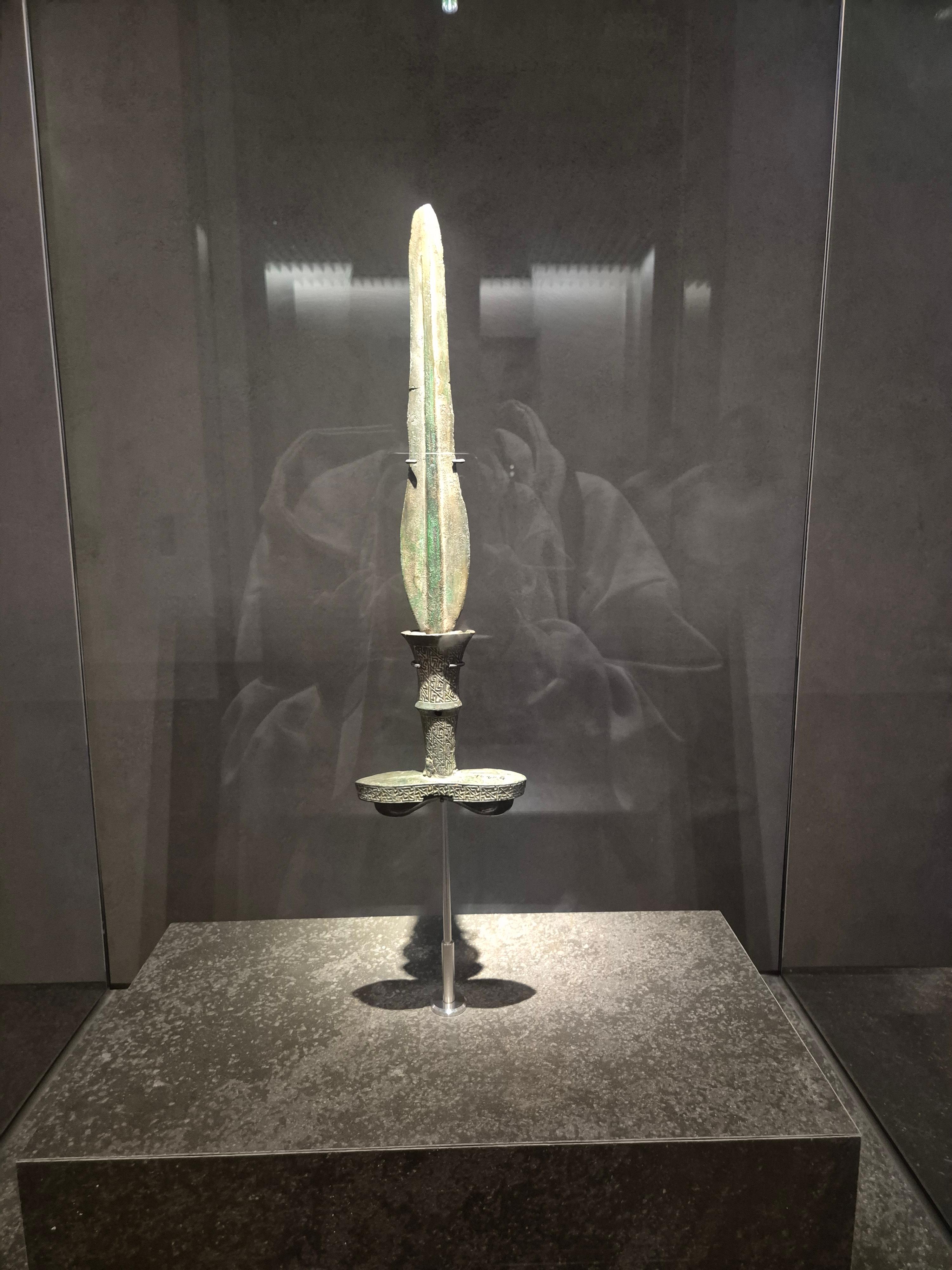
The slender bronze dagger. Displayed vertically, alone in its case. One of the defining artifacts of the Korean Bronze Age. It's a small object but it commands attention.
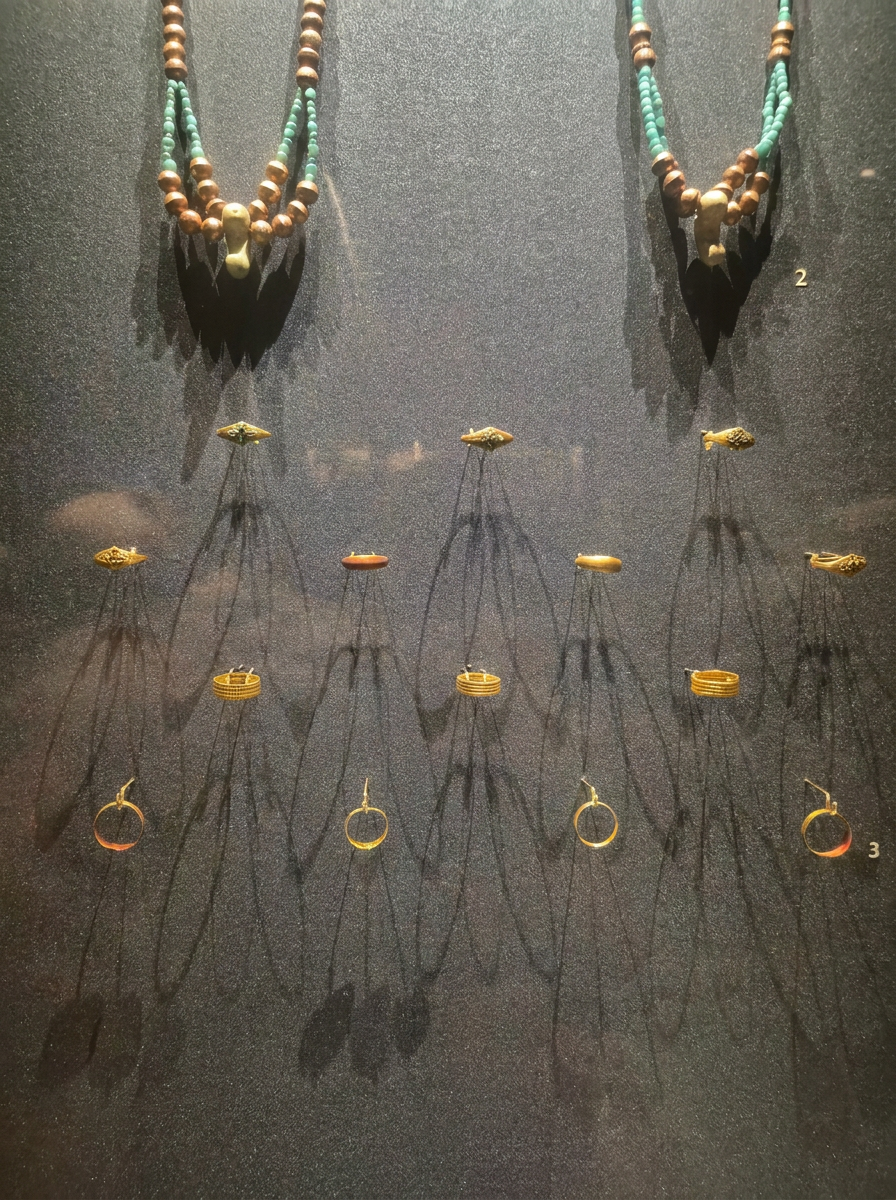
The gold jewelry. The Three Kingdoms period galleries have case after case of gold earrings, rings, and ornaments from Silla and Baekje tombs. The level of craft is hard to take in.
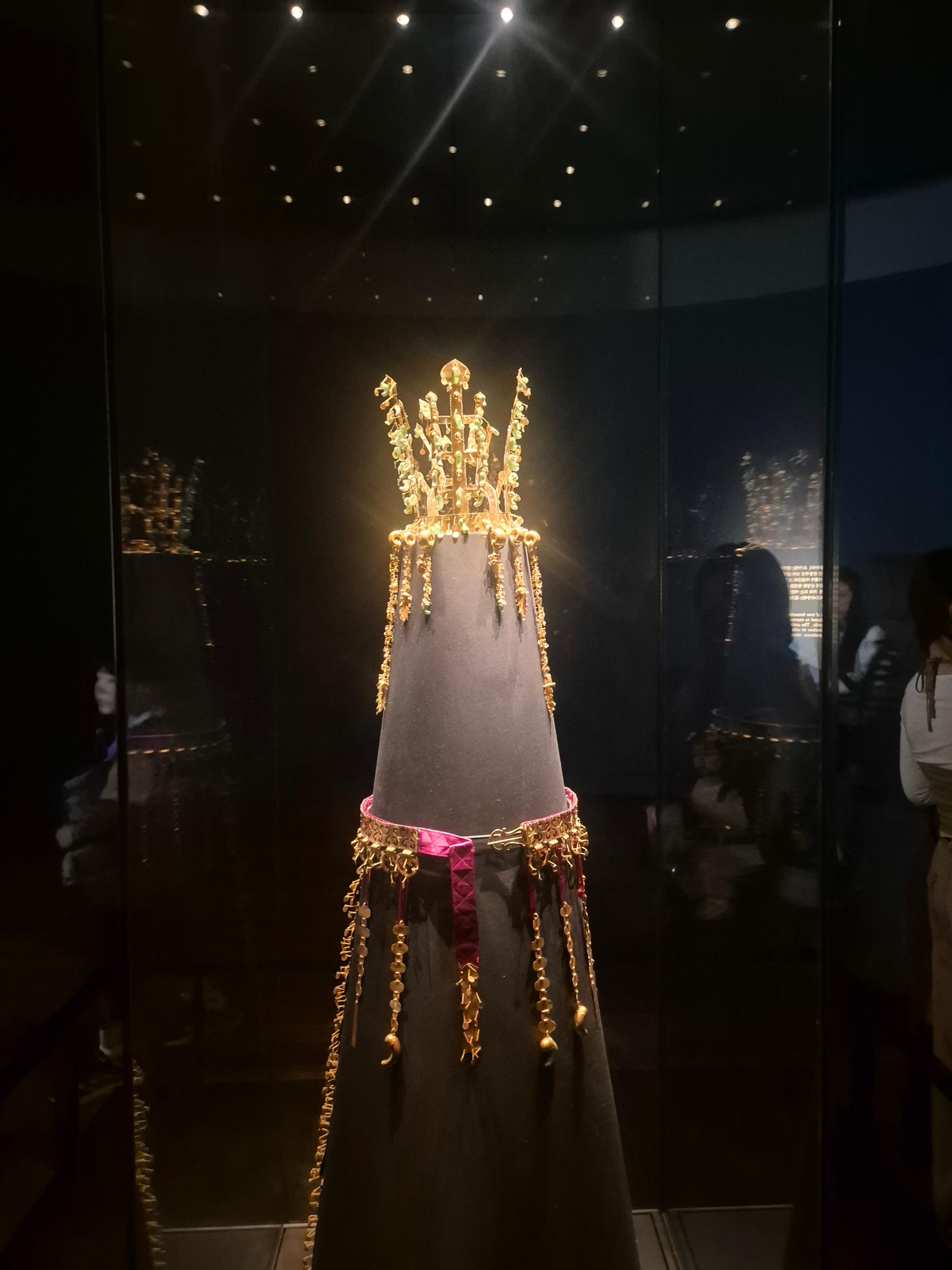
The gold crowns. Two on display — one in a dark case lit from above, the other smaller and more understated. Both are National Treasures. The larger one, with jade comma-shaped ornaments and dangling gold chains, is the kind of thing you stand in front of for a while.
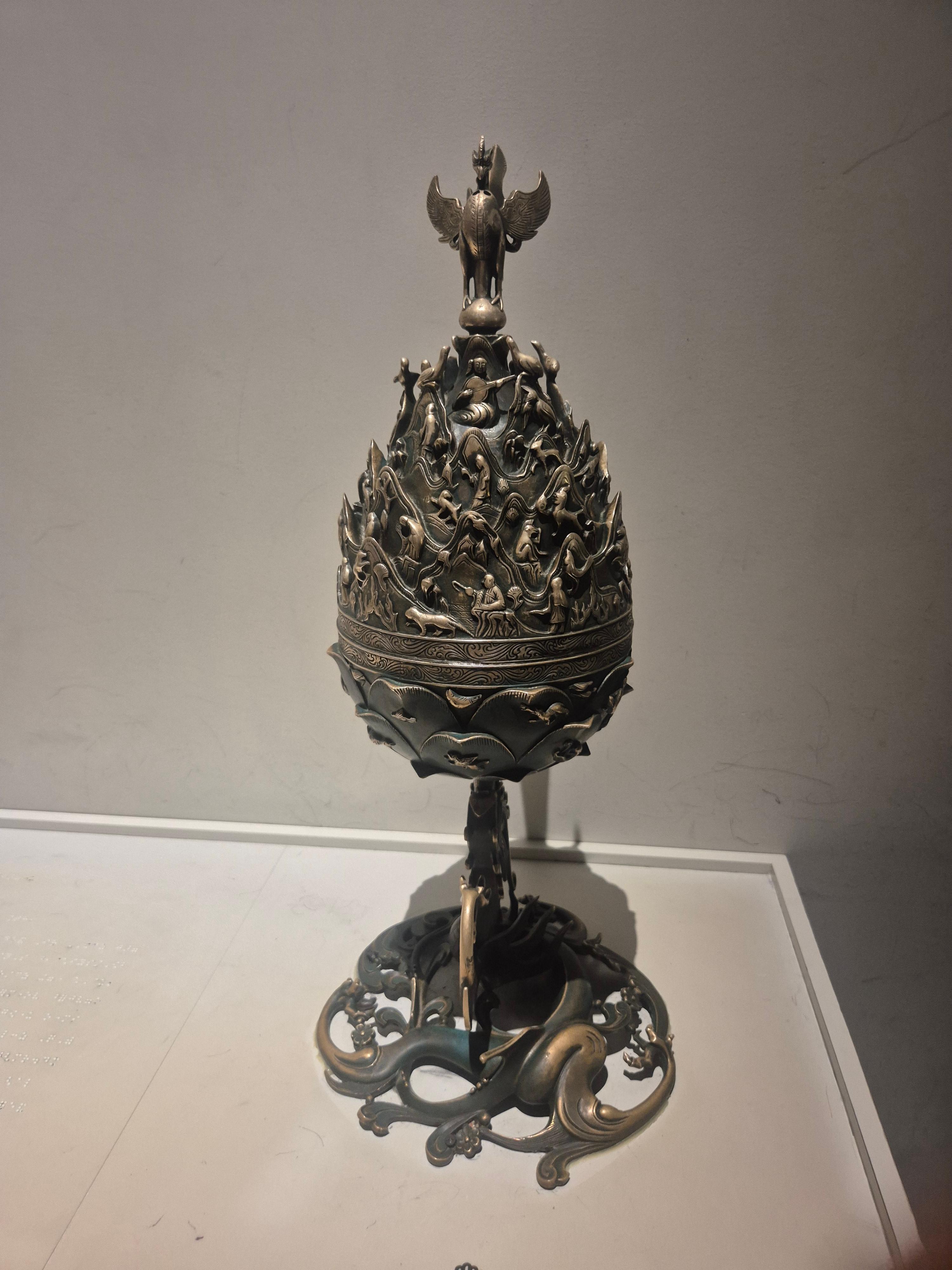
The incense burner. Tall bronze piece covered in relief figures — people, animals, mountains — topped with a phoenix. The detail is almost excessive, in a good way.
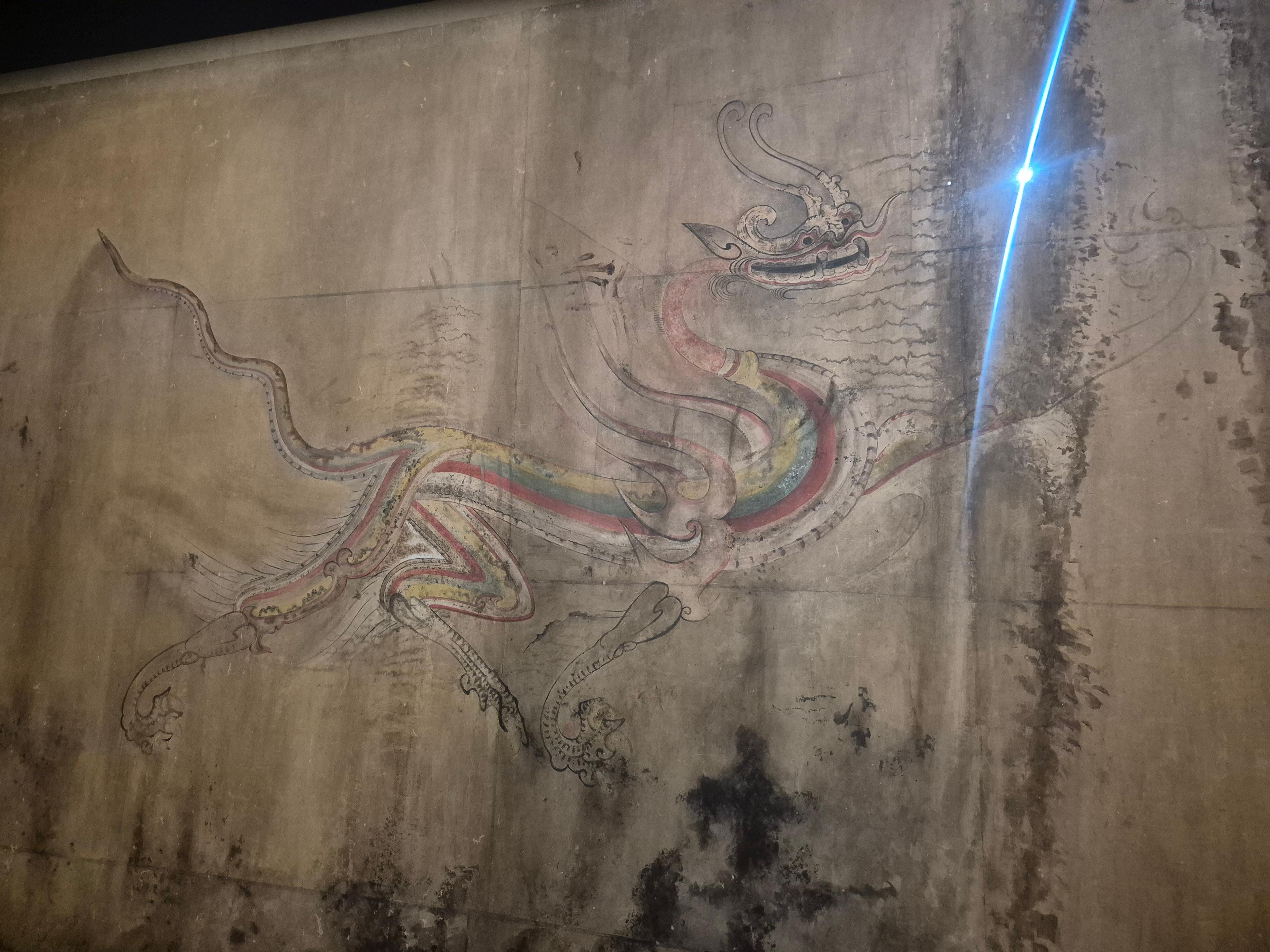
Goguryeo tomb mural replica. This is a mosado (모사도) — a hand-painted reproduction of a Goguryeo tomb mural, made by tracing the original with careful precision. The subject is a sinsu (신수), a divine mythological creature. Original Goguryeo murals cannot be moved from their tomb sites, so these painted replicas are how the museum brings them to visitors. Seeing it in person, the faded palette and the force of the lines still come through. It felt more alive than I expected.
The Museum Shop
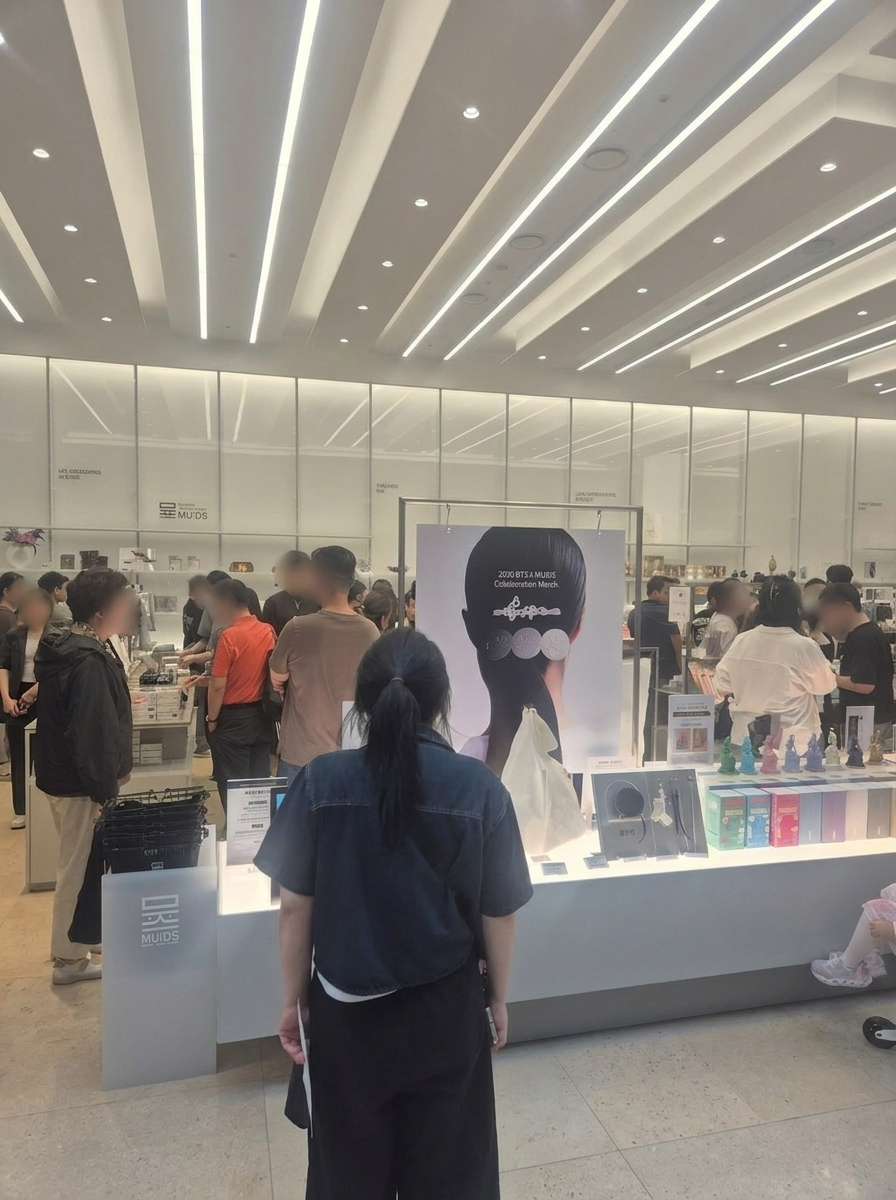
Before leaving, I stopped at two of the museum shops. The larger one had a line just to get in. Worth the wait for a browse, but it was crowded inside too.
The things that stood out most to me: keyrings and a lamp, both designed around artifacts from the collection. The keyrings in particular were well-made — the kind of souvenir that doesn't feel like a souvenir. There was also a beautiful white porcelain jar, clearly inspired by the moon jar tradition. Striking object. The price tag was not something I could take seriously. I appreciated it from a distance and moved on.
A Few Notes for Visitors
- Permanent galleries are free.
- English signage throughout is clear and thorough.
- The security line adds time — worth arriving a bit early on busy days.
- The mirror pond garden is worth a walk before or after.
- The museum shop gets crowded on weekends — factor in some extra time if you want to browse properly.
Dinner: Myeongdong Gyoja
After leaving the museum, I headed to Myeongdong for dinner at Myeongdong Gyoja (명동교자). It had been a while since I'd been to Myeongdong. It was busy as always, but the proportion of foreign visitors felt different now — not just "a lot of tourists" but genuinely more tourists than locals. That seems to be what Myeongdong is these days.
Myeongdong Gyoja has been around since 1966. The menu is simple: kalguksu, mandu, bibim noodles. We waited in line, got a table, and ordered the kalguksu — thick hand-cut noodles in a rich broth, with dumplings and minced meat on top.
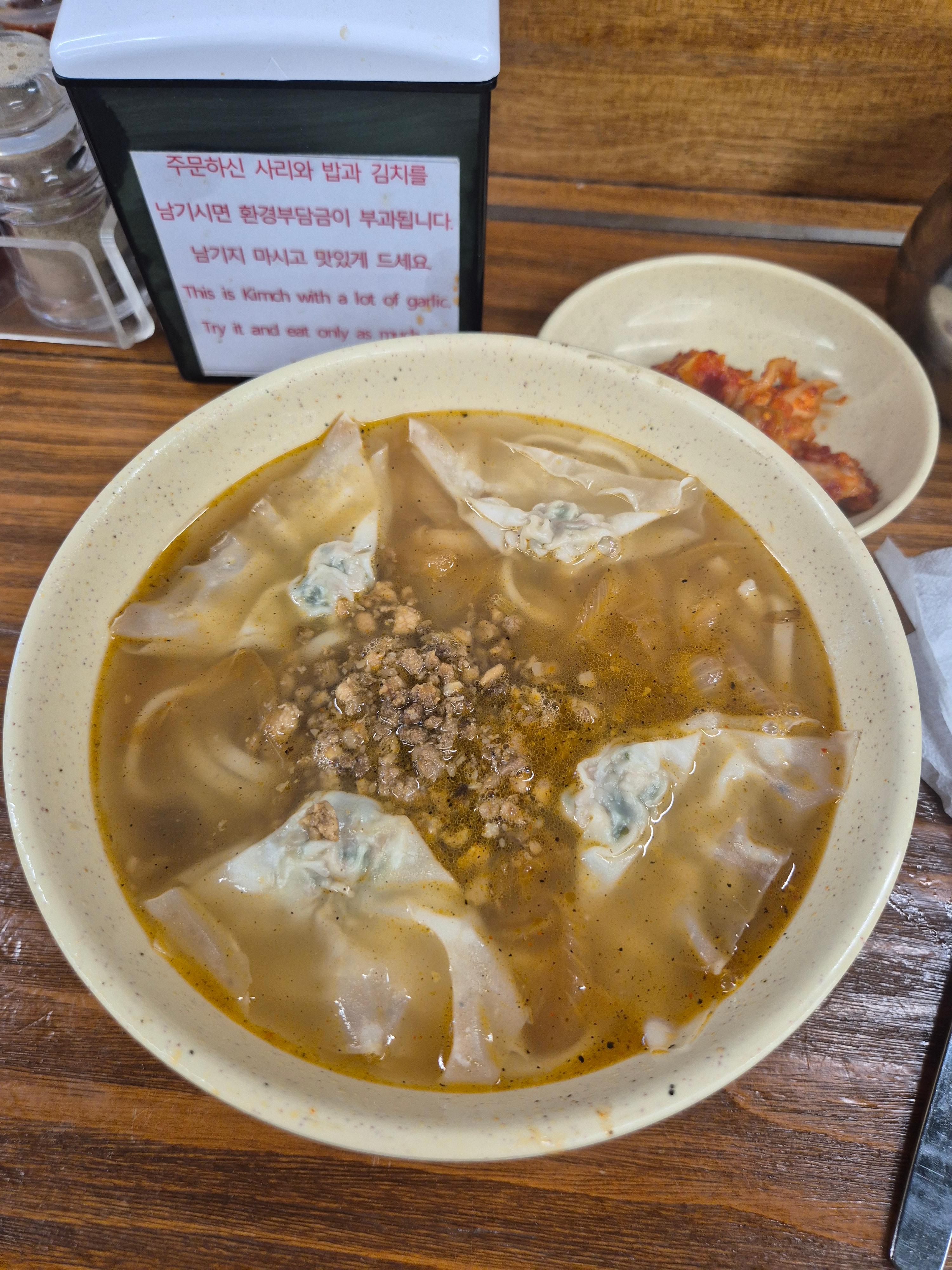
It tasted exactly the same as I remembered. Some places just don't change.
The kimchi here is heavily garlicked — the table sign even warns about it in English. I love it, but watching foreign visitors try it for the first time, I couldn't help wondering how it lands for them. It's a lot of garlic.
If you're in Seoul and want a meal that's been reliably good for decades, this is a solid choice. Expect to wait.
The National Museum of Korea is open Tuesday–Sunday. Permanent galleries are free. Myeongdong Gyoja is a short taxi or subway ride away in central Myeongdong.
#NationalMuseumOfKorea #Seoul #SouthKorea #VisitKorea #KoreanCulture #KoreanHistory #Museum #SeoulTravel #KoreaTravel #TravelKorea #KoreanArtifacts #ThreeKingdoms #Silla #Baekje #Goguryeo #MuseumVisit #Myeongdong #MyeongdongGyoja #KoreanFood #KTravel #SeoulGuide #ThingsToDoInSeoul #KGallery #KGallery