Spring and fall suit most first trips to South Korea. Compare the seasons and months, then choose your dates around cherry blossoms, fall foliage, winter sports, and the weather you prefer.
Body Content
For most first trips, the best time to visit South Korea is spring, roughly April through May, or fall, from late September into early November. Both seasons bring mild temperatures, drier air than summer, and the two landscapes Korea is best known for: cherry blossoms and autumn foliage. That is a sensible default rather than a rule. A traveler who wants snow, a ski trip, beach days, or fewer people around will land on a different month, so it helps to decide early which matters most to you: the weather, the crowds, or the specific thing you want to see.
Unless another location is named, the temperatures below are Seoul’s monthly averages, based on 1991–2020 climate data. They are not daytime highs or a forecast for your travel dates. Busan, Jeju, and the mountains of Gangwon Province can feel quite different.
What each season is like in Seoul
Spring (March to May)
March starts cold and warms quickly, and by May the days are warm, with a wide gap between cool mornings and mild afternoons. This is when the cherry blossoms open, beginning on Jeju and the south coast and moving north, and when parks, palace grounds, and riverside paths are at their busiest. Spring can bring yellow dust and poor air quality, so check local air quality forecasts before long outdoor activities. It suits city walking, palace and garden visits, day hikes, and blossom viewing.
Summer (June to August)
Summer is hot, humid, and wet. In August, the hottest month, the average daily high is around 86°F (30°C). Roughly 63 percent of Seoul's yearly rain falls in these three months, much of it during the rainy season Koreans call jangma. July is the wettest month, averaging about 16.3 inches (414 mm), compared with well under an inch in January. Summer works for beaches, islands, and city plans built around museums, shopping, and food, as long as the itinerary has room to move.
Fall (September to November)
September begins warm, and typhoon season has not fully passed. October brings clearer skies and much less rain, and November turns noticeably colder toward the end of the month. Foliage appears first in the high mountains and reaches the Seoul area later in the season. Fall suits hiking, long sightseeing days, and photography.
Winter (December to February)
Winter is cold and dry; the whole season brings only about 5 percent of Seoul's annual precipitation, and wind often makes it feel colder than the thermometer suggests. In return, crowds at many outdoor sights tend to be lighter, and the mountains offer skiing and winter scenery.
Month-by-month at a glance (Seoul averages)
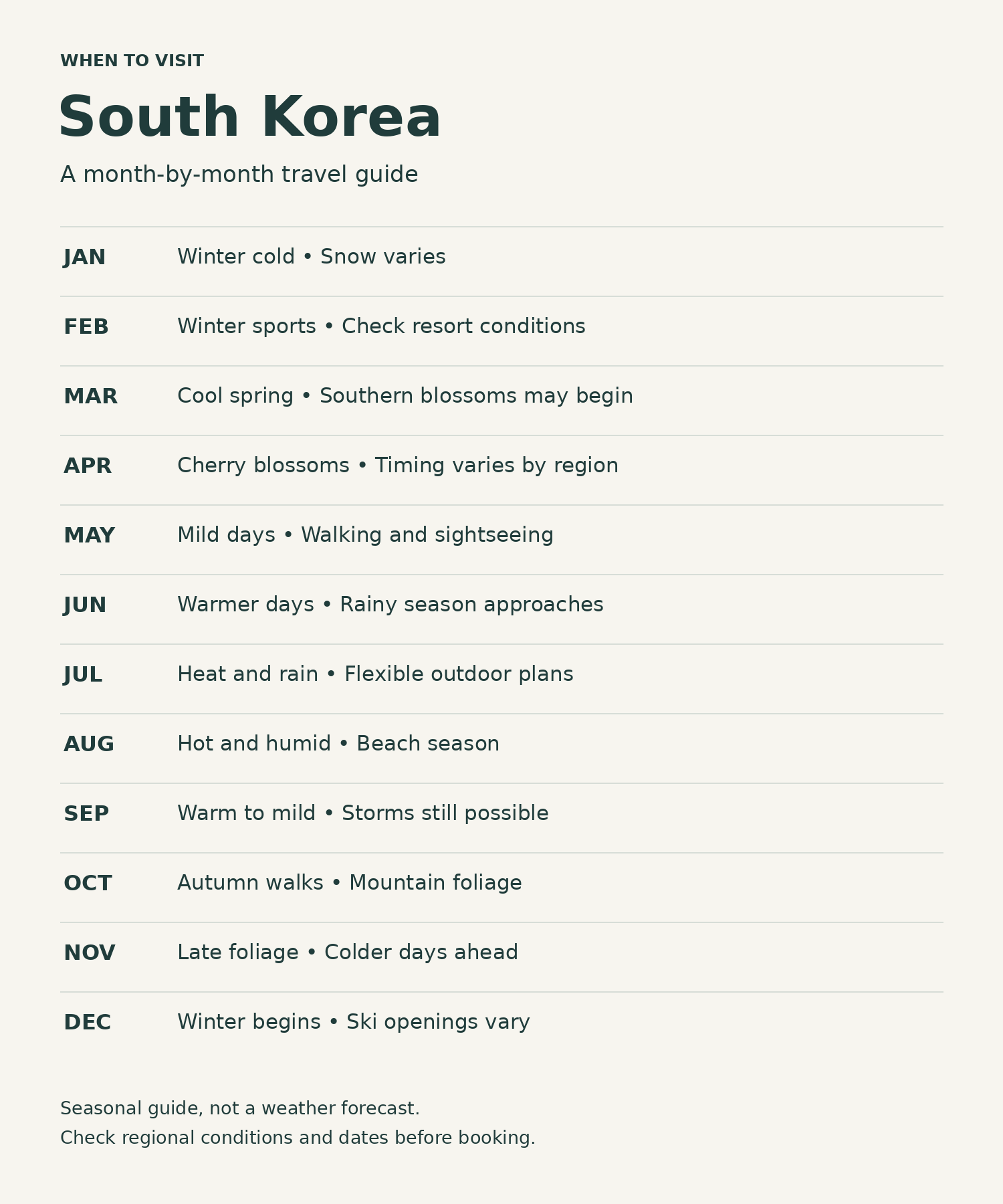
Each line pairs the month's average temperature in Seoul with what that month usually means for a trip.
January: 28°F (-2°C). The coldest month and mostly dry. Snow is possible but irregular.
February: 33°F (1°C). Still winter. Seollal, the Lunar New Year, often falls in late January or February.
March: 43°F (6°C). Cold early, milder late. Yellow dust season begins.
April: 55°F (13°C). Seoul's cherry blossoms usually open in early to mid April. Popular spots are busy.
May: 65°F (18°C). Warm and green, before the summer rain.
June: 73°F (23°C). Pleasant early in the month. The rainy season usually reaches Seoul in the last week of June.
July: 78°F (25°C). Hot, humid, and typically the wettest month. Keep outdoor plans flexible.
August: 79°F (26°C). The hottest month and peak domestic vacation season. Typhoons are possible.
September: 71°F (22°C). Summer warmth gradually eases, but heavy rain and typhoons can still affect travel.
October: 59°F (15°C). Clear and comfortable. Mountain foliage peaks in many years.
November: 46°F (8°C). Early November can still offer fall foliage around Seoul, while colder weather becomes more likely later in the month.
December: 32°F (0°C). Cold and dry. Ski season gets underway as weather and resort conditions allow.
When to go for what you want to see
Cherry blossoms
For cherry blossoms, plan around late March to April, depending on the region. Jeju and southern coastal areas generally bloom before Seoul, while cooler areas bloom later. The viewing window is short, and timing changes each year. Check the latest regional bloom forecasts before finalizing your itinerary, and keep your schedule flexible if blossoms are the main reason for your trip.
Fall foliage
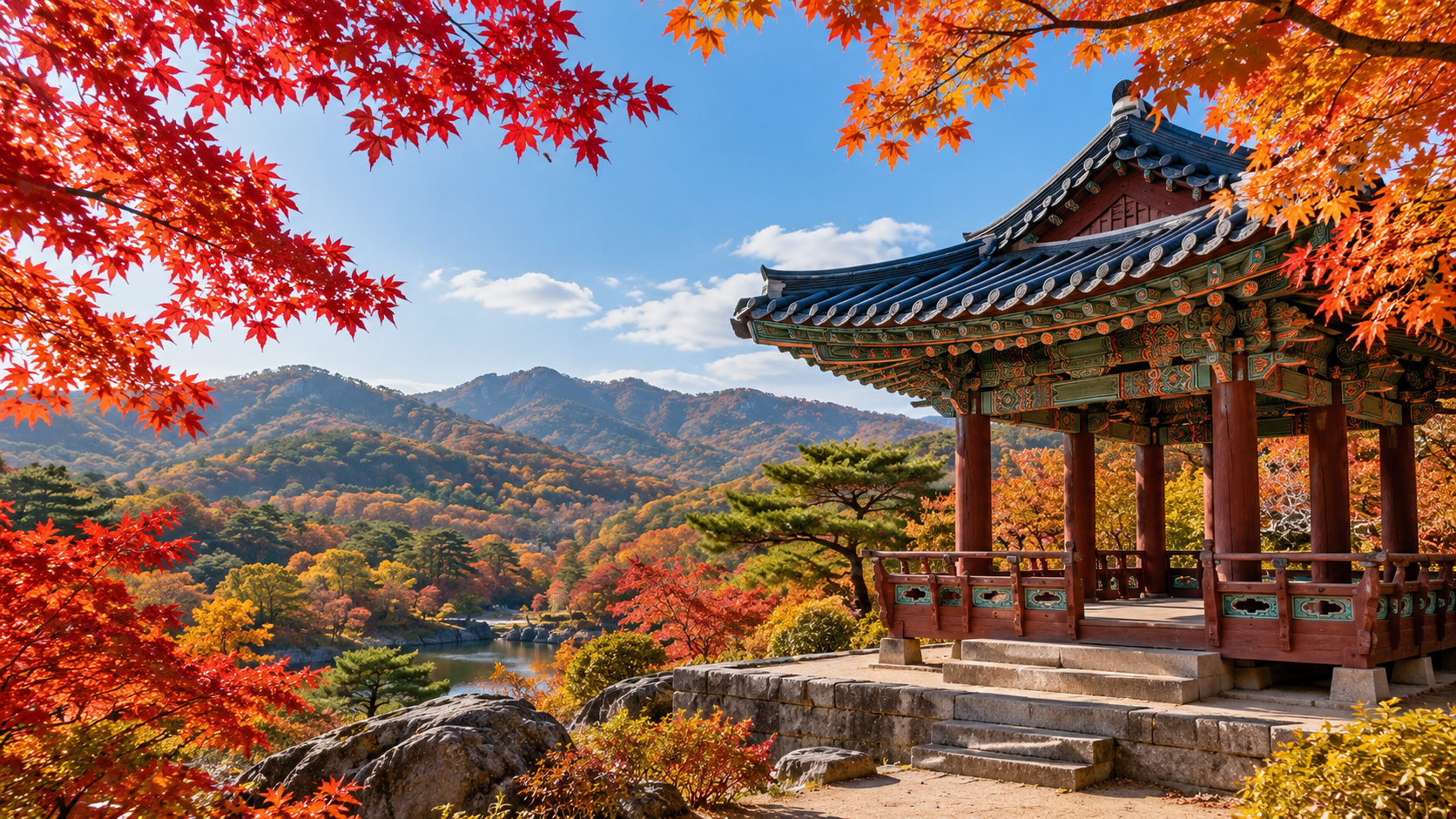
For fall foliage, October to early November is a useful planning window, depending on the destination. Color generally arrives earlier in high mountain areas and later in lower or more southerly locations. Seoul often offers autumn color in late October and early November. Check regional foliage updates rather than assuming the whole country peaks at once.
Skiing
Most resorts in Gangwon Province and around Seoul operate from roughly early December to early March, with exact dates set each season by weather and snowmaking. Midwinter is the safer window, and it is worth confirming opening dates with the resort before booking.
Sightseeing, hiking, and beaches
For long days on foot, palace visits, and hikes near Seoul, May and October are good starting points. For beaches, July and August are the season in Busan and on Jeju, though heat, rain, and busy beaches are part of the trade-off.
Snow: Seoul versus the mountains
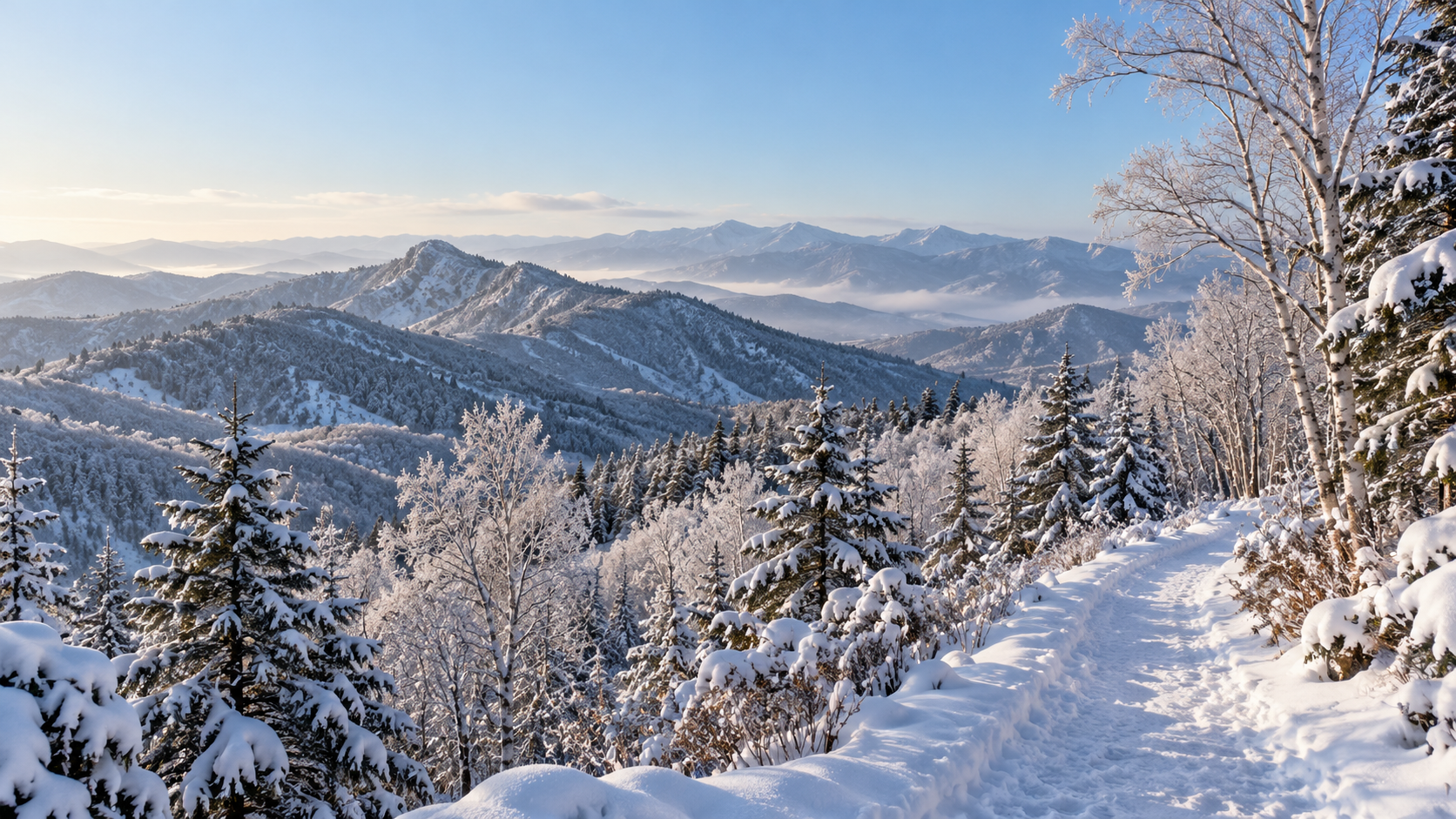
If seeing snow is the goal, where you go matters as much as when. Seoul is cold in winter, but snowfall is irregular and snow may not stay on the ground for long. A winter visit does not guarantee a snow-covered city.
The higher areas of Gangwon Province offer better opportunities for snowy scenery and winter sports. For skiing, check resort opening dates and slope conditions; for natural snow, check recent local snowfall reports. Busan and coastal Jeju are less dependable choices for snow viewing.
How rain, heat, and cold affect your plans
The rainy season generally falls between late June and late July, with timing varying by region and year. Heavy rain can also occur outside that window, so avoid treating August as reliably dry. Keep hikes and other weather-dependent activities flexible, and have indoor alternatives ready.
Summer heat and humidity make long outdoor days tiring. Plan walking and sightseeing for cooler parts of the day, with indoor breaks around midday. Typhoons can also disrupt coastal and island travel, so check forecasts and transportation updates before departure.
In winter, shorter outdoor visits with indoor stops are often more comfortable than full days on foot. Pack warm layers and shoes with good grip, especially when snow or ice is forecast.
Seoul is not the whole country
Busan generally has milder winters than Seoul, making it an option if you prefer less severe cold. You will still need winter layers, especially along the windy coast.
Jeju’s coastal areas are also milder in winter, but wind and rain can affect outdoor plans. Conditions on Hallasan differ sharply from the coast, so do not use a city forecast to plan a mountain hike.
Gangwon’s mountain areas are cooler than the major cities. Check the forecast for your actual destination, particularly for hiking, foliage trips, or winter sports.
Holidays that move every year
Seollal, the Lunar New Year holiday, and Chuseok, the autumn harvest holiday, fall on different dates each year. Domestic travel demand rises around both holidays, and some restaurants, shops, and attractions may close or change their hours.
If your trip overlaps either holiday, check that year’s holiday calendar, book intercity transportation early, and confirm opening hours for the places you want to visit.
What to pack, season by season
Spring: layers, such as T-shirts, a light sweater, and a light jacket, plus something warmer for March and early April evenings. On yellow dust days, check the air quality forecast; some visitors carry a mask.
Summer: breathable clothes, a compact umbrella or rain jacket, quick-drying shoes or sandals, and sun protection. A light layer helps in strongly air-conditioned subways and stores.
Fall: a light jacket for September and October, then a warm sweater or insulated jacket by November, plus an extra layer for mountain hikes.
Winter: an insulated coat, hat, gloves, scarf, thermal base layers, warm socks, and shoes with good grip. Moisturizer and lip balm help in the dry air.
Choosing your month
Start with the condition that matters most to you. If comfortable weather comes first, May and October are good starting points. If you are traveling for a particular sight, follow the blossom or foliage forecasts for the region you plan to visit rather than a fixed date. If you would rather avoid crowds, steer clear of peak blossom and foliage weekends, the midsummer vacation weeks, and the Seollal and Chuseok holidays, and consider early June, before the rains, or the heart of winter if you can handle the cold. Each season answers a different question, and the right month is simply the one that answers yours.