Your credit card works almost everywhere in Korea. Almost is doing a lot of work in that sentence. Here's what a first-time visitor actually needs to sort out before landing: the transit card, the cash situation, the eSIM catch nobody mentions, and the etiquette that comes up daily.
“Korea Travel Tips for First Timers: What You Need to Know”
Most first-trip advice for Korea is a list of neighborhoods. That is not what usually goes wrong. What goes wrong is standing at a subway gate at Incheon Airport with a perfectly good credit card that the turnstile refuses to acknowledge.
So here are the Korea travel tips for first timers that can actually change your week: how you pay for transit, how you pay for everything else, how you get online, and the handful of social rules that come up daily. Sort those out, and the rest of the trip is mostly deciding what to eat.
One piece of paperwork first, because the rules have changed and older travel guides may be out of date. As of this article’s publication, U.S. passport holders traveling visa-free are temporarily exempt from applying for a K-ETA through December 31, 2026. U.S. travelers entering Korea without a valid K-ETA generally need to submit an arrival card instead.
Korea offers a free e-Arrival Card through the government’s official website. You can complete and submit it within three days before your arrival in Korea, based on Korean Standard Time. Travelers who already hold a valid K-ETA and certain other exempt groups do not need to submit an arrival card, so check the official requirements for your situation before departure.
Your credit card is not a subway ticket
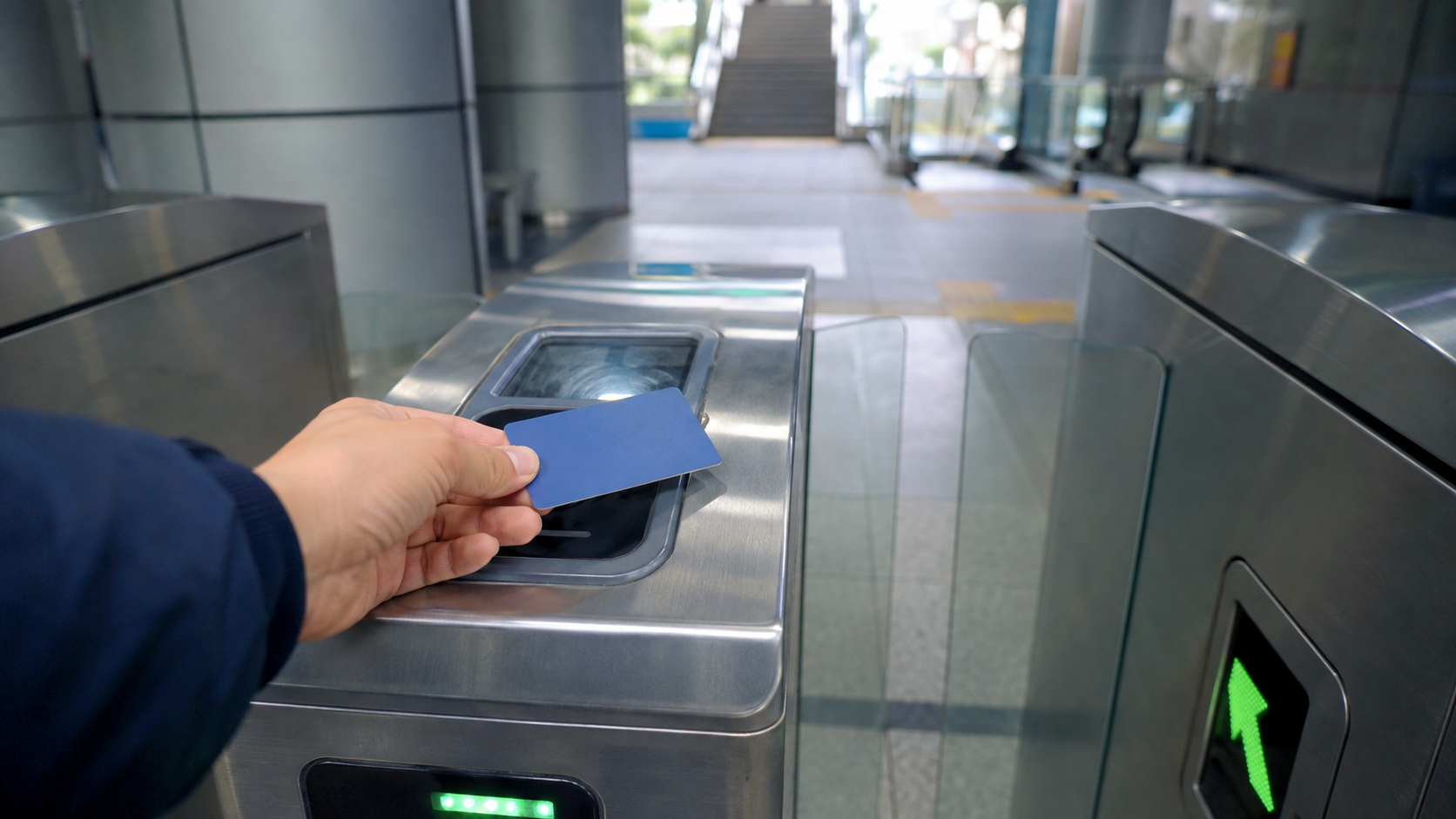
Seoul’s subway is one of the easiest ways to cross the city, but your American contactless card will not work as a standard transit card at the gate. Tapping a U.S.-issued Visa or Mastercard does not replace a Korean transportation card, and neither does Apple Pay connected to your home card.
Buy a T-money card instead. You can find one at convenience stores such as GS25, CU, and 7-Eleven, as well as at information centers in many Seoul subway stations. A standard card generally costs between 3,000 and 5,000 won before you add any travel balance.
The card works on subways, city buses, many taxis, and at participating stores displaying the T-money logo. Standard T-money balance top-ups generally require Korean won cash, so keep some available. Newer ticket machines at selected Seoul subway stations accept internationally issued cards for Climate Card short-term passes and single-journey tickets, but this does not apply to standard T-money balance reloads.
Seoul’s base subway fare for an adult using a transportation card is 1,550 won for the first 10 kilometers. Longer journeys add small distance-based charges.
Transfers between buses and subways do not trigger another base fare when you tap correctly within the transfer window. The total fare is still calculated by distance, so longer trips may cost a little more. In Seoul, you can make up to four transfers for a total of five rides. Remember to tap your transportation card when getting off a bus or exiting a subway station. If you fail to tap out, your transfer chain may be broken, and an additional base fare may be charged the next time you use the card.
If you expect to use public transportation several times a day while staying mainly within Seoul, compare your expected fares with the Climate Card. Tourist short-term passes are available for one, two, three, five, or seven days, although their service area does not cover every route in the wider metropolitan region.
Card country, with a few exceptions
Korea runs on plastic. Cafes, taxis, restaurants, department stores, and convenience stores commonly accept credit cards. You may go several days without using a banknote and barely notice.
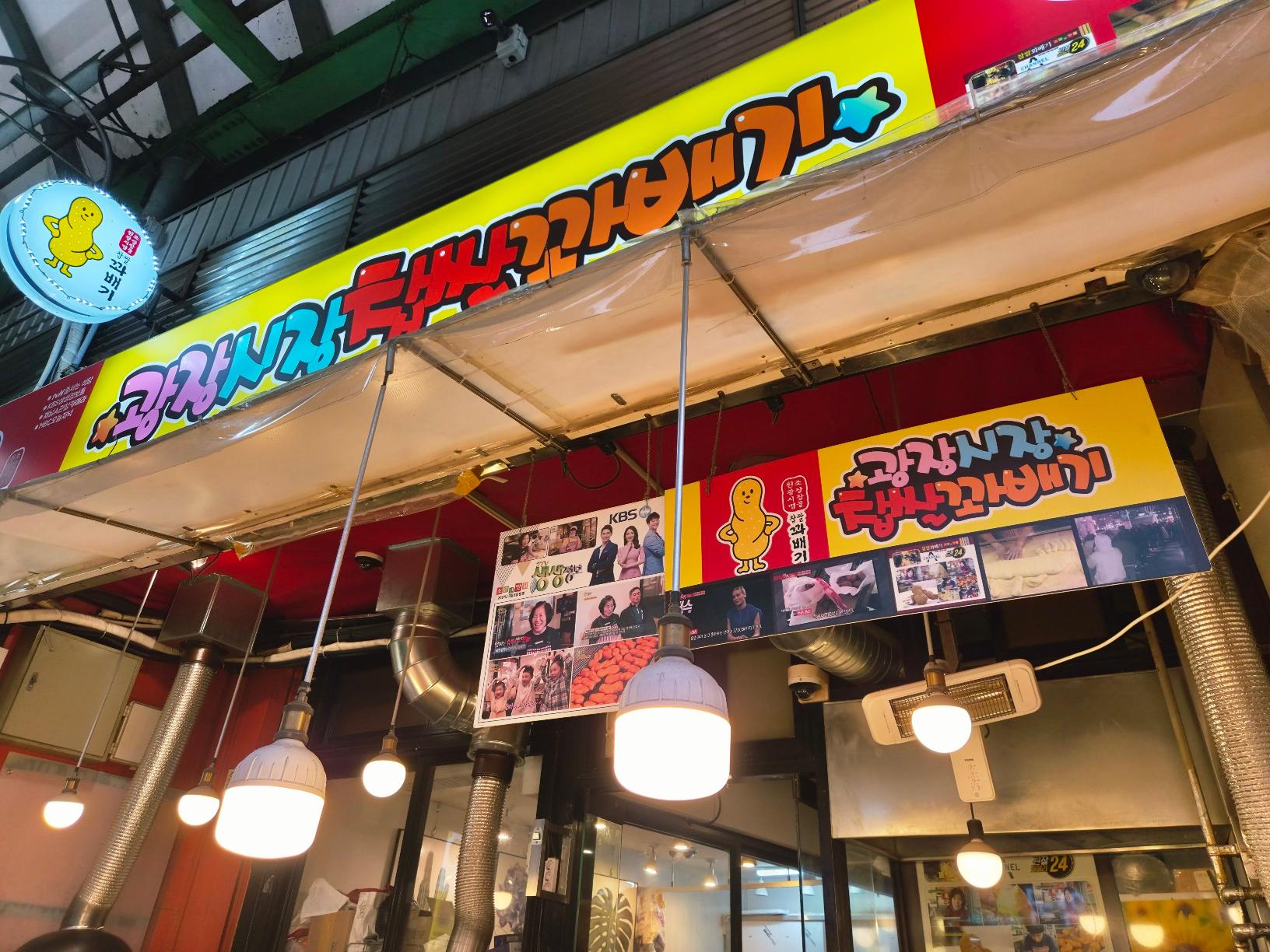
Then you reach a traditional market stall, street food cart, or small neighborhood business that accepts cash only. Carrying a modest amount of Korean won is still useful for markets, transportation-card top-ups, and other small purchases.
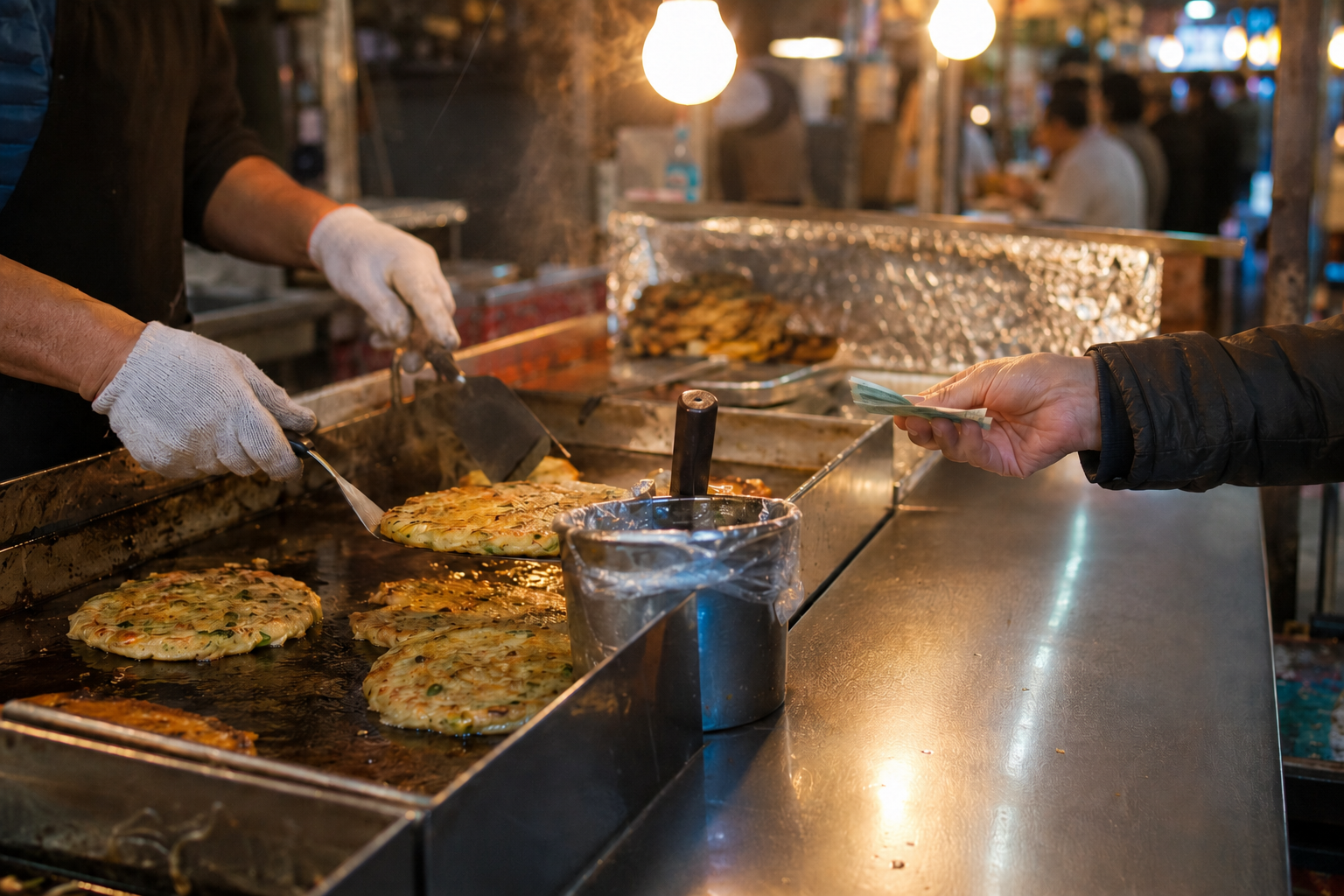
ATMs that accept international cards are usually marked with a ‘Global’ sign or display the logos of supported card networks. They are commonly found at airports, subway stations, banks, and convenience stores. Fees and withdrawal limits depend on both the Korean ATM operator and your home bank, so withdrawing one useful amount may be better than making several small transactions.
Tipping is not customary in ordinary Korean restaurants, cafes, or taxis. Staff will not generally expect it, and leaving cash behind may cause confusion.
Some Korean booking websites and apps also require a locally issued card, a Korean phone number, or both. If there is a restaurant, train, activity, or attraction you do not want to miss, check its booking requirements before your trip rather than assuming you can complete the reservation after arrival.
Data is easy. A Korean phone number is not.
Getting online is the easy part. A tourist eSIM can be installed before departure and activated after landing, often at a lower cost than a week of international roaming. Free public Wi-Fi is also widely available, including in many transportation hubs and public facilities.
The catch is that many tourist eSIMs are data-only. They connect you to the internet but do not provide a Korean phone number for calls or SMS verification. Some plans include a local number but allow incoming calls only, so read the details rather than relying on the words ‘Korean number.’
Without a usable local number, SMS verification may fail on certain Korean apps and reservation platforms. If delivery apps, restaurant waitlists, or local booking services are important to your plans, check whether your SIM or eSIM includes the specific voice and SMS functions you need.
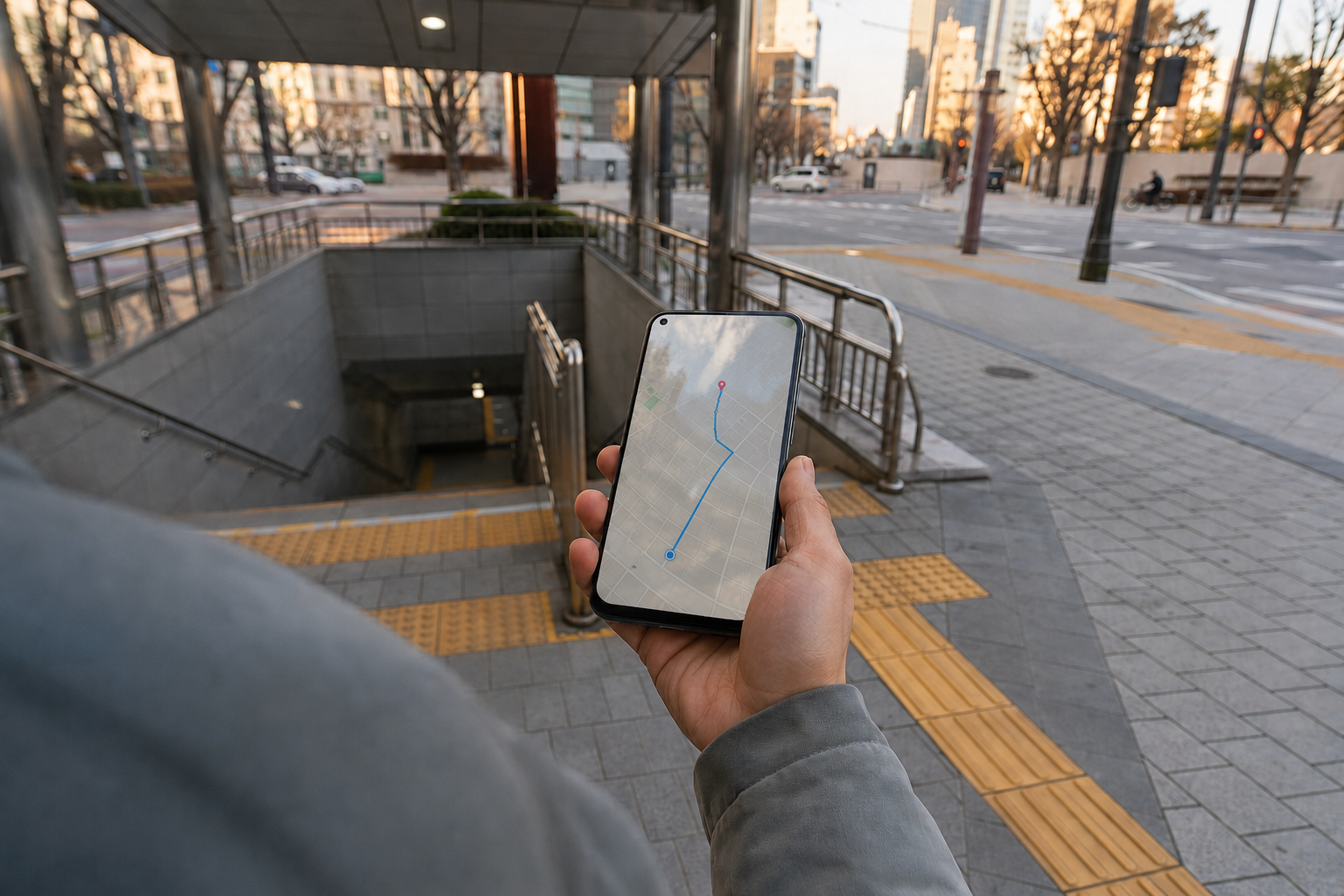
Download Naver Map or KakaoMap before you go. Both are widely used in Korea and provide detailed local transit information, including subway exits and bus routes. Check Google Maps’ current navigation support before relying on it as your only map app in Korea.
Knowing the correct subway exit matters more than it sounds. A large station can have many exits leading to different sides of a major road, and choosing the wrong one can add an unnecessary walk to an otherwise simple trip.
The etiquette that actually comes up
This is not a lecture on Confucian hierarchy. These are simply the situations you are likely to encounter during an ordinary week in Korea.
When handing someone cash, a card, a gift, or a drink, using both hands is a polite gesture. You can also use your right hand while lightly supporting your forearm with your left.
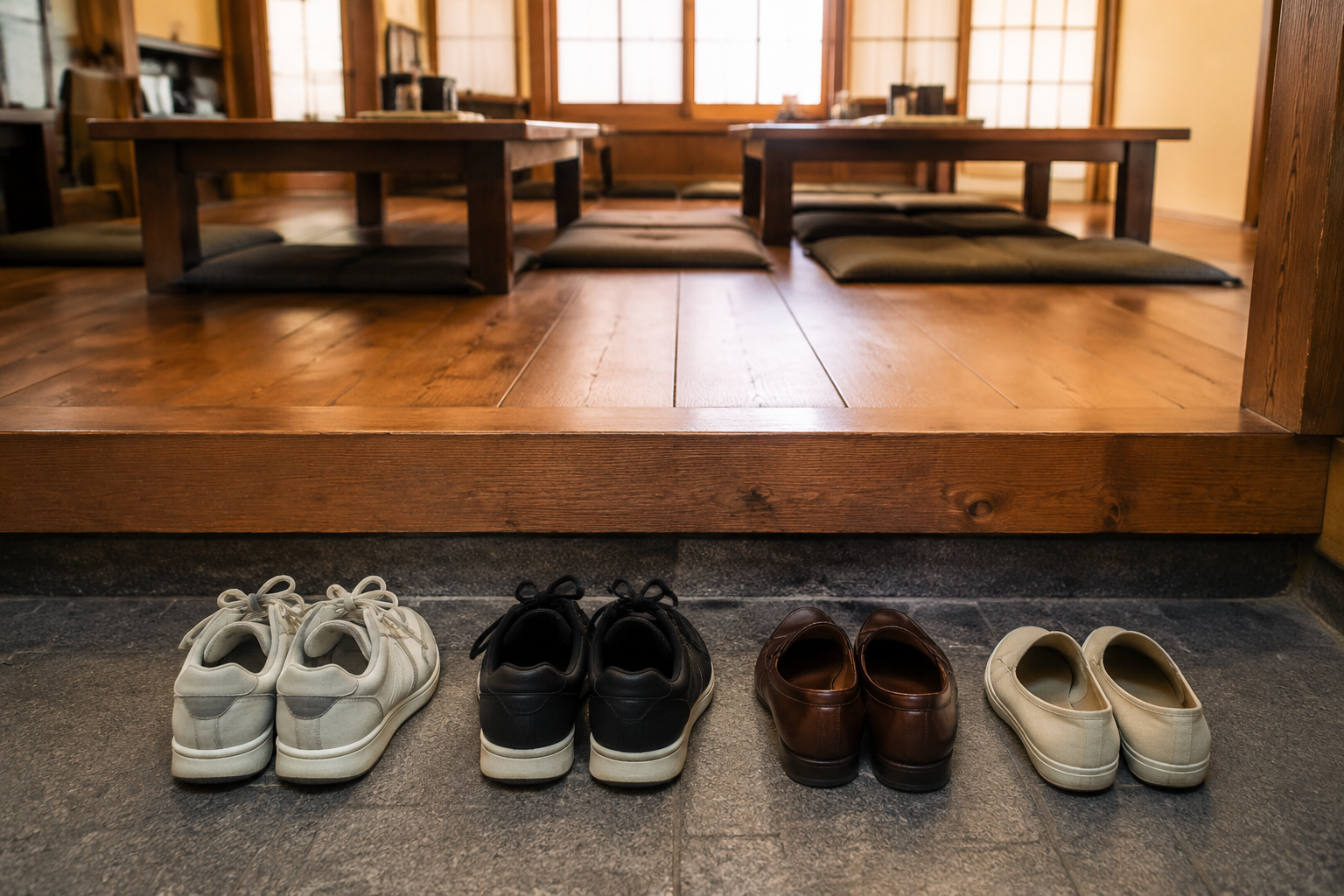
Shoes come off more often than some visitors expect. This applies in most homes, many traditional guesthouses, and some floor-seating restaurants. Check what other people are doing near the entrance rather than guessing.
Priority seats on public transportation are intended for older adults, pregnant passengers, people with disabilities, and anyone else who needs them. Even on a crowded train, be prepared to leave those seats available or give one up immediately.
In a traditional group drinking setting, people often pour drinks for one another rather than filling their own glass. Watch the tone of the group and follow the people around you instead of treating it as a strict rule in every casual situation.
None of this is difficult. It is just different from what you do automatically at home, and several small differences can land on you at once, in an airport, at five in the morning.
Check the current entry requirements, sort out your transit card, choose your map app, and confirm what your eSIM actually includes before you get on the plane. Then the only real decision left is whether to eat at the first place you see or the one three doors down with the line out front.