From hanji paper and lucky pouches to yakgwa and museum miniatures, these 12 Korean souvenirs carry real cultural meaning. Here is where to buy them in Seoul and what U.S. customs allows.
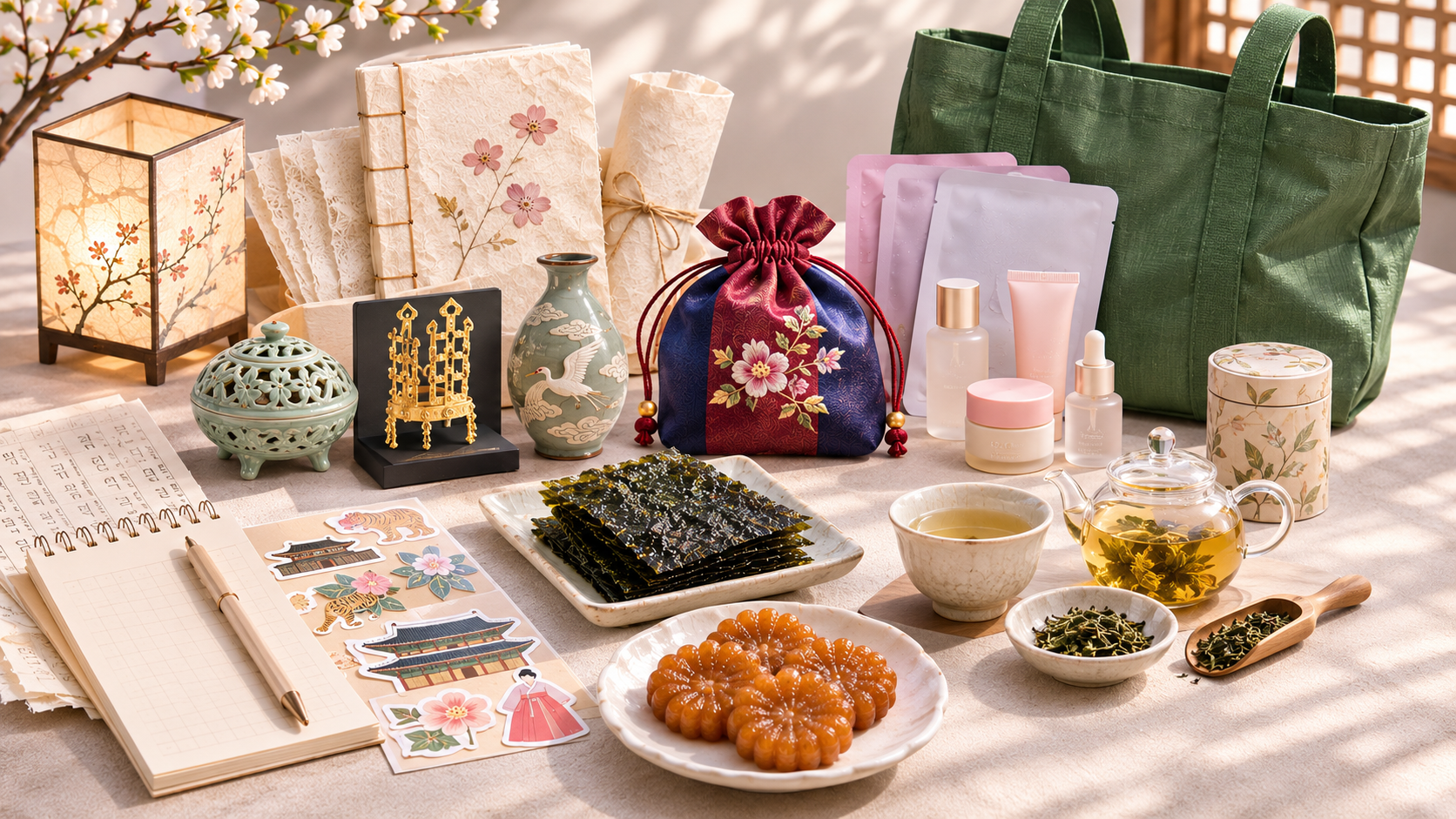
A good Korean souvenir does two jobs. It packs easily, and once it is unwrapped at home it says something specific about Korea. The twelve gifts below were chosen with both in mind, moving from traditional crafts to modern design goods and packaged foods that are generally allowed into the United States.
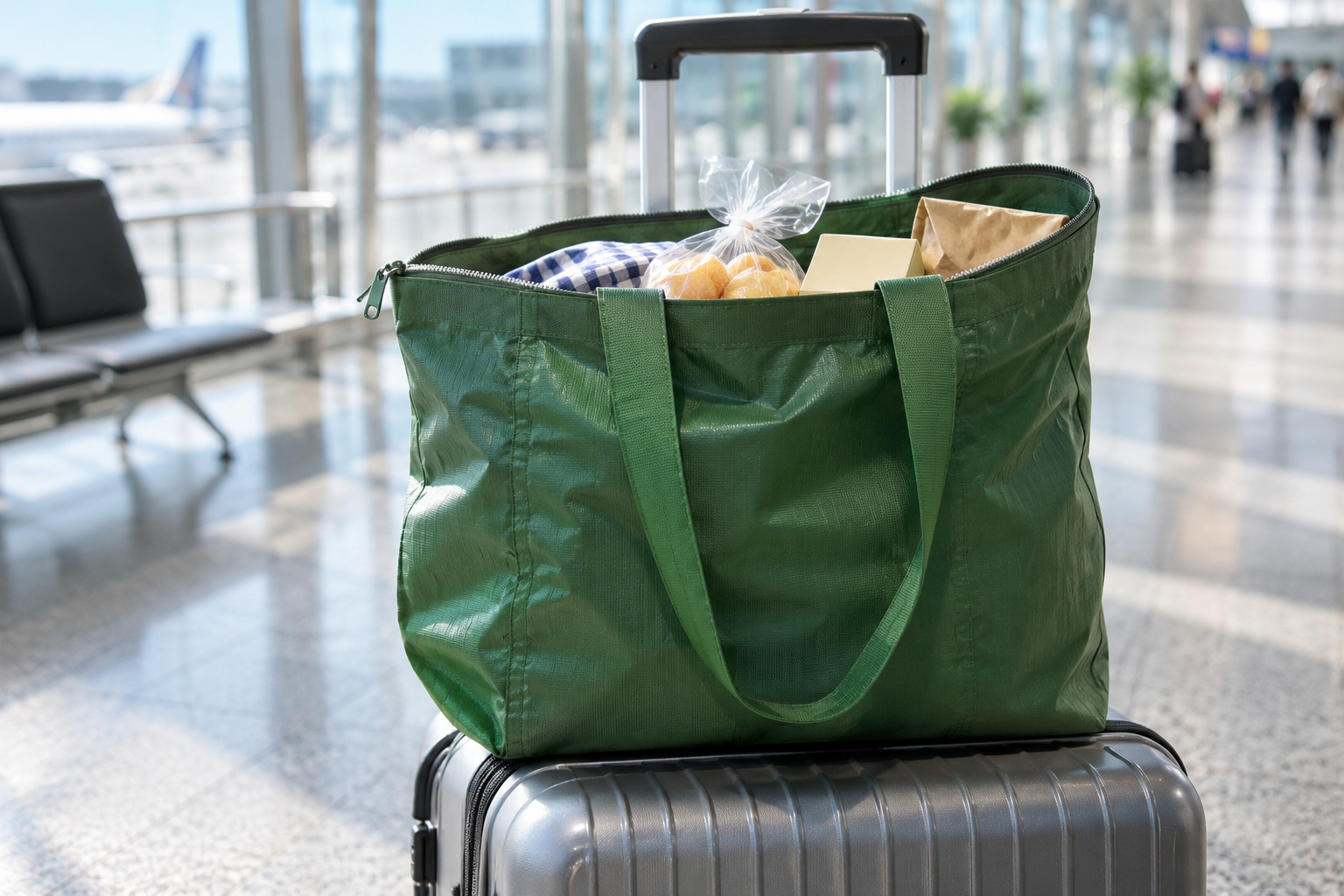
What counts as a souvenir is also widening. Starting November 13, 2026, the health and beauty chain Olive Young will sell its zippered tarpaulin shopping bag as a regular product, after many international visitors began carrying it home as a keepsake. One store's bag is not a market trend, but it shows that ordinary objects from Korean daily life can mean as much to a traveler as a fine craft.
Traditional Korean Souvenirs With Cultural Meaning
Korea's traditional crafts were household objects long before they were gifts. Knowing what each one was used for makes the choice, and the explanation later, much easier.
1. Hanji Paper Goods
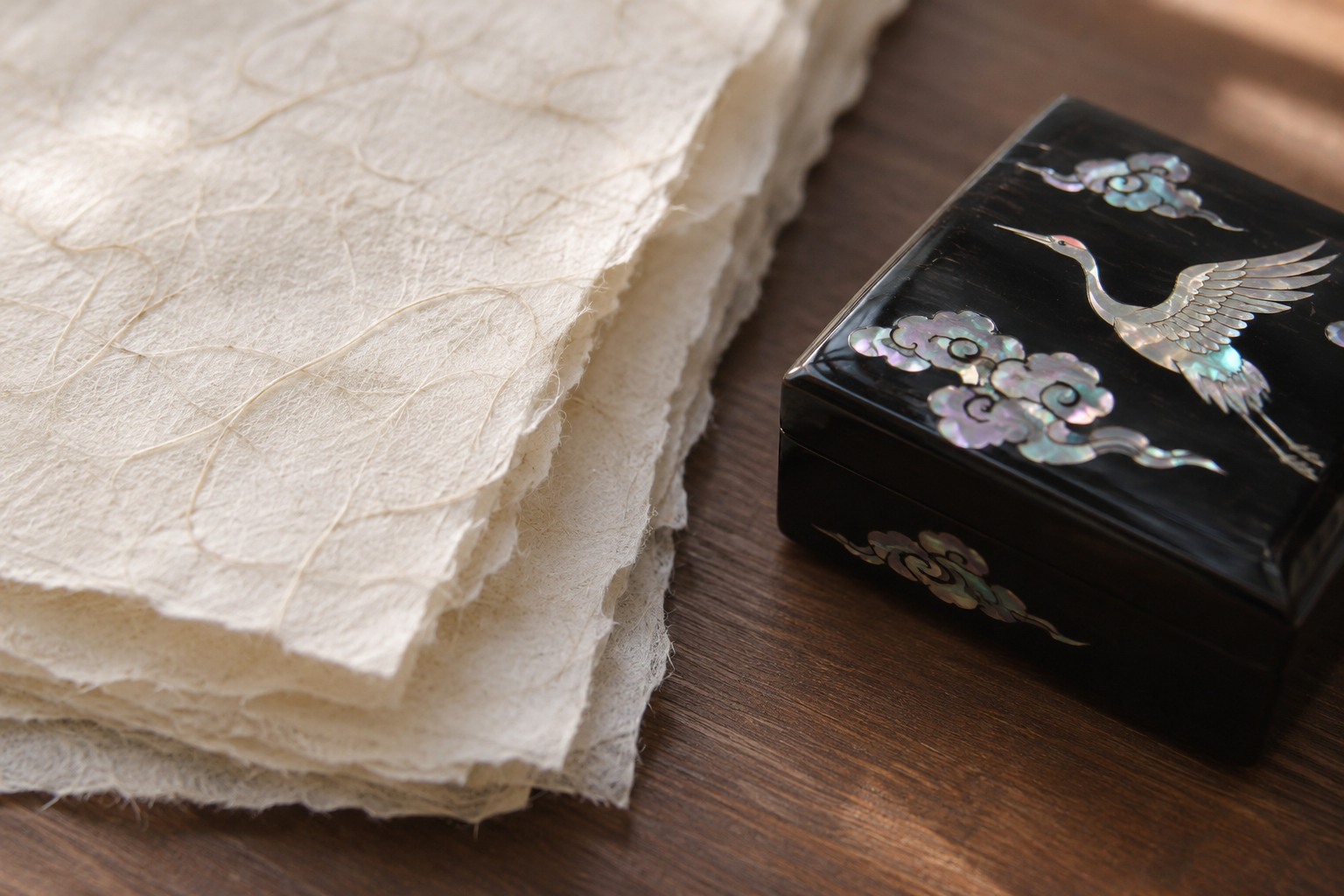
Hanji (한지) is paper made from the inner bark of the paper mulberry tree, dak (닥). Its long fibers make it strong enough that it was pasted over the lattice windows and doors of traditional houses, not only used for books and letters. Today it becomes notebooks, cards, and small boxes. The timing is good, too: UNESCO's evaluation body has recommended Korea's hanji papermaking nomination for the Intangible Cultural Heritage list, with a final decision expected at the committee meeting from November 30 to December 5, 2026.
2. Mother-of-Pearl Lacquerware (Najeonchilgi)
Najeonchilgi (나전칠기) combines najeon, thin pieces of shell set into a pattern, with chil, layers of natural lacquer. Cranes, peonies, and other symbols of long life are common motifs. Handmade pieces take many steps and are priced accordingly, so a compact mirror or card case is a sensible start. Cheaper versions may use printed or synthetic finishes, so ask whether the inlay is real shell and where the piece was made.
3. Celadon and White Porcelain
Korea's two best-known ceramic traditions look almost opposite. Goryeo-dynasty celadon (cheongja, 청자) is prized for its soft blue-green glaze, while Joseon-dynasty white porcelain (baekja, 백자) favors restrained forms such as the round moon jar (dalhangari, 달항아리). Contemporary potters work in both styles. One tea cup is easier to carry than a set and still gets used daily; have it wrapped and keep it in your carry-on.
4. Bokjumeoni (Lucky Pouch)
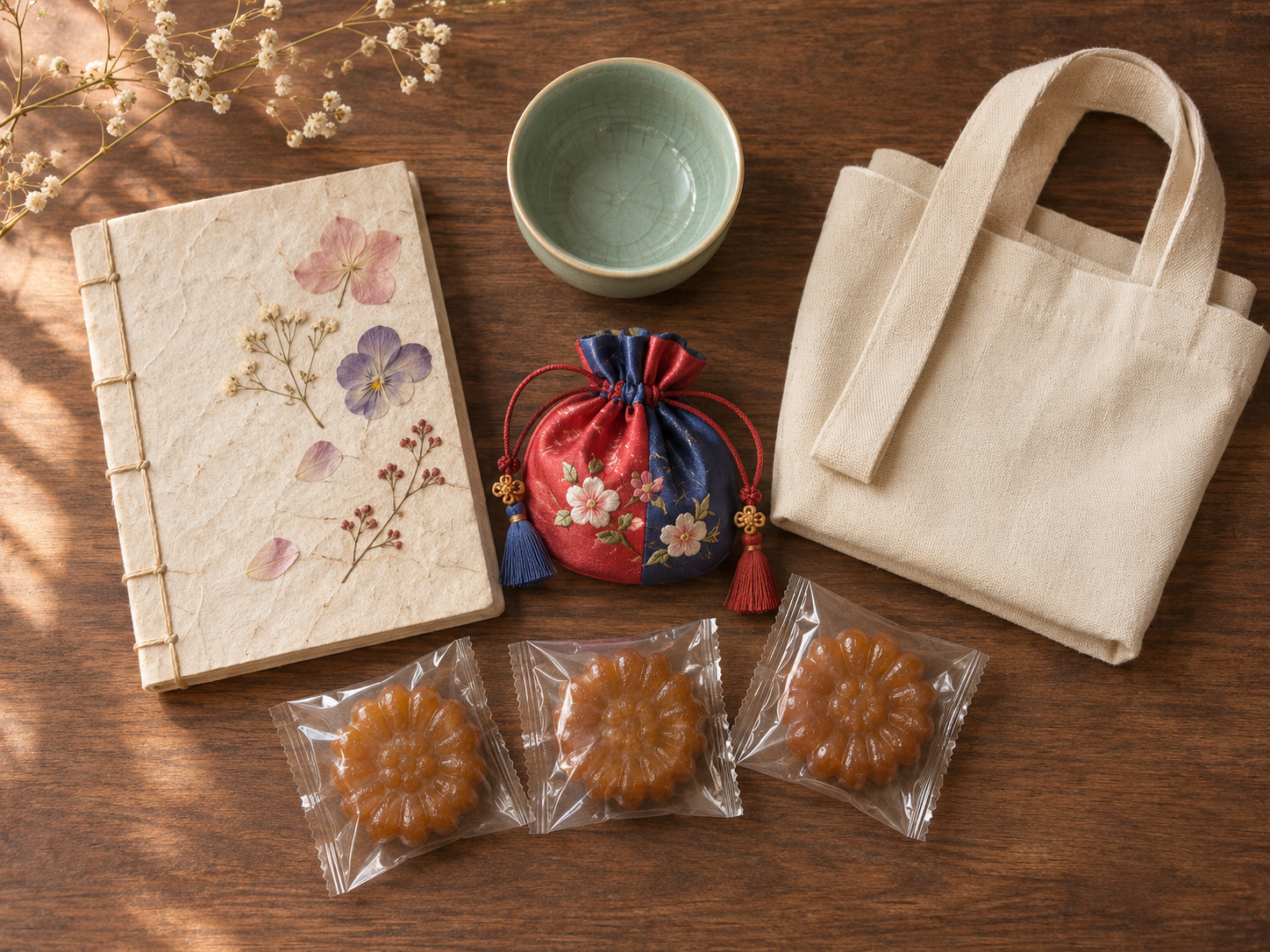
Traditional hanbok had no pockets, so people tied small pouches at the waist. The bokjumeoni (복주머니) adds bok, good fortune, and was exchanged at the start of the year as a wish for luck. On Seollal, the Lunar New Year, children in hanbok still often receive their New Year's money (sebaetdon, 세뱃돈) in one. Embroidered pouches are light, inexpensive, and handy for jewelry or a second small gift.
5. Dojang (Personal Name Seal)
A dojang (도장) is a carved personal seal, long used in Korea in place of a handwritten signature and still accepted for some formal documents. Insadong shops will carve a name in Hangul, Chinese characters, or English, giving the recipient their own name in Korean script. Each seal is made to order, so order early in your trip.
Modern Design for Everyday Life
Modern souvenirs come less from workshops and more from how people in Korea shop and spend their weekends. Read labels closely here, since a product sold in a Korean store is not always made in Korea.
6. K-Beauty Minis and Sheet Masks
Single sheet masks, travel kits, and lip products let a friend try a Korean formula without committing to a full bottle. Check the back label for the brand's home country and country of manufacture, because large chains also stock international brands. Liquids, creams, and gels over 3.4 ounces (100 ml) belong in checked luggage under TSA rules.
7. The Olive Young Reusable Bag
The tarpaulin tote began in January 2025 as a test at four Seoul stores, aimed at visitors who buy in bulk and want a large, sturdy bag. Visitors liked the waterproof material and zipper, and it soon became a familiar sight at Seoul's airports. From November 13, it goes on sale as the Olive Young Reusable Bag: 3,000 won for the large size and 2,000 won for a new medium size. The company says the medium bag will be sold nationwide and the large one at about 150 tourist-area stores. It is a modest object that shows how a Seoul shopping trip becomes part of the travel memory.
8. Museum Goods Inspired by National Treasures
MU:DS (뮷즈, from museum and goods), the National Museum of Korea's design brand, turns objects from the collection into everyday items. Its signature product is a miniature of the gilt-bronze Pensive Bodhisattva, the seated figure with one hand raised to its cheek. The National Museum Foundation of Korea reported cumulative sales of about 61,000 miniatures by the first half of 2026. These are modern design products inspired by artifacts, not pieces made with historical techniques, which is exactly their appeal.
9. Hangul Stationery and Stickers
Hangul, the Korean alphabet, was created under King Sejong in the 15th century, and its geometric letters translate easily into design. Korean stationery shops sell notebooks, pens, and postcards that use Hangul as a graphic element, plus sticker sets that have long been a safe gift for children. Kyobo Bookstore's stationery section is a good place to browse.
Korean Food Gifts Worth Bringing Home
The three picks below are shelf-stable and commercially packaged, the kinds of products that tend to clear U.S. agricultural inspection. Check expiration dates and keep the original packaging.
10. Gim (Roasted Seaweed)
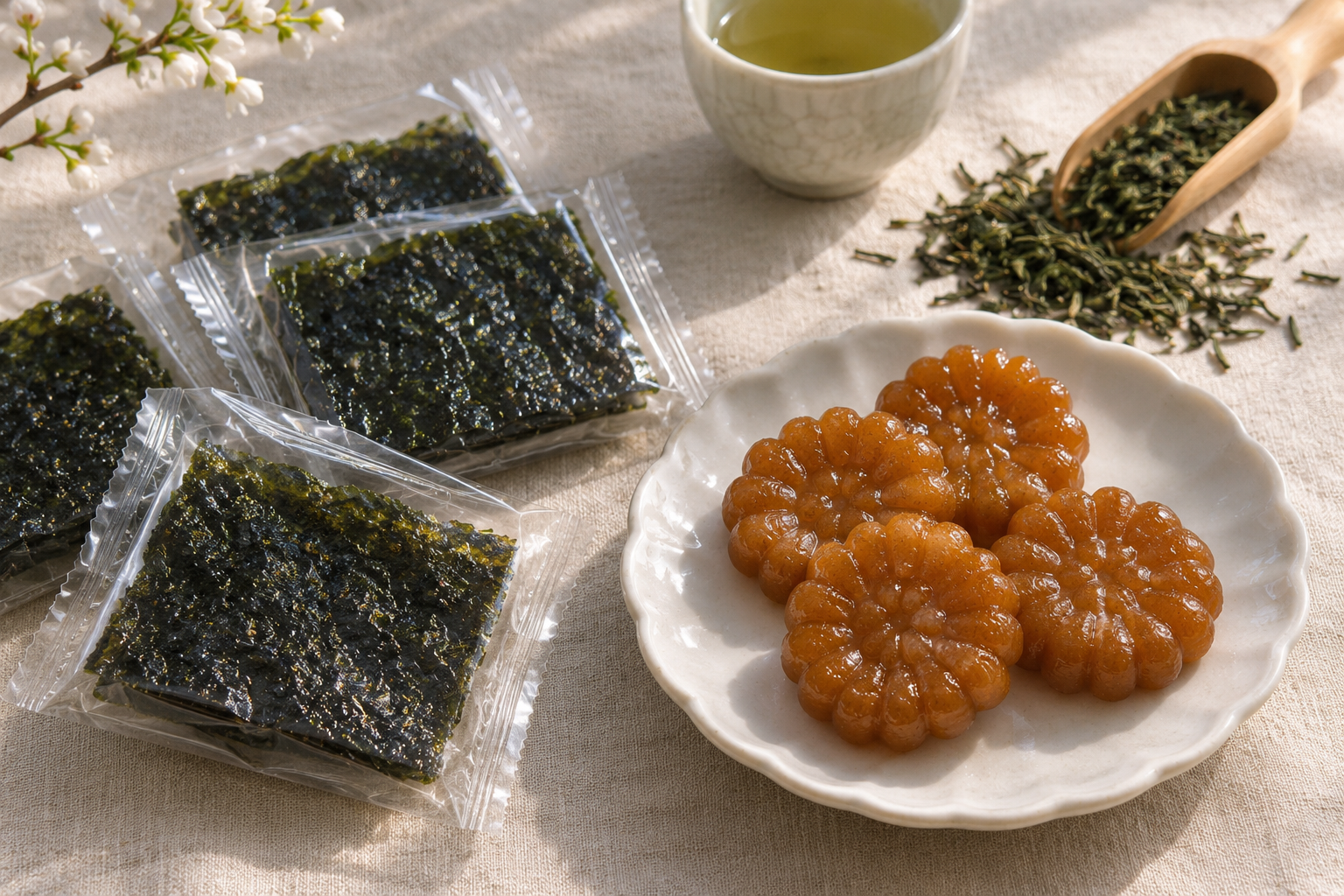
Gim (김) is laver pressed into thin sheets, roasted, and usually seasoned with oil and salt. In Korea it is everyday food, wrapped around a spoonful of rice or eaten from the snack pack. It weighs little but takes up space, so individually sealed gift packs travel better than large tins. Flavored versions can contain other ingredients, so read the label.
11. Yakgwa (Honey Cookie)
Yakgwa (약과) is a flower-shaped confection of wheat flour, honey, sesame oil, and ginger, fried and then soaked in syrup. The name pairs yak, medicine, with gwa, confection, reflecting the Joseon-era view of honey as nourishing. It long appeared mainly on ancestral rite tables and holiday spreads, and in recent years it has found younger fans in Korea through a taste for grandmother-style snacks, sometimes nicknamed halmaenial. Individually wrapped yakgwa is the easiest form to share.
12. Korean Tea
Green tea from Boseong and Jeju Island comes in boxed tea bags and loose leaf, both light and practical. Under USDA guidance, products made only from tea leaves may be brought in if declared. Yujacha (유자차), a sweet citron preserve stirred into hot water, is another classic, but its heavy glass jars belong in checked luggage.
Where to Buy Korean Souvenirs in Seoul
Insadong concentrates traditional crafts, from hanji to seals and pouches, and the Ssamziegil complex gathers many small shops under one roof. For clearer provenance, the KCDF Gallery on Insadong 11-gil, run by the Korea Craft & Design Foundation, has a shop selling work by Korean makers. Elsewhere, check origin labels, since souvenir stalls also stock imported goods.
Myeongdong packs beauty stores, including large Olive Young branches, into a few walkable blocks. It is the practical stop for sheet masks, minis, and the reusable bag.
Traditional markets, supermarkets, and convenience stores cover food. Gwangjang and Namdaemun markets are good for browsing, while supermarkets such as Emart and Lotte Mart sell gim and yakgwa in multipacks, often at lower unit prices than convenience stores.
The National Museum of Korea in Yongsan carries MU:DS goods in its museum shop. Popular items can sell out, so check the online shop before you go.
Tips for Choosing and Packing
Start with the recipient. Individually wrapped food and single sheet masks cover coworkers and groups. Close friends may appreciate something with a story, like a hanji box or a seal carved with their name, and children usually like stickers and bright pouches.
For budget, paper goods, snacks, and the 2,000 to 3,000 won reusable bag sit at the low end. Museum goods and handmade ceramics fall in the middle, and genuine najeonchilgi is the splurge worth buying slowly.
For the flight, pad ceramics and lacquerware and carry them on. Jars and liquids over 3.4 ounces go in checked bags.
Finally, check U.S. entry rules. U.S. Customs and Border Protection requires travelers to declare meats, fruits, vegetables, plants, and plant and animal products, including soup products. For Korean shopping, these points matter most:
- Products with meat ingredients, such as beef broth, are usually prohibited, so skip instant ramen with meat-based seasoning.
- Almost all fresh fruit is prohibited, Jeju tangerines included, and most dried fruit is restricted.
- Commercially packaged baked goods, candy, and tea-leaf products are generally allowed after inspection.
- Inspectors make the final call. USDA says travelers who declare everything face no penalty even if an item is refused, while CBP can assess civil penalties of up to $1,000 for an undeclared first-time offense.
Take a Little Piece of Korea Home
The best Korean souvenirs link an object to a way of living: paper that once covered windows, a pouch meant to carry luck into the new year, a cookie from the ancestral table, a shopping bag from an afternoon in Myeongdong. Choose a few with a story you can tell, pack them with care, and declare the food at the border.