A first-timer's guide to Busan, sorted by area: beach walks at Haeundae, evenings at Gwangalli, the Sky Capsule and Beach Train, a seaside temple, Jagalchi Market, Gamcheon's hillside lanes, three local dishes, and realistic one- to three-day plans.
Busan is Korea's big port city on the southeast coast, and most of the things to do in Busan fall into six kinds of experience: walking a city beach, riding a slow coastal train or elevated capsule, visiting a Buddhist temple built on the rocks above the sea, eating your way through a fish market and the busy streets around it, wandering a hillside village of stepped lanes, and watching the city light up at night across the water. You do not need all six on one trip. The better approach for a first visit is to pick the two or three that match how you like to travel, then build your days around the part of the city where those things sit.
That last point matters more in Busan than in many cities, so it comes first.
Busan is a city of separate areas, so plan by neighborhood
On a map, Busan looks compact. In practice, its main sights are spread along a long, uneven coastline and divided by hills, and getting from one cluster to another usually means a metro ride with a transfer, a bus, or a taxi through traffic. Places that look like neighbors can take longer to connect than you expect.
For planning, it helps to think of two main zones and one optional extra:
The east coast: Haeundae Beach, Haeundae Blue Line Park (with the Sky Capsule and Beach Train toward Cheongsapo and Songjeong), and Haedong Yonggungsa Temple farther north. Gwangalli Beach sits between this zone and the city center and fits easily into an east-side evening.
The old downtown and west: Jagalchi Market, the Nampo-dong shopping streets, BIFF Square, Gukje Market, and, up the hill to the west, Gamcheon Culture Village.
Yeongdo, the island just across the bridge from the old downtown: Huinnyeoul Culture Village and Taejongdae, both coastal walks you can add if you have time.
Metro Line 1 serves the old downtown, while Line 2 runs out toward Gwangalli and Haeundae, so crossing from one zone to the other generally involves a change of lines. If you only remember one thing from this guide, make it this: give each zone its own block of time instead of trying to zigzag between them.
The east coast: beach walks, coastal rides, and a temple by the sea
Haeundae Beach
What you do here: Walk. Haeundae is Busan's best-known beach, a long curve of sand backed by hotels and high-rises, and the appeal for most visitors is strolling the shoreline and the paths at either end. The beach also works as a starting point, since the Blue Line Park station at Mipo is at its eastern edge.
Why go: It is the easiest introduction to Busan's beach culture, it costs nothing to walk, and it puts you right where the east coast rides begin.
Good for: First-time visitors, families, and anyone who wants a relaxed morning near the water before doing something else.
Know before you go: Swimming is a summer activity with an official season, not something to plan on for a fall or winter trip. Outside summer, treat Haeundae as a place to walk and look rather than swim.
Haeundae Blue Line Park: Sky Capsule and Beach Train
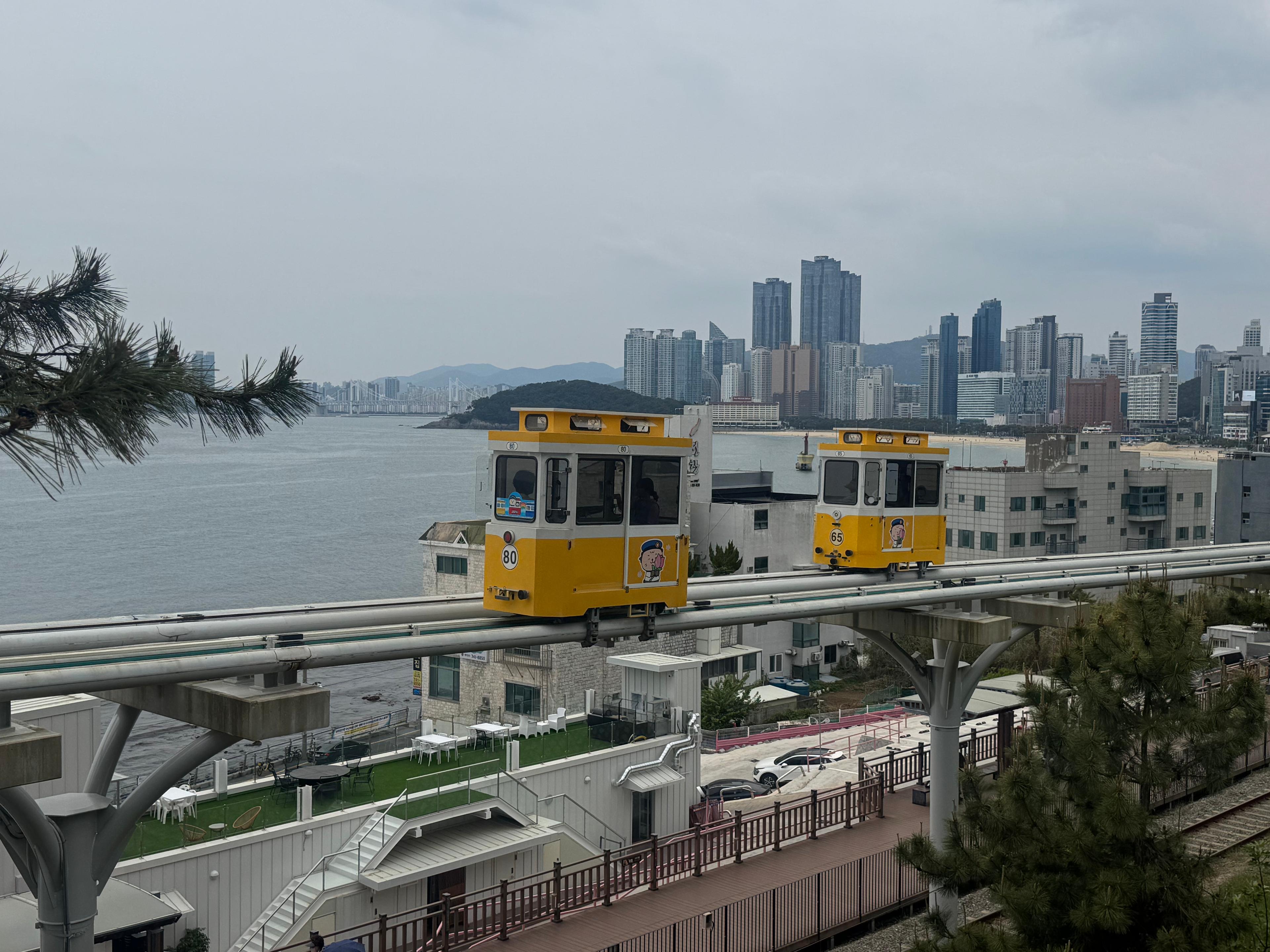
Haeundae Blue Line Park runs along an old coastal rail line, and it offers two different rides. They are easy to confuse, so it helps to separate them clearly.
The Sky Capsule is a small, colorful pod that travels slowly along an elevated track above the coast between Mipo and Cheongsapo. You ride in a private capsule with your own group, and the point is the slow, close-up view of the shoreline. It suits couples, small families, and anyone who wants the experience itself to be the activity.
The Beach Train is a sightseeing train that runs a longer route, from Mipo through Cheongsapo to Songjeong, with stops along the way. It suits travelers who want to explore more of the coastline, but stops and reboarding depend on the ticket purchased. Check the boarding limits before planning multiple stops.
These are separate rides with separate tickets, though combined options may be offered. Before you go, decide which experience you want, then check the official Haeundae Blue Line Park website for the current route, ticket types, operating hours, and booking options. Last departures are posted there and can change with conditions. Busy days can fill time slots, and booking ahead does not guarantee you will board without waiting, so build some slack into your plans.
Haedong Yonggungsa Temple
What you do here: Walk down to a working Buddhist temple set on rocks right at the edge of the sea. Most Korean temples sit in the mountains, which is what makes Haedong Yonggungsa unusual. You reach the main area by descending a long stone stairway, traditionally counted at 108 steps, then cross toward halls and pagodas with the waves breaking just below.
Why go: The meeting of temple architecture and open coastline is the reason to make the trip, especially if you are interested in Korean Buddhism or simply want a coastal view with more meaning behind it than a lookout point.
Good for: Travelers comfortable with stairs and crowds who want a cultural stop on the east side.
Know before you go: The temple is in Gijang, north of Haeundae, so plan on a bus or taxi rather than a walk from the beach. Every step down is a step you climb back up, and the site is not easy with a stroller or limited mobility. This is an active place of worship. Keep your voice down, give people who are praying space, avoid photographing worshippers up close, and follow any signs about where photos are not allowed inside halls.
Gwangalli Beach: Busan after dark
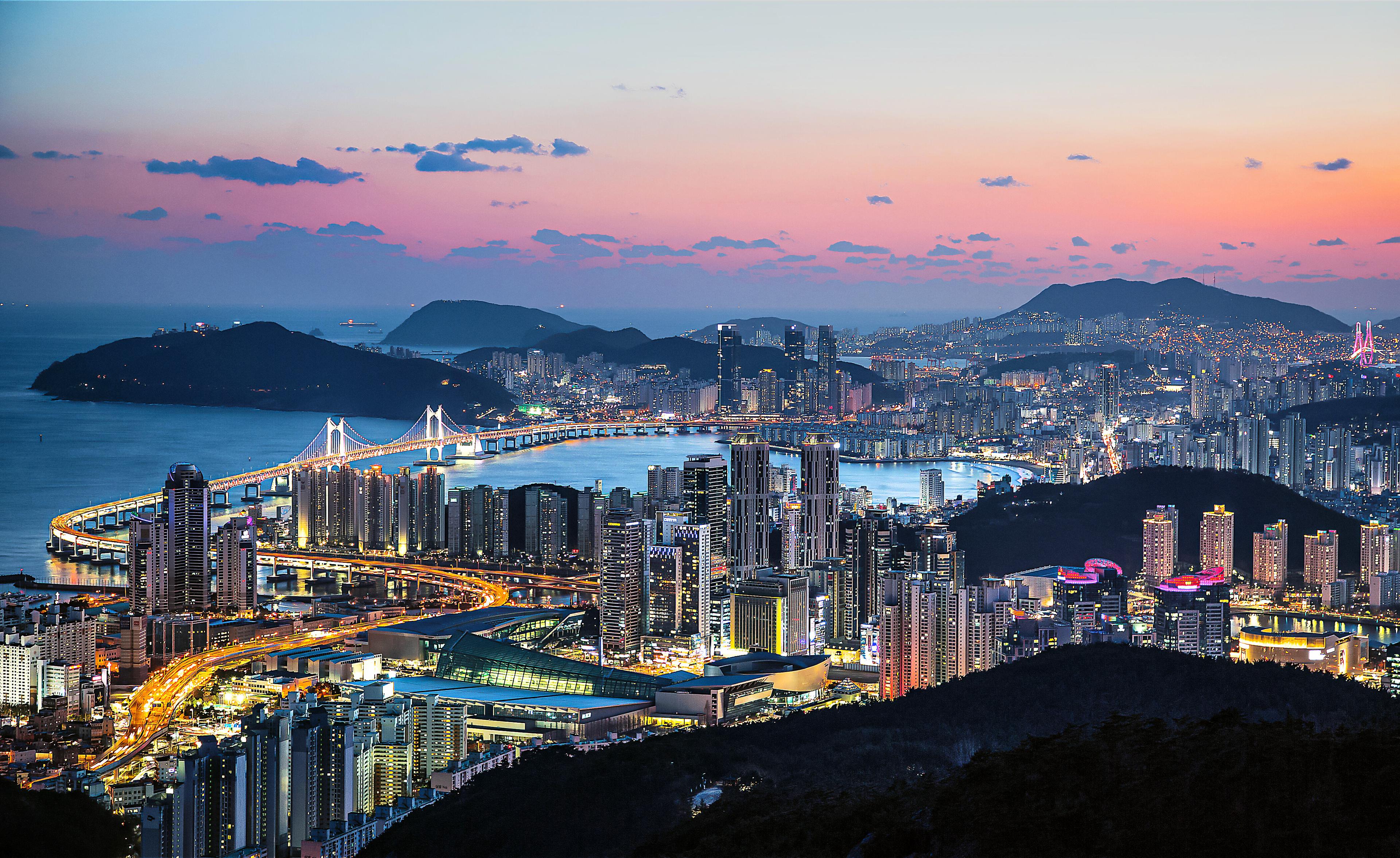
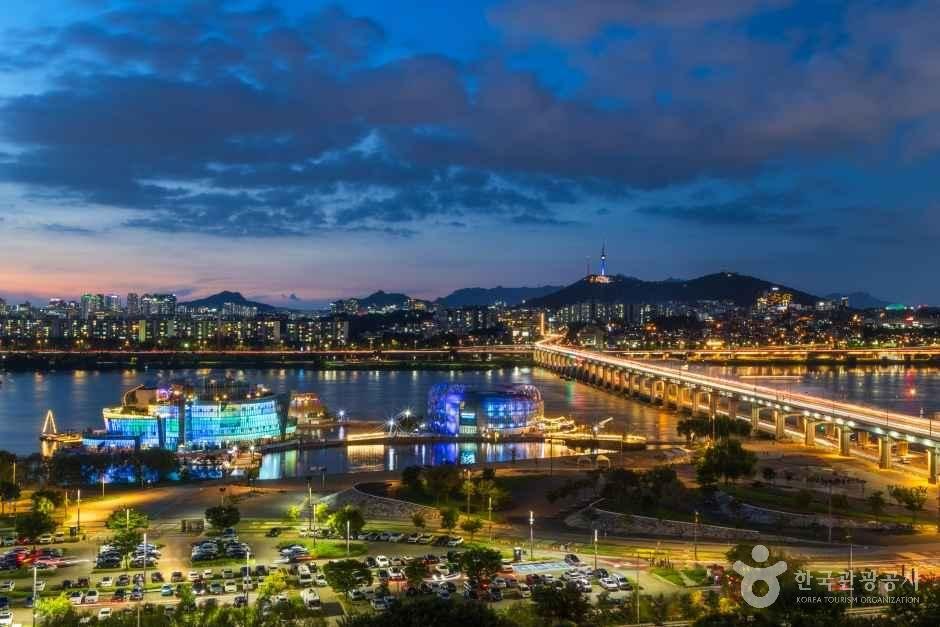
For this itinerary, Gwangalli is the evening stop: a beach walk with views of Gwangan Bridge and waterfront cafes. What sets it apart from Haeundae is the view across the bay to Gwangan Bridge, a long suspension bridge that is lit up at night. The waterfront road behind the sand is lined with cafes and restaurants, many of them with seats facing the bridge.
What you do here: Arrive near sunset, walk the sand, then settle into a cafe or a bench and watch the bridge lights come on. It is one of the simplest and most rewarding ways to spend an evening in Busan, and walking the beach costs nothing.
Good for: Couples, friends, and anyone who prefers a slow evening with a view over a packed schedule.
Know before you go: The lit-up bridge is something you can see on most nights. The Gwangalli drone light show is different: it is a scheduled event, generally held on Saturday evenings, with show times that vary by season and special performances on some dates. It is free to watch from the beach, but it can be canceled or delayed because of rain, wind, or technical problems. If you want to see it, check the official show schedule for your dates rather than assuming it runs every night. Large festivals, such as the city's autumn fireworks festival, are also one-time annual events, not regular evening entertainment.
The old downtown: markets, film street, and a hillside village
Jagalchi Market and the Nampo-dong streets
What you do here: Jagalchi is Busan's best-known seafood market, set along the harbor. You can simply walk through and look at the tanks and trays of fish, shellfish, and other sea creatures, or you can sit down for a seafood meal. From there, it is an easy walk into the Nampo-dong area, where BIFF Square (a street tied to the Busan International Film Festival, known for street food stalls and film-themed details) and Gukje Market (a large traditional market with clothes, household goods, and snacks) sit close together. Treat all of these as one walkable area for a half day or more.
Why go: This is where you see everyday Busan commerce up close, and it is the easiest place to try street food in one session.
Good for: Food-focused travelers, people who enjoy markets, and anyone who likes to wander without a fixed plan.
Know before you go: If you decide to eat seafood at Jagalchi, ask about the total cost before you agree to anything. A common setup is that you choose seafood from a vendor and a restaurant prepares it, and there can be separate charges for cooking, side dishes, or the table on top of the price of the seafood itself. Confirm the weight or portion, the price, and any extra fees first. If you do not eat seafood, the market is still worth walking through, and the surrounding streets have plenty of other options.
Gamcheon Culture Village
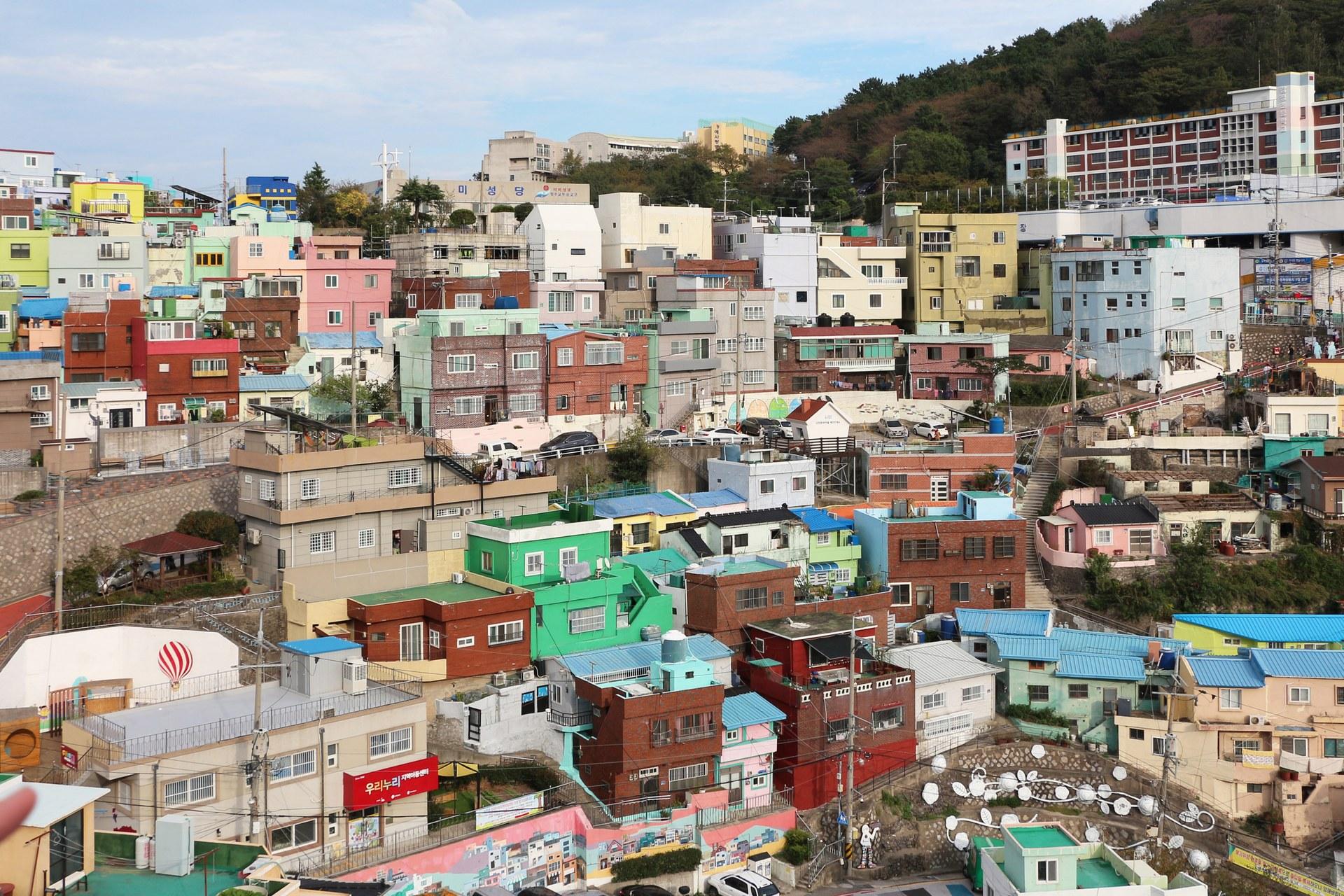
What you do here: Walk the narrow lanes and stairways of a neighborhood that climbs a steep hillside, with small painted houses stacked above one another and views down toward the sea. Murals, art installations, and small shops along the main route make it a place to explore slowly on foot.
Why go: The layered view of the village itself is the draw, along with the experience of moving through a neighborhood shaped by its hills.
Good for: Walkers and photographers who are comfortable with slopes and stairs.
Know before you go: Gamcheon is a residential neighborhood where people live, not an open-air set. Keep your voice down, stay on public paths, do not open gates or doors, and do not take photos into homes or of residents without permission. Some spots have signs asking visitors not to take pictures, and those should be respected. Visiting guidance and facility hours are posted by the village and by the Korea Tourism Organization, so check the latest information before you go. Wear shoes with grip, since the lanes are steep in places.
If you want one more coastal walk: Huinnyeoul or Taejongdae
Busan has more viewpoints than any short trip can hold, and many of them offer a similar mix of cliffs, sea, and sky. Rather than treating each one as essential, pick at most one of these based on your mood.
Huinnyeoul Culture Village, on Yeongdo, is a strip of small houses, cafes, and a walking path set along cliffs above the sea. It is a good choice if you liked the idea of Gamcheon but want something smaller and closer to the water. Like Gamcheon, it is a lived-in neighborhood, so the same rules apply: walk quietly, stay on the public path, and keep cameras away from people's homes.
Taejongdae, at the southern tip of Yeongdo, is a coastal park with rocky cliffs, a lighthouse, and lookout points. It suits travelers who want a more natural, hiking-style outing. A small sightseeing train called the Danubi runs inside the park for a fare, while walking the paths is an option for those who prefer it. Check current hours and conditions before you go, as coastal areas can close or become slippery in bad weather.
What to eat beyond the fish market
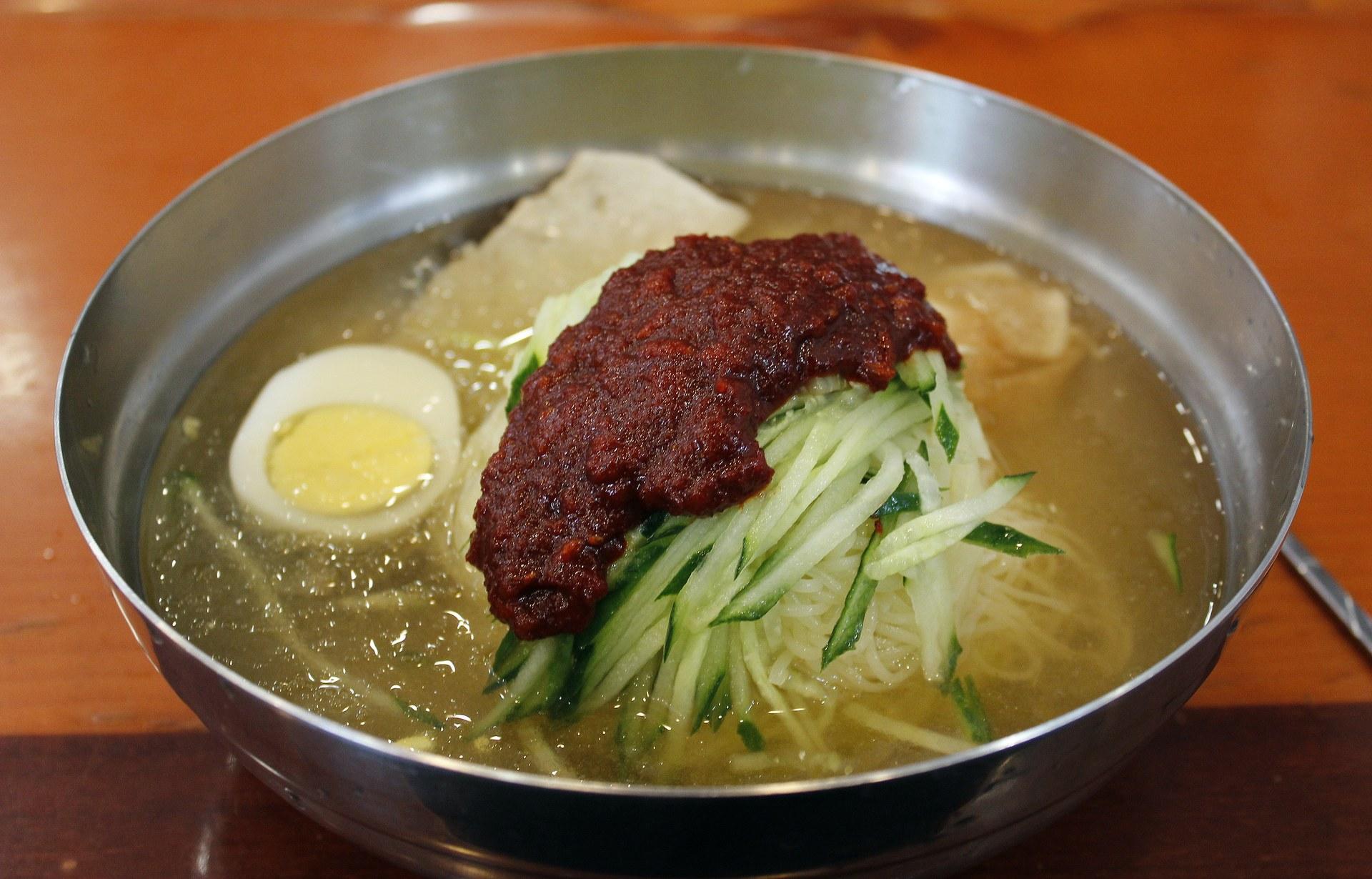
Busan’s food scene goes well beyond seafood platters. These three local favorites offer different flavors and textures, though ingredients and condiments vary by vendor.
Dwaeji gukbap (pork soup with rice) is one of Busan’s signature comfort foods. It combines pork, hot broth, and rice, with styles ranging from clear to milky broth. Rice may come separately or already in the soup. Seasonings vary by restaurant; salted shrimp, chives, and chili seasoning are common accompaniments. If you prefer a mild bowl, ask whether chili seasoning is already included.
Milmyeon (wheat noodles) is Busan's version of cold noodles. Chewy wheat noodles come in an icy, tangy, slightly sweet broth, or in a spicy sauce version with little or no broth. If you have tried naengmyeon, the cold buckwheat noodle dish, milmyeon looks similar but has a softer, wheat-based bite. It is especially refreshing in warm weather.
Ssiat hotteok (seed-filled sweet pancake) is a street snack. A round of dough is fried until crisp, its inside melts into brown sugar syrup, and it is then cut open and stuffed with a mix of seeds and nuts such as sunflower seeds, pumpkin seeds, and peanuts. The result is sweet, crunchy, and very hot inside, so let it cool for a moment before biting. You will find it at street stalls, particularly around BIFF Square. If you avoid nuts or seeds, ask about the filling first.
Free walks, ticketed rides, and plans that bend with the weather
Many of Busan's best experiences cost nothing. Walking Haeundae and Gwangalli beaches, watching the bridge lights at night, wandering Nampo-dong and the markets, and exploring the public lanes of Gamcheon and Huinnyeoul are all free in themselves, though you will spend money on food and shopping along the way.
Other experiences need a ticket or fare. The Sky Capsule and Beach Train at Blue Line Park are paid rides, and the Danubi train at Taejongdae has its own fare. Some small exhibits inside the villages may also charge. Prices and booking rules change, so confirm them on official sites close to your trip.
Because so much of Busan is outdoors, weather shapes a good plan. Rain and strong wind can pause outdoor rides and cancel the drone show, and they make stairs and coastal paths slippery. For a rainy-day alternative, focus on the indoor sections of Jagalchi Market and nearby cafes or restaurants. The surrounding shopping streets still involve outdoor walking, so they are not a fully sheltered option.
Sample plans for one, two, or three days
These are outlines, not fixed schedules. Each one keeps you mostly in one area per day.
If you have one day, choose one zone. For beaches and views, spend the morning walking Haeundae, ride either the Sky Capsule or the Beach Train in the afternoon, and finish the evening at Gwangalli. For food and neighborhoods, visit Gamcheon during the permitted daytime visiting hours, then continue to Jagalchi, BIFF Square, and Gukje Market. Trying to do both in one day mostly means spending it in transit.
If you have two days, give each zone a full day. Day one: the old downtown, with Gamcheon in the morning and the Jagalchi and Nampo-dong area in the afternoon. Day two: start at Haedong Yonggungsa, then work back toward Songjeong, Cheongsapo, and Haeundae, choosing either the Beach Train or Sky Capsule around your booking time. Finish at Gwangalli if time and energy allow. If this feels too full, skip the temple or the ride rather than rushing both.
If you have three days, add Yeongdo or slow down. Use the third day for Huinnyeoul or Taejongdae, which pair naturally with the old downtown since Yeongdo is just across the bridge. Or keep the third day open for anything you skipped, a second meal of dwaeji gukbap, or a Saturday evening at Gwangalli if the drone show is scheduled.
The common thread is simple: Busan rewards travelers who choose an area and stay there long enough to walk it, eat in it, and watch the light change over the water.