Cleansing balms and cleansing oils play a similar first-cleanse role, but their textures and handling differ. Learn how each format melts makeup and sunscreen, how emulsification works, and where either one can fit into a flexible K-beauty double-cleansing routine
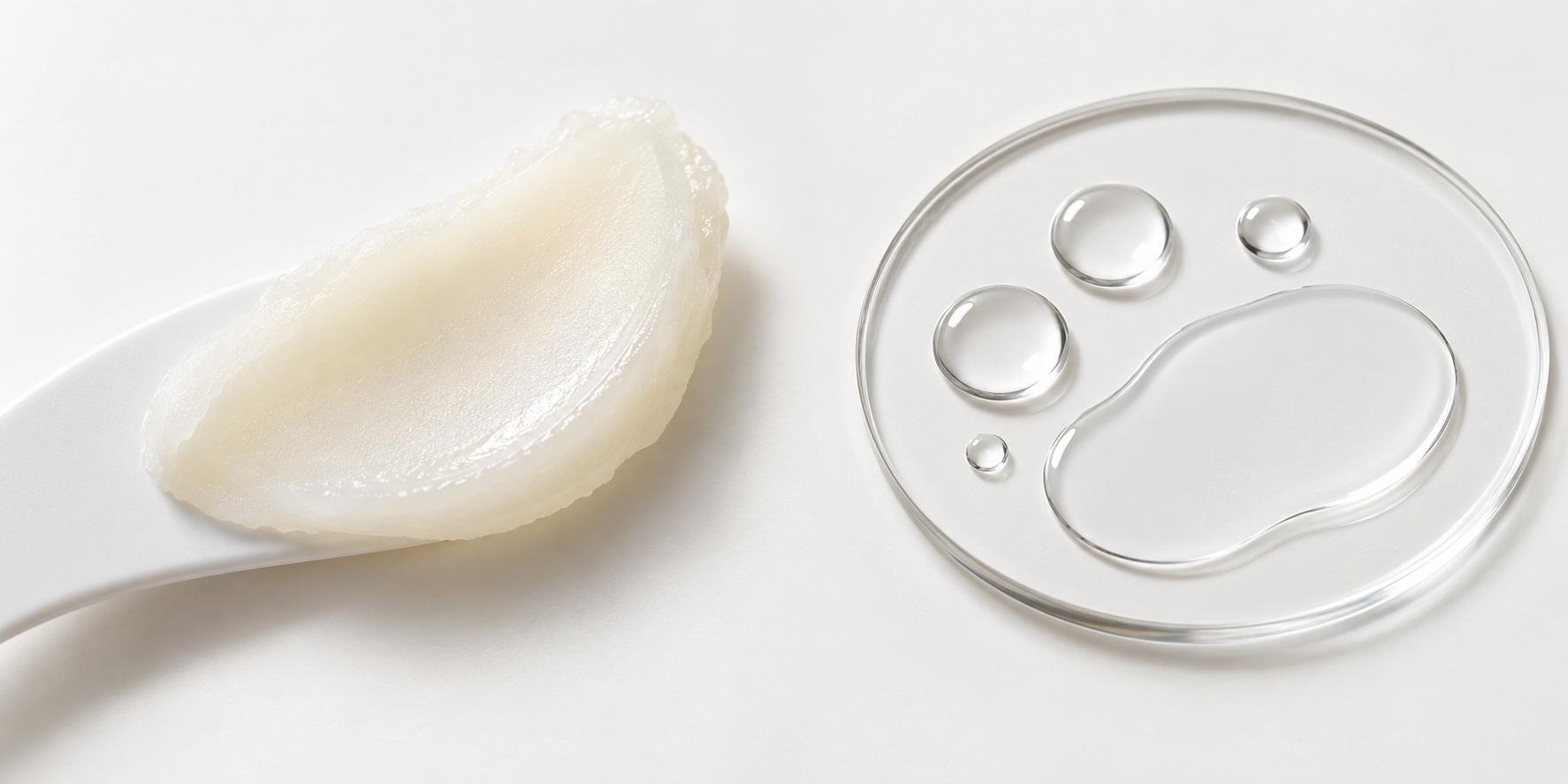
Cleansing balm and cleansing oil play a similar role: both are oil-based first cleansers designed to loosen makeup, sunscreen and other oil-soluble residue before rinsing. The main difference is their starting texture. A balm begins as a solid or semi-solid product, while an oil is already liquid. Once a balm warms and spreads across the skin, it behaves more like an oil.
That does not make the two formats interchangeable in performance. Two balms can rinse very differently, and so can two oils. The formula, directions and your skin's response matter more than the category name.
Two textures, a similar first-cleanse role
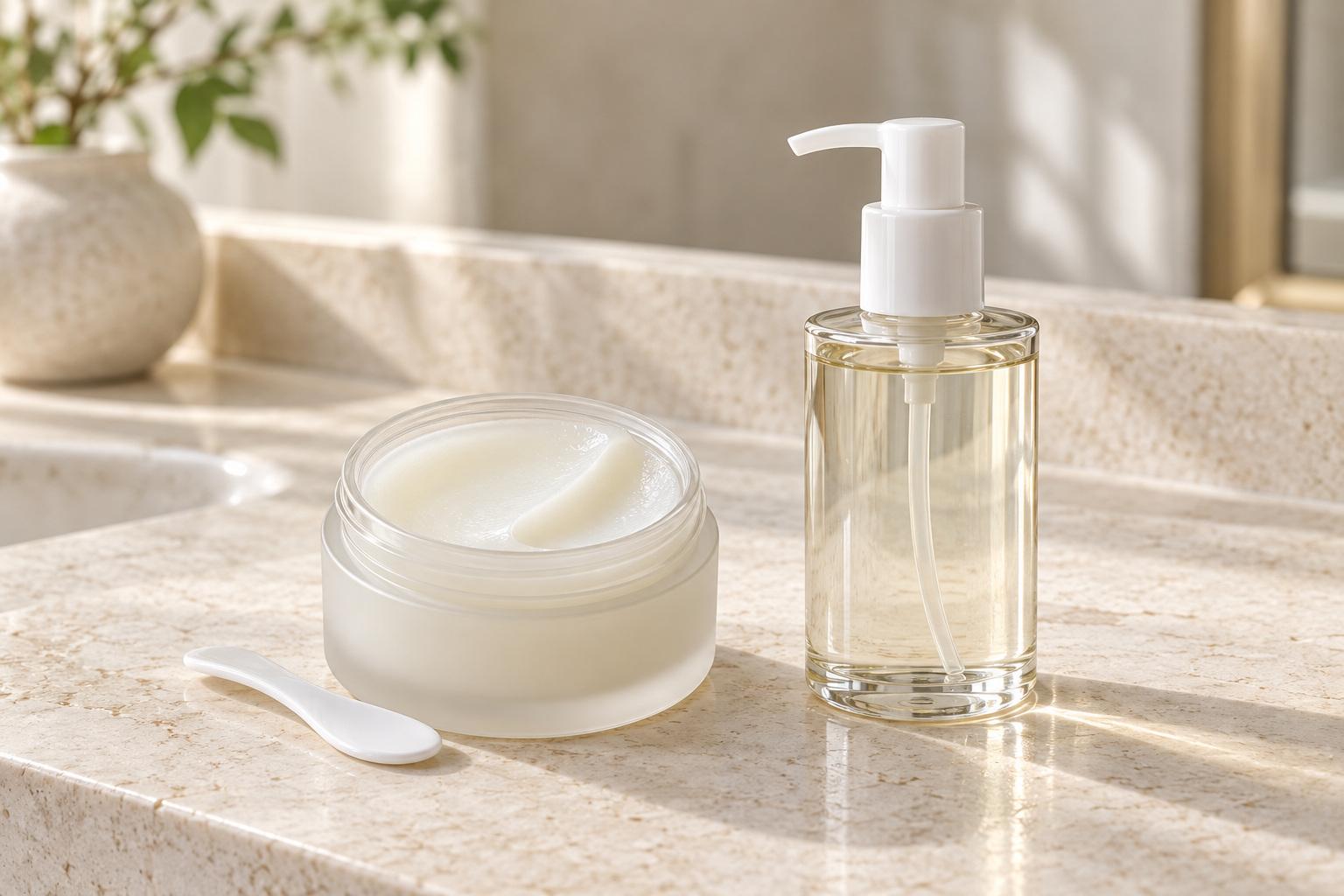
A cleansing balm holds its oil phase in a firmer base. It is usually scooped from a jar or dispensed from a tube, then softens as it is spread over dry skin. A cleansing oil is fluid from the start and is commonly poured or pumped into the hands.
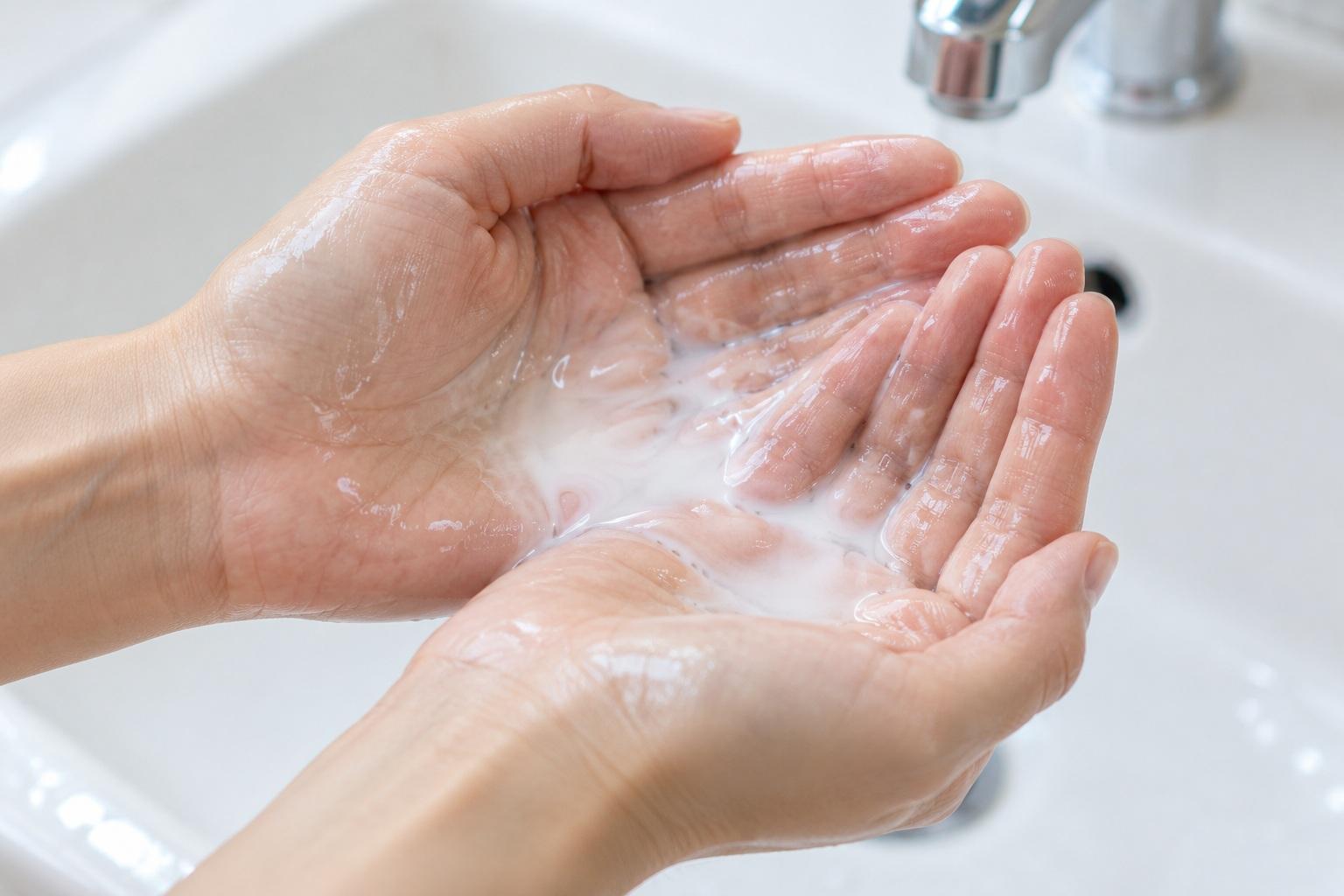
Formulated balms and oils also contain ingredients that help the oily phase disperse when water is added. This is why many rinse-off products turn cloudy or milky during use. The oil-rich phase helps loosen oil-soluble residue, while the emulsifying system helps carry the mixture away with water. Plain facial oil or cooking oil may not rinse the same way because it may not contain that system.
How to use either format
Read the product label first because the amount, contact time and rinsing directions vary. Many rinse-off cleansing balms and oils follow the same general sequence:
1. Start with dry hands and a dry face unless the label says otherwise.
2. Dispense the amount directed on the package. Use a clean, dry spatula if one is supplied with a jar.
3. Spread the cleanser gently over areas with makeup or sunscreen. Avoid scrubbing and follow the label's suggested massage time.
4. Add a small amount of lukewarm water. Many formulas become cloudy or milky as they emulsify.
5. Rinse thoroughly with lukewarm water and pat dry with a soft towel.
Do not judge every product by whether it produces a dramatic white emulsion. The visible change and the intended removal method vary by formula, so the label remains the better guide.
Where balm and oil differ in daily use
Texture and handling. A balm stays in place until it warms, while an oil spreads immediately and can run between the fingers. People who dislike drips may prefer a balm; people who want a fluid texture may prefer an oil.
Dispensing. Pumps can make repeat amounts easier, while jars let you scoop the amount you want. Neither is automatically more economical because package size, formula and actual use vary.
Travel. A solid format may be easier to pack, but no container is guaranteed leak-proof. Secure the lid or pump and follow travel rules for the package you carry.
Hygiene. The FDA lists consumer handling, including dipping fingers into a product, as one route for cosmetic contamination. Wash your hands, keep the container clean and tightly closed, and use a clean, dry spatula when the product provides one.
After-feel. Some products rinse with very little detectable residue, while others intentionally leave a softer finish. That difference is formula-specific and does not prove that one category cleans better.
Choose by what you need to remove
The most useful starting question is not whether balm or oil is better, but what is on your face. Light makeup and some non-water-resistant sunscreens may come off with a suitable regular cleanser. Long-wear makeup and water-resistant sunscreen may benefit from an oil-based first cleanser, but the removal directions for the makeup or sunscreen should come first.
A study of 20 participants compared water, a foaming cleanser and a cleansing oil on the specific non-waterproof and waterproof sunscreens tested. The cleanser and cleansing oil both worked for the tested non-waterproof sunscreen, while the cleansing oil performed better for the tested waterproof sunscreen. The study was small, used particular products and did not test cleansing balms, so it cannot establish a universal rule for every sunscreen or first cleanser.
Texture preference is still a valid deciding factor. Choose the format you can spread gently, rinse comfortably and use consistently without irritation.
Skin type is not a shortcut
The common rule that balms are for dry skin and oils are for oily skin is too simple. A balm is not automatically gentler or more moisturizing, and an oil is not automatically lighter or better for oily skin.
If your skin is dry or sensitive, pay attention to tightness, stinging and persistent redness after rinsing. Fragrance is a frequent cause of cosmetic contact reactions, and plant-derived ingredients are not automatically gentle. If your skin is oily or combination, you do not need to reject an oil-based cleanser on format alone. Evaluate the complete formula, how it rinses and what happens after repeated use.
Where Korean double cleansing fits
Double cleansing is widely associated with Korean skincare and is called ijung se-an in Korean. In the familiar two-step version, an oil-based product such as a cleansing balm or oil is used first, followed by a water-based cleanser such as a gel or foam when a second wash is needed.
This is a flexible method, not a rule that every K-beauty routine must follow. If you did not wear makeup or used products that wash off easily, one cleanse may be enough. Dry or sensitive skin can become uncomfortable when it is washed more than necessary. The American Academy of Dermatology recommends a gentle, non-abrasive cleanser, lukewarm water and no scrubbing. A tight or squeaky feeling is not a goal.
Reading Korean cleansing terms
Cleansing balm describes the solid or semi-solid format. Some Korean brands use sherbet to describe a light, scoopable texture that melts during application. Sherbet is a marketing texture description, not a regulated cleanser category.
Cleansing oil describes the liquid format. First cleanse (1차 세안) refers to the initial makeup- or sunscreen-removal step, while second cleanse (2차 세안) refers to a following wash when it is used. These terms describe steps, not a requirement to perform both every night.
Try a new cleanser carefully
Introduce one new product at a time. The American Academy of Dermatology describes an at-home use test in which a product is applied to a small area twice daily for seven to ten days. A rinse-off cleanser should remain on the test area only as long as the directions say, or for about five minutes when appropriate. This can help screen for an obvious reaction, but it is not the same as medical patch testing performed to diagnose an allergy.
Stop using the cleanser if it causes persistent stinging, redness, itching, swelling or marked dryness. Severe or recurring reactions should be discussed with a board-certified dermatologist.
The practical conclusion is simple: balm and oil can fill a similar first-cleanse role, but neither format wins by default. Choose by the product directions, what you need to remove, the texture you prefer and how your skin responds.
Frequently asked questions
Is cleansing balm gentler than cleansing oil?
Not automatically. Gentleness depends on the complete formula, how the product is used and your individual response.
Do I need balm or oil to remove sunscreen?
Not always. Follow the sunscreen's removal directions. A regular cleanser may remove some non-water-resistant products, while an oil-based first cleanse may help with water-resistant or long-wear formulas.
Why does my cleansing oil turn milky with water?
Many formulas contain emulsifying ingredients that help the oily phase disperse in water so the cleanser and loosened residue can be rinsed away.
Do I have to double cleanse every day?
No. Double cleansing is an optional method that can be useful on heavier makeup or sunscreen days. One gentle cleanse may be enough on other days.