Niacinamide helps the skin barrier hold moisture, fades the look of dark spots and tempers oil. Here is what the research supports, how Korean serums pair it with propolis or tranexamic acid, and how to read the percentage on the label.

Niacinamide is a form of vitamin B3, and on skin it does several modest, useful things rather than one dramatic one. The best-supported are helping the skin barrier hold on to moisture and fading the look of dark spots. It can also lower oil production, and with steady use skin tends to look smoother, with pores that are less noticeable, though no topical ingredient has been shown to shrink the pores themselves.
So when people ask what is niacinamide good for, the honest answer is a short list rather than a single benefit. That breadth is also why Korean brands so often pair it with other ingredients, and why the percentage on the label tells you less than it seems to.
Five things niacinamide does for skin
Most of the clinical evidence comes from studies lasting 4 to 12 weeks, using leave-on creams with 2 to 5 percent niacinamide.
It supports the skin barrier
The outermost layer of skin relies on lipids called ceramides to keep water in. Research has found that niacinamide increases the skin’s own production of ceramides and related lipids, along with lower water loss through the skin. A better-hydrated barrier also tends to tolerate other products more easily.
It evens the look of skin tone
Niacinamide does not stop skin from making pigment. Instead, it slows the transfer of pigment packets, called melanosomes, from the cells that produce them to the surrounding skin cells. In a 2002 trial, a 5 percent niacinamide moisturizer reduced the appearance of hyperpigmentation compared with the same moisturizer without it after four weeks. Results are gradual and depend on daily sunscreen.
It helps balance oil
In a four-week placebo-controlled study in Japan, a 2 percent niacinamide moisturizer lowered the rate at which participants’ skin produced sebum, and a parallel study in the United States found lower levels of oil on the skin’s surface. The effect is real but modest, which describes most of niacinamide’s benefits fairly.
It makes pores look less obvious
Pores look larger when filled with oil and surrounded by rough skin, so reducing both can make them less visible. It does not change their actual size.
It refines overall texture
A 12-week split-face trial of a 5 percent niacinamide moisturizer in women aged 40 to 60 found improvements in fine lines, texture, red blotchiness and sallowness compared with the moisturizer alone.
How Korean brands build formulas around niacinamide
In Korea, niacinamide has an official role. The Ministry of Food and Drug Safety recognizes it as an active ingredient for brightening “functional cosmetics,” or gineungseong hwajangpum (기능성화장품), a category that requires a regulatory review or report before a product can make that claim. Those products carry the word 기능성화장품 on the box.
The more distinctive habit is pairing. Many Korean formulas treat niacinamide as one partner among several, matched with hydrating, soothing or brightening ingredients for a specific concern. Brands outside Korea do this too, so the approach is common rather than unique. Two widely sold Korean serums show how differently it plays out.
Beauty of Joseon Glow Serum: Propolis + Niacinamide
The brand lists 60 percent propolis extract and 2 percent niacinamide, along with a gentle BHA in the form of betaine salicylate. It is a cushiony serum positioned for visible pores, redness and oil-moisture balance, with niacinamide at a low percentage and propolis doing much of the hydrating and calming.
Anua Niacinamide 10 TXA 4 Serum
Anua lists 10 percent niacinamide, 4 percent tranexamic acid and 2 percent arbutin, with ceramides and hyaluronic acid added for hydration. It is a watery serum aimed at dullness, dark spots and the look of enlarged pores, taking the opposite route: a higher niacinamide percentage stacked with two other brightening ingredients. Neither is better in the abstract; they are built for different concerns.
How much niacinamide do you need?
Most of the human studies behind niacinamide’s reputation used 2 or 5 percent. A safety assessment by the Cosmetic Ingredient Review expert panel reported no irritation in use tests at concentrations up to 5 percent and no stinging in clinical testing up to 10 percent. Serums at 10 percent and above are now easy to find, but there is little published evidence that benefits rise in step with the number, and sensitive skin has more opportunity to react.
The percentage in a product name describes niacinamide alone, not everything active in the bottle. If no percentage is given, the ingredient list offers a rough clue, since ingredients are listed largely in descending order of amount. And the rest of the formula matters as much as the figure: a 2 percent serum with an exfoliating acid and a 10 percent serum with two brightening agents can feel very different on the same face, while a cleanser rinsed off within a minute is not comparable to a leave-on serum at any percentage.
How to use niacinamide in your routine
Apply it after cleansing (and toner, if you use one) and before moisturizer. It works morning or night, once or twice a day. If your skin is reactive, start once a day.
Niacinamide generally layers well with hydrating ingredients and with retinoids. Advice on combining it with pure vitamin C (L-ascorbic acid) varies, so follow the product’s directions and use them at different times of day if you notice stinging. Also watch for doubling up across several niacinamide products.
Before putting a new formula on your whole face, test it on a small area such as the inner forearm or along the jawline, and stop if you see redness, itching or burning. If your goal is a more even tone, a daily broad-spectrum sunscreen with SPF 30 or higher is part of the plan rather than an optional extra. Give any product two to three months before judging it.
Matching the formula to the concern:
Oily skin or visible pores: a lightweight serum or gel at 2 to 5 percent, often paired with BHA or zinc.
Dark spots or uneven tone: niacinamide combined with other brightening ingredients such as tranexamic acid or arbutin, always alongside sunscreen.
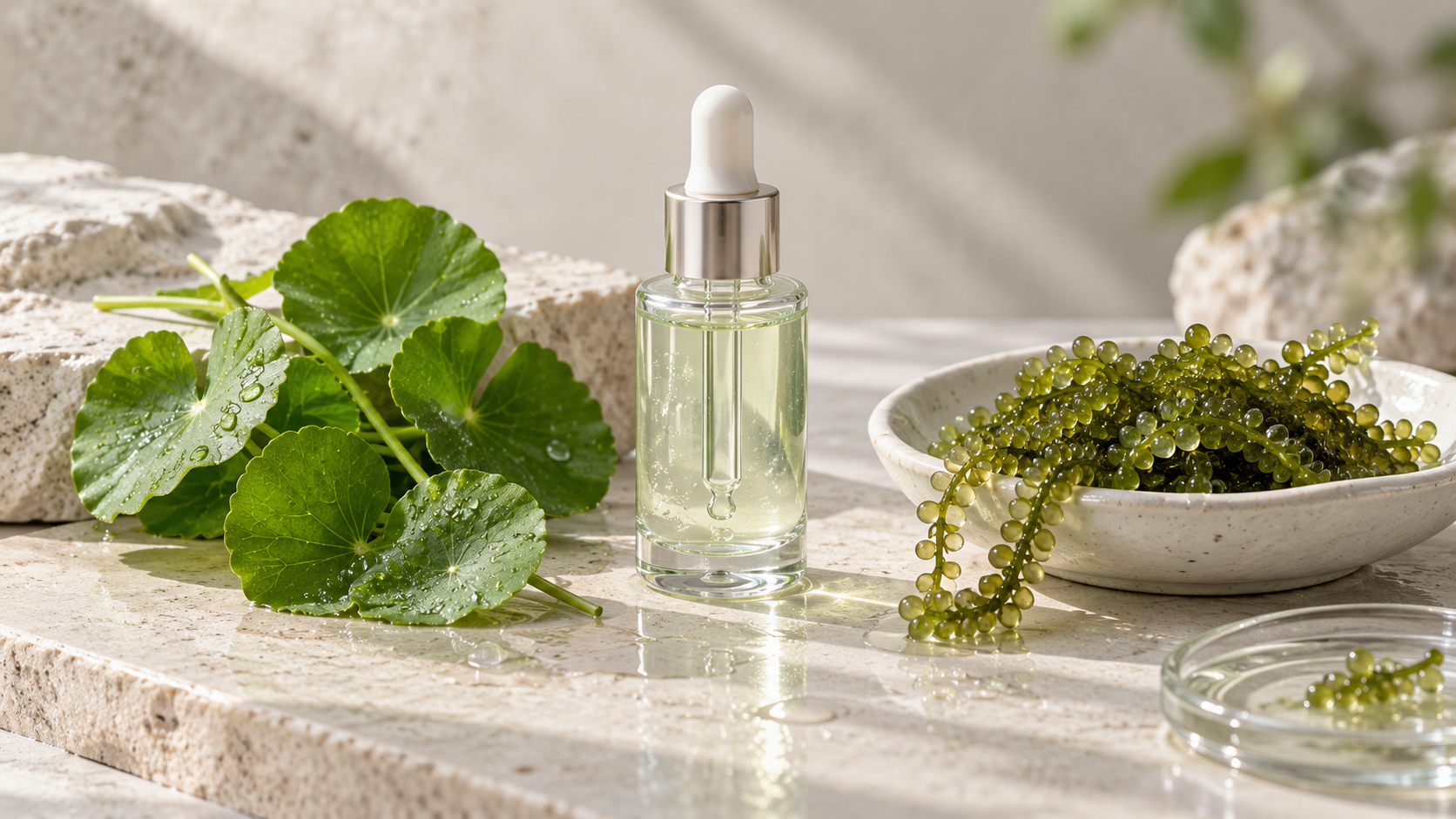
Dry or easily irritated skin: a lower percentage in a formula with barrier-supporting partners like ceramides, panthenol or centella.
Persistent breakouts, melasma or ongoing redness: worth a dermatologist’s assessment, since a cosmetic serum is not a treatment for any of them.
Choosing the right formula
The useful question is not how high the percentage goes but what the whole formula is built to do. A 2 percent serum surrounded by soothing ingredients and a 10 percent serum stacked with brightening agents are aimed at different faces. Many Korean products put that pairing right in the name, which makes the choice easier to read.