Still dry after moisturizing? Here’s why skin stays tight and flaky, how hydration differs from moisturization, and a simple K-Beauty layering routine built for dry skin.
Most people who type “why is my skin so dry” into a search bar have already tried the obvious fix. They own a moisturizer, and they use it. Their skin still feels tight by lunchtime.
The short answer is that dry skin is a water problem before it is a product problem. Skin feels dry when its outer layer loses water faster than it can hold on to it, and the usual causes sit outside the jar: dry air, indoor heating, long hot showers, harsh cleansers and too much scrubbing. A moisturizer can only do so much while those habits keep pulling water out. Sometimes the formula is a poor match, and sometimes persistent dryness is a sign of a skin condition that calls for a dermatologist rather than a new cream.
Why Is My Skin So Dry Even When I Moisturize?
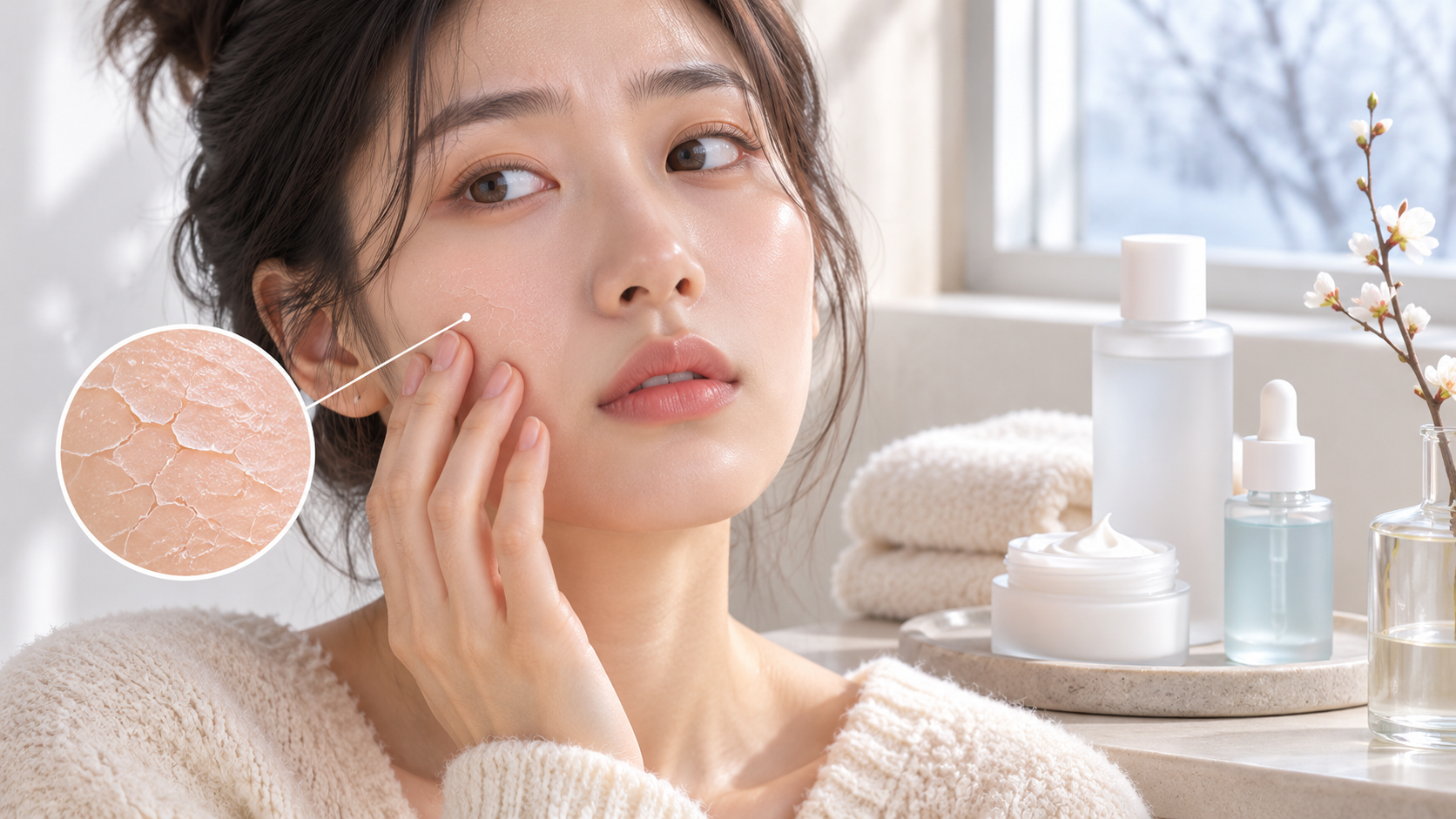
If you moisturize faithfully and your skin is still dry, the cause usually falls into one of these patterns.
- The air around you is dry. Cold winter air holds little moisture, and central heating, space heaters and fireplaces lower indoor humidity further.
- Your washing routine is removing oil. Long, hot showers, bathing more than once a day, and soaps designed to cut grease all take some of the skin’s own oils with them.
- You are exfoliating too often. Scrubs, rough washcloths and frequent acid exfoliants can wear down the skin’s outer layer, and retinoids can be drying as well. If your question is closer to “why is my skin so dry and flaky,” check this first; scrubbing flakes away tends to set up the next round of flaking.
- The moisturizer doesn’t fit the job. Lotions contain more water than creams and may not last long on very dry skin, while fragrance and drying alcohols can irritate it. Timing matters too: moisturizer applied hours after a shower misses the moment when it helps most.
- Something else is going on. Aging skin makes less of the oil it needs to hold water. Eczema (atopic dermatitis) and psoriasis often cause dry skin, and so can diabetes, an underactive thyroid, kidney disease and some medications.
Only one of these is about the moisturizer itself, which is why switching products alone often changes less than people expect.
Hydration vs. Moisturization: What’s the Difference?
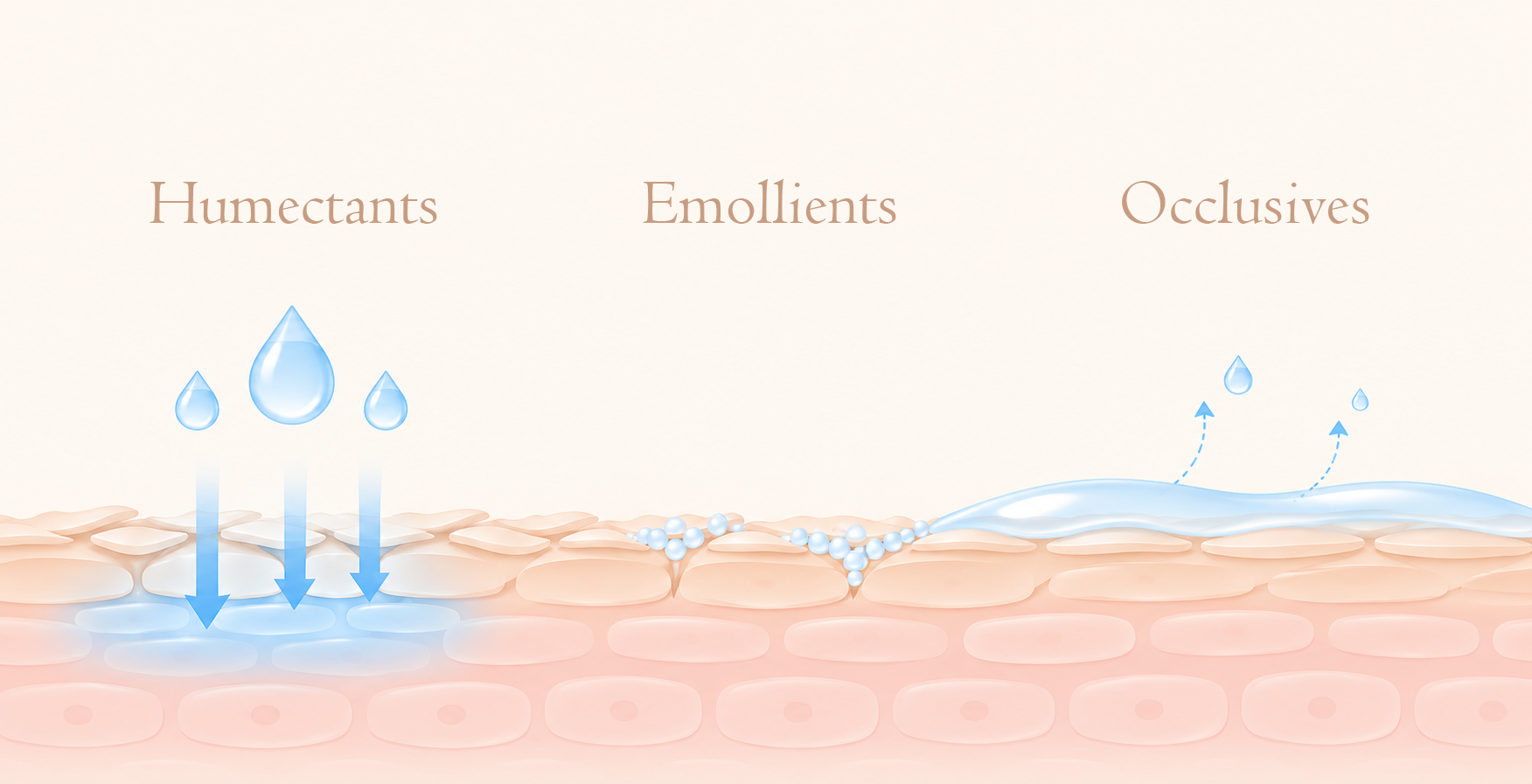
The two words are used interchangeably on labels, but they describe different jobs. Hydration means bringing water into the skin. Moisturization, in the stricter sense, means keeping that water from escaping. Dry skin usually needs both.
- Humectants draw water into the outer layer of skin. Glycerin, hyaluronic acid, urea and lactic acid are common examples.
- Occlusives form a thin film on the surface that slows water loss. Petrolatum, dimethicone, lanolin and mineral oil belong here.
- Emollients smooth the rough surface that dryness leaves behind. Shea butter and jojoba oil are familiar ones, and some oils work as both emollients and occlusives.
- Ceramides are lipids the skin already makes to hold moisture; in a moisturizer, they support that natural structure.
So a watery humectant layer on its own, such as a hydrating toner or a hyaluronic acid serum, can feel refreshing and still leave skin tight an hour later if nothing seals over it. For very dry skin, creams and ointments generally hold water in better than lotions. A gel or light lotion often suits the face unless the skin there is very dry, which is one reason a single formula rarely works for the whole body.
What Can K-Beauty Teach Us About Dry Skin?
Korean skincare has a word for the texture people with dry skin are usually chasing: chok-chok (촉촉), skin that feels moist and supple rather than greasy. The ideas behind it are more modest than the “10-step routine” headlines suggest.
The first is layering by texture. Korean routines generally move from the thinnest, most watery product to the thickest, so a hydrating toner or essence goes on first and a cream goes on last. Read against the humectant and occlusive split above, the logic is plain: water-attracting layers underneath, a water-holding layer on top. A Korean toner is also a different product from the astringent toner many Americans grew up with; it is meant to add moisture after cleansing, not to strip oil.
The second is attention to the skin barrier, or pibu jangbyeok (피부 장벽). Many Korean routines are built around keeping that outer layer comfortable, which favors gentle cleansers and moisturizing formulas over harsh ones. The idea is useful as long as it is not stretched too far. Weather, age and medical conditions cause dryness too, and not every dry patch means the barrier is damaged.
Layering also does not mean that more is better. Two well-chosen layers can do more for dry skin than seven mismatched ones, and every extra product is another chance for fragrance or an irritant to slip in. The part worth borrowing is the order and purpose of each layer, not the count.
A Simple K-Beauty Routine for Dry Skin
- Cleanse gently. Use a mild, fragrance-free, non-soap cleanser with lukewarm water, keep it brief, and pat your skin dry instead of rubbing.
- Add a hydrating layer if your skin likes it. A hydrating toner or a serum with glycerin or hyaluronic acid can go on while skin is still slightly damp. This step is optional; skip it if it stings or isn’t needed.
- Seal with a moisturizer. Choose a fragrance-free cream that pairs humectants with occlusives or ceramides, and apply it within a few minutes of washing.
- Protect in the morning. Finish with a broad-spectrum sunscreen of SPF 30 or higher, or a moisturizer that contains one.
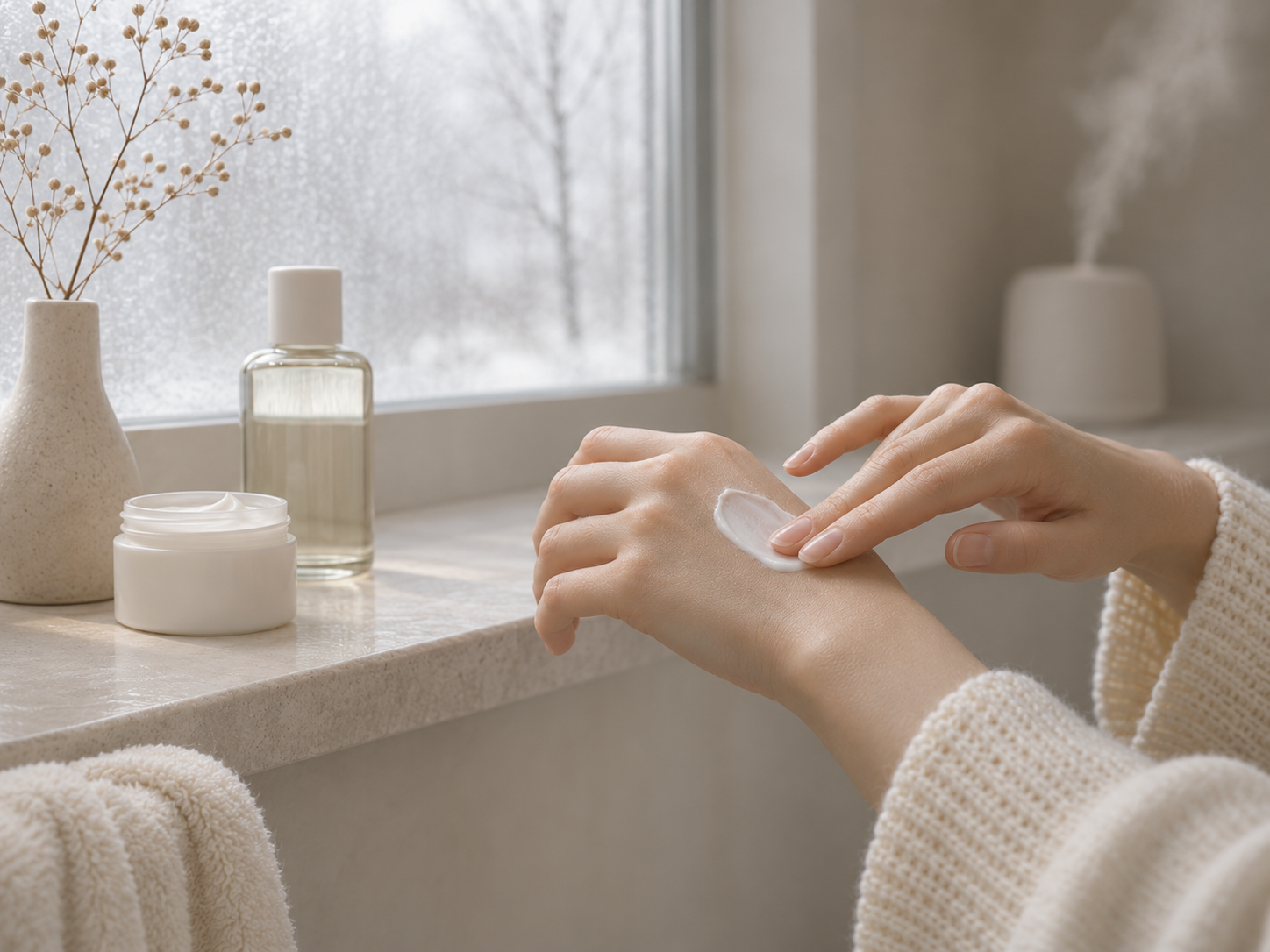
The same logic applies below the neck: keep showers to about five to ten minutes in warm water, then moisturize while your skin is still damp. A humidifier in the bedroom can help during heating season, as long as it is cleaned regularly.
Season matters as well. Seoul swings from humid summers to cold, dry winters, and most Korean homes are warmed by ondol (온돌), underfloor heating descended from traditional heated-stone floors. Against that calendar, a light gel in July and a richer cream in January is an ordinary adjustment, and it makes just as much sense in Chicago or Denver.
When Should You See a Dermatologist?
With consistent care, most dry skin improves, often within a couple of weeks. Make an appointment if:
- dryness continues despite gentle cleansing and regular moisturizing
- your skin becomes red, inflamed or painful, or a rash develops
- itching keeps you up at night or distracts you from daily life
- cracks bleed, open sores form, or the skin looks infected
- large areas start scaling or peeling
Mention it, too, if a moisturizer burns or stings. Persistent dryness can point to a condition that needs its own treatment plan, and that diagnosis belongs to a professional rather than to trial and error with new products.
Moisturize Smarter, Not Just More
The jar on your bathroom shelf is rarely the whole story. Shorter, cooler showers, a gentler cleanser, fewer scrubs and a moisturizer applied to damp skin usually change more than a new product does. Korean layering adds one sensible idea: put water on first and something to hold it in last. Choose those layers for your own skin, give them a few weeks, and let a dermatologist take over when your skin is telling you something a cream cannot fix.