Loved the K-dramas? These eight Korean novels, all available in English translation, range from cozy bookshop stories and a dream-shop fantasy to a Seoul thriller, with a simple guide to choosing your first one.
Why Korean Novels Are Worth Exploring
If you came to Korean culture through its dramas or its music, Korean novels are a natural next step, and many of the best ones are already available in English. The eight below range from cozy neighborhood stories and a fantasy about a shop that sells dreams to a Seoul assassin thriller, and each entry notes the translator and the kind of reader it suits best.
The timing is good. In 2024, Han Kang became the first South Korean writer to receive the Nobel Prize in Literature, and interest in Korean fiction abroad has kept building since. At the Frankfurt Book Fair, held October 7 to 11, 2026, three Korean cultural agencies ran a joint Korea Pavilion for the first time, under the theme “Crossroads of Stories.” The program offered a useful hint about where readers’ tastes are heading: alongside sessions on new literary voices, there were talks on Korean science fiction and on the global appeal of what is now called K-healing fiction.
Where to Start with Korean Novels
The phrase “healing fiction” is worth understanding before you browse. In Korea, the borrowed English word hilling (힐링) describes anything that helps a tired person recover, and healing novels (힐링 소설) apply the idea to fiction: gentle, character-driven stories, often set in a small neighborhood business where strangers slowly become a kind of community. Several books below belong to this tradition, but Korean fiction in translation is much broader than that, and some of its best-known titles are anything but gentle.
Two practical notes will save you time. Korean names are usually written family name first, so Han Kang is filed under Han; some English editions reverse the order, which is why the same thriller appears under both Kim Un-su and Un-su Kim. Translators also matter more than many readers realize, and a handful of names (Anton Hur, Sora Kim-Russell, Chi-Young Kim, Janet Hong) appear again and again on the best English editions. Every title on this list has a published English translation, and most are carried by U.S. public libraries; several also come as ebooks or audiobooks.
Korean Novels for Every Kind of Reader
Welcome to the Hyunam-dong Bookshop by Hwang Bo-reum
Genre: Healing fiction | Translated by Shanna Tan
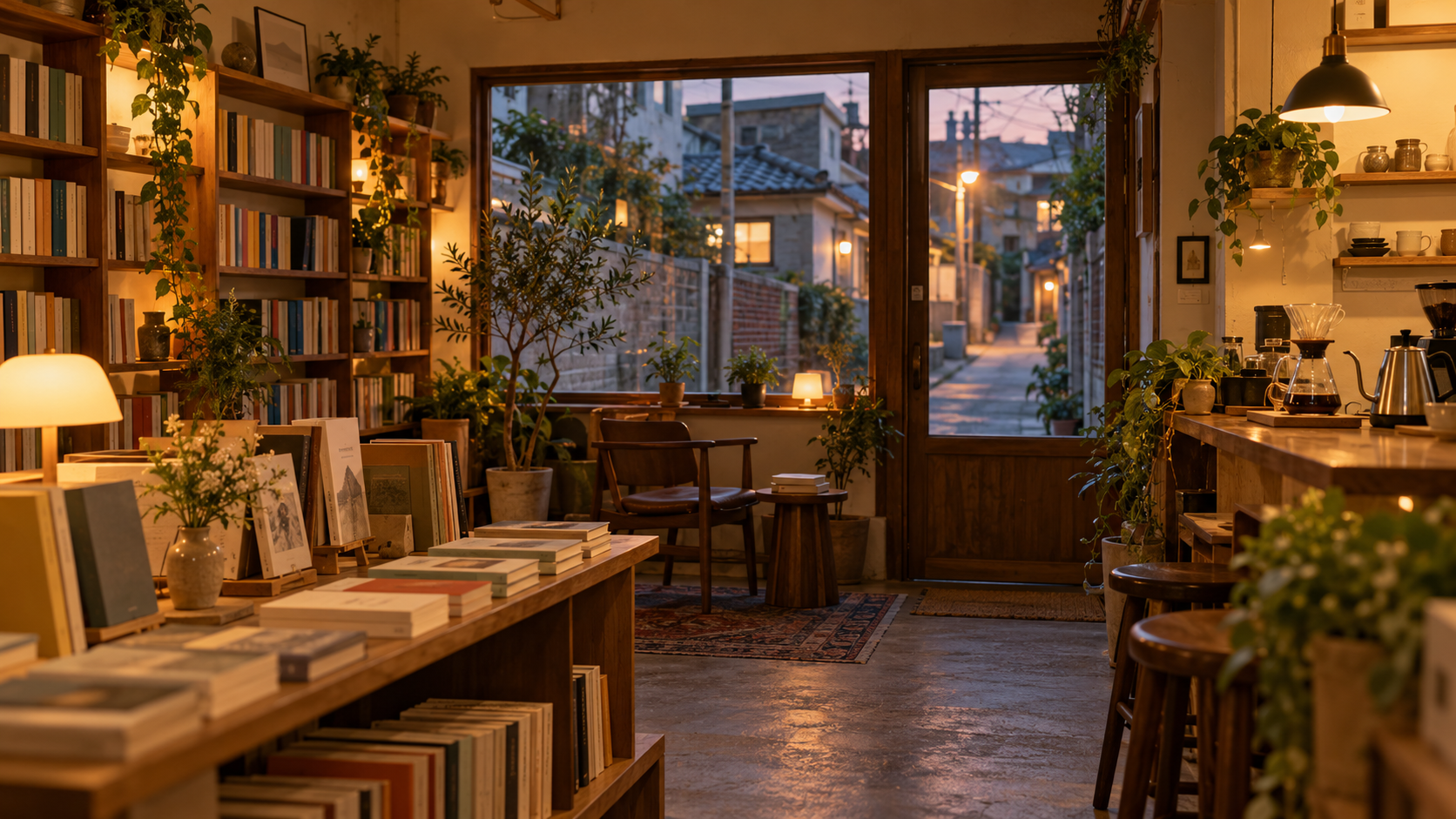
After burning out at a high-pressure job, Yeongju opens a bookshop with a small coffee bar in a residential Seoul neighborhood. The novel moves in quiet episodes rather than a driving plot, following a barista obsessed with the perfect cup, a coffee roaster in an unhappy marriage, and a student who rediscovers reading through Yeongju’s recommendations. It is best for readers who want a slow, reflective book about work and rest.
The Second Chance Convenience Store by Kim Ho-yeon
Genre: Healing fiction | Translated by Janet Hong
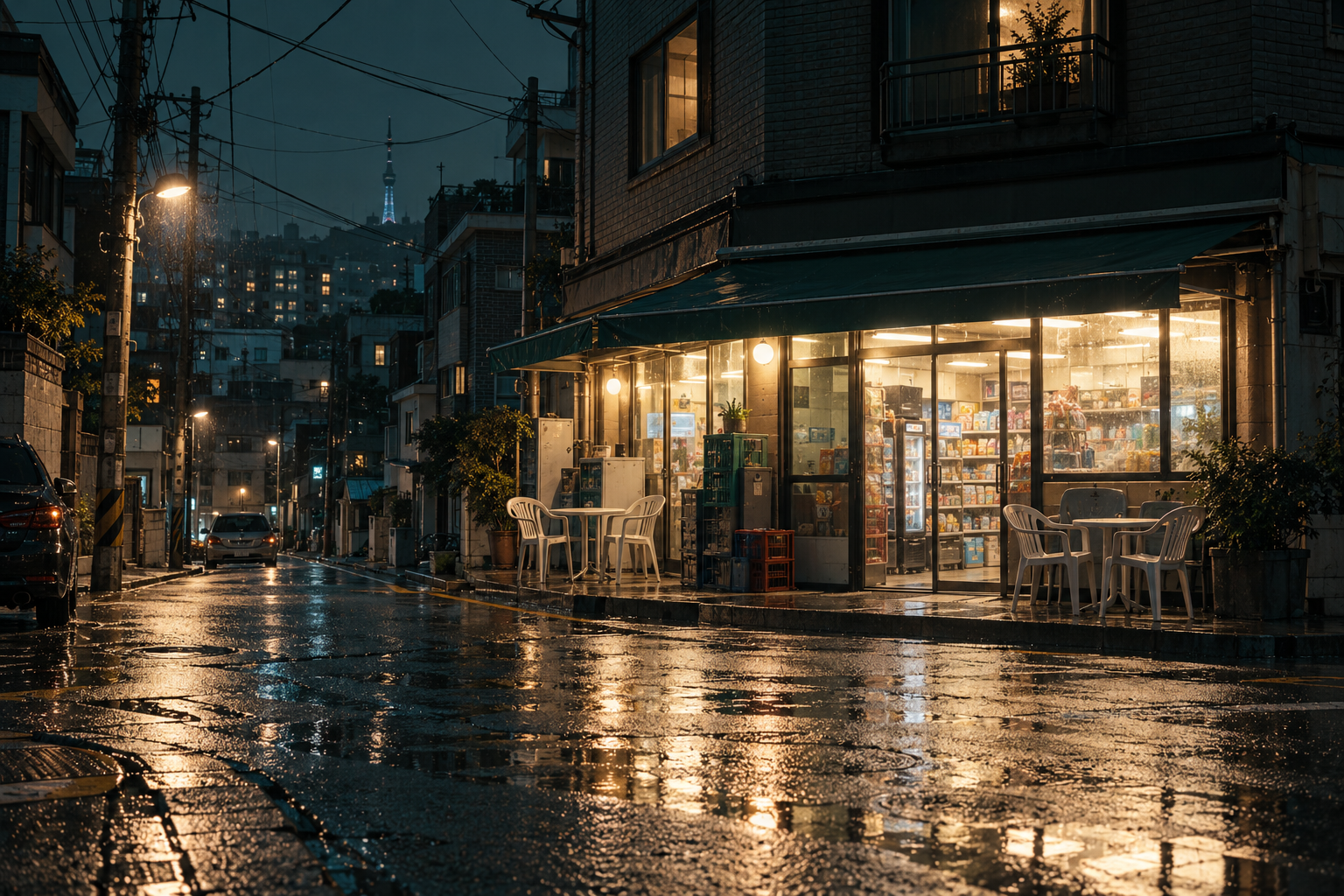
Mrs. Yeom, a retired history teacher who owns a convenience store in Seoul, loses her purse; Dokgo, the homeless man who returns it, ends up working the night shift. As he becomes a sounding board for customers and coworkers, the neighborhood changes in small ways, while Mrs. Yeom’s son hires a detective to dig into Dokgo’s past. The Korean title, Bulpyeonhan Pyeonuijeom, is a pun that roughly means “the inconvenient convenience store,” which tells you something about the book’s gentle humor. Choose it if you enjoy found-family warmth and second chances.
The DallerGut Dream Department Store by Miye Lee
Genre: Fantasy | Translated by Sandy Joosun Lee
In a town hidden in our collective subconscious, visitors both human and animal shop for dreams, and each floor of the store specializes in a different kind, from childhood memories to food. Flying dreams are almost always sold out. The story follows Penny, a new employee, through her first year on the job, and a sequel continues her story. It suits readers who want fantasy that is whimsical rather than dark.
Love in the Big City by Sang Young Park
Genre: Literary fiction, queer romance | Translated by Anton Hur
Young, a university student in Seoul, spends his nights out with his best friend and roommate, Jaehee, as they drink away their worries about love and family. The novel follows him through relationships and through his complicated bond with his mother, with a humor that keeps turning into heartbreak. It was nominated for the 2022 International Booker Prize, and in 2024 it was adapted into both a film and a streaming series. Start here if you want a contemporary Seoul love story told with honesty.
Kim Jiyoung, Born 1982 by Cho Nam-joo
Genre: Social fiction | Translated by Jamie Chang
After leaving her job to care for her newborn, Kim Jiyoung spends her days in a small apartment on the outskirts of Seoul and begins speaking in the voices of other women. Written in a deliberately clinical style, the short novel examines the ordinary pressures that shaped one woman’s life. It is the right pick for readers interested in gender and family expectations in contemporary Korea, and it works especially well for book clubs.
The Plotters by Un-su Kim
Genre: Thriller | Translated by Sora Kim-Russell
This is an alternate Seoul where assassin guilds compete for business. Reseng, an orphan raised by an old man known as Old Raccoon, is a skilled hitman who stumbles onto a larger plot and has to decide where his loyalties lie. Philosophical and darkly funny, it is the book for readers who come to Korean stories for crime films and tense plotting.
Please Look After Mom by Shin Kyung-sook
Genre: Family drama | Translated by Chi-Young Kim
In a crowded Seoul subway station, 69-year-old So-nyo is separated from her husband and disappears. Her family’s search is told from several perspectives, and as it goes on, each of them has to confront what was left unsaid. The novel won the Man Asian Literary Prize, and it is a moving entry point to Korean family life in English. Read it if stories about parents and adult children feel close to home.
The Vegetarian by Han Kang
Genre: Literary fiction | Translated by Deborah Smith
A woman’s sudden refusal to eat meat turns her family against her, and the novel traces her unraveling and the neglect of those around her. It won the International Booker Prize in 2016, the first Korean-language novel to do so, and it remains Han Kang’s best-known book in English. It is unsettling and demanding; readers who finish it and want more can turn to Human Acts, her novel set during the 1980 Gwangju Uprising.
What These Books Reveal About Life in Korea
Read a few of these together and some patterns appear. The first is family as obligation as much as affection. In Please Look After Mom, the family begins to see their mother clearly only once she is gone, and Kim Jiyoung, Born 1982 shows how expectations around marriage and childcare can narrow a woman’s life without anyone intending harm.
The second is the neighborhood shop as a stand-in for community. A bookshop in a residential district and a corner convenience store are ordinary places in Korean life, which is exactly why they work so well in fiction; they are where strangers from different generations cross paths every day. Healing fiction tends to begin in spaces like these and let a small circle of regulars do the rest.
The third is the pressure of the city itself. Seoul in these books is dense and competitive, and many characters are recovering from burnout or from the feeling that they have fallen behind. That is why Yeongju’s decision to quit a respectable job in Welcome to the Hyunam-dong Bookshop reads as quietly radical rather than merely brave. History is present as well, sometimes in the background and sometimes at the center, as in Han Kang’s Human Acts.
It is tempting to treat these novels as K-dramas in book form, but the comparison only goes so far. Prose allows a slower pace and a closer look at what characters think and leave unsaid, and some of these books, The Vegetarian above all, would be hard to imagine as a weekly series.
How to Choose Your First Korean Novel
- If you like cozy stories where little happens and everything changes, start with Welcome to the Hyunam-dong Bookshop or The Second Chance Convenience Store.
- If you want fantasy that stays warm, try The DallerGut Dream Department Store.
- If romance and city life are what drew you to K-dramas, read Love in the Big City, then watch one of its adaptations and compare.
- If you prefer momentum and twists, pick The Plotters.
- If you want a book to discuss with friends, choose Kim Jiyoung, Born 1982 or Please Look After Mom, and save The Vegetarian for when you are ready for something unsettling.
Your Next Korean Story Starts Here
Any of these eight will show you a different Korea from the one on screen, and all of them reward slow reading. If one sends you looking for the food its characters eat or the neighborhoods they walk through, that curiosity is the point; these books open onto the everyday life that dramas only have time to glimpse. The convenience store on the corner, it turns out, has a story behind the counter too.