
Do You Know LeeChanwon?
Let me ask it differently. Have you ever heard of trot?
It is Korea's oldest pop genre — warmth-heavy, emotionally direct, built for
voices that carry feeling more than flash. If K-pop is the genre that conquered
the world by being deliberately designed to, trot is the one that stayed home and
aged into something deeply loved. Lee Chan-won (이찬원) is twenty-nine years old
and one of its biggest names.
In 2020, he placed in the top three on Mr. Trot, a TV Chosun competition that
sparked the genre's biggest comeback in years. His fans call him Chantobaegi —
a nickname born from a folk song he performed on the show that apparently lodged
itself into a great many ears. Since then, he has hosted major music programs,
landed a number-one spot on national music charts, and built a fanbase that
cuts across generations in a way that very few artists manage.
And some of those fans decided, at some point, that loving his music was not
quite enough. They wanted to build a place.
I spent an hour inside that place.
The walls speak first
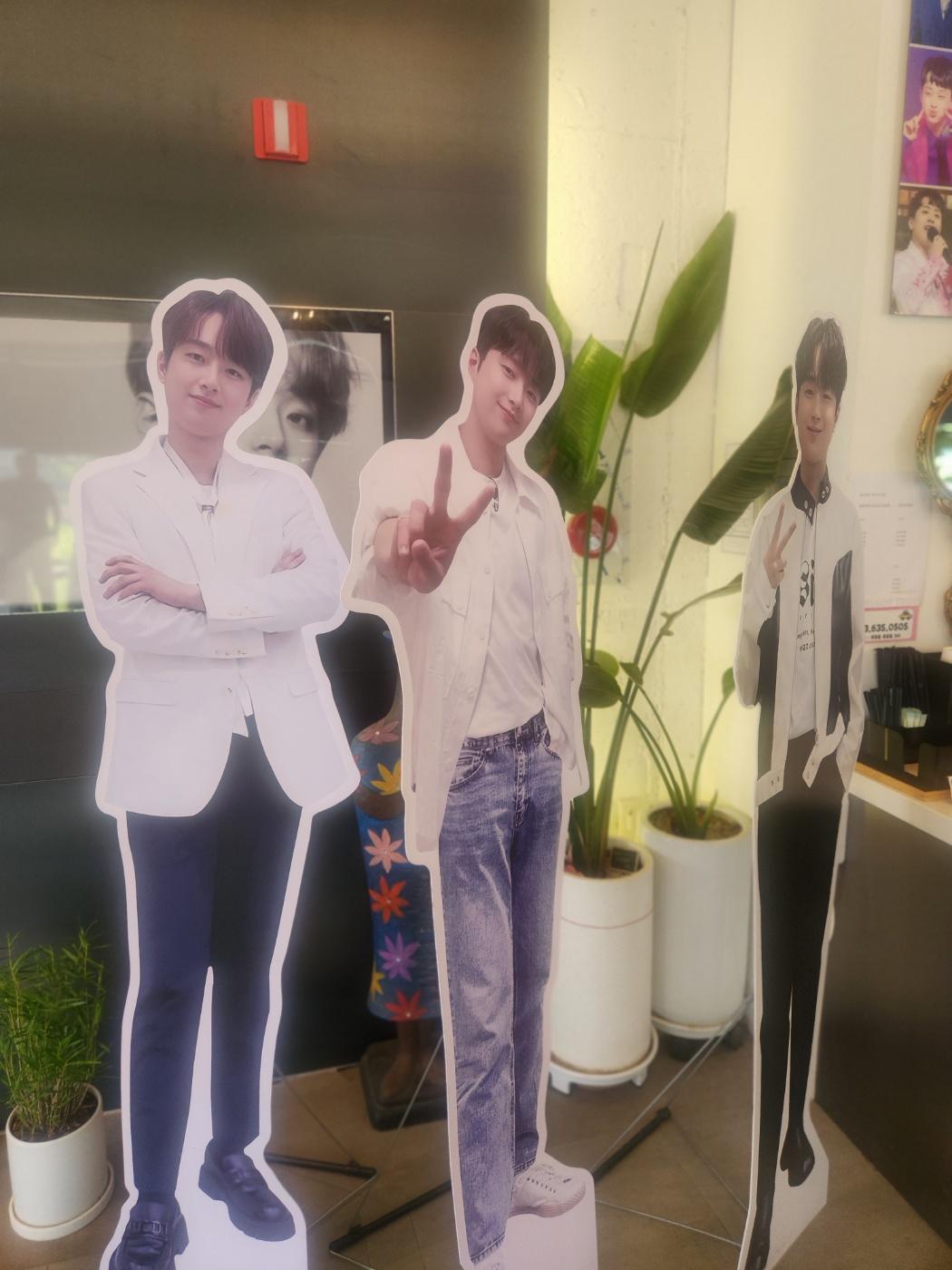
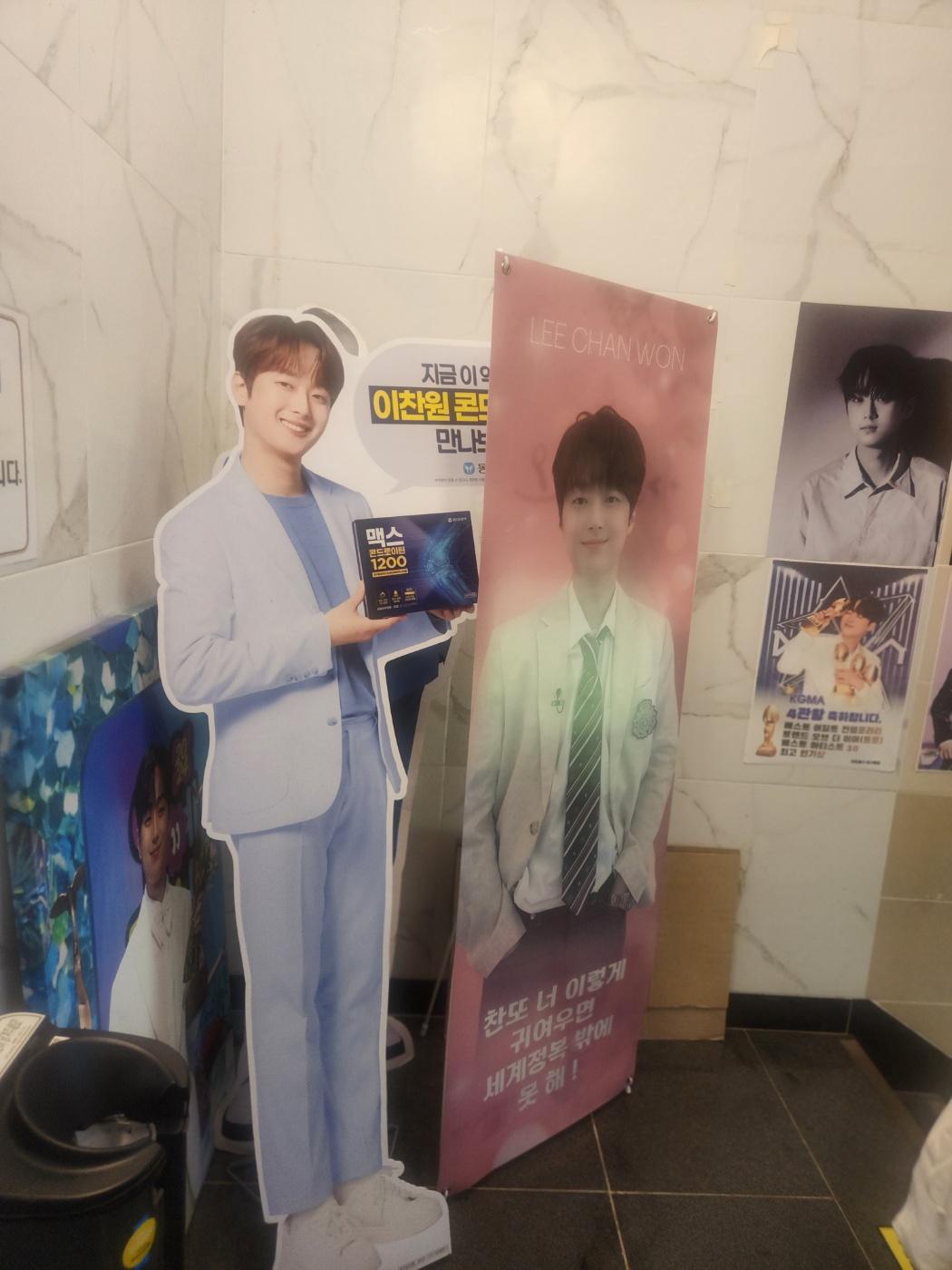
The entrance is marked by a life-size cardboard cutout: Lee Chan-won in a suit,
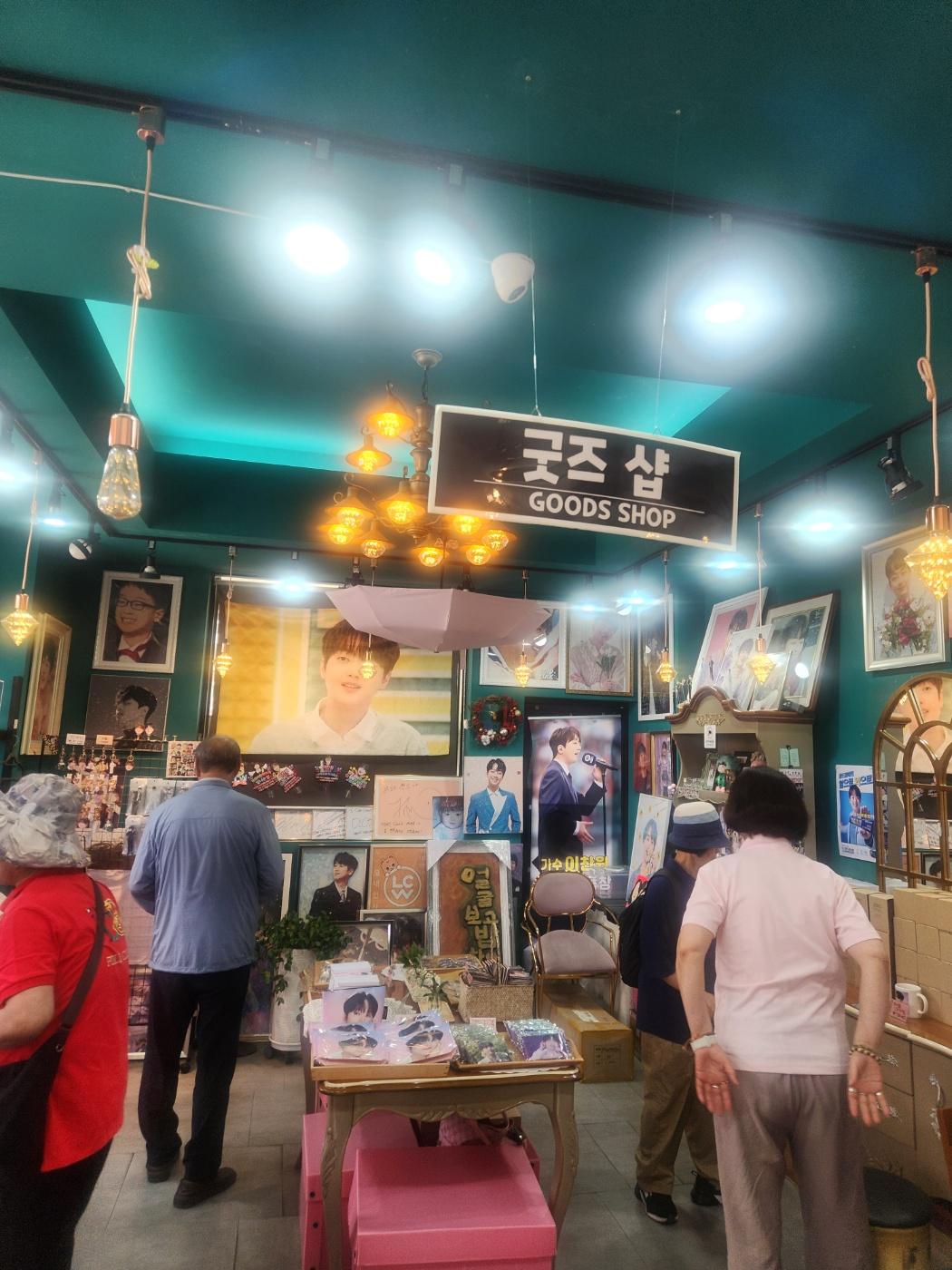
slight smile, standing as if he has been expecting you. Inside, a teal ceiling
and warm Edison bulb lighting take over. A sign in Korean and English reads:
GOODS SHOP. Every wall around it is covered — framed prints in gold and white,
performance photos and candid shots, fan art on canvas, handmade banners strung
between shelves. It feels less like a retail space and more like being invited
into someone's very dedicated living room.
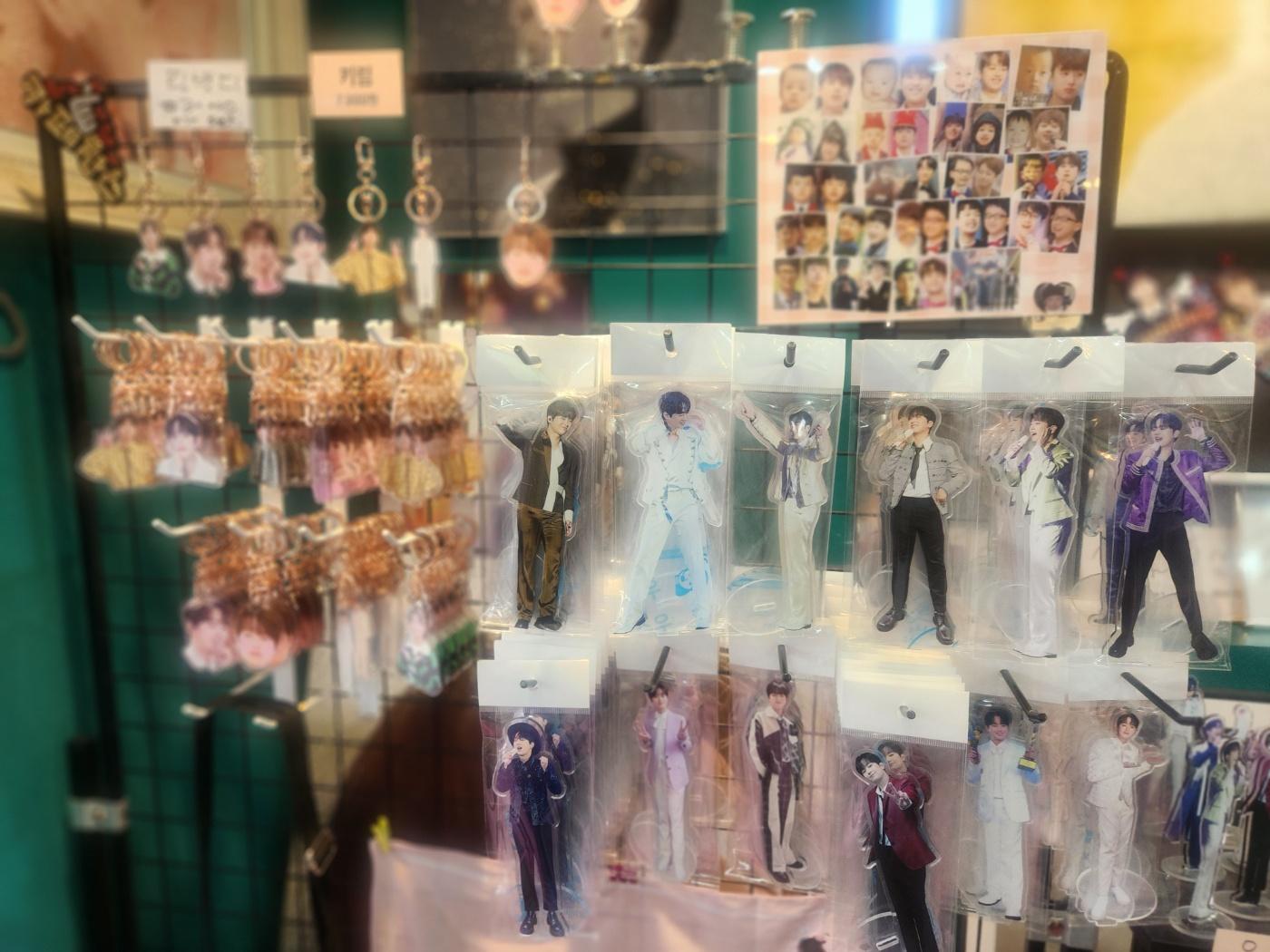
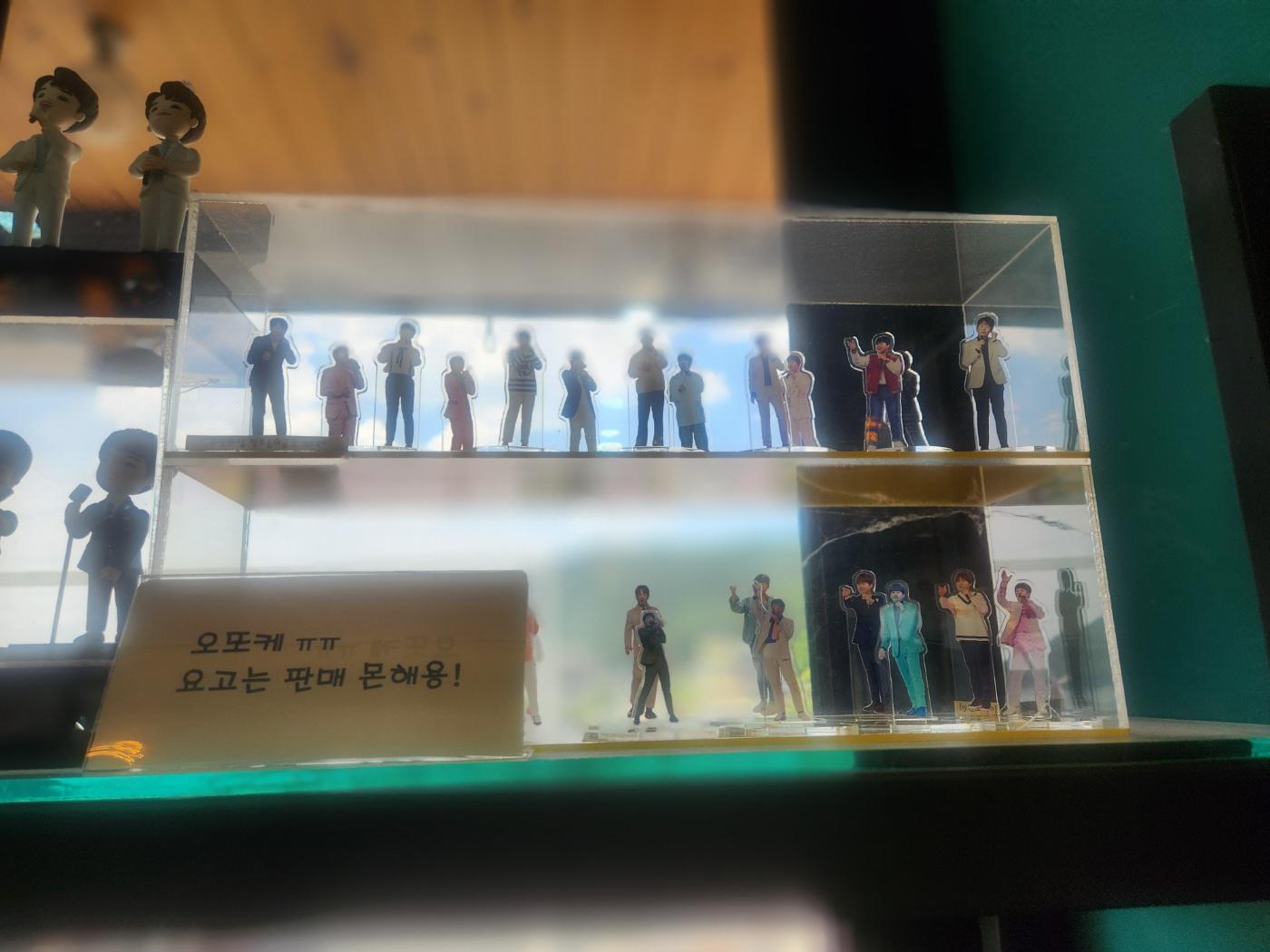
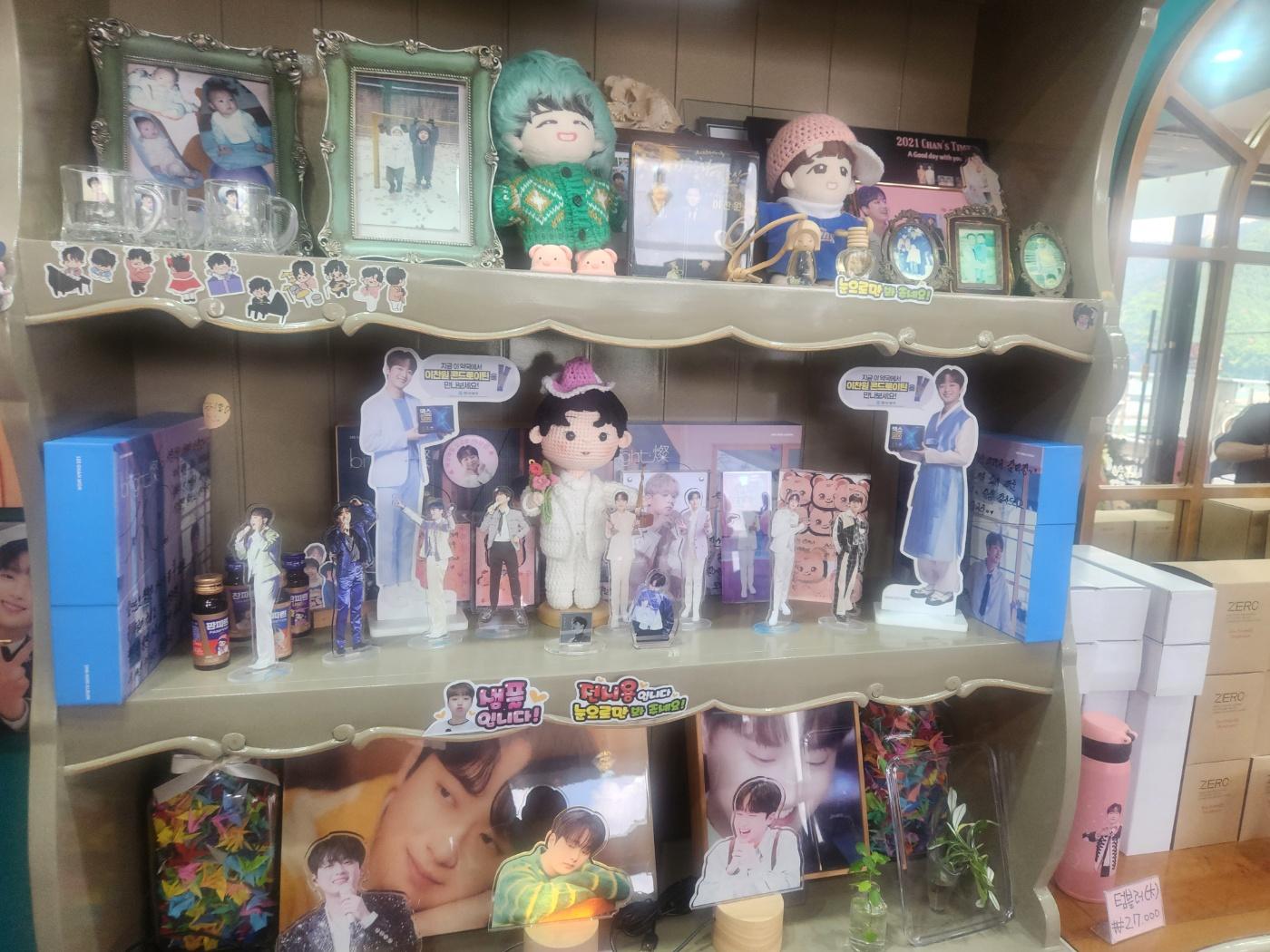
A display cabinet holds the most personal layer. Crocheted dolls in tiny outfits.
Framed photo sets. Acrylic standees arranged by concert era. Tucked between them
is a handwritten card: "오또케 ㅠㅠ 요고는 판매 몬해용!" — roughly, "What do I
do, this one is not for sale!" The little sad faces drawn after it are extremely
relatable.
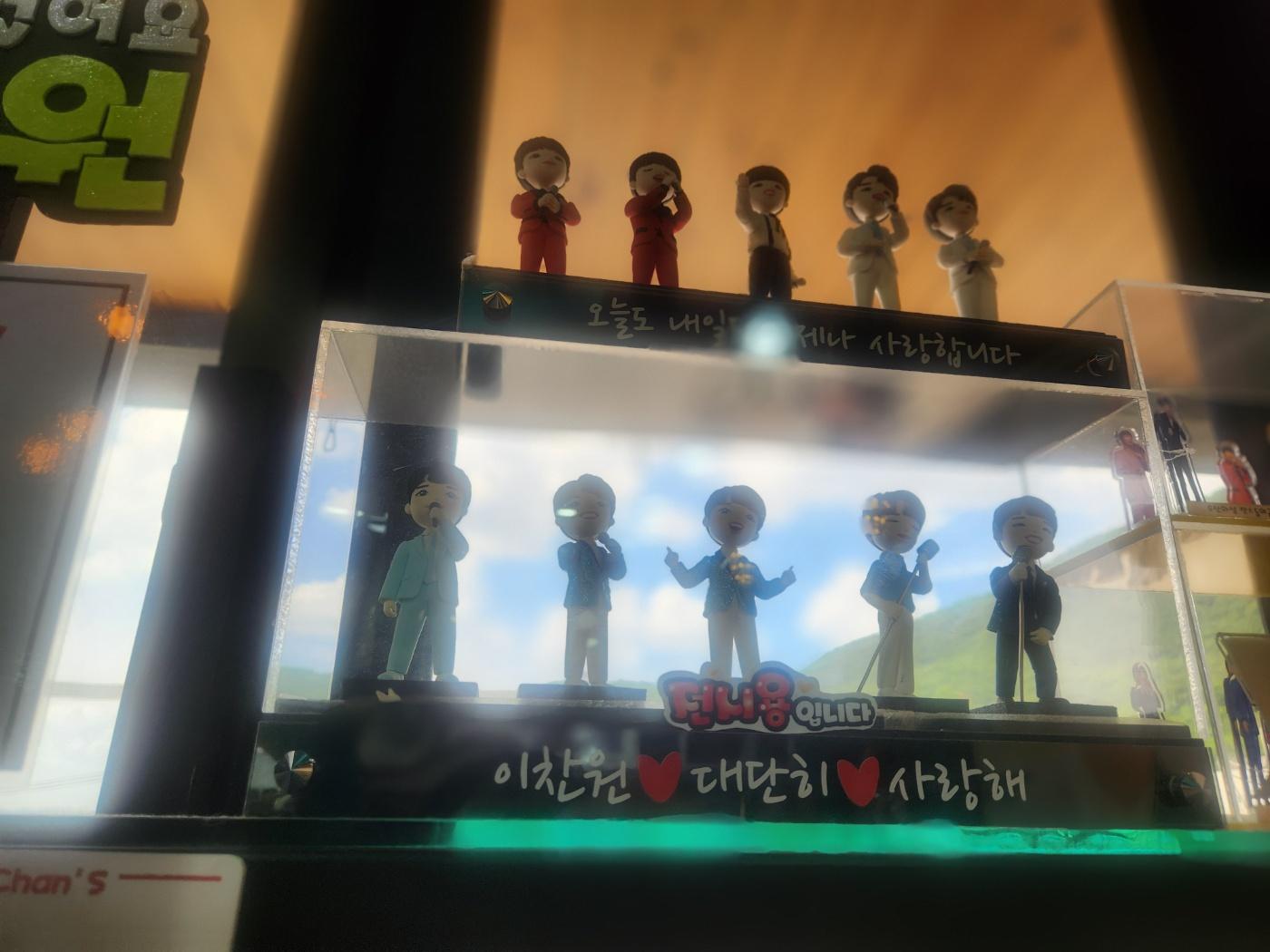
Another case holds hand-painted chibi figures mid-performance, posed against a
custom summer sky backdrop. At the bottom, in bold letters:
이찬원 ❤ 대단히 ❤ 사랑해. Lee Chan-won, I love you so, so much.
What you can actually buy
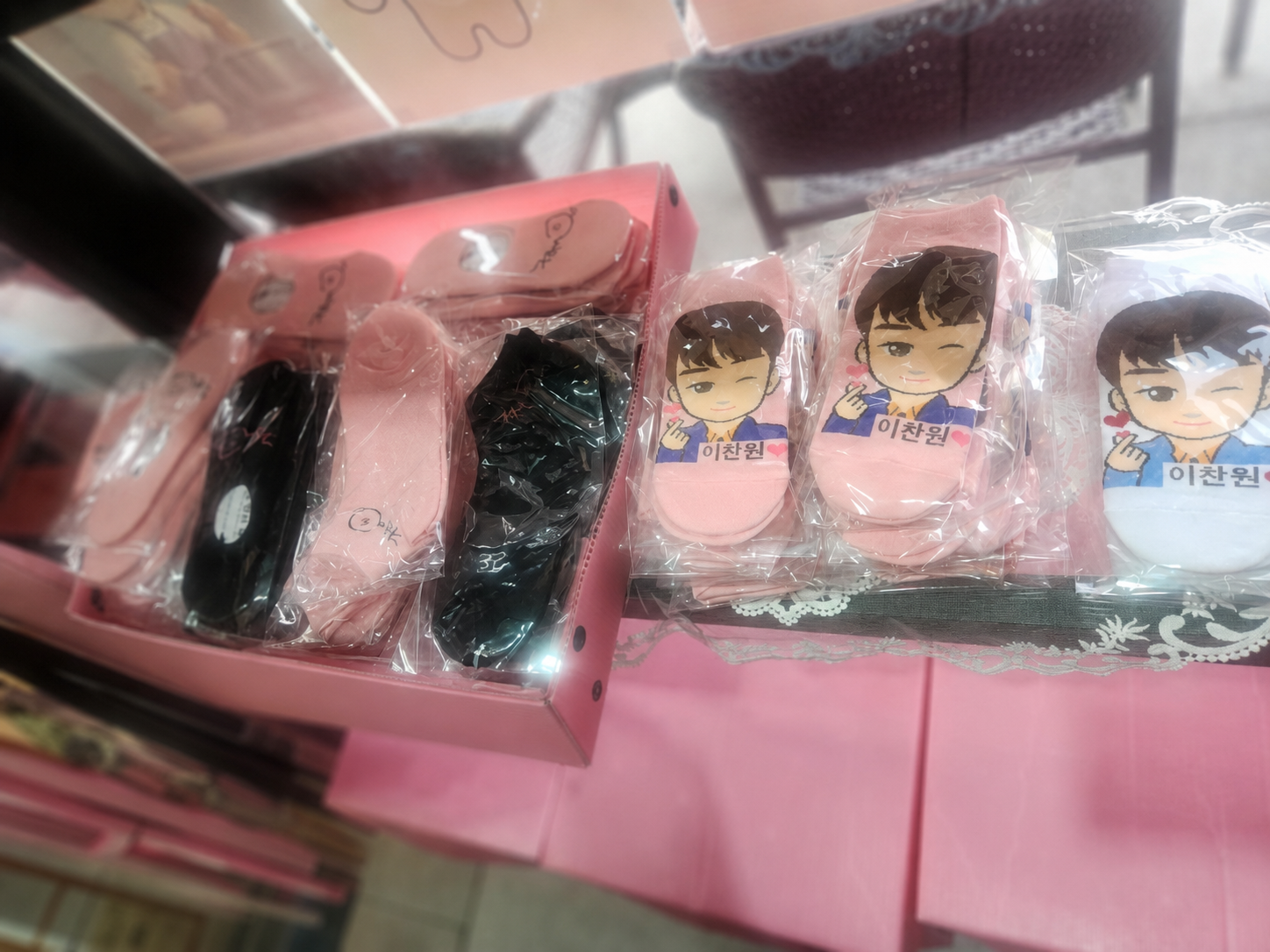
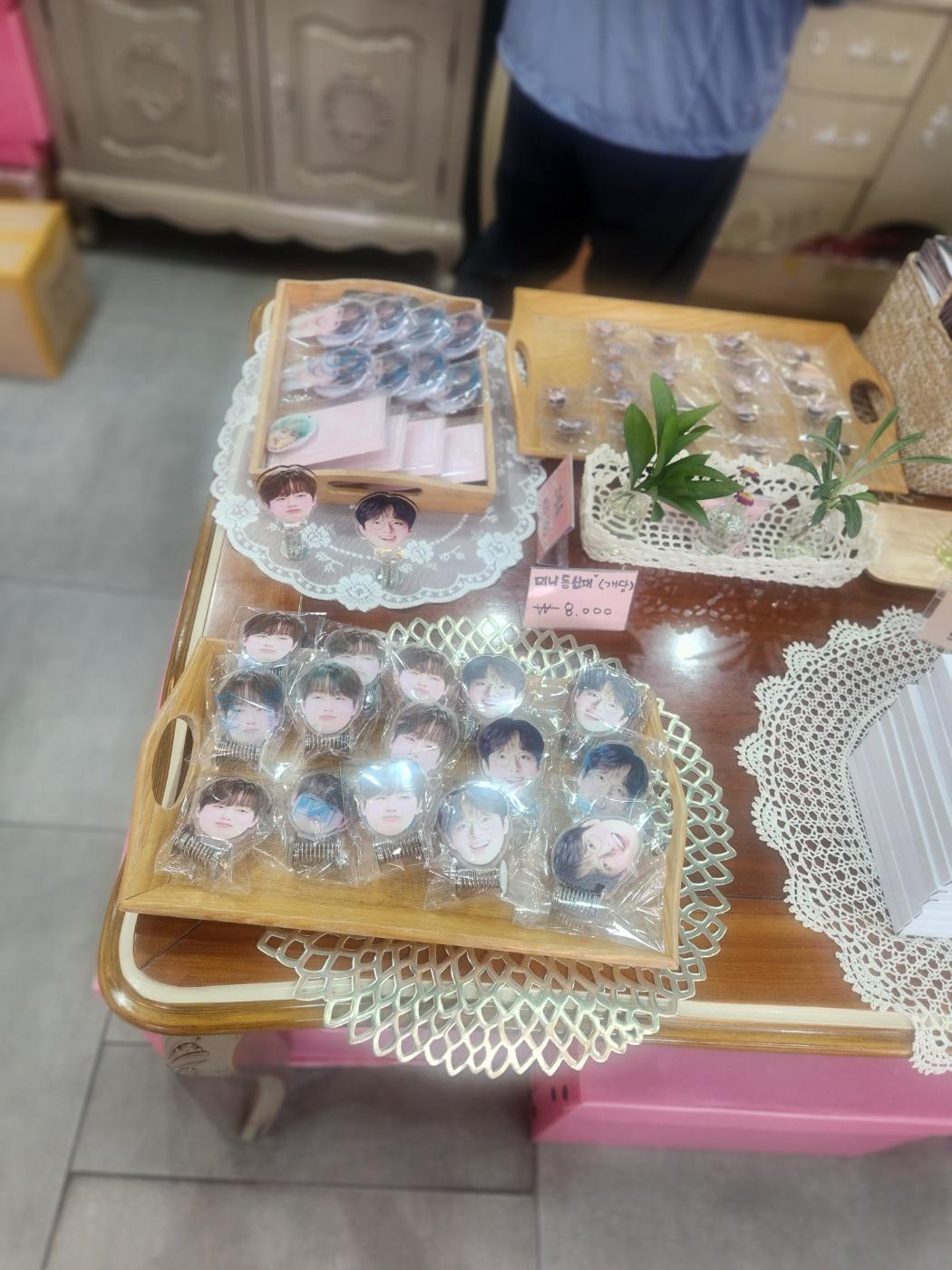
The goods table is a wooden tray situation, and it is quietly delightful. Rows of
face pins in clear plastic, each a small circular button printed with Lee Chan-won
from a different photo shoot. Eight thousand won per pin. Photo card packs stacked
in two or three color palettes alongside character socks with illustrated faces on
the ankle panel.
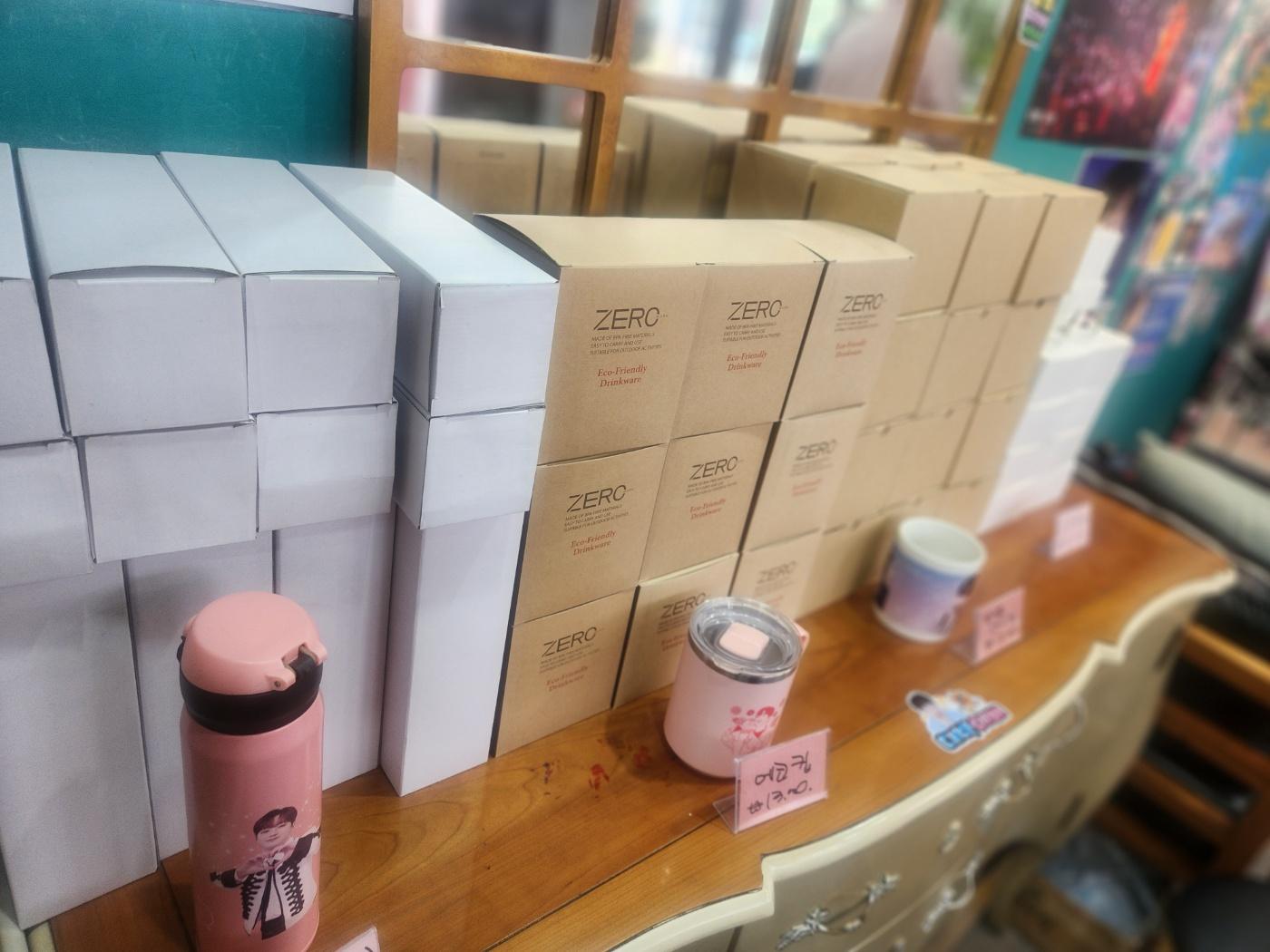
A row of kraft-paper boxes lines the back shelf — ZERO, eco-friendly drinkware.
Inside: pale pink tumblers and short mugs, each printed with a small illustrated
figure. That particular shade of pale pink, I noted, appears at least a dozen
times across the space. It is clearly a considered choice.
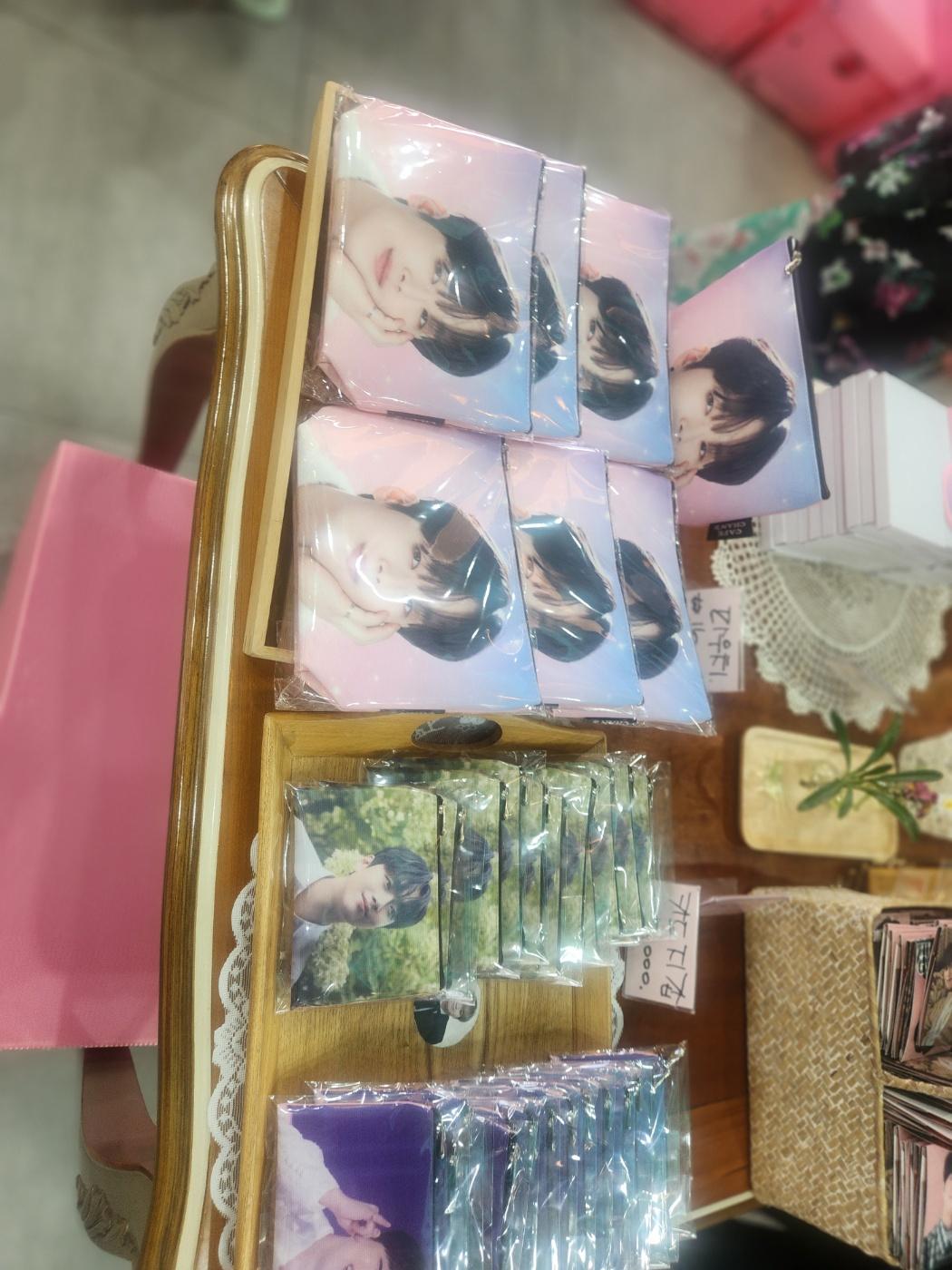
A glass case holds acrylic standees in individual packaging: a glittering white
concert suit, a deep purple blazer, a casual open shirt with the collar turned up.
Different eras. Different fits. The same energy.
A drink and a very good view
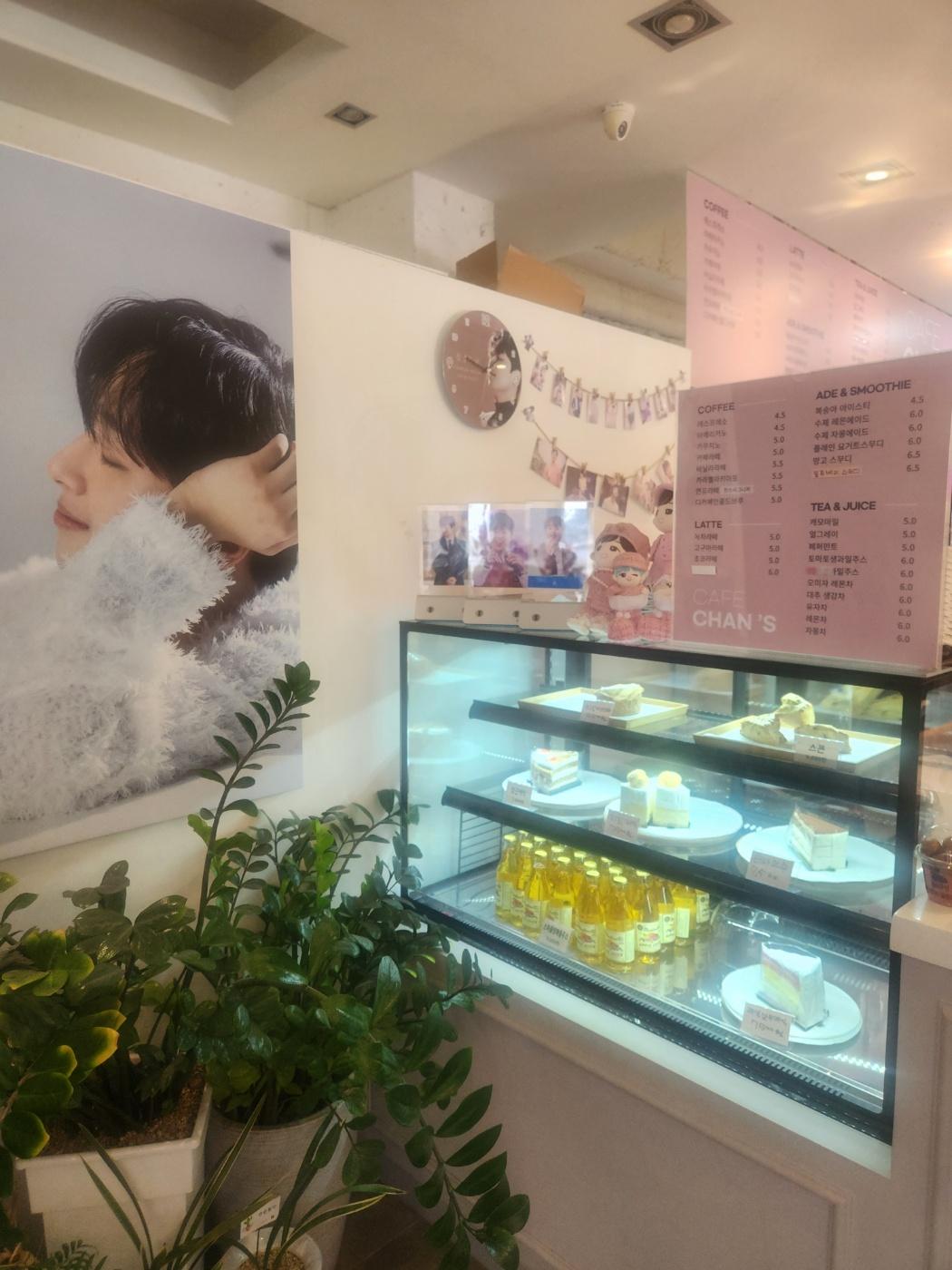
The cafe counter runs along one wall — pink menu board, iced coffee, lattes,
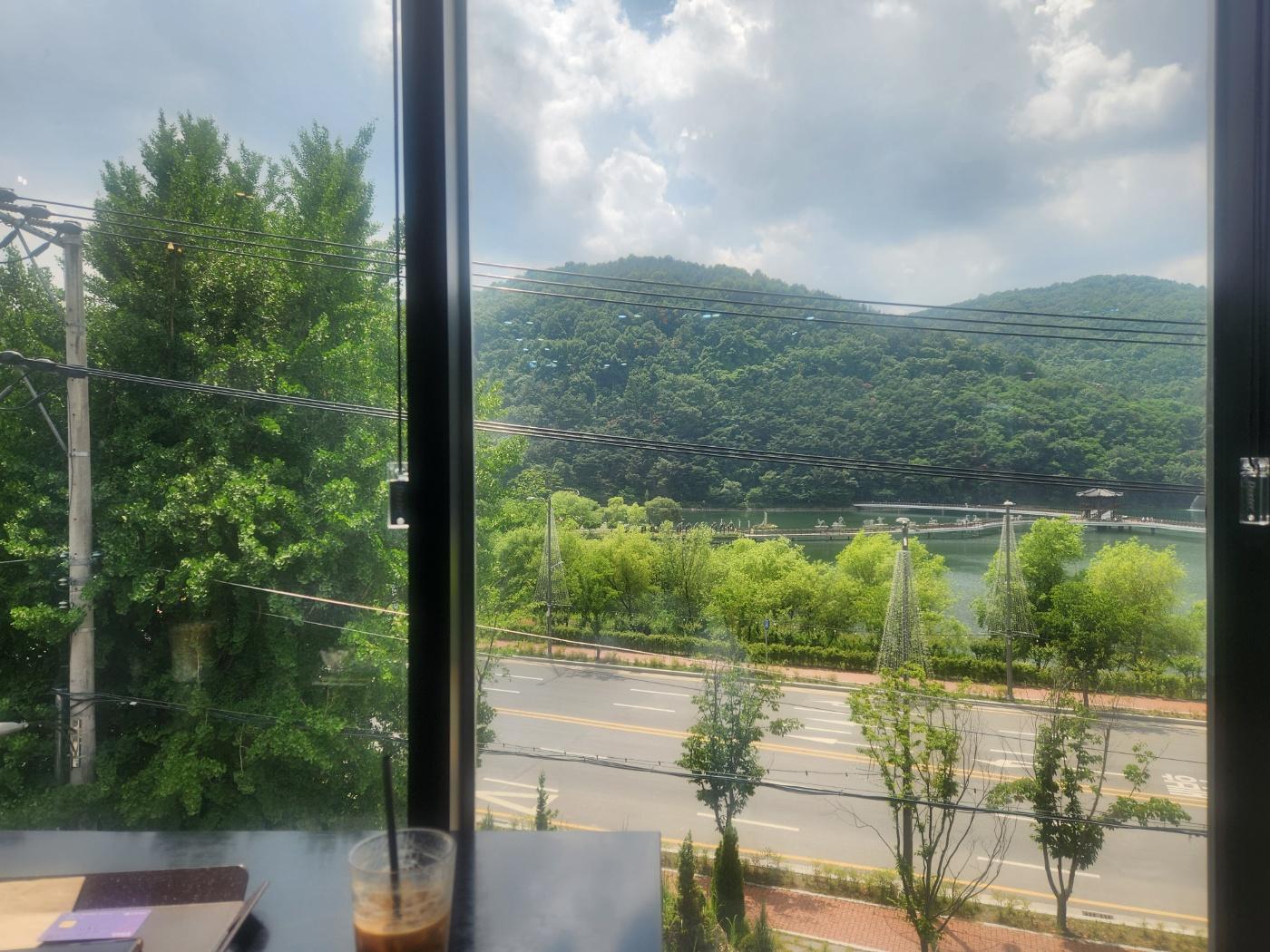
yuzu tea. I ordered and found a seat by the window.
Outside: a two-lane road, a calm lake the color of pale jade, and mountains still
fully summer-green. Not bad at all for somewhere that never advertised itself as
a scenic destination.
What lingers
In one corner: a large framed portrait, a wicker basket of fresh and dried flowers
arranged together, long white message ribbons stacked neatly in rows. Some written
in large block letters. Some folded like letters. A small potted cactus left by
someone who clearly meant it.
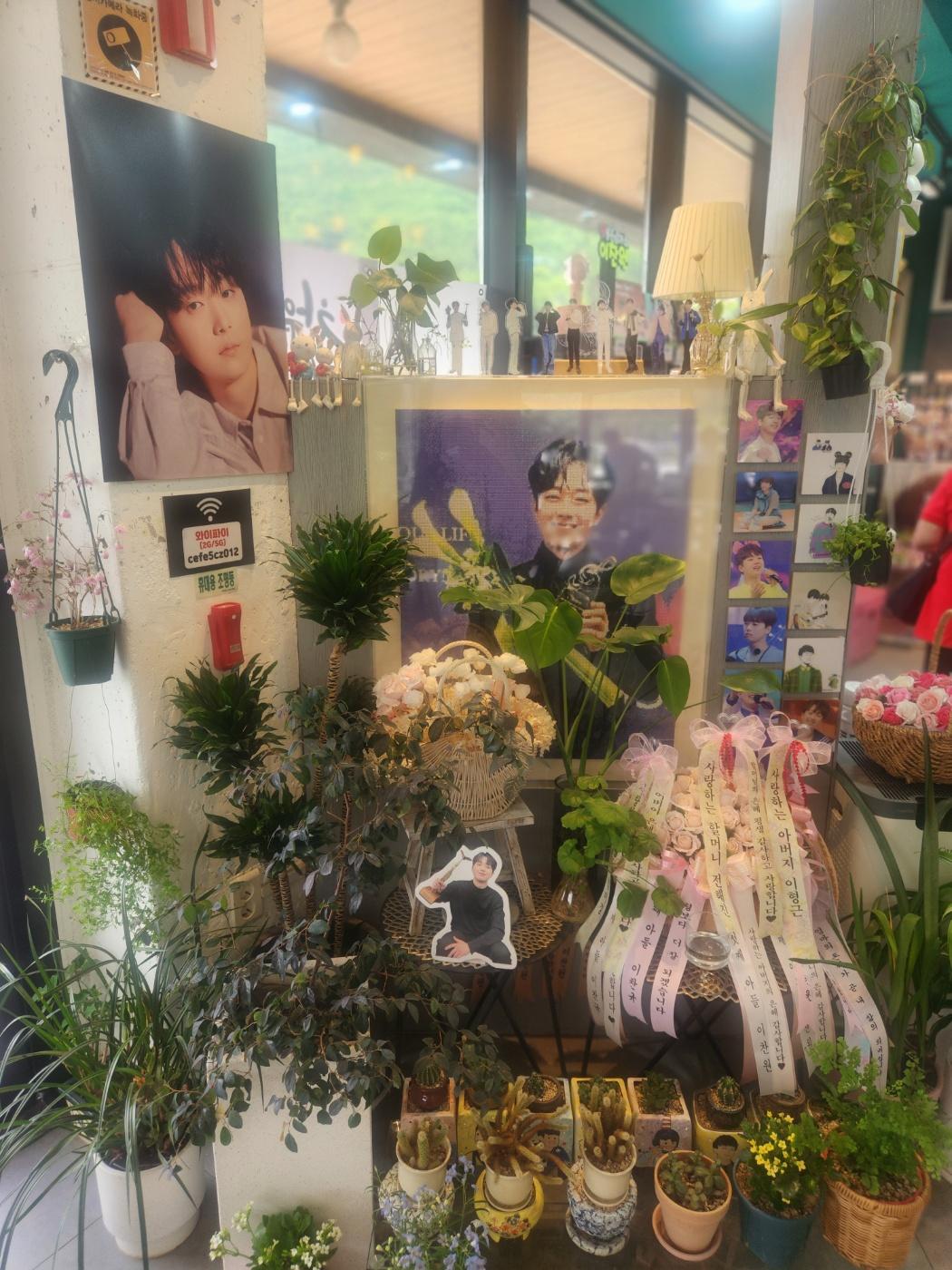
Not showy. Tidy and intentional, the way things look when someone takes something
seriously and wants it to show.
I left with a face pin and a mug.
So — do you know Chanwon? If not, you do now. And if you ever find yourself
in Korea with a free hour, you might consider finding a room full of people who
do. They have built something worth seeing.