If you've ever tossed a piece of bread to a pigeon in a Seoul park, here's a heads-up before your next visit: doing it in the wrong spot can now cost you up to one million Korean won (about USD 760). And as of June 2026, the city has stopped issuing friendly warnings and started writing actual tickets.
Yes, really. Seoul has a pigeon problem, and the city is taking it seriously.
What changed, and when
The story goes back to early 2025, when Seoul amended its Wildlife Protection and Management Ordinance. The amendment gave the city the legal power to designate "no-feeding zones" for animals classified as harmful urban wildlife — pigeons, magpies, crows, sparrows, and a few larger creatures most travelers will never run into.
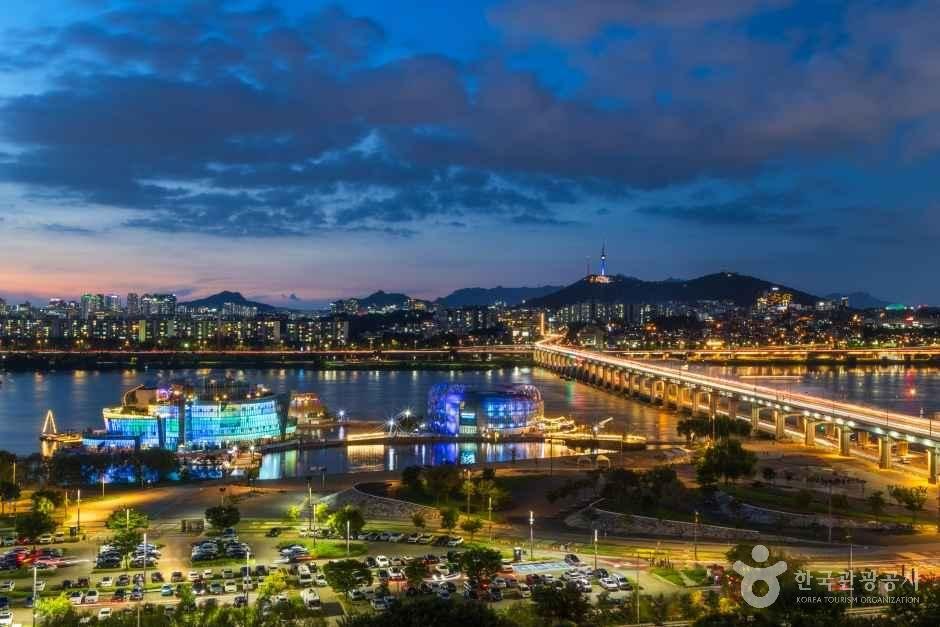
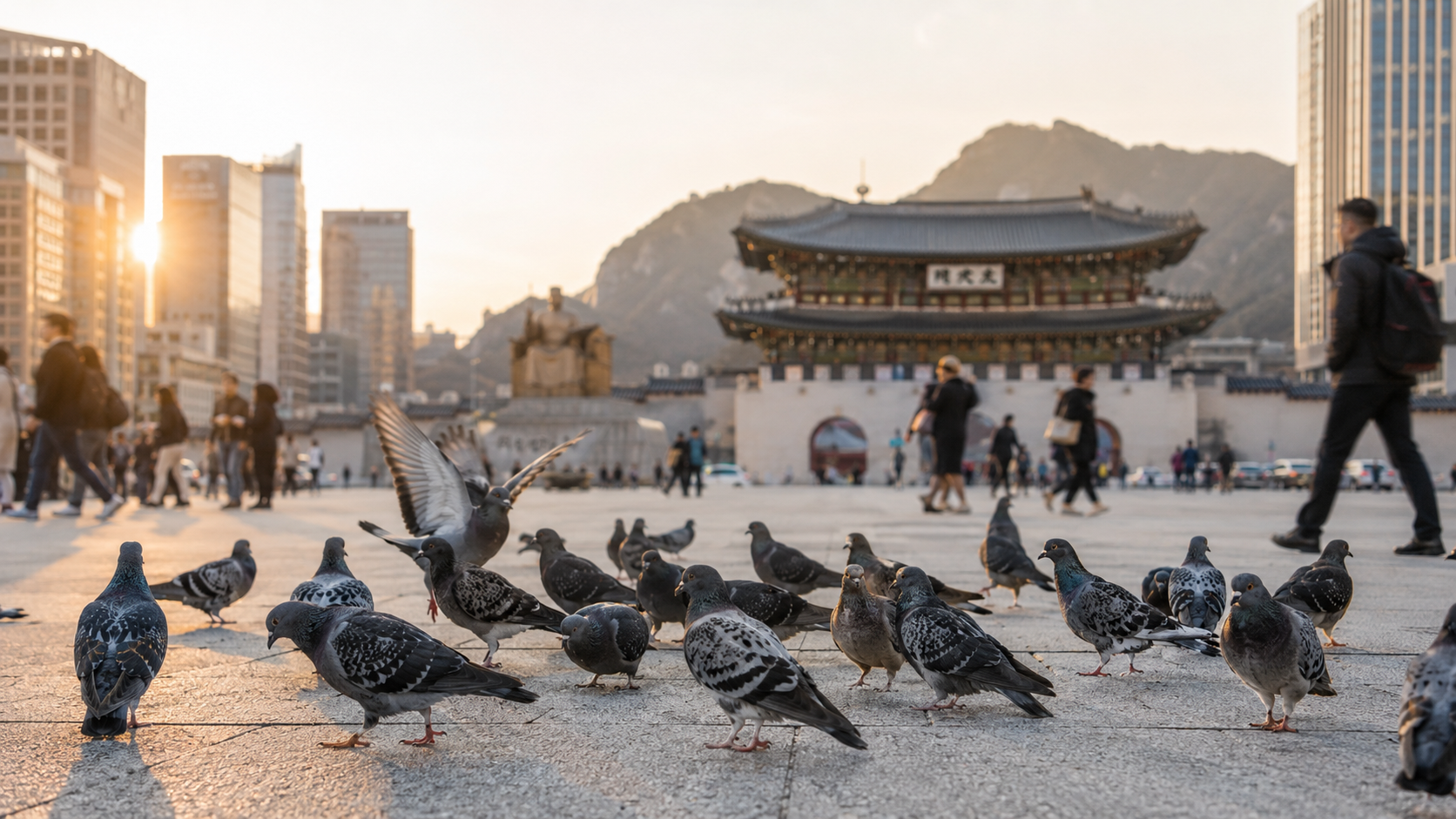
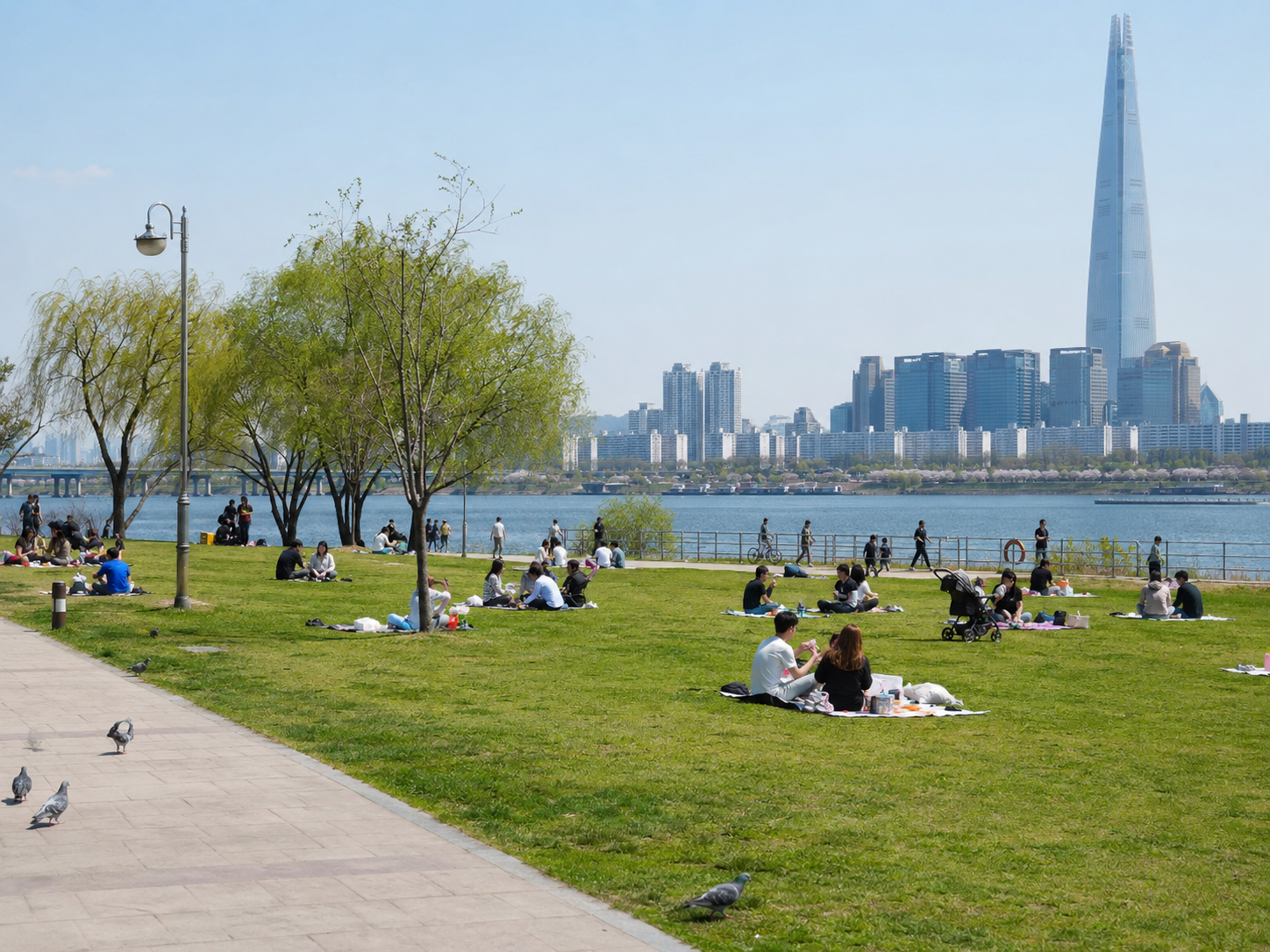
In April 2025, Seoul officially named 38 locations where feeding these animals would be banned. The list reads like a tourist itinerary: Gwanghwamun Square, Seoul Plaza, Seoul Forest, Namsan Park, World Cup Park, Children's Grand Park, and eleven separate stretches of Hangang (Han River) Park, including the popular Yeouido, Banpo, and Ttukseom sections.
For most of the past year, enforcement was gentle. City officers issued roughly 940 verbal warnings and focused on putting up bright yellow signs explaining the rule. Starting June 2026, that grace period is officially over. Get caught once and you'll pay 200,000 won (around USD 150). A second offense doubles past that, and a third reaches the full one million won.
Why the city is doing this
Pigeons weren't always a city problem. They're descended from rock doves that lived on cliffs and in mountain areas. Urban environments turned out to be a great substitute — tall buildings replace cliffs, and human food is constantly available — so their numbers exploded.
Seoul has the data to prove it. Pigeon-related complaints jumped from 667 in 2020 to over 1,400 by 2023, and they kept climbing. The issues are practical, not philosophical. Pigeon droppings are highly acidic and slowly damage historic stone monuments, building facades, and statues. Feathers and waste create hygiene concerns in popular gathering spots. And large flocks can be genuinely intimidating in places where families and children spend time.
There's also an ecological angle. When humans feed pigeons, the birds breed faster and stay clustered in unnaturally dense groups. The city's argument is that the kindest thing you can do for them, long-term, is let them find food the way wild animals are supposed to.
What the signs look like
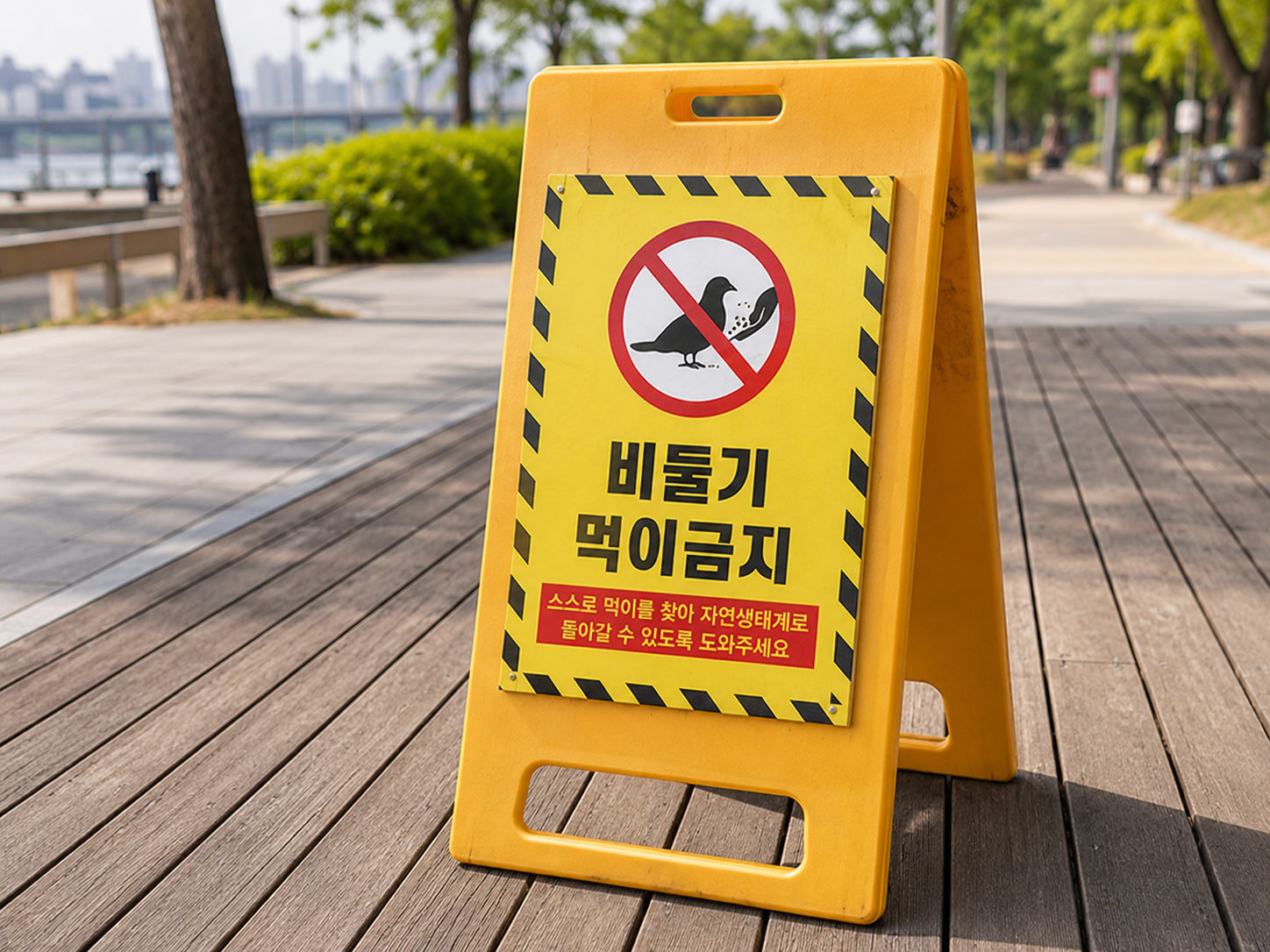
If you're walking through any of the 38 zones, look for bright yellow standing signs with a red prohibition mark over a pigeon illustration. The Korean text reads "비둘기 먹이금지" (pigeon feeding prohibited). There's usually a smaller line underneath asking people to help the birds "return to nature on their own."
The signs are unmissable on purpose. The city would much rather you read one and walk away than have to issue a fine.
So what should travelers actually do?
The rules are simpler than they sound:
Don't bring birdseed or bread to feed wildlife in public parks. If you're picnicking by the Han River, clean up thoroughly. Open food containers and dropped crumbs count toward the same problem, even if you didn't mean to feed anyone. Keep an eye on kids who might enthusiastically share their snacks with curious pigeons.
It's also worth knowing that the ban does not apply to small companion birds you might see in cafes or pet stores, and it has nothing to do with the small wild songbirds you'll spot in residential neighborhoods. The focus is specifically on overpopulated urban species in high-traffic public spaces.
A note for travelers worried about the larger crows you might hear near forested park edges between May and July: those are likely jungle crows protecting their young, and the city recommends giving them a wide berth rather than feeding or approaching them. Honestly, this is just good travel advice anywhere.
A small policy with a bigger idea
What makes this story interesting isn't really the fine. It's the idea behind it. Seoul is essentially asking residents and visitors to practice a kind of considerate distance with the wildlife that shares the city — the opposite of how many of us were taught to interact with birds as kids.
Public response has been telling. Total complaints actually went up slightly in the first year of the program, but complaints about pigeon droppings and noise went down. What jumped dramatically were requests for more no-feeding zones, from 15 in the first year to over 900 in the second. People want this.
For travelers, it's a small thing to remember. For Seoul, it's a small piece of how a modern city tries to share space with everything else that lives in it.
#VisitSeoul #SeoulTravel #KoreaTravelTips #SeoulParks #HanRiver #TravelKorea #SeoulLife #ResponsibleTravel