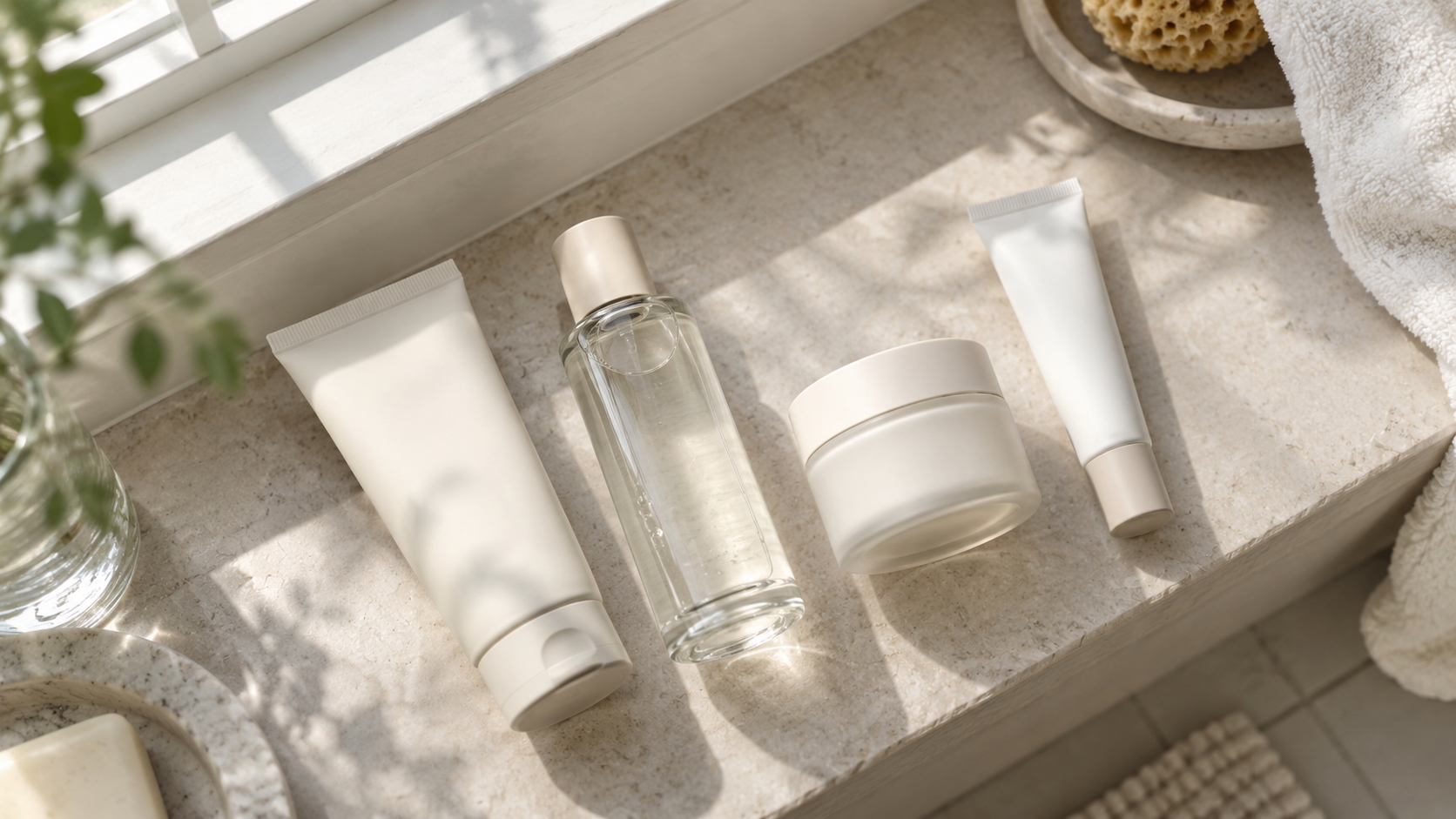
In South Korea, skin barrier repair is not a marketing phrase. It is a legal category. Since August 2020, the enforcement rule of Korea's Cosmetics Act has listed, among eleven classes of functional cosmetics (기능성화장품, gineungseong hwajangpum), products that help improve itching by restoring the function of the skin barrier. The rule even defines the barrier for you: the epidermis of the stratum corneum, the outermost layer of skin. A brand that wants to print that claim has to file safety and efficacy data with the Ministry of Food and Drug Safety first.
That single administrative fact explains more about the current direction of Korean skincare than any ten-step chart ever did. And it arrives at a useful moment, because anyone looking up how to repair a damaged skin barrier is being told, over and over, to do less.
Everyone now starts the same way: use less
Read the guides that rank highest in English on the subject, from dermatology practices to magazine beauty labs, and the first instruction is identical. Simplify. Cut the exfoliating acids back or pause them. Drop the fragrance. Stop layering retinoids over scrubs over vitamin C. Then wait several weeks while the skin, which is quite good at this, rebuilds its own lipids.
The signs that send people searching are consistent too. Skin that feels tight no matter how much moisturizer goes on, products that used to feel fine and now sting, flaking, redness, sudden reactivity. Dermatologists tie most of it to the same causes: over-washing, over-exfoliating, cold dry air, and too many active ingredients competing at once. Anything that persists or spreads is a dermatologist's question rather than a shelf's.
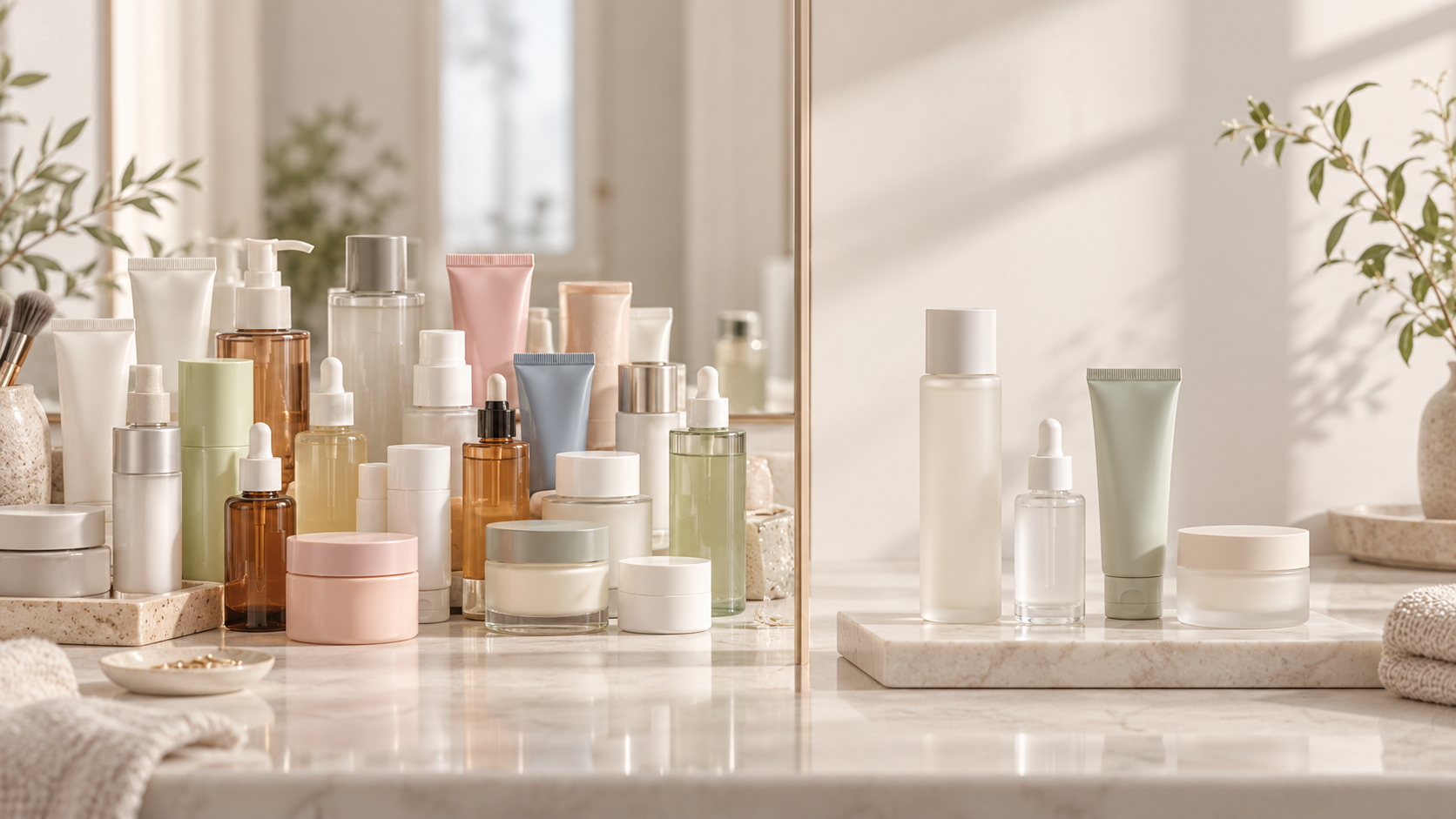
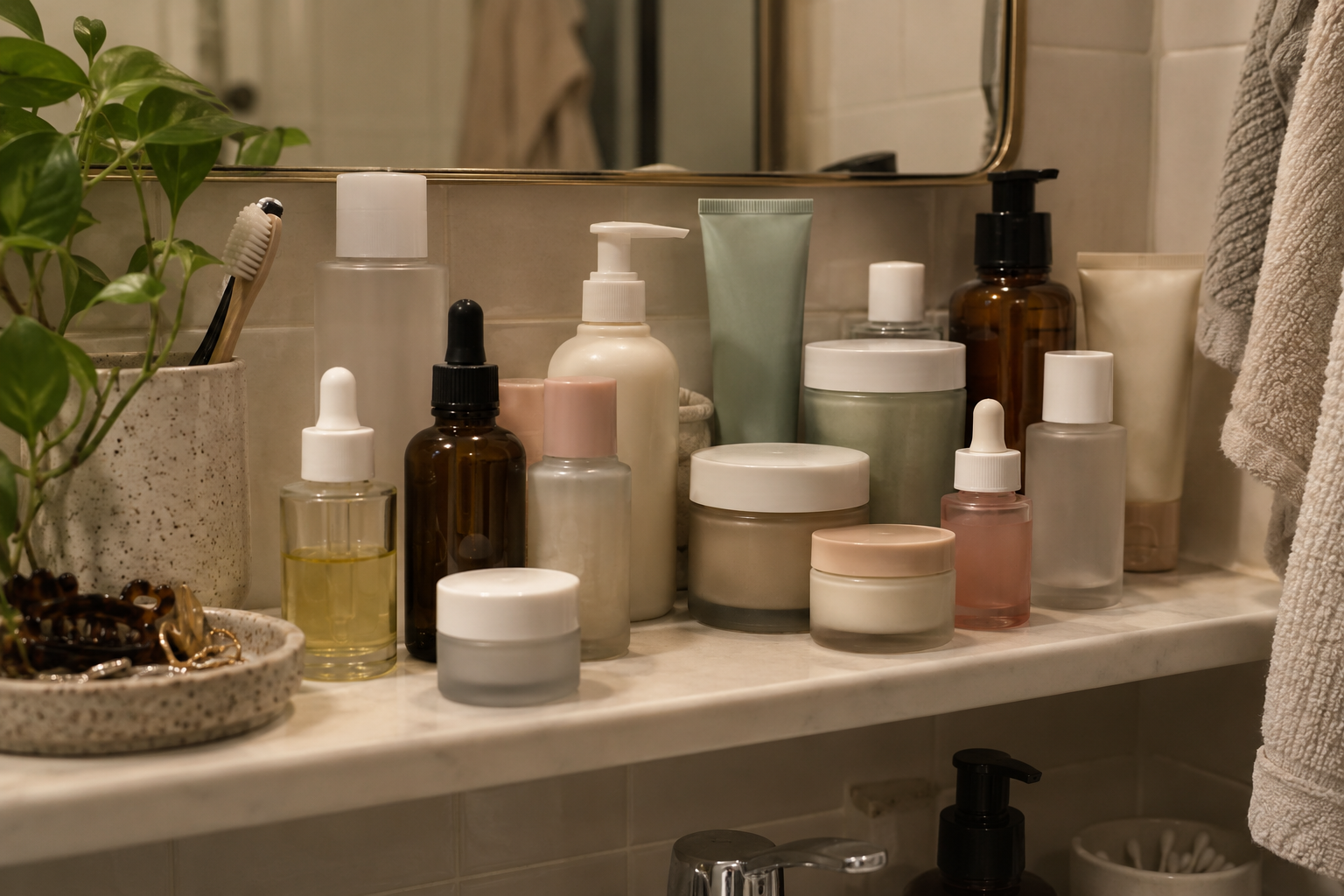
The beauty press has a word for the correction, skinimalism, which is roughly what it sounds like: fewer steps, better formulas. It reads as a rejection of the maximalist decade, when a bathroom shelf held twelve bottles and each one addressed a separate anxiety.
Korea wrote skin barrier repair into the rulebook
Here is the part most of that coverage tends to skip. Korea's barrier category was not created by a trend cycle. It was created in 2017, when the functional cosmetics list was expanded to cover products that help relieve dryness caused by atopic-prone skin. Three years later the disease word was removed, after input from Korean dermatology bodies, on the grounds that "atopy" on a cream made the product sound like medicine. What replaced it was the barrier wording still in force today, and the ministry followed up with a published guideline for the human application testing such products must undergo.
The practical result is a market where "restores the skin barrier" is a claim with paperwork behind it, and where "treats" or "cures" is illegal on a cosmetic. Prevention and protection are not brand poetry in that system. They are the only things a cosmetic is legally allowed to promise.
You can hear it in ordinary Korean shopping vocabulary. 피부장벽 (pibu jangbyeok, skin barrier) is a shelf word, not a science word. So are 진정 (jinjeong, calming) and 저자극 (jeojageuk, low irritation). Shoppers in Seoul were reading ingredient lists for barrier lipids while the phrase was still niche in English.
What a Korean skincare routine looks like in practice
The famous ten-step routine was always closer to a menu than a mandate, and it is now openly described that way even by the retailers who sold it. The Korean-coined correction, skip-care (스킵케어), simply means cutting the redundant steps and letting multi-functional products cover the rest.
A barrier-focused version of a Korean skincare routine runs about four moves:
- A gentle, low-pH cleanser, used once in the morning and after sunscreen at night. Skin should not feel squeaky.
- One hydrating layer. A Korean toner or essence is a watery treatment, not a Western astringent, and this is the step people confuse most often.
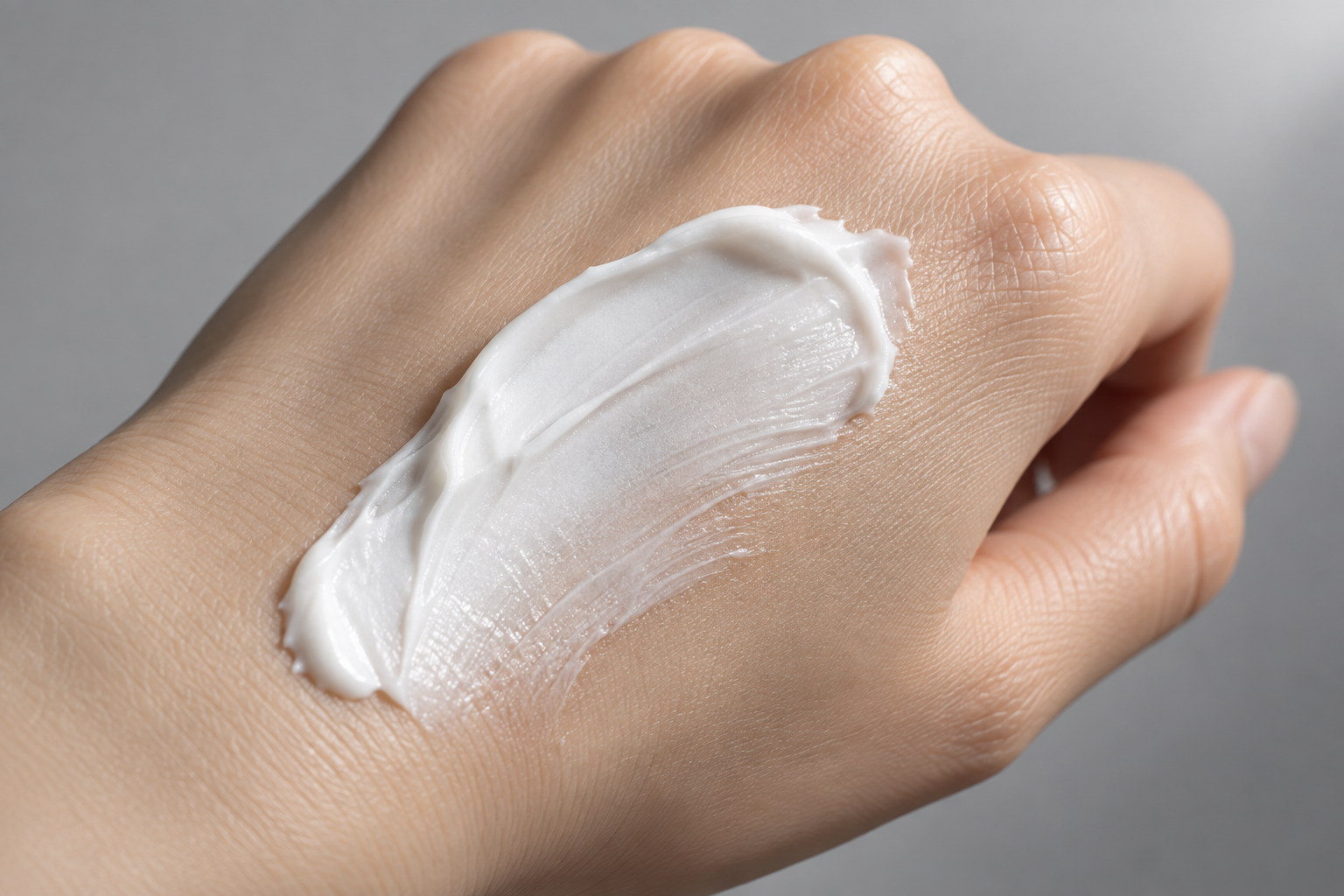
- A moisturizer built around skin barrier ingredients: ceramides, cholesterol and fatty acids, the lipid mix the stratum corneum is made of, often with panthenol or niacinamide.
- Sunscreen every morning, since UV exposure works against barrier recovery no matter what else is in the routine.
The order matters more than the count. Thinnest to thickest, water before oil, and nothing new introduced while the skin is still reactive. A simple skincare routine held for six weeks does more than a clever one abandoned in six days.
The simplification has a business tail
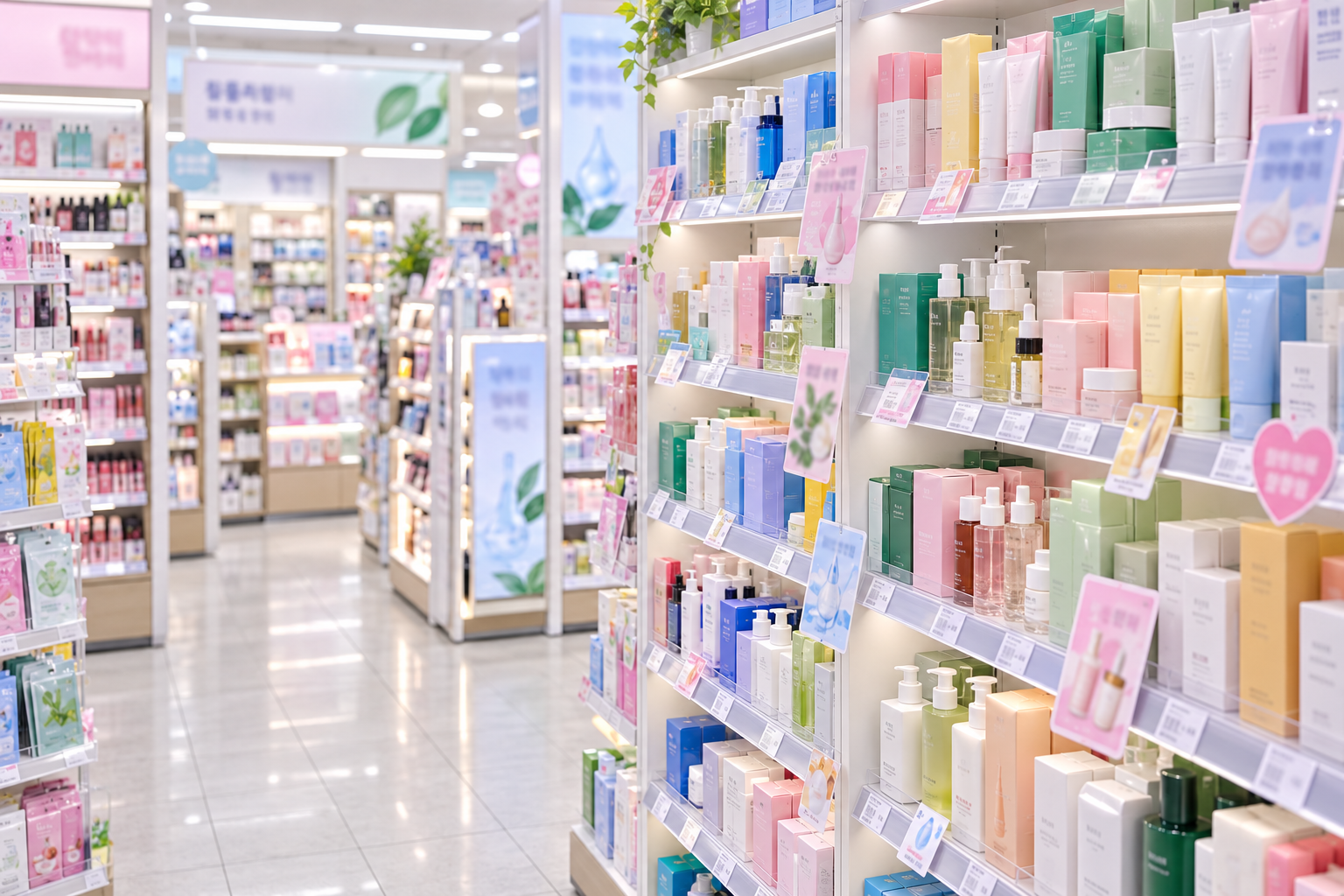
None of this means Korea is buying less. Market researchers put growth in Korea's derma skincare segment at roughly 15% a year from 2020 through 2025, against about 2% for skincare overall. Amorepacific created a dedicated derma beauty unit in July 2025; LG Household and Health Care built a derma division that December. Olive Young, the retail chain that functions as Korea's beauty barometer, is now expanding an "advanced derma" section stocked partly by pharmaceutical companies.
Exports tell the same story from the other direction. Korean cosmetics shipments hit a record 11.4 billion dollars in 2025, with skincare at roughly three quarters of the total, and the United States became the largest single market for the first time at 2.2 billion dollars. Skin barrier repair creams from Korean brands with pharmaceutical parentage, one of them descended from a drug company founded in 1982, went from 441 Sephora doors in the United States in early 2025 to roughly 1,500 a year later.
So the honest version is not that Korean skincare got shorter. It got reorganized. The steps that survived are the ones that defend the barrier, and the ones that vanished were mostly the ones competing for the same job. That is a less exciting story than a ten-step ritual, which may be exactly why it is working.