Compare Samyang's official US Buldak heat tiers from Swicy to 2X Spicy, learn why unofficial SHU charts differ, and see where 3X Spicy fits.
“buldak ramen spice levels”
Samyang's official US guide sorts its Buldak ramen lineup into five relative heat tiers, from mild Swicy to 2X Spicy. Unofficial Scoville figures vary across websites and often do not identify a primary source, so the official US tiers are the more reliable starting point for comparing products sold in the United States.
The official US ladder, hottest first
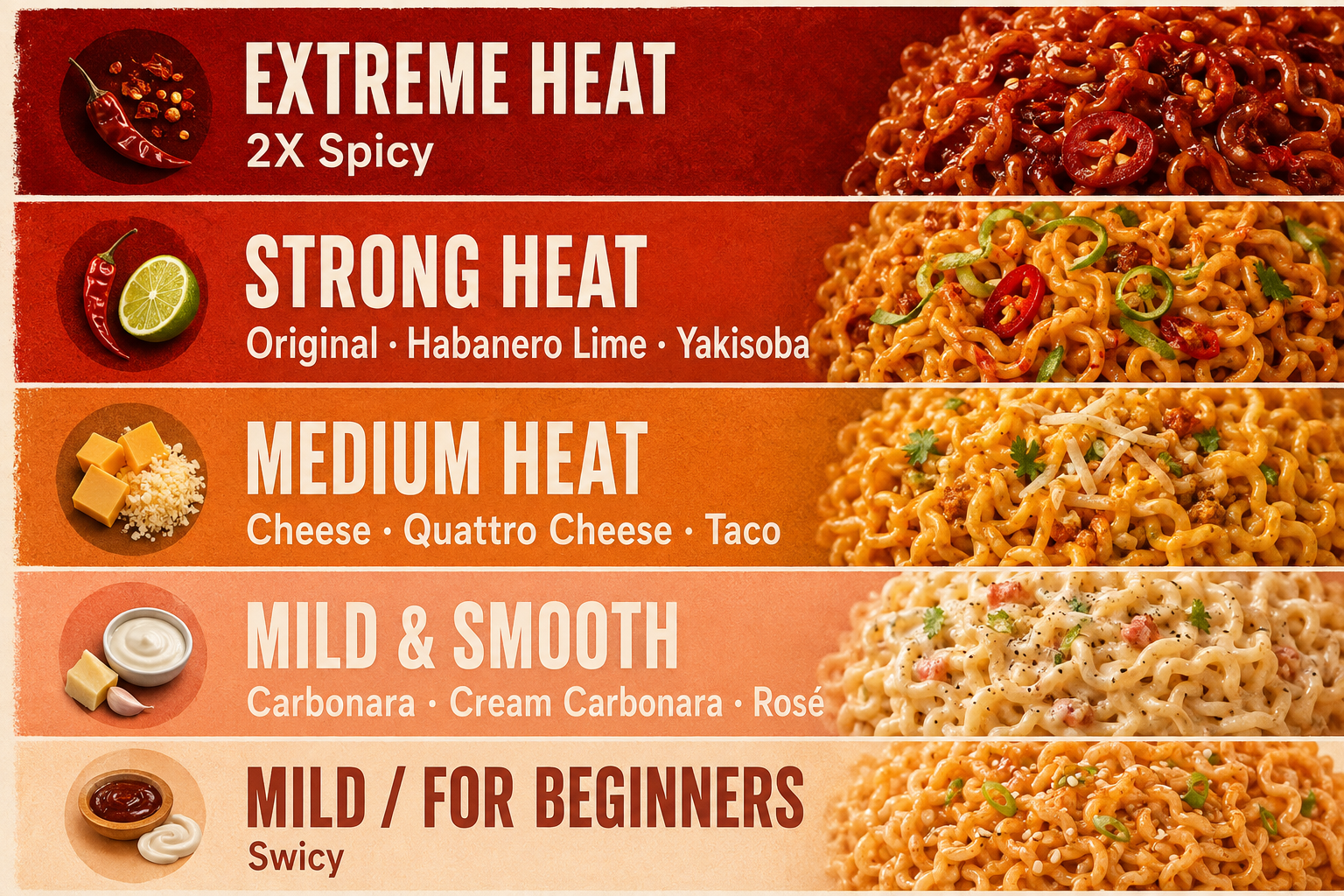
• Extreme Heat: 2X Spicy. Samyang frames it as the final challenge for heat lovers and treats it as the ceiling of the US range.
• Strong Heat: Original, Habanero Lime, Yakisoba.
• Medium Heat: Cheese, Quattro Cheese, Taco.
• Mild & Smooth Heat: Carbonara, Cream Carbonara, Rose
• Mild, for beginners: Swicy.
Notice where the creamy flavors land. Samyang's official US guide places Carbonara, Cream Carbonara, and Rosé two tiers below Original. Their creamy seasoning can also make the heat feel smoother, which is why these flavors are often easier starting points for people who are new to Buldak.
Samyang's suggested progression starts with Swicy, moves through Carbonara and Cheese varieties, and reaches Original at the fourth step. Habanero Lime or Yakisoba comes next, followed by 2X Spicy as the final challenge.
Why unofficial Scoville charts can differ
Samyang's official US flavor guide and the US product pages reviewed for this article do not provide product-by-product Scoville Heat Unit figures. Instead, the company presents the lineup through relative heat tiers.
That is why unofficial SHU charts should be read with caution. A single flavor may appear with different figures across websites, and some pages do not explain whether the number applies to a specific market, package format, formulation, or testing method. Without a traceable primary source, an exact SHU figure should not be treated as an official value for the US product.
A 2024 Danish case shows why marketed heat information and laboratory measurements should not be treated as interchangeable. Danish authorities initially recalled three Samyang products, then allowed 2X Spicy and Hot Chicken Stew to return after testing found lower capsaicin levels than retailers had reported in marketing information. The authority maintained its restriction on 3X Spicy after an updated risk assessment.
The practical takeaway is simple: use Samyang's official US tiers for relative comparisons, and treat an exact SHU number as unverified unless it can be traced to a clearly identified test or official source.
The 3X Spicy is a separate conversation
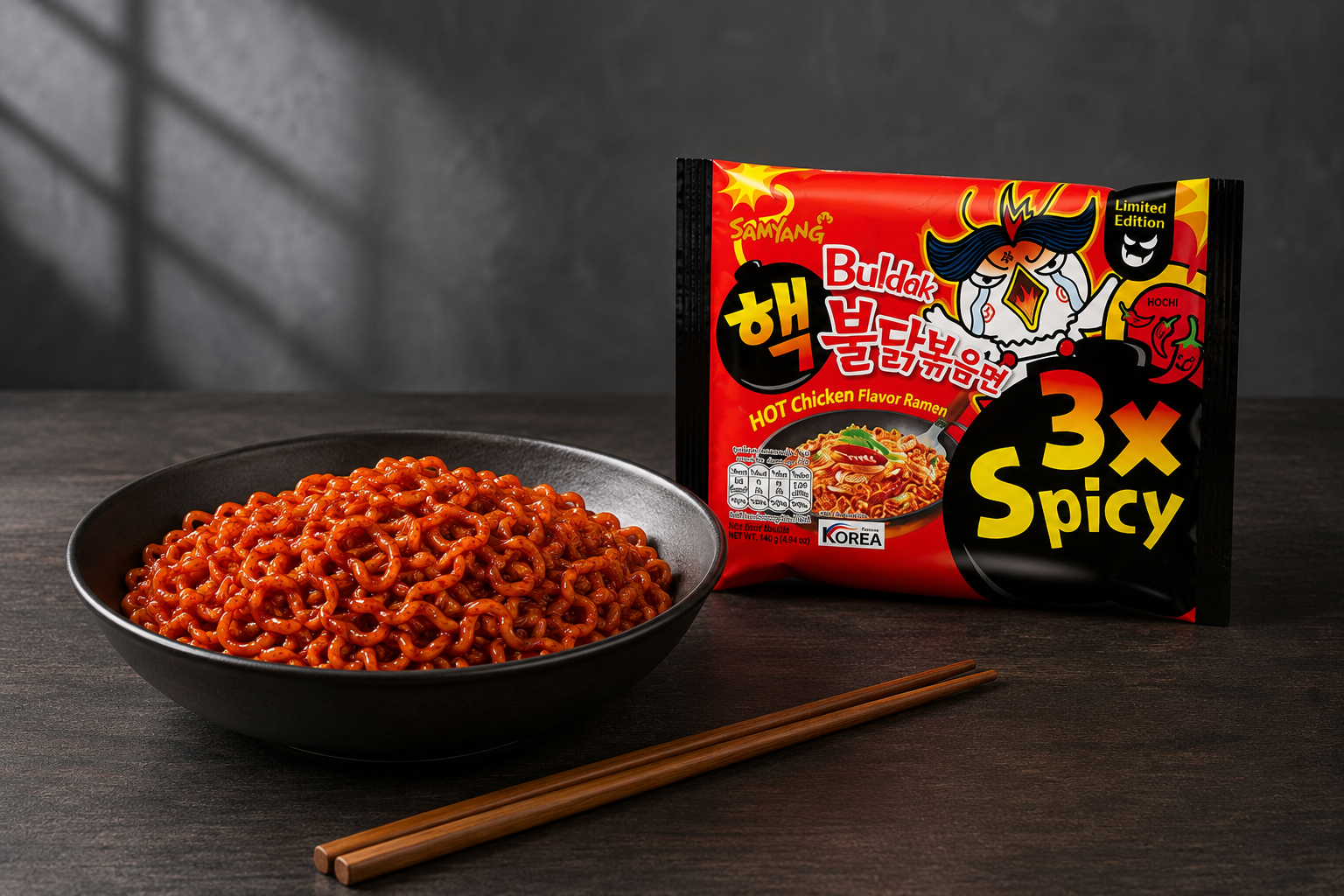
3X Spicy often appears at the top of unofficial Buldak heat charts. However, as of August 2026, it is not listed in Samyang's official US ramen guide. That makes it more accurate to discuss 3X separately from the current core US lineup.
It was also the only one of the three products assessed by Danish authorities in 2024 that remained restricted after laboratory testing and an updated risk assessment.
For readers following the current official US guide, 2X Spicy is the highest listed tier. Any comparison involving 3X should be clearly labeled as separate from that US ranking.
What actually turns the heat down
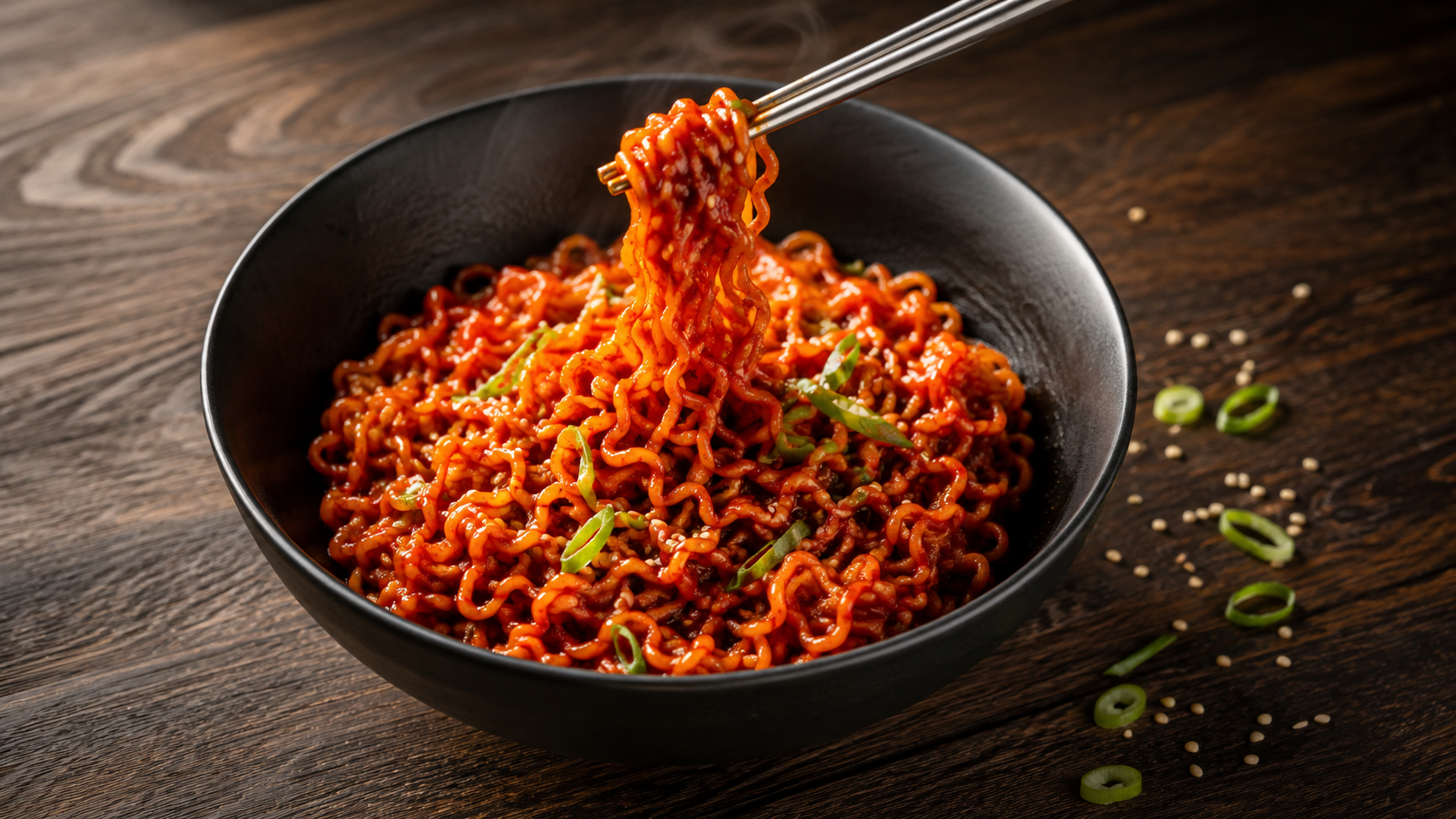
Buldak is a stir-fried-style ramyeon, or bokkeummyeon. The noodles are drained and coated with sauce rather than served in a full bowl of broth, so the flavor and heat can feel more concentrated than they do in many soup-based noodles.
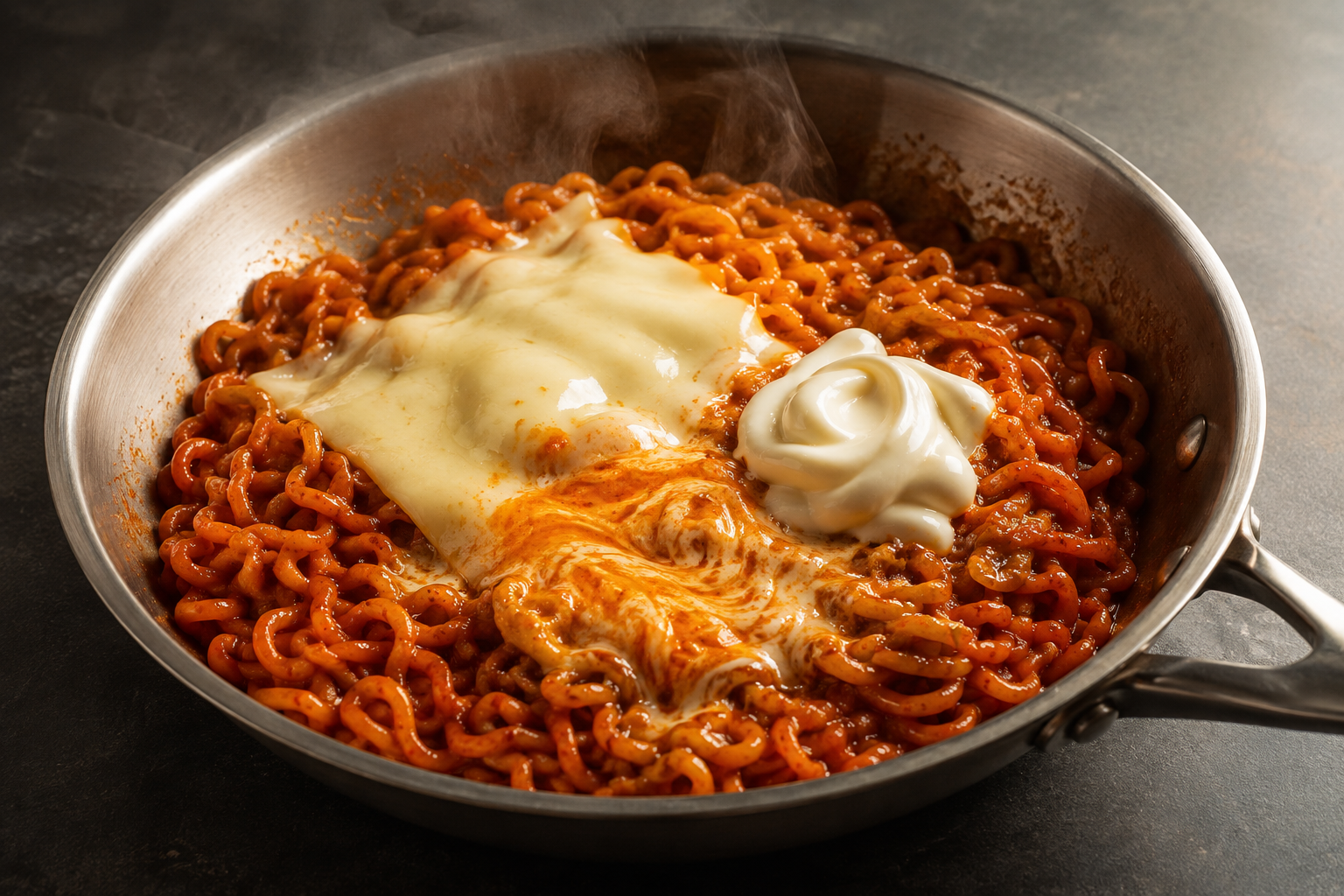
Fat-rich ingredients such as milk, cheese, mayonnaise, egg yolk, or peanut butter can make the sauce taste creamier and the heat feel less intense. They are not the only options: cooler serving temperatures, extra carbohydrates, a little sweetness, or a small amount of acidity can also change how the heat is perceived. Water may provide brief cooling, but it does not reliably remove the burning sensation.
The other option is to adjust the amount of sauce. Start with about two-thirds of the packet, taste the noodles, and add more only if you want it. This lowers the heat, although it also reduces some of Buldak's signature flavor.
Buldak passed 10 billion cumulative packs sold worldwide by the end of May 2026, according to the brand's official US site. Its popularity reflects more than heat alone: the noodles combine a concentrated spicy sauce with sweet, savory, and garlicky flavors across a growing range of products.