Makgeolli is Korea's cloudy rice wine, fermented from rice, water, and nuruk. Learn what it tastes like, why it settles, how fresh and pasteurized bottles differ, and what to check before you buy.
Makgeolli (roughly "mahk-guh-lee") is a traditional Korean cloudy alcoholic drink made by fermenting rice and water with nuruk, a grain-based starter. In English it is usually called "Korean rice wine," though it is brewed from grain rather than fruit. Korean drink categories place it under takju, meaning "cloudy liquor."
What makgeolli is made from
The base recipe is short: cooked rice, water, and nuruk. Nuruk is the ingredient that starts fermentation. It is a grain-based starter containing microorganisms and enzymes that help break rice starch down into sugars and ferment those sugars into alcohol. Traditional nuruk is often made from wheat, though rice and barley versions also exist.
Rice is the main grain in most bottles, but it is not the only possibility. Depending on the producer, makgeolli may include wheat, barley, or other grains, and flavored versions may add fruit or other ingredients. This is why two bottles that are both called makgeolli can read quite differently on the ingredient list.
Why it looks white and settles at the bottom
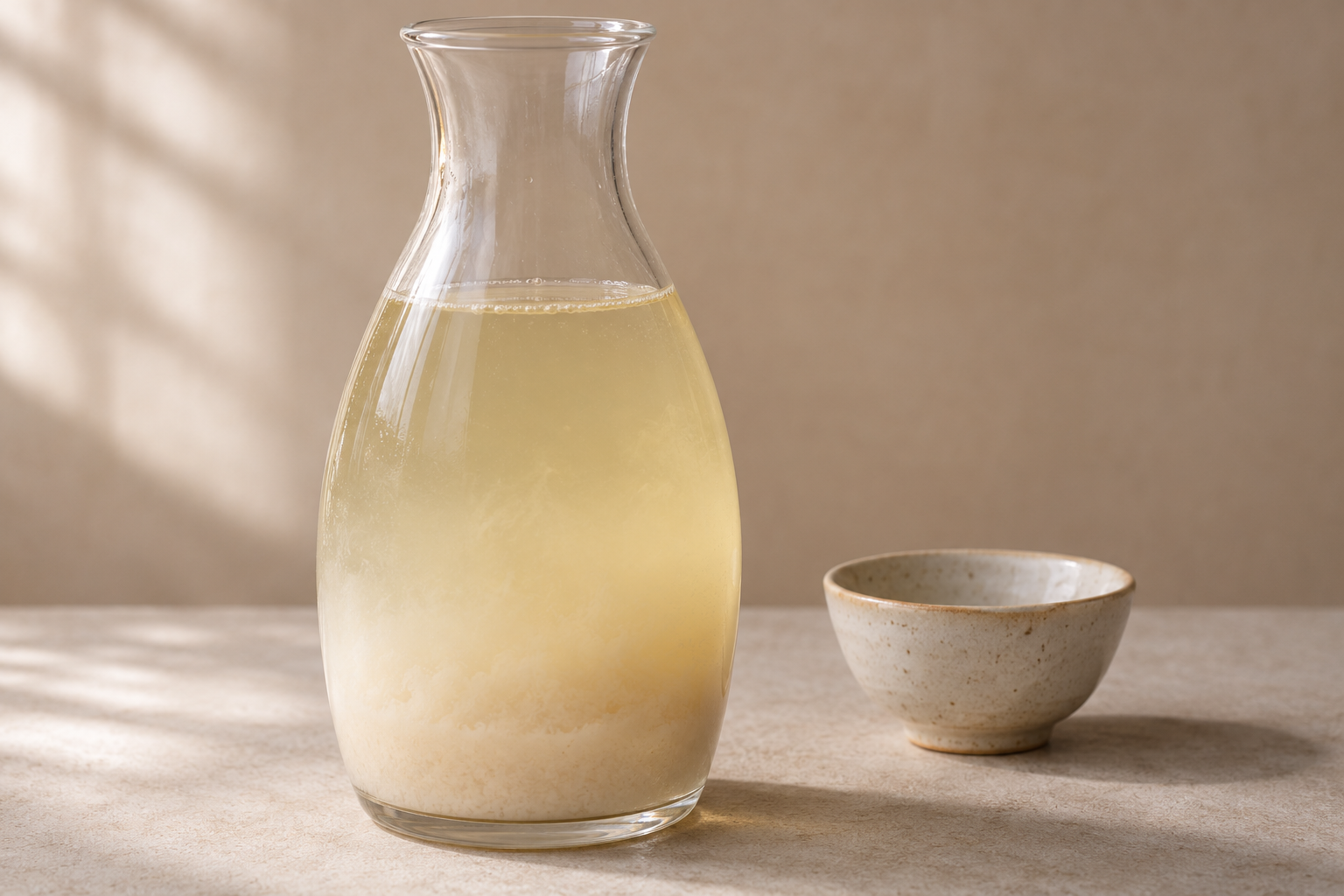
Makgeolli is filtered only coarsely, so fine grain particles and fermentation solids remain in the liquid. Those solids give it the milky, off-white color. The color comes from the grain, not from dairy; there is no milk in the basic recipe.
Left to stand, the solids sink. A bottle that has been sitting in the refrigerator will often show a white layer at the bottom and a clearer, paler liquid above it. This separation is normal, and it is why makgeolli is often gently mixed before pouring. The amount of sediment and the appearance of the layers vary by product.
What makgeolli tastes like
The flavor usually sits somewhere between sweet and tart. There can be a gentle sweetness, a light acidity from fermentation, and a cereal, slightly bready aroma that recalls cooked rice. The suspended grain gives it a soft, rounded body. Some bottles finish with a faint bitterness or a dry, chalky edge.
How sweet and how fizzy a given makgeolli tastes depends heavily on the product. Some are noticeably sweet, while others are drier and sharper. Some are lightly sparkling, sometimes from fermentation that continues in the bottle, while others have little or no carbonation at all.
It is also an alcoholic drink, and it should be treated as one. Many everyday products are around 6 to 8 percent ABV, but stronger styles exist, so always check the exact alcohol content on the label.
Makgeolli vs. soju
The two are often mentioned together, but they are made in different ways. Makgeolli is fermented and then coarsely filtered, so it keeps its grain solids and cloudy look. Soju is a spirit made through distillation; many familiar green-bottle products are made by diluting distilled alcohol. These are typically clear, stronger than everyday makgeolli, and more neutral in flavor. Makgeolli is often served in small bowls, while soju is commonly poured into small shot glasses.
Fresh or pasteurized: why the label matters
Many makgeolli bottles fall into one of two groups. Fresh, or unpasteurized, makgeolli (often labeled saeng makgeolli, meaning "live" makgeolli) can continue fermenting after bottling, so its flavor and fizz may change during storage. Pasteurized makgeolli has been heat-treated to inactivate fermentation microorganisms, helping stabilize it and generally extend shelf life. Pasteurization alone does not tell you how sweet or fizzy a bottle will taste.
Because the products behave differently, there is no single storage rule that fits all of them. Fresh makgeolli is normally kept refrigerated. For either type, follow the specific product's storage instructions, date, and guidance about how long to keep it after opening.
How to drink makgeolli
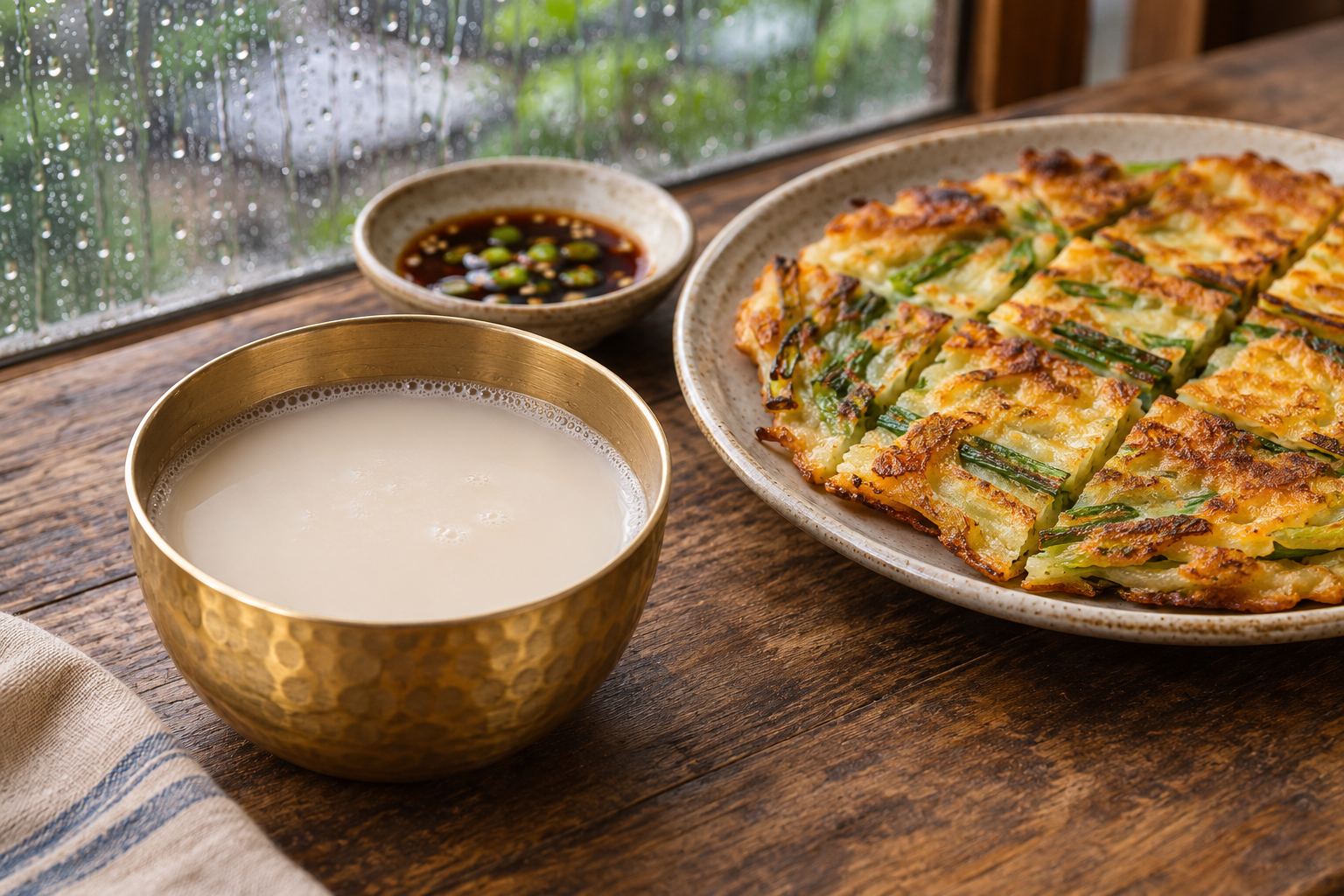
Makgeolli is generally served chilled. In Korea it is commonly poured into small, wide bowls, often metal or ceramic, although a glass is also fine.
To bring the sediment back into the drink, follow the producer's mixing and opening instructions. For products that recommend mixing before opening, gently swirl or slowly tilt the closed bottle to redistribute the sediment. Vigorous shaking is not necessary.
Carbonated bottles need a little more care. Keep them chilled and open the cap slowly, releasing a little gas at a time. Pause if the liquid starts to rise toward the neck. Some highly carbonated products have their own opening method, so check the label before mixing or opening them.
What to eat with makgeolli
The classic partner is jeon, the family of Korean savory pancakes and pan-fried dishes. Pajeon, made with scallions, and kimchijeon, made with chopped kimchi, are two common choices. The pairing works on contrast: jeon is crisp at the edges, rich, and savory, while makgeolli can offer a lightly tangy counterpoint. A sweeter style can also complement kimchijeon's sour, spicy flavor.
In Korea, jeon and makgeolli are a familiar rainy-day pairing. One popular explanation is that the sound of rain resembles batter sizzling in a pan; it is a cultural story rather than a proven origin. Mung bean pancakes are another familiar pairing.
What to check before buying makgeolli in the US
Start with the label and the producer's product information. A few details are worth checking before choosing a bottle:
Alcohol by volume (ABV), since strength varies between products.
Ingredients, including which grains are used besides rice.
Added sugar or sweeteners, which vary by product and may affect the flavor.
Storage instructions, especially whether refrigeration is required, and any guidance for keeping it once opened.
Gluten deserves a separate note. Makgeolli is often described as a rice drink, but rice is not always the only grain involved. Nuruk may be made from wheat or barley, and some products add those grains directly, so rice-based makgeolli is not automatically gluten-free. If you avoid gluten, look for an explicit gluten-free claim and ask the producer about the grains and starter if the information is unclear. Do not assume that a short ingredient list provides the full answer.
Read that way, the label and producer's guidance help you understand what is in the bottle and how to serve and store it.