This easy Korean cucumber salad recipe (oi muchim) takes about 25 minutes with supermarket cucumbers, plus tips for keeping it crunchy and serving it as Korean banchan.
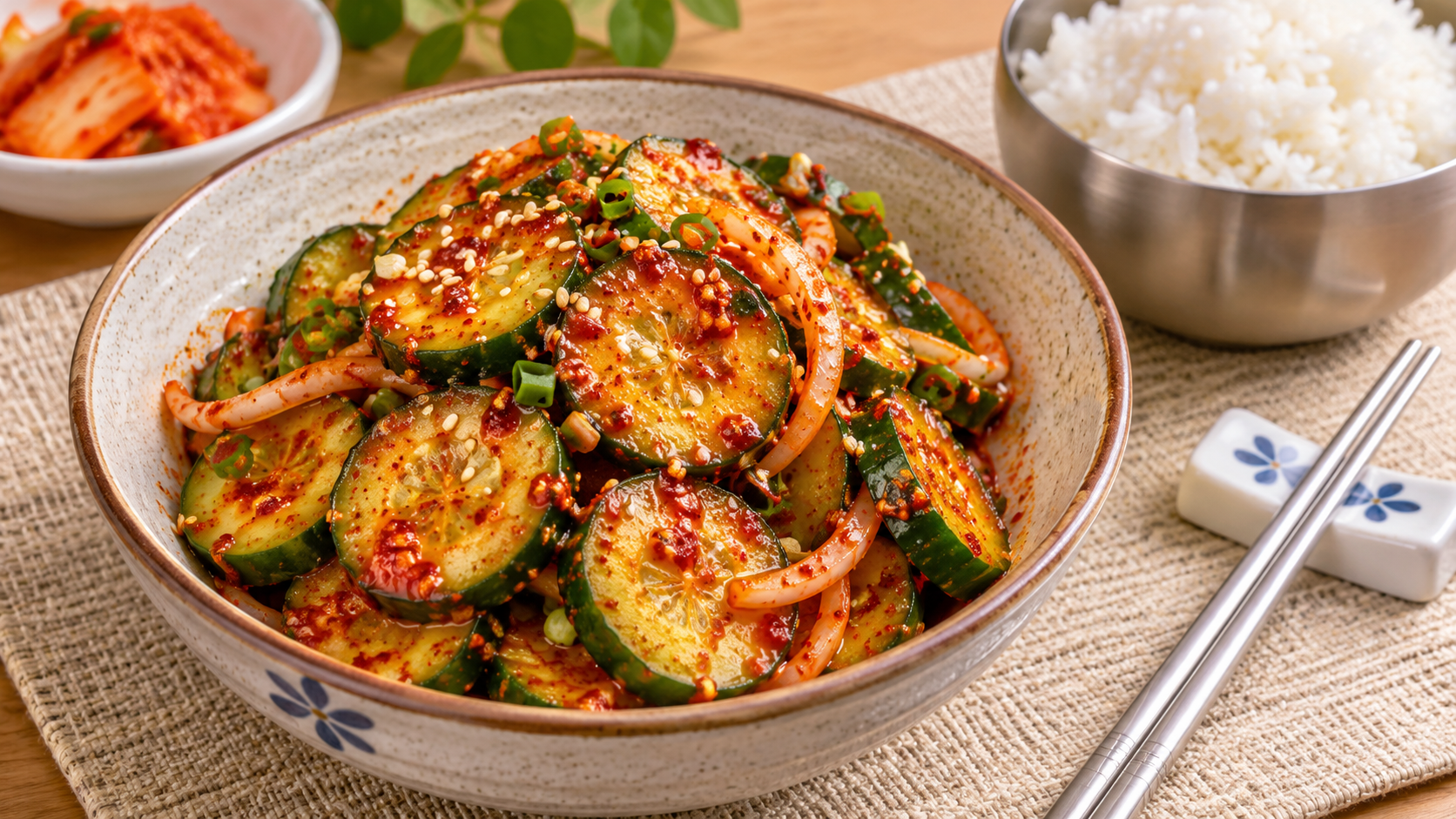
Korean cucumber salad is the side dish that disappears first, which is a little unfair to everything else on the table. In Korean it's called oi muchim (오이무침). Oi means cucumber, and muchim means seasoned and mixed by hand. Thin cucumber slices get a quick salt, then a toss with gochugaru, vinegar, garlic, and sesame. Cold, crunchy, a little spicy, a little sweet.
This korean cucumber salad recipe makes 4 side servings in about 25 minutes, and 15 of those minutes are the salt working while you do something else. No stove. No fermentation either. Oi muchim is not kimchi. It's made to be eaten fresh, the same day or close to it.
- Serves: 4 as a side dish
- Prep time: 10 minutes
- Salting time: 15 minutes
- Total time: about 25 minutes
Ingredients for Korean Cucumber Salad
For the cucumbers
- 1 lb Persian or English cucumbers (about 4 to 5 Persian or 1 large English)
- 1 tsp kosher salt
For the dressing
- 1 tbsp gochugaru (Korean chili flakes), plus more to taste
- 1 1/2 tbsp rice vinegar
- 2 tsp sugar
- 1 clove garlic, finely minced
- 1 green onion, thinly sliced
- 1 tsp toasted sesame oil
- 1 tsp toasted sesame seeds
- 1 tsp soy sauce (optional)
- 1/4 small onion, thinly sliced (optional)
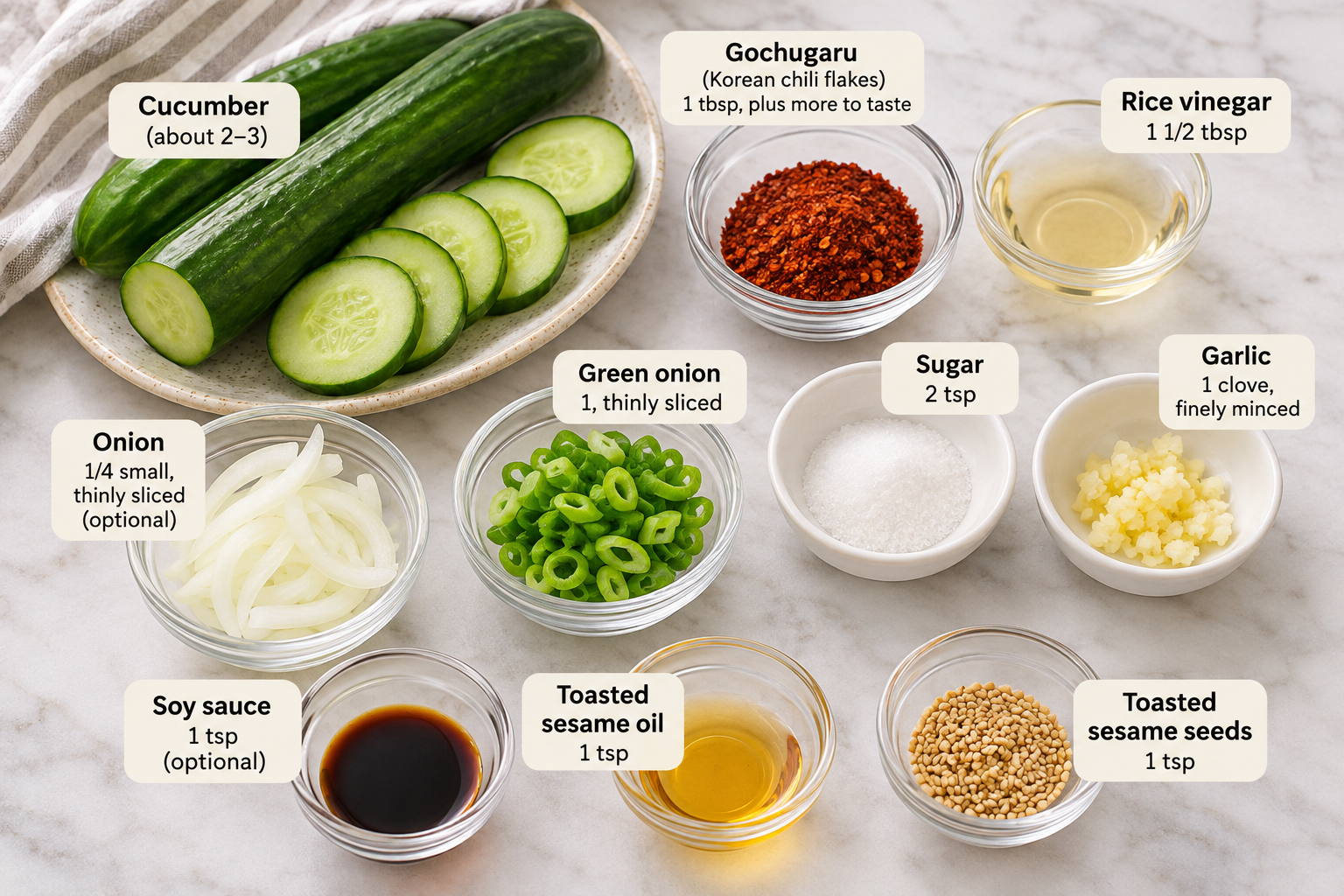
Which cucumbers to buy in the US
Korean cucumbers are the classic pick: thin skin, small seeds, serious crunch. Outside Korean markets they can be hard to find, which is fine, because two supermarket regulars do the job. Persian cucumbers are small, thin-skinned, and nearly seedless, so you slice and go. English cucumbers, the long ones sold wrapped in plastic, work just as well. Kirby pickling cucumbers are the crunchiest option if your store has them.
The thick-skinned garden cucumber is the one to handle differently. Peel it, halve it lengthwise, and scoop out the seeds with a spoon. Otherwise the bowl turns into cucumber soup by dinner.
Gochugaru is sold at Korean and Asian grocery stores and is easy to order online. Coarse flakes give the classic look. Fine flakes coat more evenly and won't feel gritty.
How to Make Korean Cucumber Salad
- Slice. Wash the cucumbers, trim the ends, and cut them into rounds about 1/8 inch thick. Halve them lengthwise first if you prefer half moons.
- Salt. Toss the slices with the kosher salt in a bowl or colander and let them sit for 15 minutes. Water will start pooling.
- Mix the dressing. While you wait, stir together the gochugaru, vinegar, sugar, garlic, green onion, and soy sauce if you're using it.
- Drain and squeeze. Pour off the liquid and taste a slice. If it's too salty, give the batch a quick rinse. Squeeze gently, a handful at a time. Damp is fine. Wrung out is too far.
- Toss. Add the cucumbers (and onion, if using) to the dressing and mix with your hands or tongs until every slice turns red. This is the muchim part. Gloves help, since gochugaru stains and garlic lingers.
- Finish. Add the sesame oil and sesame seeds, toss once more, and taste. Adjust with a pinch of sugar, a splash of vinegar, or more gochugaru.
Serve right away, or chill for 10 to 20 minutes first.
Tips for Keeping Korean Cucumber Salad Crunchy
- Salt first if you're making it ahead. Salting pulls water out before the dressing goes on, so less of it ends up in the bowl later. Skipping it is fine if you're eating within the hour.
- Watch the thickness. Paper-thin slices go limp fast. Around 1/8 inch keeps the snap, and thicker diagonal pieces give you an even chunkier bite.
- Dress it close to serving time. Even salted cucumbers keep releasing liquid once sugar and vinegar hit them.
- Toss, don't knead. Rough mixing bruises the slices and speeds up the sog.
Storage and allergen notes
Oi muchim is at its best the day it's made. Leftovers keep in a covered container in the fridge for about 2 to 3 days, but expect softer slices and more liquid each day, so drain before serving. Like any cut produce, it should go into the fridge within 2 hours and shouldn't sit out longer than that.
This recipe contains sesame (in the oil and seeds). If you use soy sauce, it also contains soy and usually wheat. Fish sauce, a common swap, adds fish. For a gluten-free version, use a soy sauce labeled gluten-free or skip it and season with a pinch of salt.
How to Serve Oi Muchim as Korean Banchan
Banchan are the small side dishes served alongside rice and the main dish at a Korean meal. Nobody eats them in courses. You pick at a little of everything, going back and forth. Oi muchim usually plays the cold, sharp one on the table, the bite that resets your mouth between richer dishes.
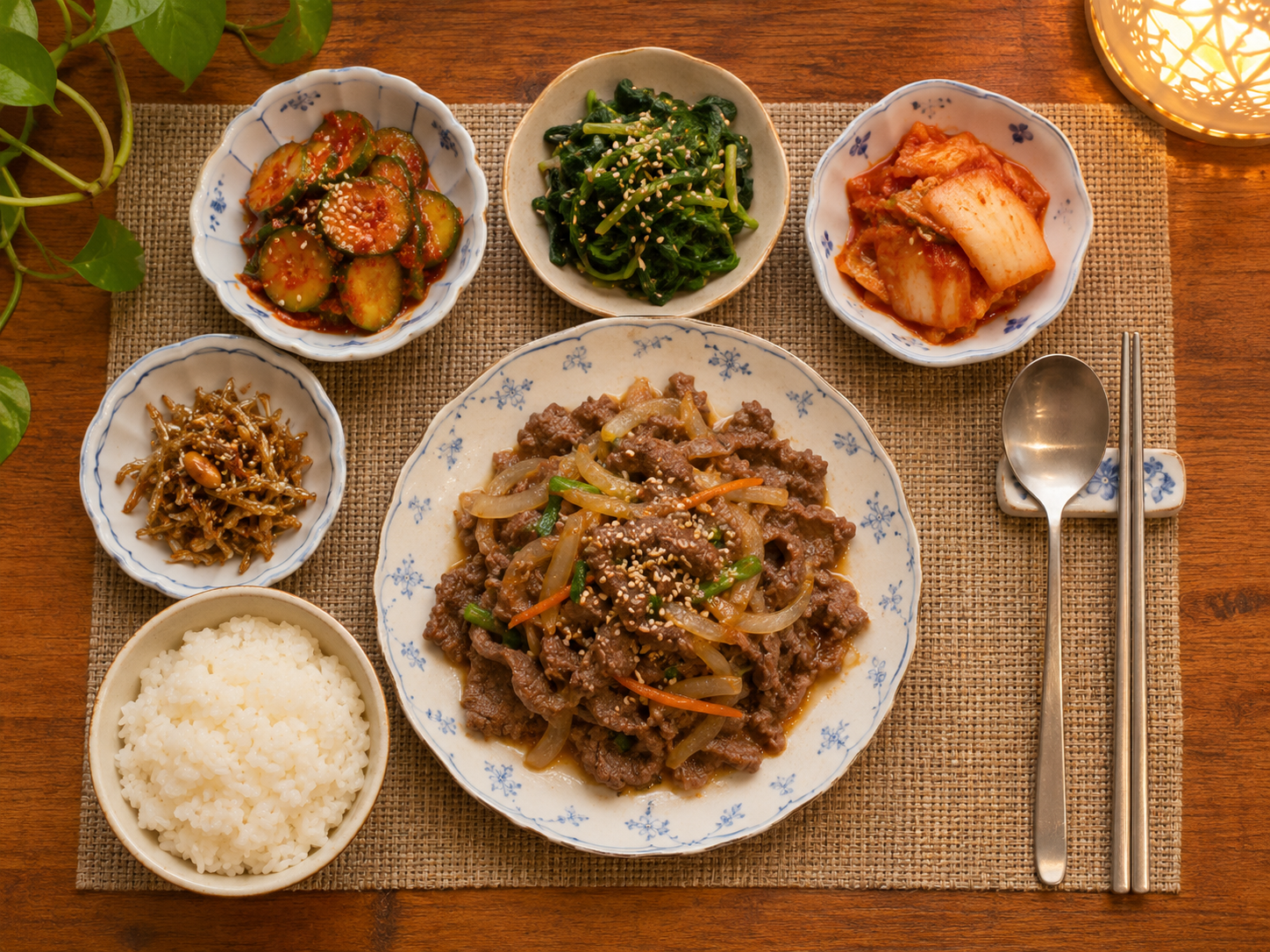
Good matches:
- Bulgogi or galbi, where the vinegar cuts right through the sweet, savory meat
- Samgyeopsal (grilled pork belly)
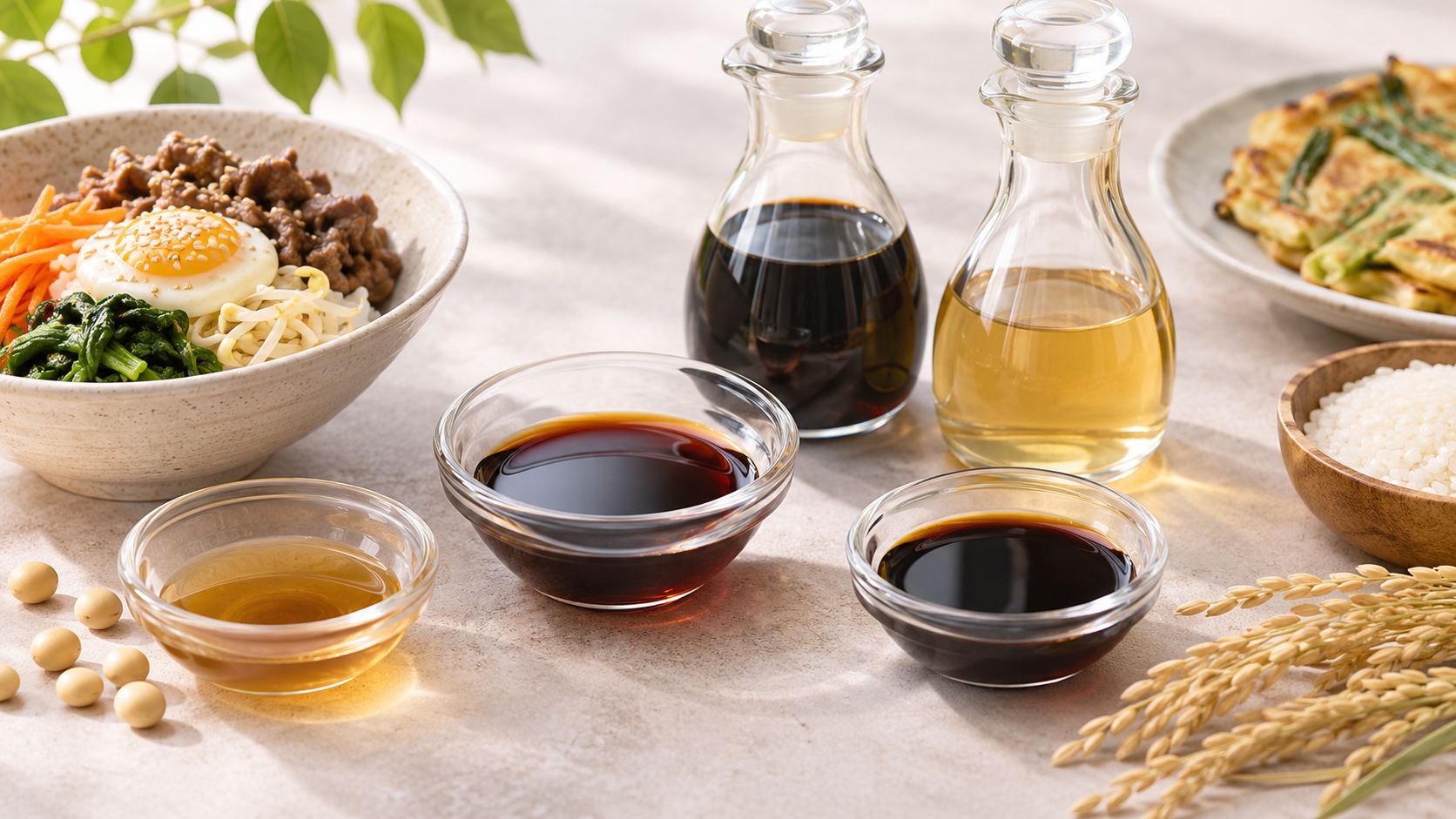
- Bibimbap, served on the side or tucked into the bowl
- A bowl of rice with a fried egg, which honestly counts as dinner on a tired Tuesday
It also behaves well outside Korean food. Grilled chicken, salmon, a burger. It does not care.
Easy Variations and Substitutions
- Milder: start with 1 tsp gochugaru. Heat varies by brand, so add more a little at a time.
- Thicker and spicier: stir in 1/2 to 1 tsp gochujang. It helps the dressing cling. Optional, not required.
- No gochugaru: a small pinch of cayenne or red pepper flakes adds heat, but not the same fruity, gently smoky flavor or bright red color. Use far less, since both usually run hotter.
- Vinegar swaps: apple cider vinegar or white vinegar both work. White vinegar is sharper, so start with a bit less.
- More savory: use a splash of fish sauce in place of soy sauce.
- Less sweet: swap the sugar for honey, or leave it out for a tarter salad.
A Simple Korean Side Dish for Everyday Meals
One pound of cucumbers, a few pantry staples, 25 minutes. That's the whole commitment. Make it once by the recipe, then start adjusting: more vinegar, less heat, onion or no onion. Korean home cooks do the same thing, which is why no two families make oi muchim exactly alike.
Put a bowl next to whatever you're already cooking tonight. It'll fit.