A Korean weeknight dinner is less a recipe than a structure: rice, one protein, a vegetable or two, and a few pantry staples that do the seasoning for you. Here is how to put one together on a Tuesday.
It is 6:40 on a Tuesday and someone is standing in front of an open fridge. That is when dinner actually gets decided, not at 10 a.m. when you felt organized and saved a recipe.
A Korean dinner doesn't have to mean a complicated recipe. It can be a simple combination of rice, protein, vegetables, and a few flavorful staples. Most easy healthy dinner recipes hand you a fresh shopping list every night. Korean home cooking hands you a structure, and a structure is the thing you can actually repeat on a Wednesday.
Rice does the boring work
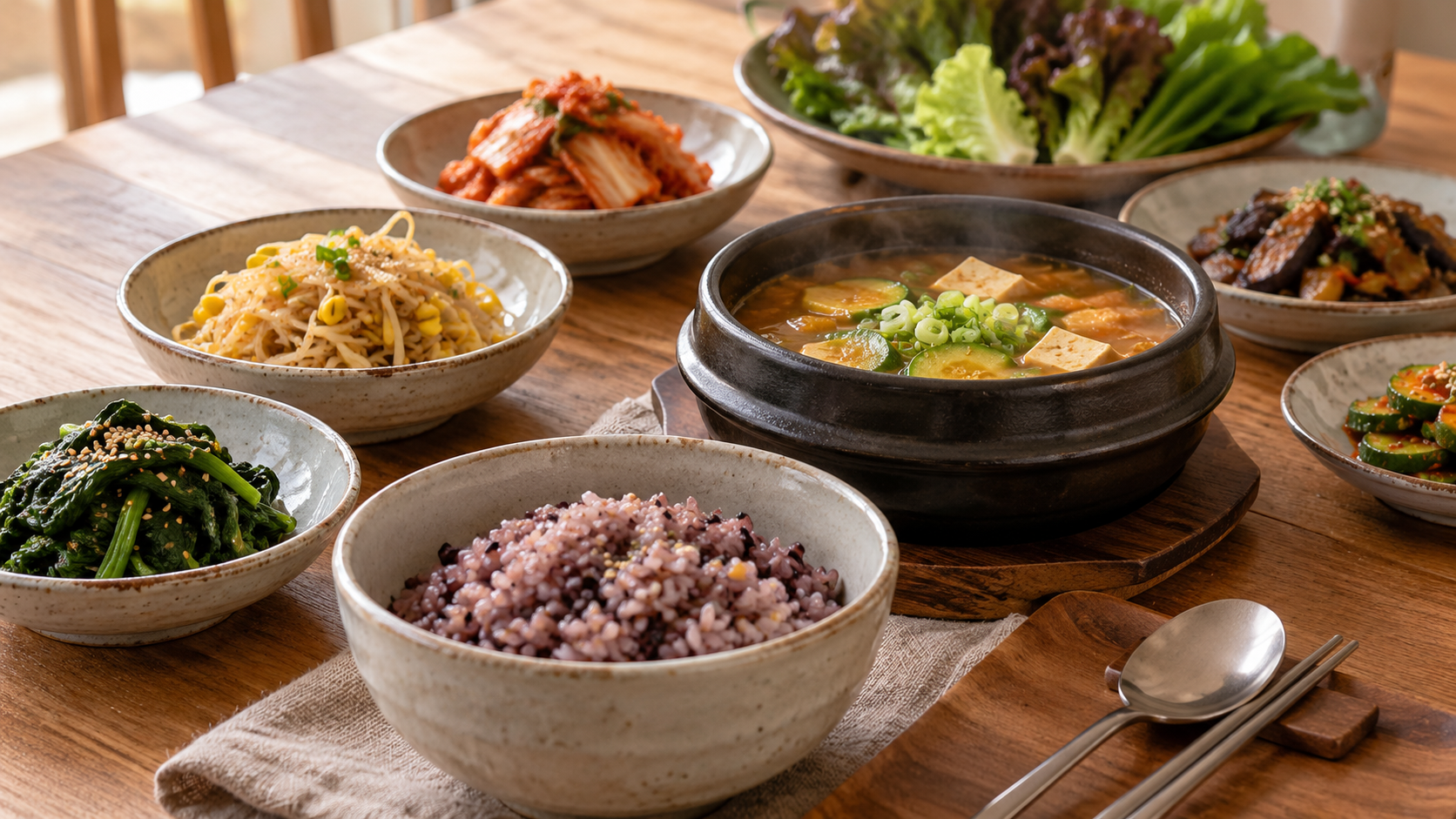
A Korean meal gets built in parts. There is bap (rice), a soup or stew if anyone has the energy, and banchan (반찬), the small side dishes. Everyone gets their own bowl of rice. The side dishes sit in the middle of the table and get shared, picked at, and refilled from a container in the fridge.
Rice is not filler in this setup. It is the anchor, and everything else is seasoned on the assumption that it will be eaten in small bites against plain rice. That is why a spoonful of kimchi tastes loud on its own and exactly right on top of rice. It was never designed to be eaten alone.
And the parade of tiny dishes you get at a Korean barbecue restaurant in the States? That is a restaurant move. A weeknight table in a Korean home is usually rice, one thing that got cooked, one or two things that were already sitting in the fridge, and kimchi.
Five pantry things carry the whole system
Korean pantry staples are the reason any of this works without a recipe in front of you, and most of them now sit in regular American grocery aisles rather than a specialty market across town.
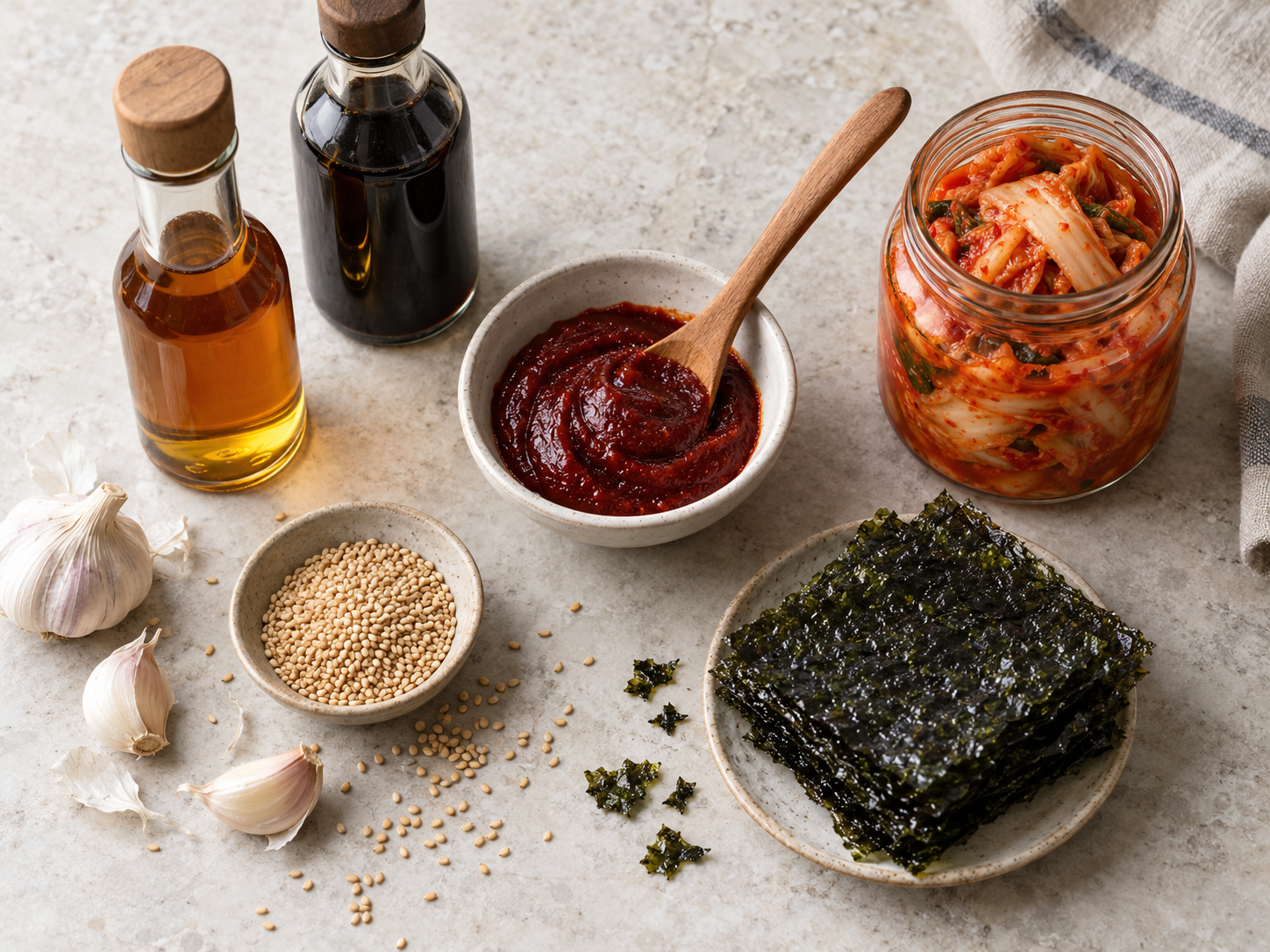
Toasted sesame oil is the one that does the most work. A teaspoon turns blanched vegetables into a side dish, and it goes in at the end, off the heat, because heat kills the smell that you bought it for.
Soy sauce, or ganjang, handles the salt and the savory part in the same move.
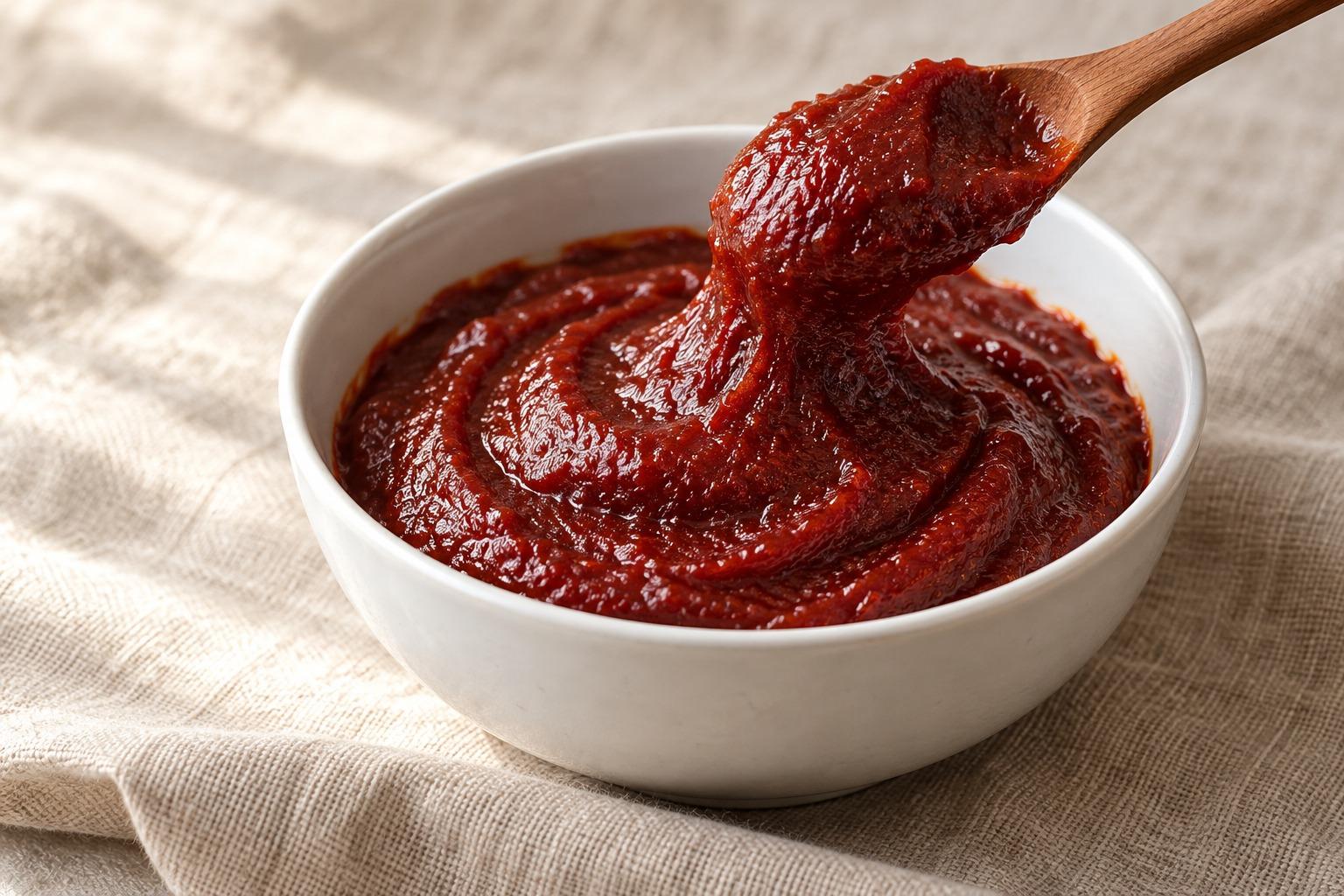
Gochujang, the fermented chili paste, is sweet and salty before it is hot. Thin it with a splash of water, sesame oil, and a little vinegar and you have a sauce for a rice bowl.
Gim, the thin sheets of roasted seaweed, sits in snack packs at Costco and Trader Joe's, both of them sourced from Korean seaweed farms, and the United States is now the biggest overseas buyer. Crumble it over rice. That counts as a side dish.
Kimchi does two jobs: it is a vegetable and it is the sour, sharp note that keeps a plate of rice from tasting flat.
The technique worth stealing is smaller than it sounds. Almost any vegetable becomes a Korean side dish the same way: blanch it for a minute, squeeze the water out, then dress it with sesame oil, minced garlic, and salt. Spinach, soybean sprouts, sliced zucchini, broccoli if that is what is in the drawer. Cucumber skips the blanching and gets salted instead. One method, five vegetables, nothing to look up.
Four dinners that are mostly assembly
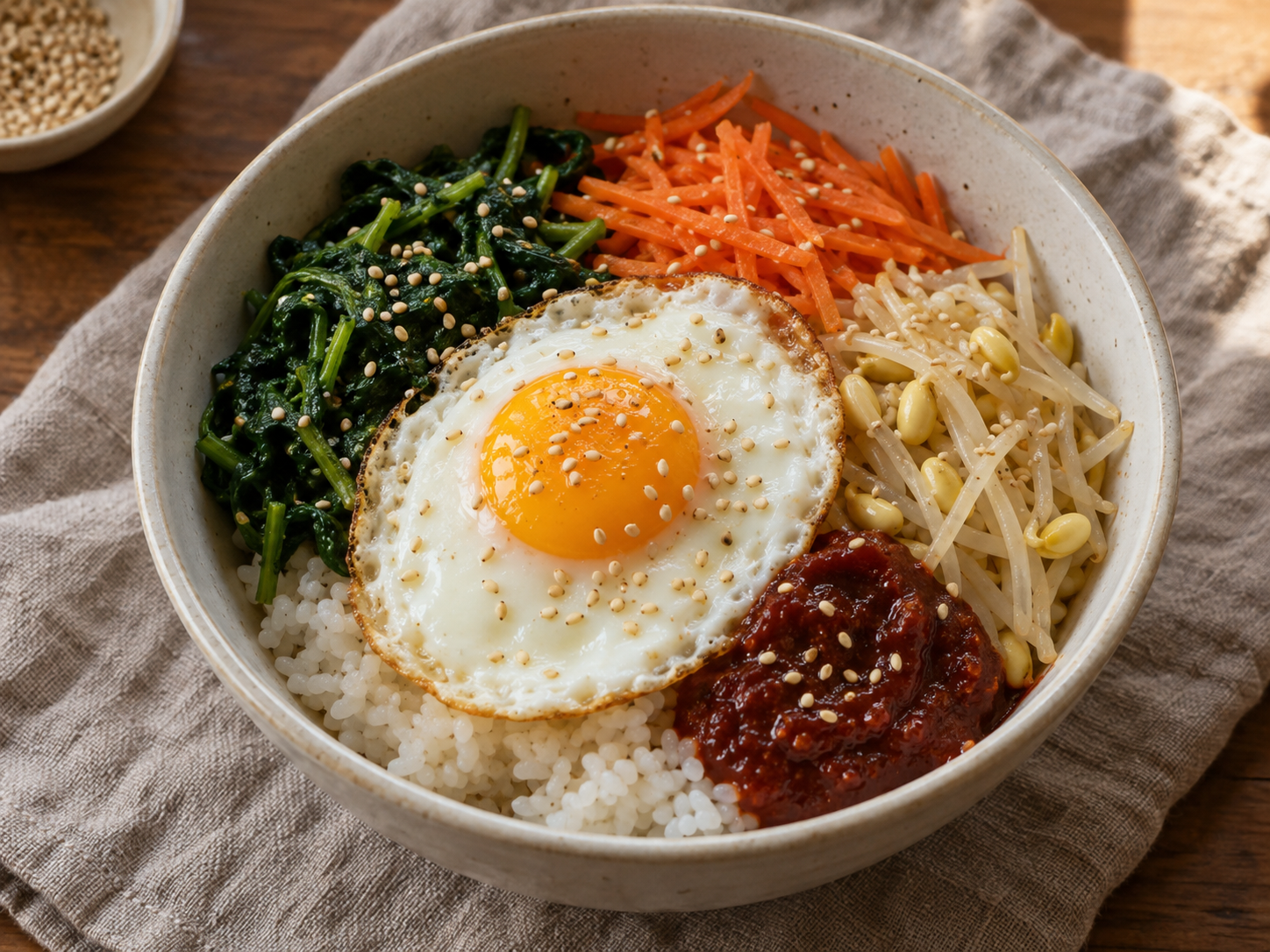
A rice bowl, bibimbap style. Warm rice, whatever vegetables you seasoned, a fried egg, a spoonful of gochujang sauce. Mix it all together before eating, which is what the name means anyway. Bibimbap started as a way to use up yesterday's side dishes, so leftovers are not cheating here.
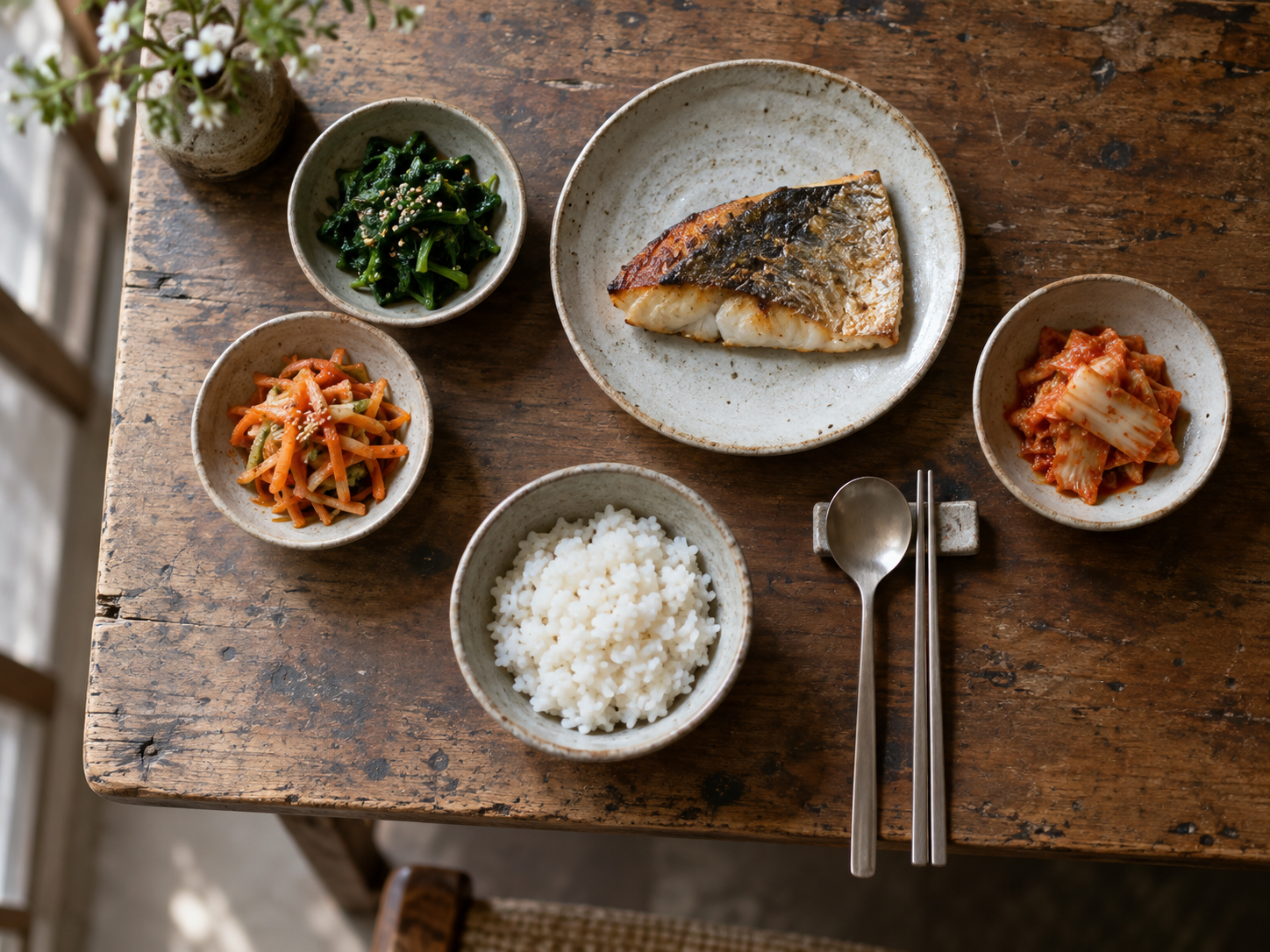
Rice, a piece of salmon or chicken from the pan, salted cucumbers, and a stack of gim. About fifteen minutes, most of it hands off.
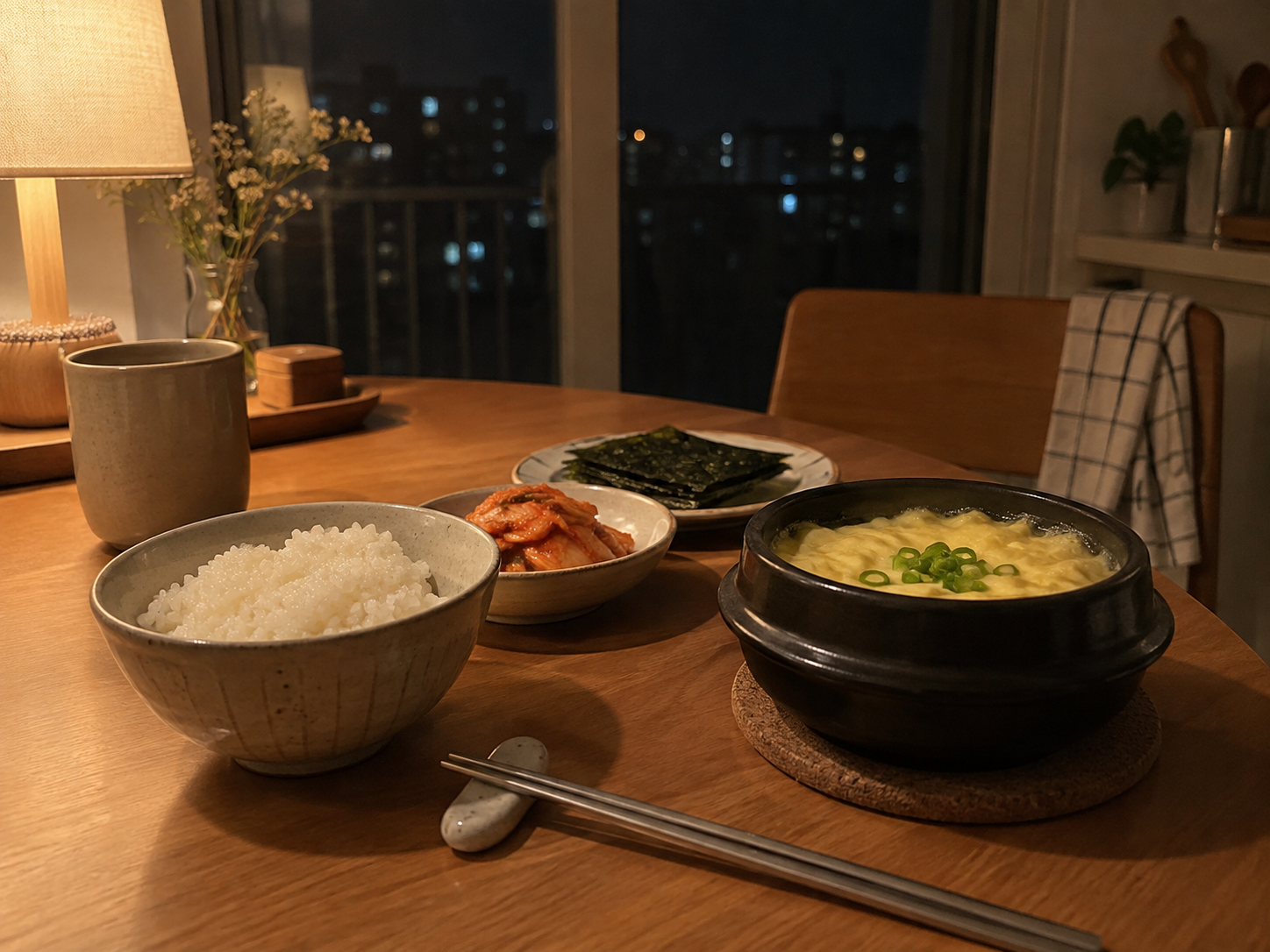
Egg night. Steamed egg custard takes roughly five minutes in the microwave, and with rice and a sheet of gim torn over the top it turns into a full weeknight dinner that a lot of Korean households eat more often than they admit.
Kimchi stew, the one you make when the kimchi in the jar has gone too sour to eat straight. Kimchi, tofu, a little pork if there is pork, water, simmer. It gets better the longer the kimchi has been sitting there.'
What a Tuesday actually looks like in Korea now
Korean food culture has been quietly scaling itself down. Single-person households passed 36 percent of all households in the most recent census, and a table set for one does not need seven small dishes on it. What you get instead is the one-bowl version: rice in a bowl, something on top, kimchi on the side, done.
Store-bought kimchi is normal. Frozen rice is normal. Making one or two side dishes on Sunday and eating them until Thursday is extremely normal.
The vegetables end up on the table because a vegetable is a category in the meal, not because anyone decided to be virtuous about dinner that night. That is the part worth borrowing.
Start the rice first. Everything else takes less time than the rice does, which is most of the trick.