A mild, stovetop galbijjim recipe for Korean braised beef short ribs, with the right butcher cut, exact measurements, doneness cues, sauce fixes, and safe storage times.
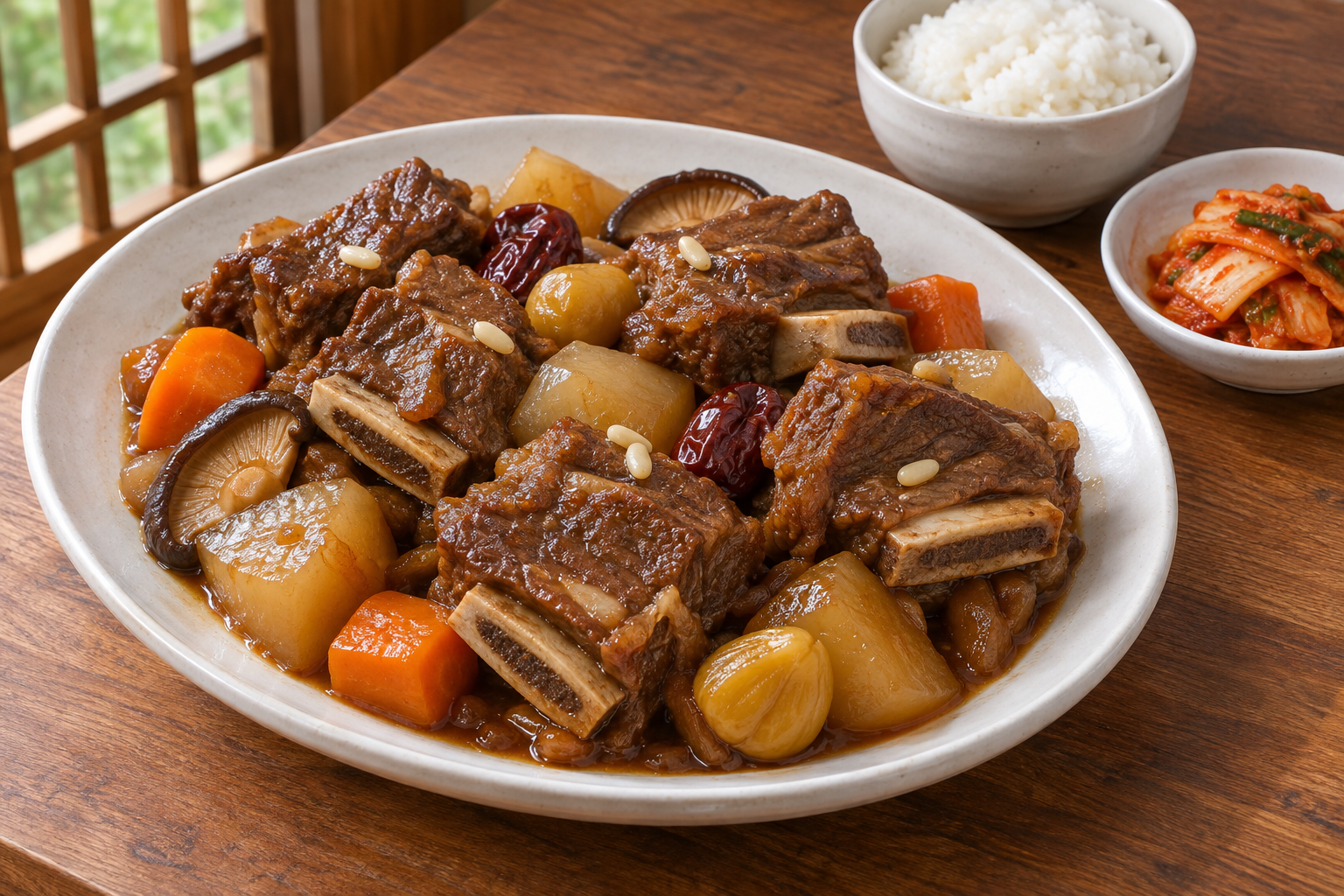
Galbijjim is Korean braised beef short ribs: bone-in ribs and chunks of vegetables simmered slowly in a sweet and salty soy sauce mixture until the meat turns tender and the sauce clings to it like a glaze. Many Korean families make it for Seollal (Lunar New Year) and Chuseok (the autumn harvest holiday), and for birthdays or any meal that calls for something special. You will also see it spelled galbi-jjim or kalbi jjim.
This galbijjim recipe makes one version only: mild, not spicy, made with beef in a pot on the stove. Spicy galbijjim, pork rib versions, and pressure cooker or slow cooker methods use different liquid amounts and timing, so they belong in their own recipes rather than in the margins of this one.
Recipe at a Glance
Serves: 4
Mushroom soaking: at least 3 to 4 hours, hands-off; allow longer or overnight in the refrigerator if needed
Prep: 30 minutes, including a 30-minute rib soak while you cut vegetables and mix the sauce
Cook: about 2 hours (about 20 minutes to blanch the ribs, then about 1 hour 35 minutes of braising and glazing)
Total: about 5 1/2 to 6 1/2 hours if soaking and cooking are done in sequence; about 2 1/2 hours once the mushrooms are soaked. Longer mushroom soaking or extra braising adds time
Equipment: a heavy 5- to 6-quart pot or Dutch oven with a lid, a bowl, and a colander
Thicker ribs can need 15 to 30 minutes more. The doneness check below matters more than the clock.
What to Ask for at the Butcher Counter
Ask for bone-in beef short ribs, English cut. In this cut the ribs are separated between the bones, so each piece is a single bone with a thick block of meat on top. Korean markets often label them as braising ribs or galbijjim ribs. For this recipe, look for pieces roughly 2 to 2 1/2 inches (5 to 6 cm) long and about 1 1/2 inches (4 cm) across, with plenty of meat on the bone. Two pounds is usually about 8 pieces. If the butcher only has long ribs, ask them to cut each one down to that size.
Do not swap in flanken-cut ribs, the thin strips sliced across several bones that are used for LA galbi, the grilled marinated short ribs. They are built for quick grilling and cook far faster than thick braising ribs, so the liquid and timing here would not fit them. Boneless short rib also behaves differently in a braise and is not covered by this recipe.
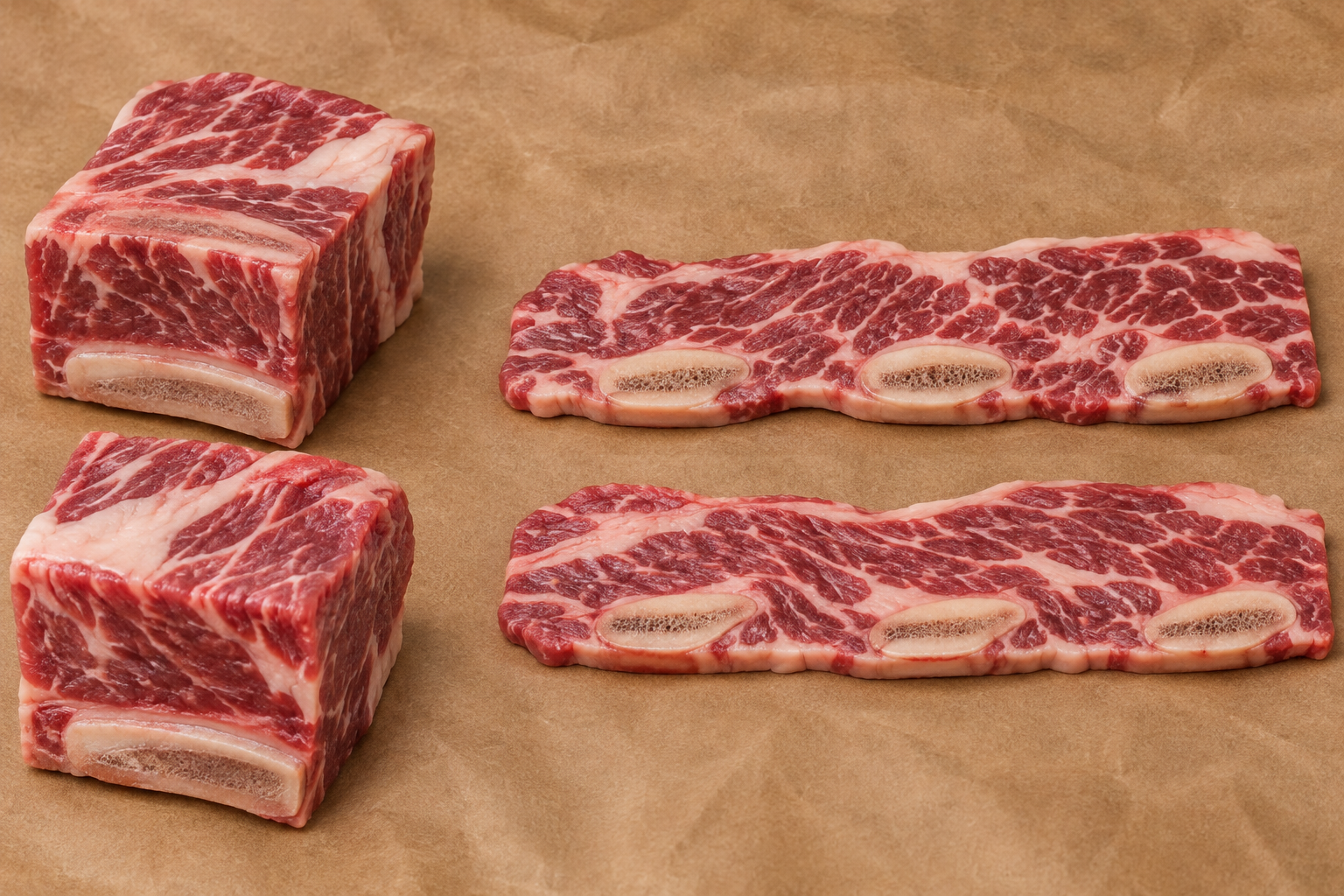
The 2 pounds in the ingredient list is the weight with the bone in. Expect noticeably less meat on the plate than the number suggests.
Ingredients
For the ribs:
2 lb (about 900 g) bone-in beef short ribs, English cut, weighed with the bone
For the braising sauce:
4 dried shiitake mushrooms
2 1/2 cups (600 ml) cold water, for soaking the mushrooms (2 cups, or 480 ml, of this soaking liquid goes into the sauce)
1/3 cup (80 ml) regular soy sauce (see the note on soy sauce below)
1/2 cup (120 ml) mirim (Korean cooking rice wine), or water
1/4 cup (about 50 g) sugar, white or brown
1/2 tsp ground black pepper
8 garlic cloves, minced
1 tsp minced peeled ginger
2 tbsp (30 ml) rice syrup (ssal-yeot), added near the end
For the vegetables:
8 to 12 oz (225 to 340 g) Korean radish or daikon, peeled
2 large, thick carrots, peeled
The 4 soaked shiitake mushrooms from above
Optional additions:
12 peeled chestnuts, fresh or frozen
8 large dried jujubes (Korean red dates), pitted
12 pine nuts, for garnish
The basic recipe is complete without the optional additions. Chestnuts and jujubes add a gentle sweetness and the look of a holiday table, and pine nuts are only a finishing touch.
What Each Part of the Sauce Does
Soy sauce brings the salt, the savory depth, and most of the color. Use regular soy sauce: in Korean markets that usually means a bottle labeled jin-ganjang or yangjo-ganjang, and an all-purpose brewed soy sauce from the supermarket works in the same role. Do not use guk-ganjang, Korean soup soy sauce. It is generally lighter in color and more concentrated in salt, so the same 1/3 cup can make the dish too salty. Brands also differ in saltiness, and low-sodium bottles change the balance again, which is why this recipe gives no conversion for other soy sauces. Whatever you use, taste before the final reduction. Most regular soy sauces are brewed with wheat, so treat this recipe as containing gluten unless every label you use says otherwise.
Sugar, mirim, and rice syrup supply the sweetness that rounds off the soy sauce. The rice syrup goes in late because its main job is the glossy finish. Garlic, ginger, and black pepper keep the richness of the beef from feeling heavy. The shiitake soaking water replaces plain water with an earthy, savory base.
You may notice that many galbijjim recipes add grated Asian pear. This version does not. A pear-based recipe is balanced around the extra sweetness, fruit aroma, and liquid the pear brings, so adding pear to this sauce would tip it sweeter and change the reduction. Swapping apple or another fruit would shift the flavor again. If you want a pear version, follow a recipe written for one. Tenderness here does not depend on fruit at all; it comes from time and gentle heat.
How to Make Galbijjim
1. Soak the mushrooms (at least 3 to 4 hours)
Put the dried shiitake in a bowl with the 2 1/2 cups of cold water, cover, and refrigerate for at least 3 to 4 hours, until the caps are soft all the way through. Thick mushrooms may need longer or overnight. Lift the mushrooms out, squeeze them gently over the bowl, and strain the liquid through a fine sieve to remove any grit. Cut off the stems and halve any large caps.
2. Trim the fat and soak the ribs (30 minutes)
Cut away the thick, hard layer of white fat on the outside of each rib. Leave the thin membrane that holds the meat to the bone, since it keeps the pieces from falling apart in the pot.
Skip rinsing the raw ribs under the tap. U.S. food safety guidance advises against washing raw meat because the splashing spreads bacteria around the sink and counter. Instead, place the ribs in a bowl, cover them with cold water, and keep the bowl in the refrigerator for 30 minutes, changing the water once. The soak draws some of the reddish liquid out of the cut surfaces and bones. Most of that liquid is water colored by myoglobin, a muscle protein, rather than blood. Removing some of it keeps the braising sauce cleaner and less murky. It is a flavor step, not a safety step; cooking is what makes the meat safe. Wash your hands and the sink area afterward.
3. Prepare the vegetables and sauce
Cut the radish and carrots into chunks about 1 1/2 inches (4 cm) across. Large pieces hold up through the long simmer. Some cooks round off the sharp edges with a paring knife so the pieces are less likely to chip when stirred, but this is optional.
In a bowl, mix 2 cups of the mushroom soaking liquid with the soy sauce, mirim, sugar, black pepper, garlic, and ginger. If you have less than 2 cups of soaking liquid, top it up with cold water. Stir until the sugar dissolves. Keep the rice syrup aside for later.
4. Blanch the ribs (about 20 minutes, including boiling the water)
Bring enough water to cover the ribs to a boil in your pot. Lift the ribs out of the soaking water and lower them in carefully. Once the water returns to a boil, cook for 5 minutes. Gray foam and some fat will rise to the surface.
Drain the ribs in a colander and discard all of the blanching water. Rinse the ribs under a gentle stream of cold water to remove any foam stuck to them, keeping the flow low so it does not splash, then wash the pot. Blanching removes surface scum and some fat so the sauce stays clean. It does not cook the ribs through, and it is not a sanitizing step.
Discard the blanching water. The measured liquid ingredients in the sauce are 2 cups (480 ml) mushroom soaking water, 1/3 cup (80 ml) soy sauce, and 1/2 cup (120 ml) mirim or water: about 680 ml before the sugar and aromatics are added.
5. Braise the ribs on their own (20 minutes, covered)
Return the ribs to the clean pot and pour in the sauce. It may not cover the ribs completely, which is fine. Cover the pot and bring it to a boil over medium-high heat. Adjust the heat to maintain a steady simmer, then cook covered for 20 minutes.
6. Add the vegetables and simmer low (1 hour, covered)
Stir in the mushrooms, radish, and carrots, plus the chestnuts if you are using them. Cover, turn the heat down to low, and simmer for 1 hour.
The ribs get that 20-minute head start because they need far longer than the vegetables. Adding them later helps the radish and carrots hold their shape. Check them as they simmer, since their cooking time varies with size and variety.
Stir every 15 minutes or so, running the spoon across the bottom of the pot. If you feel the sauce catching or turning sticky, or if the liquid has dropped so far that you can see the bottom of the pot between pieces, add 1/2 cup (120 ml) of hot water and make sure the heat is at a gentle simmer: small, lazy bubbles rather than a rolling boil.
7. Add the rice syrup and jujubes (10 minutes, covered)
Stir in the rice syrup and the jujubes, if using. Cover and simmer for 10 more minutes, then check the meat.
How to Tell When the Meat Is Done
Time alone will not tell you. Push a fork or wooden skewer into the thickest part of a rib. When it is ready, the fork slides in with little resistance, and the meat pulls away from the bone easily while still holding its shape. If the fork meets a springy, chewy pushback, keep cooking. Thicker ribs, a lighter pot, or a burner that runs hot or cool can all move the timing in either direction.
If the vegetables are already tender, lift them out before extending the cooking time and return them for the final glaze. If the meat is still tough and there is plenty of sauce, cover the pot and keep it on low for another 15 to 30 minutes, checking every 15 minutes.
If the meat is still tough but the sauce has already reduced and thickened, add about 1 cup (240 ml) of water, cover, and simmer on low for another 15 to 30 minutes. The extra water gives the ribs time to finish without scorching the sauce, and you will reduce it again at the end.
8. Reduce the sauce to a glaze (a few minutes, uncovered)
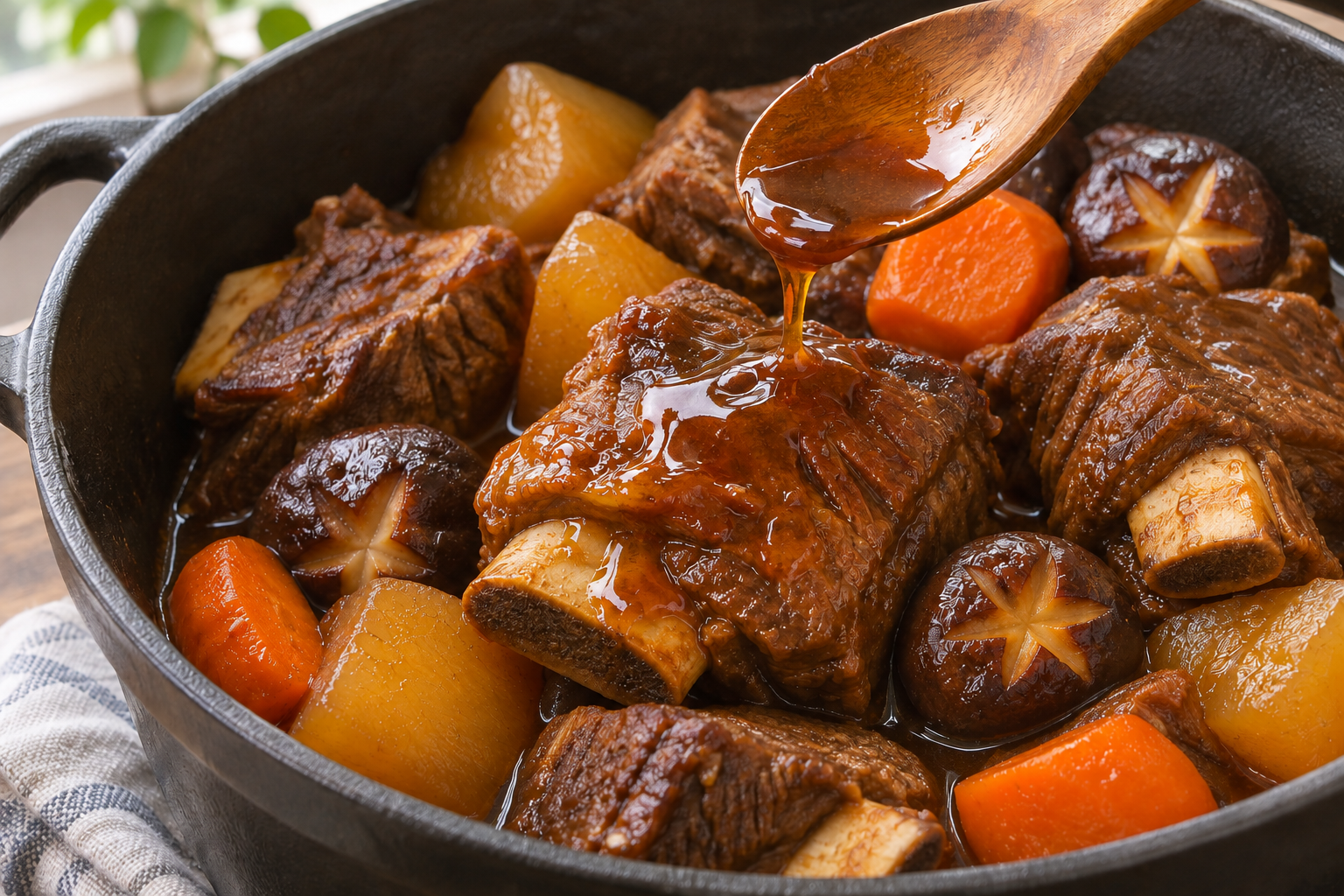
Once the meat is tender, take the lid off and raise the heat to high. Spoon the sauce over the ribs and vegetables again and again for a few minutes, until most of it has cooked down and everything looks glossy. Stay at the stove for this part, because the sugars can scorch quickly once the liquid is low.
This version finishes with a glossy coating rather than a soup-like broth. Leave some sauce to spoon over the ribs, and stop reducing before it becomes too salty or sticky; there is no need to reduce it to a fixed number of spoonfuls.
Fixing the Sauce
Too thin. Keep reducing uncovered and keep spooning. If the vegetables start to break up before the sauce thickens, move the ribs and vegetables to a platter, boil the sauce on its own until it thickens, then pour it back over.
Too salty. Reducing concentrates salt, so taste before the final reduction rather than after. If it already tastes salty, stop reducing. Add a little water to loosen it and do not reduce it back to its previous volume. For a very salty sauce, remove some sauce and replace it with water, tasting as you go. Serve with plain rice. Next time, check that the soy sauce was regular soy sauce and not soup soy sauce.
Too much fat on the surface. Before glazing, keep the pot level and skim the surface fat off with a spoon or ladle. For the cleanest result, make the galbijjim a day ahead: once it is chilled, the fat hardens on top and lifts off in pieces.
How to Serve It
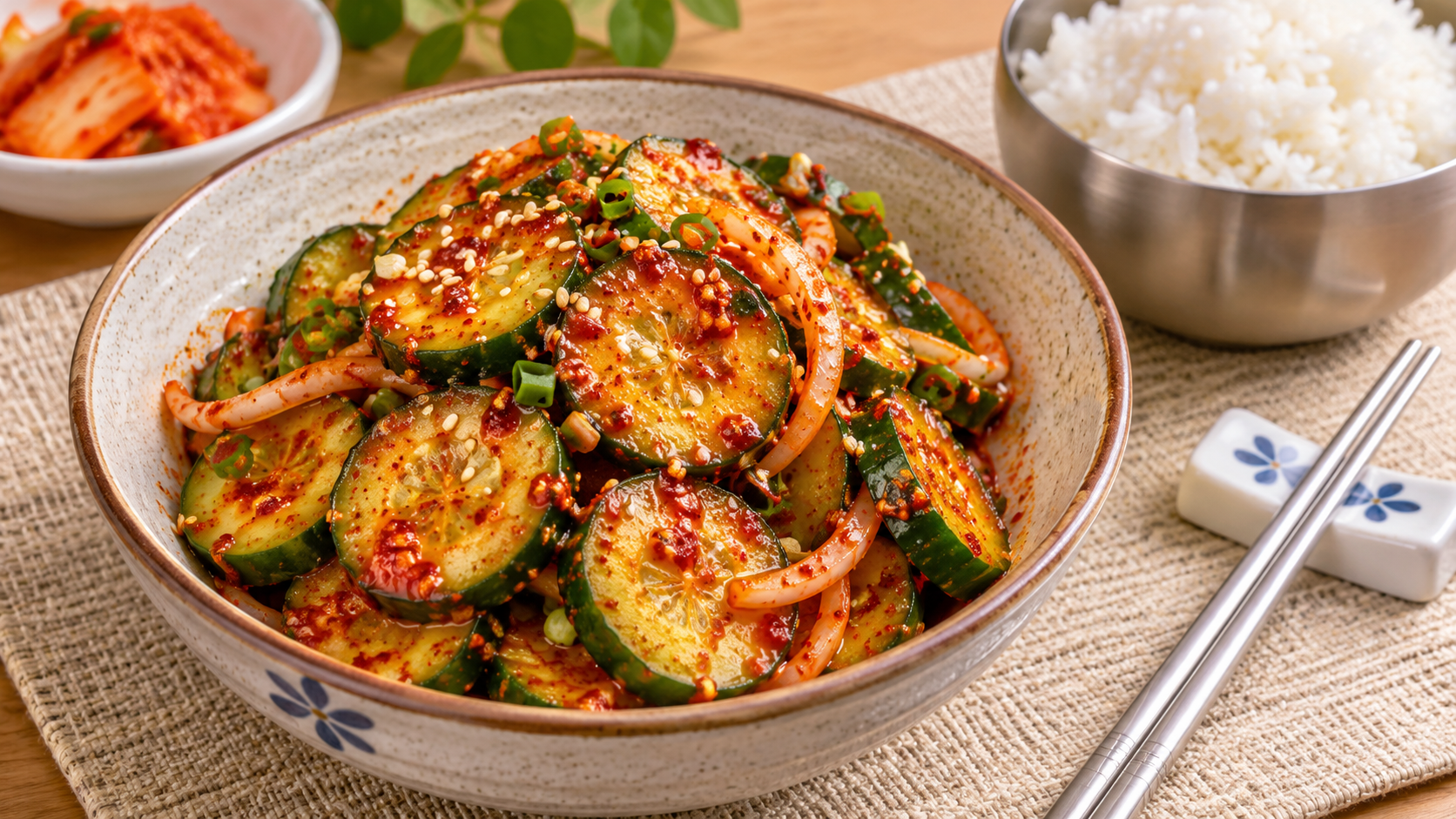
Pile the ribs and vegetables onto a platter, spoon over the remaining sauce, and scatter the pine nuts on top if you have them. Galbijjim is rich and sweet-savory, so it wants plain white rice, a bowl of kimchi, and one or two light vegetable side dishes, such as seasoned spinach or a quick cucumber salad. The sauce is very good spooned over rice.
Making It Ahead, Storing, and Reheating
Galbijjim reheats well, and making it the day before has the bonus of easy fat removal. Refrigerate it within 2 hours of cooking, or within 1 hour if the room is above 90°F (32°C), in shallow covered containers so it cools quickly.
Kept in a refrigerator at 40°F (4°C) or below, it should be eaten within 3 to 4 days. For longer storage, freeze it at 0°F (-18°C) or below and use it within 2 to 3 months for the best quality. Properly handled food kept continuously frozen at 0°F (-18°C) stays safe, but texture and flavor slowly decline. Thaw frozen galbijjim in the refrigerator.
To reheat, put the ribs and sauce in a covered pot with a few tablespoons of water and warm them over medium-low heat, stirring gently, until the meat reaches at least 165°F (74°C) throughout, checked with an instant-read thermometer away from the bone. Bring the sauce to a boil as well.
The braise itself is not complicated. Most of what makes galbijjim come out well happens around the meat itself: buying thick English-cut ribs, and giving them a head start before the vegetables join the pot.