What is soju? A clear look at Korea's best-known spirit: distilled vs. diluted styles, what it tastes like, how strong it is, how it differs from sake, and how it is usually served at a Korean meal.
Soju is a typically clear Korean spirit, and the word covers more than one kind of drink. There is distilled soju, made the traditional way by distilling a fermented base, and diluted soju, made by blending highly refined alcohol with water to reach its bottled strength, sometimes adding sweeteners or other ingredients. The green bottle you have probably seen at a Korean barbecue restaurant in the U.S. is one type of soju, almost always the diluted kind. It is the most familiar version, but it is not the whole category.
That distinction answers most of the questions people bring to their first bottle: what it is made from, why some soju tastes nearly neutral while another smells of rice, and why one label says 16% while another says 25% or more.
What soju is made from
Soju is often described in English as a rice drink, and that is only partly accurate. Rice has a long history in distilled soju, but producers also use barley, wheat, sweet potato, and other starches. The refined alcohol behind most diluted soju is commonly made from inexpensive starch or sugar sources such as tapioca and sweet potato. The ingredients depend on the product and the method, so the label is the place to check.
For the same reason, soju is not "Korean rice wine." Rice wine usually means a brewed drink that is never distilled, which describes makgeolli, Korea's cloudy fermented rice drink, far better than it describes soju.
Distilled and diluted soju, explained simply
Both styles involve distillation. The difference is what happens to the alcohol and how much of the original ingredient's character survives.
Distilled soju (jeungnyusik soju) starts as a fermented mash, often rice and water with a fermentation starter, which is then distilled. Its production can retain more of the aroma and flavor of the fermented base than the highly refined neutral spirit used for diluted soju. A rice-based distilled soju can smell faintly of cooked rice or grain; a barley-based one will taste different again.
Diluted soju (huiseoksik soju) begins with a neutral spirit that has been distilled and refined to very high purity, so very little of the original ingredient's flavor remains. Producers then add water and, depending on the product, sweeteners or other flavor adjustments. It is still a drink made from distilled alcohol; the word "diluted" refers to blending with water, not to skipping distillation. Traditional distilled soju can also have water added to adjust its strength; adding water alone does not define the category.
Neither style is simply better. They are built for different purposes: diluted soju for a clean, easy drink alongside a meal, and distilled soju for those who want to taste the ingredient.
What does soju taste like?
A typical unflavored green-bottle soju tastes fairly clean. Many drinkers notice a mild sweetness, followed by some warmth or bite from the alcohol, especially in the higher-strength bottles. There is not much aroma, which is why people often compare it to a lighter, softer vodka. That comparison helps as a reference point, but the two are different drinks, and many green-bottle soju products are bottled at a much lower strength than typical vodka.
Distilled soju is harder to describe in one line because it varies with the base ingredient, the fermentation, and the distillation. Some lean toward rice and grain, while others come across as fruity, or bold and warming. Tasting one beside a green-bottle soju is the fastest way to understand the difference.
Flavored soju is a separate experience. Fruit versions such as grapefruit or green grape are often noticeably sweet, but the source of that sweetness depends on the recipe, which may include sugar, other sweeteners, or fruit ingredients. Sugar content and alcohol level both vary from product to product.
How strong is soju?
The alcohol content depends entirely on the bottle. Diluted soju has become steadily lighter over the decades, while distilled soju can be considerably stronger.
As a concrete example, HiteJinro's global product pages list Chamisul Fresh at 16% ABV and Chamisul Original at 20.1% ABV. Those numbers belong to those two products only, not to soju as a whole, and the same brand can sell slightly different strengths in different markets or update a recipe over time. In the U.S., the reliable figure is the one printed on the label of the bottle in your hand.
The two examples above have a higher alcohol concentration than most beer. The mild taste can make that easy to forget, so it is worth pacing yourself.
Soju vs. sake
The core difference is how each is made. Soju is a Korean drink built on distilled alcohol, whether it is a traditional distilled soju or a diluted one. Sake is a Japanese drink brewed by fermenting rice, without distillation. Sake is often called rice wine for that reason; soju is not.
How do you drink soju?
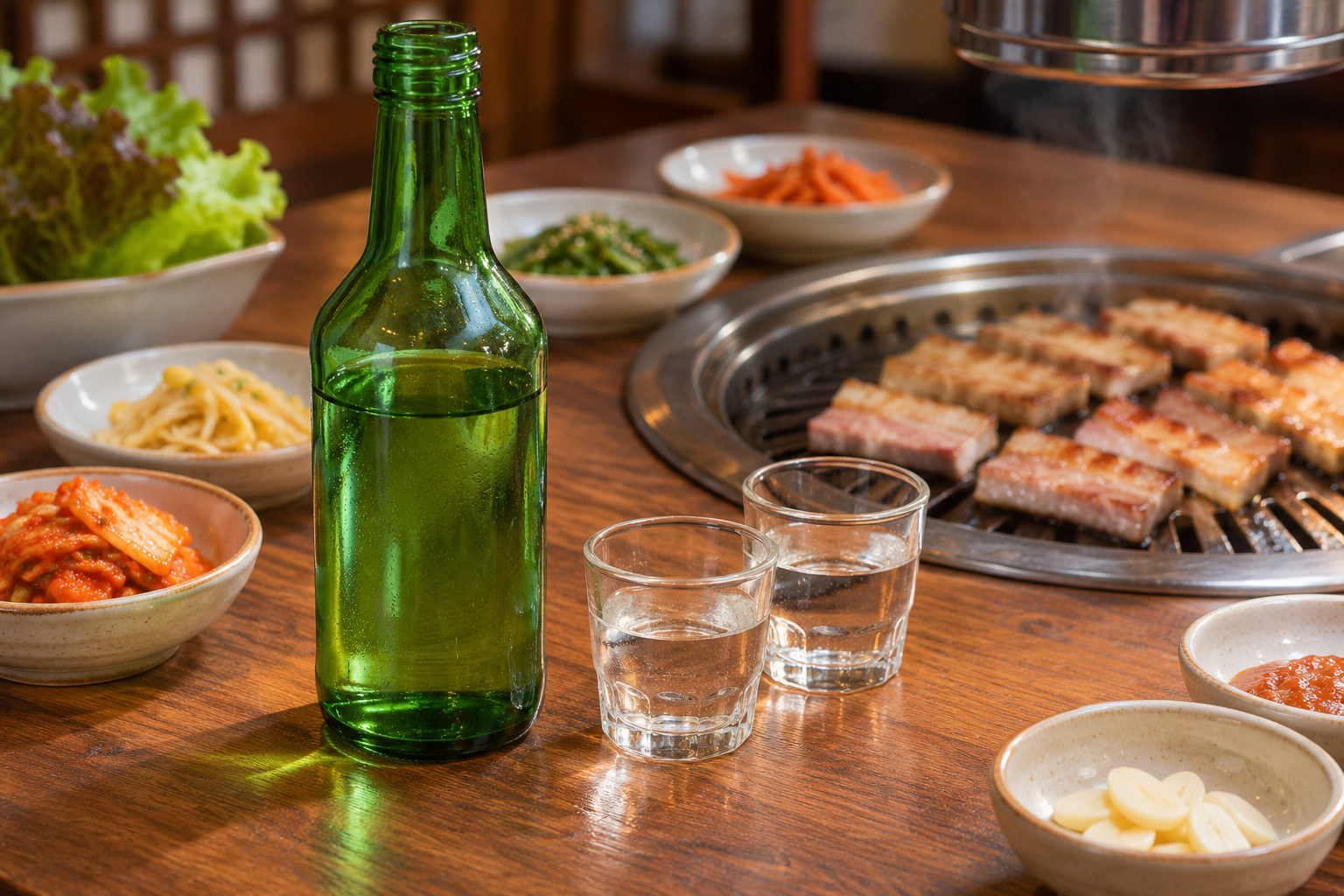
The most familiar way to drink green-bottle soju is cold, poured into small glasses, and shared around the table. The small glass can suggest that it should be finished in one swallow, but there is no rule saying so. Sipping is perfectly normal, and drinking slowly is the sensible choice with any spirit.
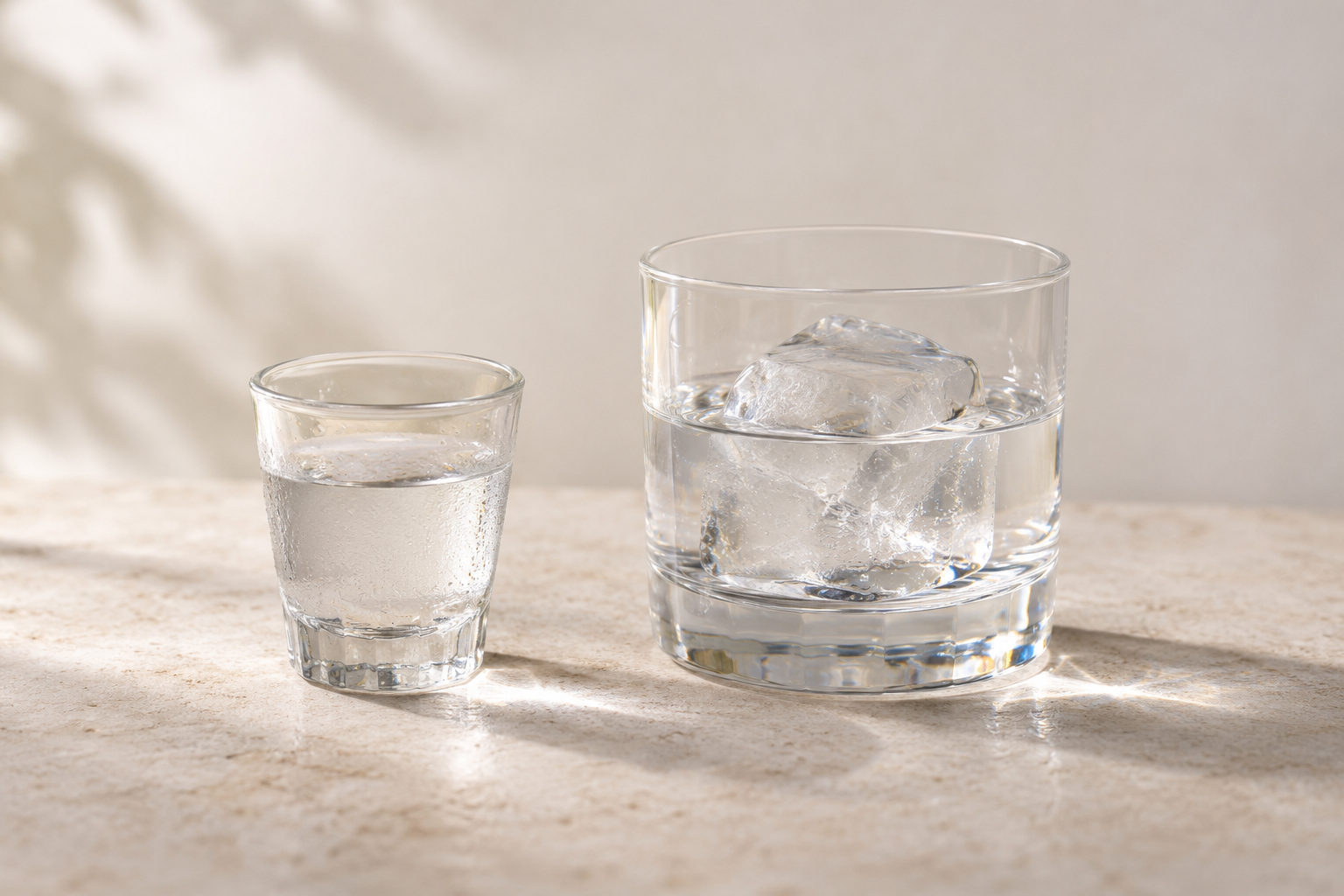
Distilled soju gives you more room. Depending on the product, it can be served chilled or at room temperature, and some bottles are made to be enjoyed over ice. Less chilling generally lets more of the aroma come through. The producer's serving suggestion on the label or website is a good starting point.
Soju at a Korean meal
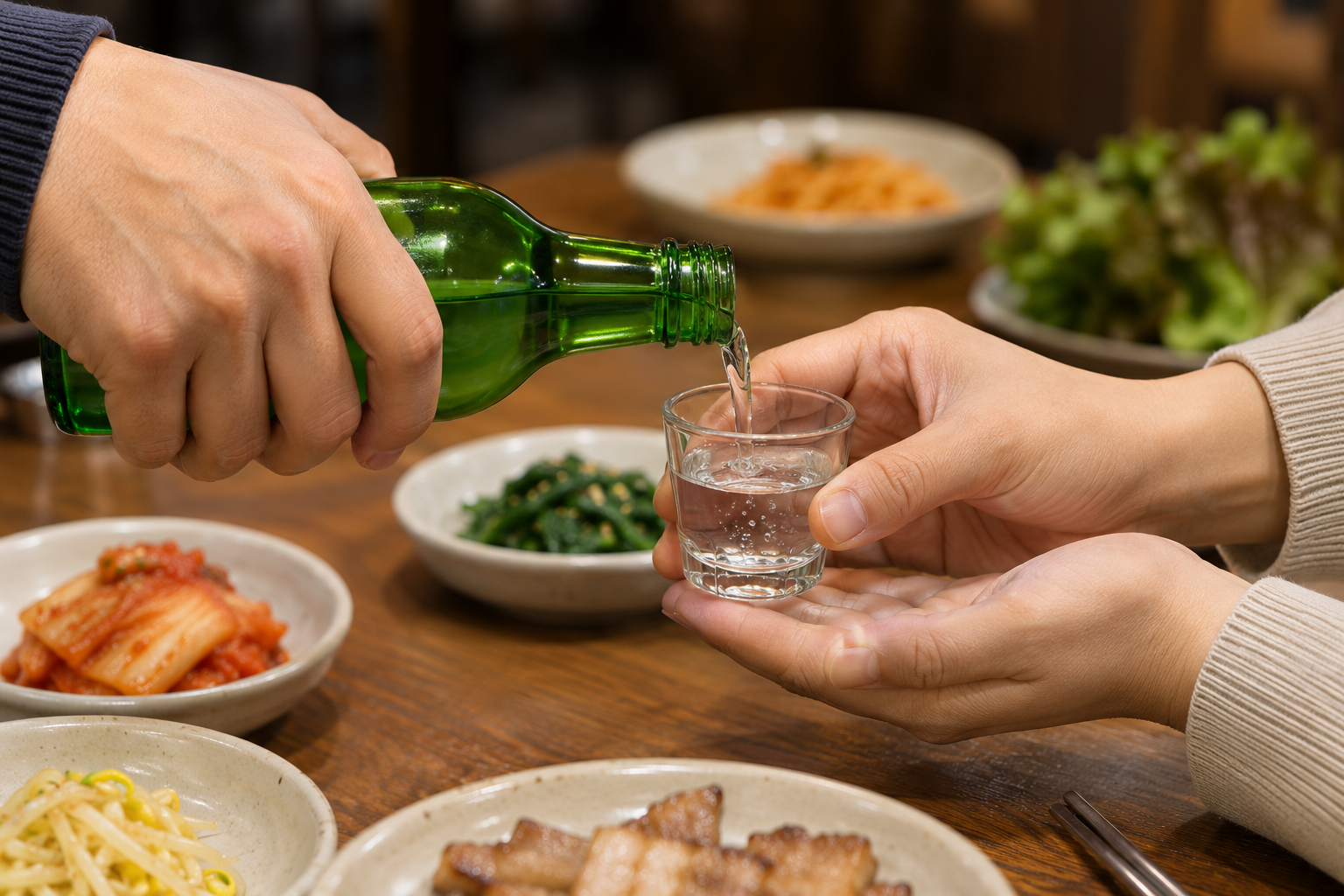
In Korea, soju usually appears with food, not on its own. It is common at grilled-meat dinners, and samgyeopsal (grilled pork belly) is one of the best-known pairings; the clean taste of diluted soju balances the richness of the pork. Korean barbecue more broadly, along with spicy stews and stir-fries, also turns up on the same table. These are familiar combinations, not requirements, and soju sits comfortably beside many other dishes.
A few customs you may notice
At a Korean table, people often pour drinks for one another rather than for themselves. With an elder or someone senior, a younger person may receive the glass with two hands as a sign of respect, and may pour with two hands as well. How closely these customs are followed depends on the relationship and the setting. Among close friends they may be relaxed or skipped entirely, and expectations can vary. Paying attention to how others at the table are pouring is usually guide enough.
FAQ
Is soju the same as Japanese shochu?
No. Both are distilled spirits, but soju is Korean and shochu is Japanese, and each has its own production traditions.
How big is a bottle of soju?
A common green-bottle size is 360 ml. For example, JINRO lists Chamisul Fresh in 350, 360, 375, and 750 ml glass bottles. Because sizes and strengths differ, check the label for both before you pour.