No dish can cure a hangover, but hangover food still says a lot about culture. Korean traditions often center on hot soup, while American choices vary by region and community. Today, the line between the two menus is becoming less distinct.
No food can cure a hangover. According to U.S. public health guidance, symptoms often peak when blood alcohol returns to about zero, may last 24 hours or longer, and improve only with time. The idea of hangover food is therefore less about a universal remedy than about what people find familiar, manageable, and comforting while they wait to feel better.
That leaves a more interesting cultural question. If no dish is a cure, why do people return to the same foods? In Korea, many familiar answers come in bowls of hot soup. In the United States, preferences differ by region, family, and community. Yet burgers, ramen, pho, and Korean soups increasingly appear across both menus, making the comparison less tidy than it first seems.
Korea's hangover tradition starts with hot broth
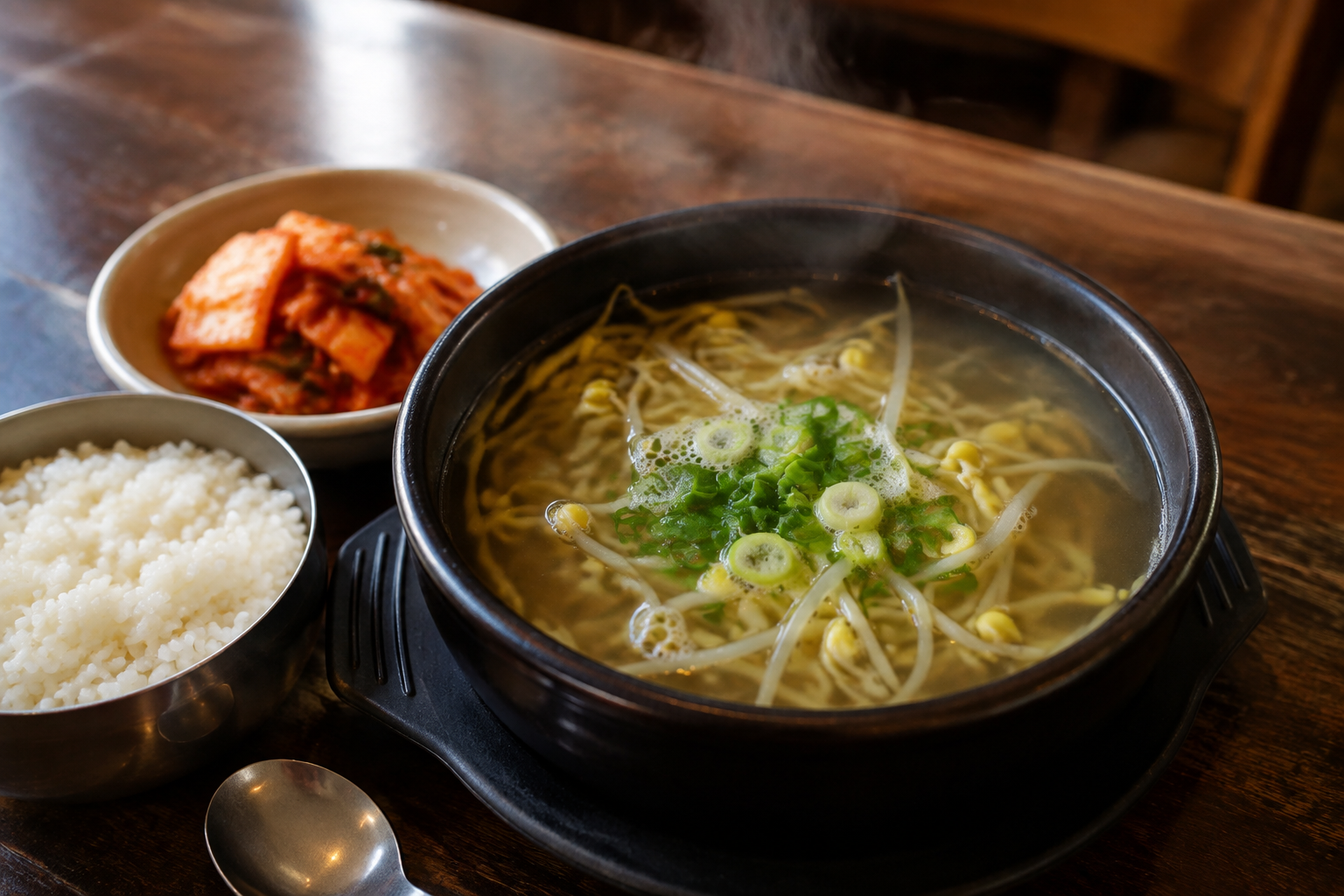
In Korea, the category itself has a name. Haejang-guk roughly means soup eaten to ease the aftereffects of drinking, but it refers to a broad family of dishes rather than one fixed recipe. A late-Goryeo Chinese conversation textbook, Nogeoldae, mentions seongjutang, or soup for waking from drink, which is commonly described as an early form of haejang-guk.
One influential Seoul style uses beef-bone broth seasoned with soybean paste and includes dried radish greens, bean sprouts, and seonji, or congealed ox blood. Cheongjin-dong became known for this style as rice-soup restaurants gathered near the area's wood market in the 1930s. Contemporary accounts of the alley emphasize that the meal arrived quickly and filled hungry workers, not that it functioned as a proven cure.
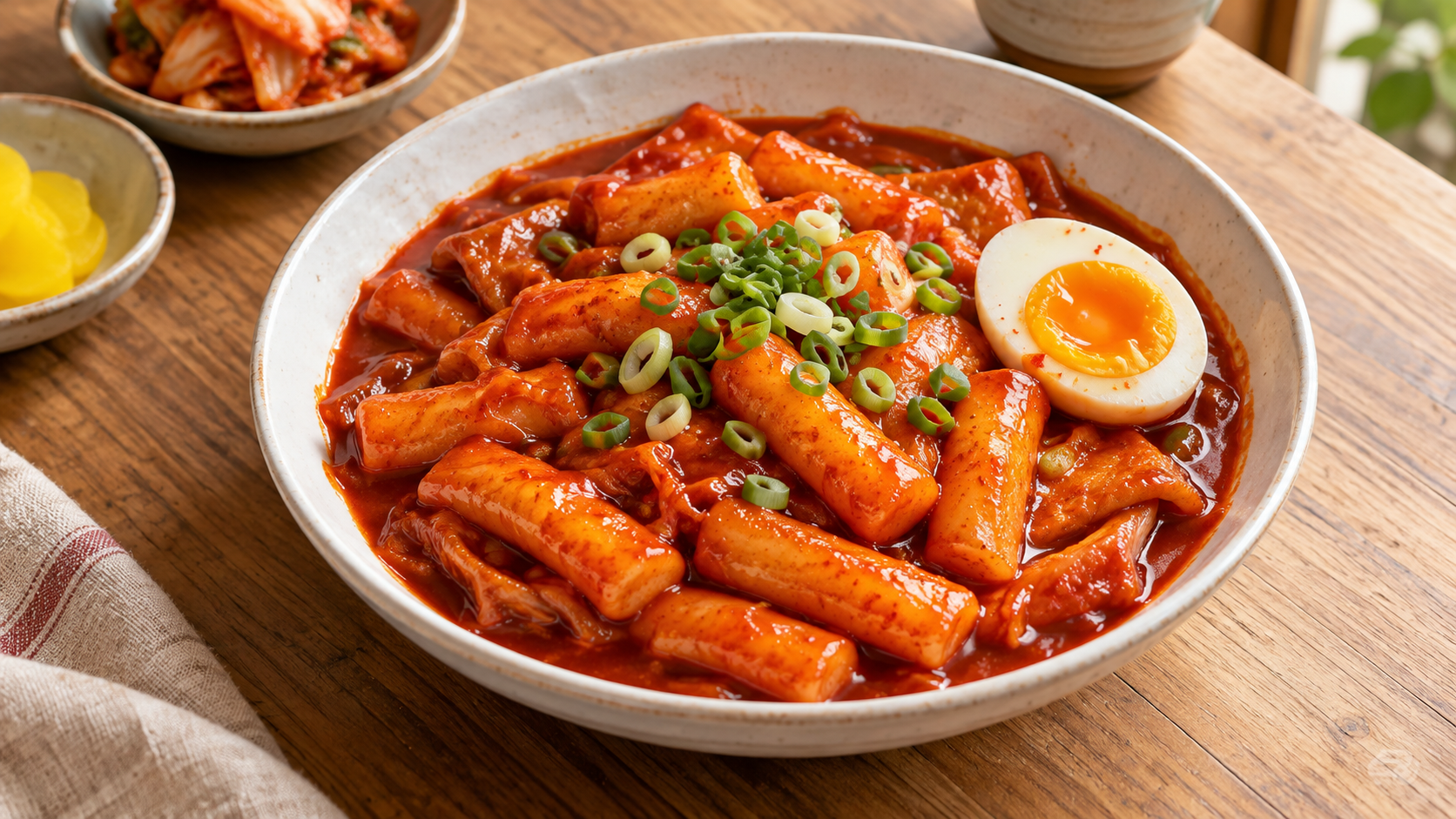
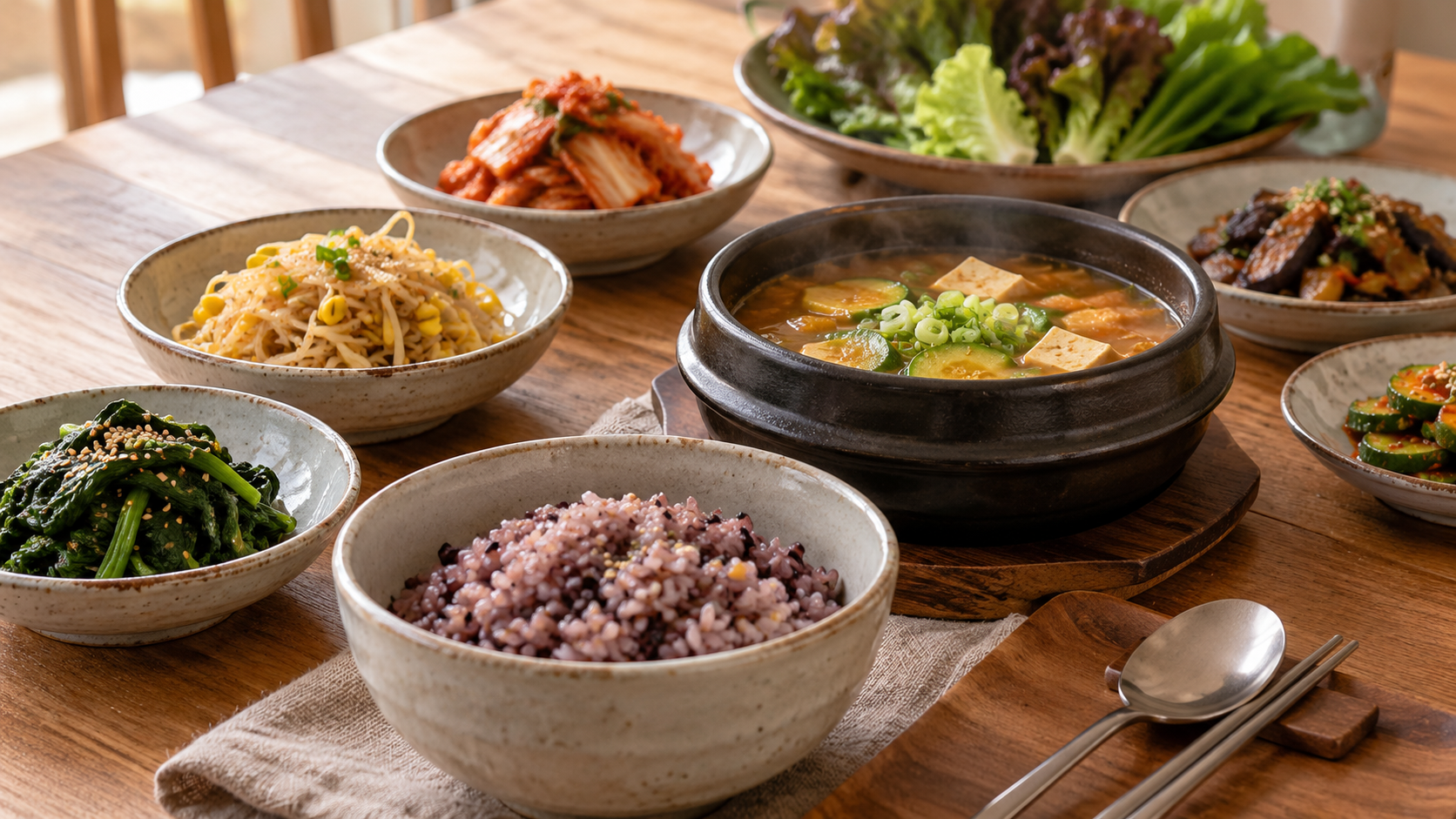
That is only one bowl among many. Kongnamul-guk, or bean sprout soup, is a lighter option. In Jeonju, kongnamul-gukbap combines the soup with rice and is closely associated with breakfast. Bugeo-guk (북어국), made with dried pollock and often tofu and egg, is another familiar morning soup. Instant ramyeon offers a different kind of comfort: it is inexpensive, familiar, and quick to prepare.
What connects these dishes is not a shared medical effect. It is the cultural appeal of warm broth, familiar flavors, and a meal that feels manageable after a late night.
American hangover food has no single menu
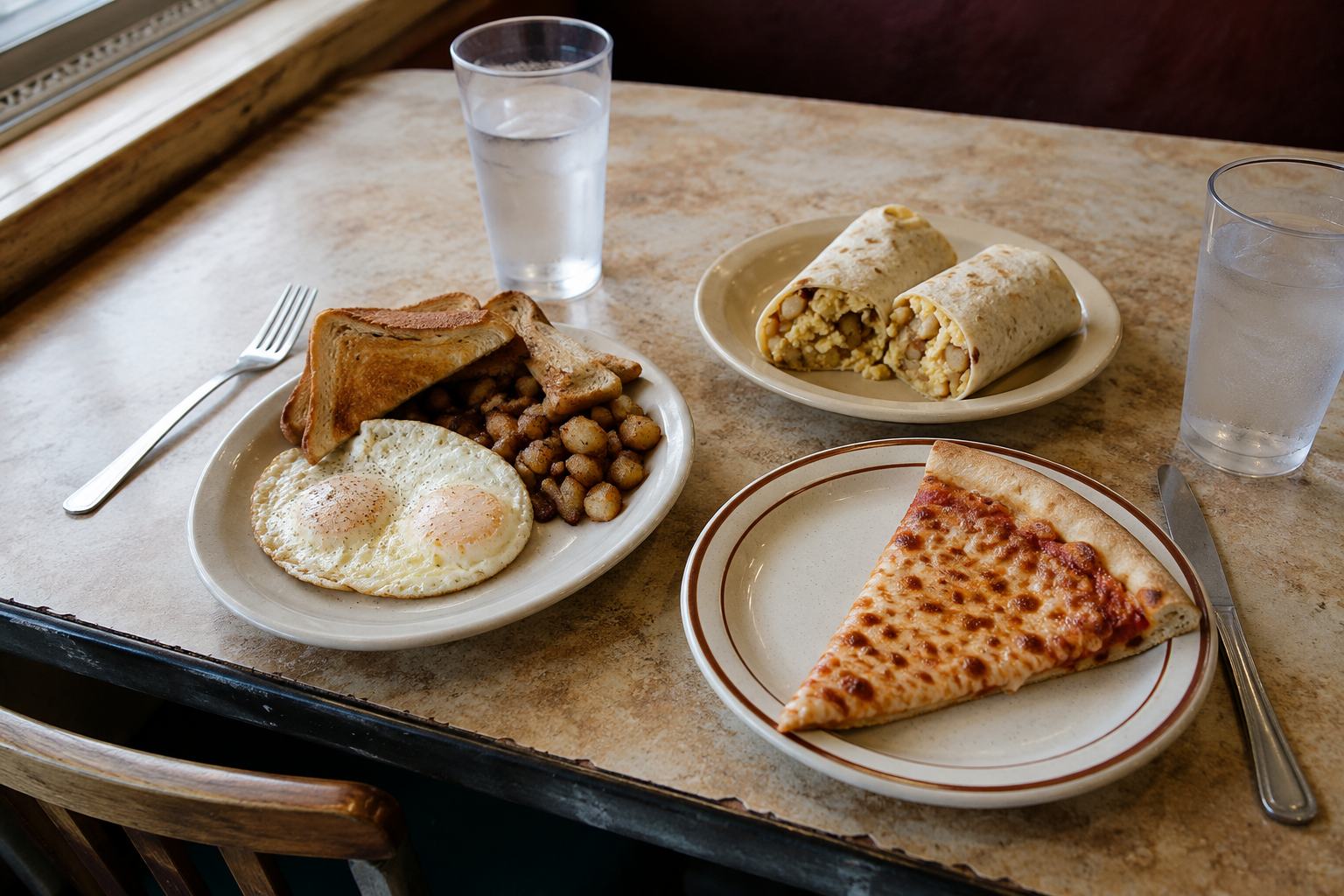
No single American dish plays exactly the same role across the country. Many familiar choices begin with breakfast: eggs on a plate, a bacon, egg, and cheese sandwich, a breakfast burrito, breakfast tacos, or huevos rancheros. Pizza, burgers, and leftover takeout also appear frequently in conversations about the morning after, often because they are convenient or already available.
Soup also has a place in regional and immigrant food traditions. Yakamein in New Orleans is often nicknamed Old Sober. Menudo has a long-standing place in Mexican American food culture, while pho is a familiar choice in many Vietnamese American communities. These examples do not form one national menu. They show how hangover food in the United States is shaped by region, family history, neighborhood restaurants, and personal routine.
The two menus are already crossing over
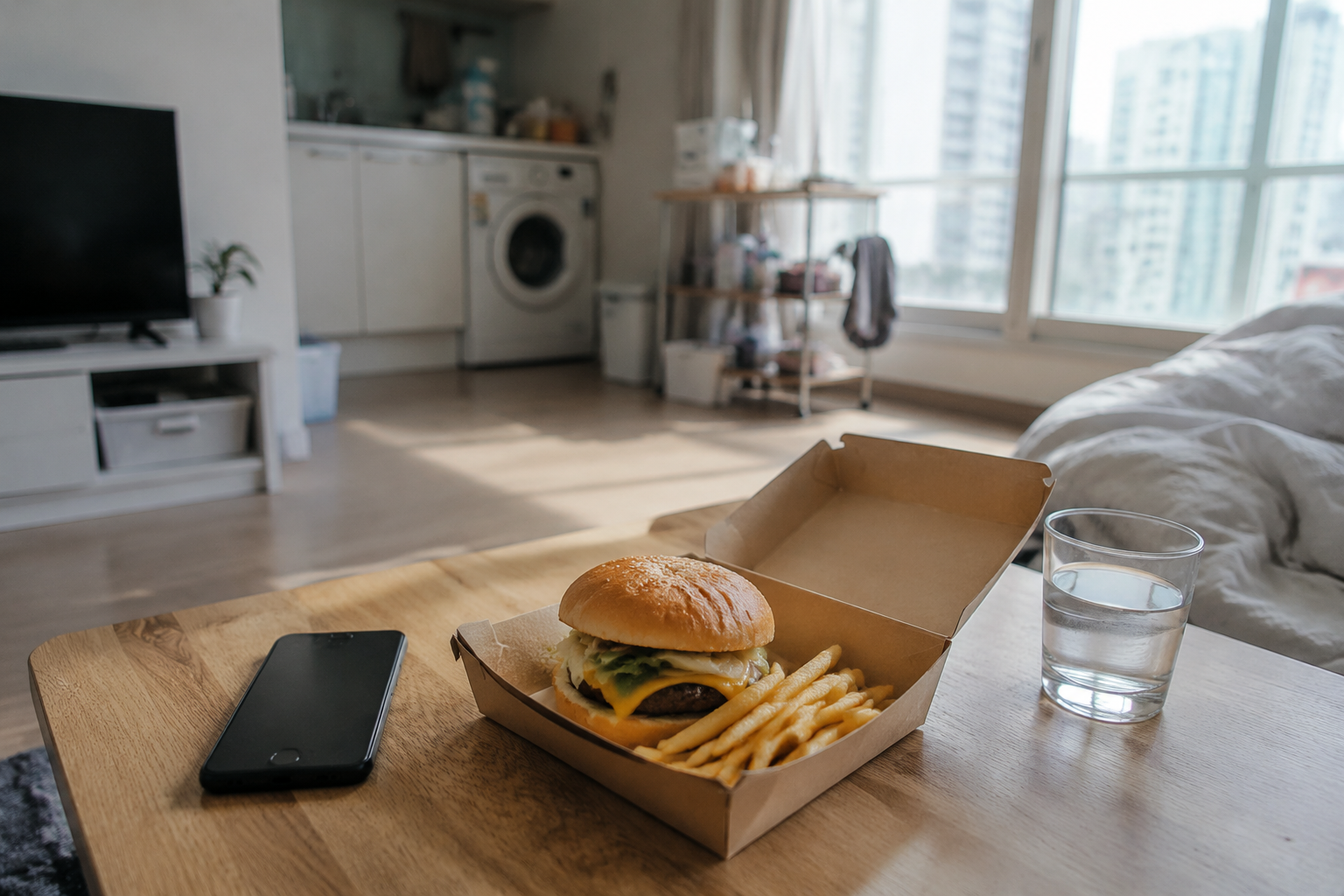
A December 2022 Korean television segment featured hamburger as the top food associated with hangover-related searches in a one-year dataset. The published material does not explain the sample size or calculation method in detail, so the result is best read as a snapshot of online interest rather than a nationwide preference survey.
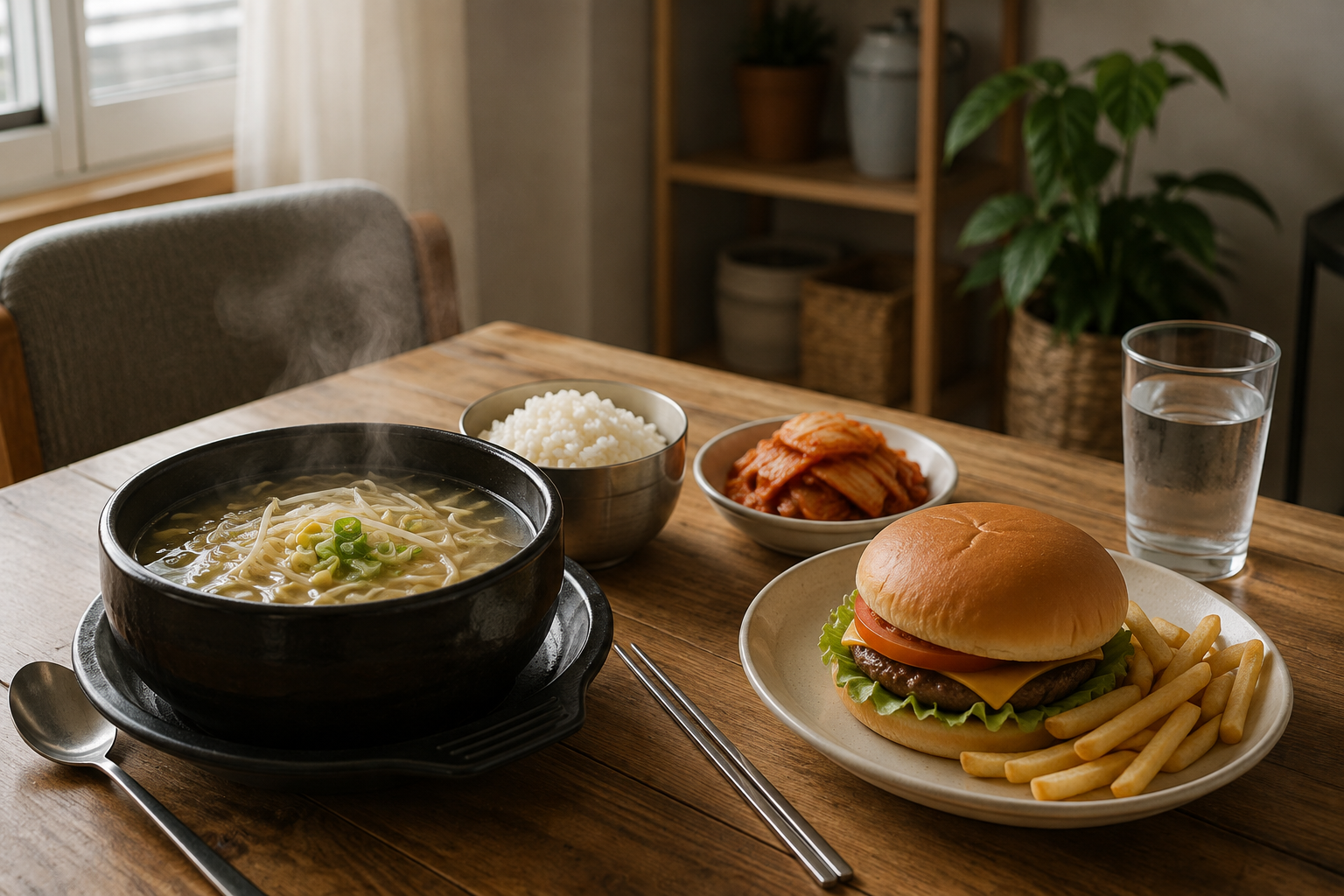
The point is not that burgers have replaced soup in Korea. It is that some people now move between traditional broth, ramyeon, burgers, and other delivery foods according to convenience and mood. The same person may want kongnamul-guk one morning and a burger on another.
The influence also moves in the other direction. Ramen, pho, menudo, and Korean stews appear in American restaurant culture and discussions about what to eat after drinking. Their presence does not erase family or regional differences. It simply makes the boundary between the two menus less rigid.
What people are really choosing
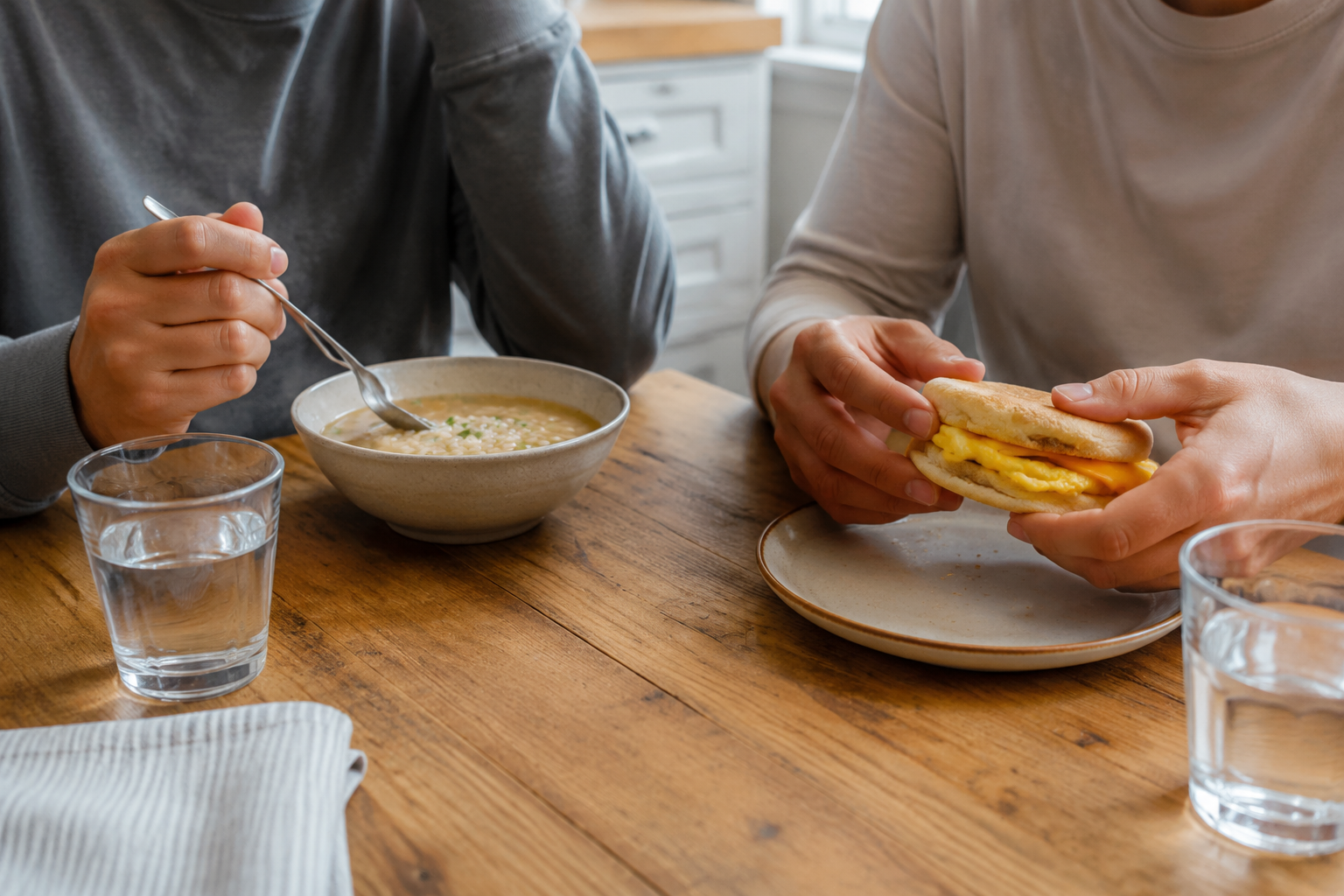
Placed side by side, these traditions do not reveal which country has solved the hangover. They show how comfort food works. People often choose what is familiar, available, and manageable to eat. For one person, that may be clear broth and rice. For another, it may be eggs, a breakfast burrito, a burger, or ramyeon.
Greasy food cannot absorb alcohol that the body has already taken in, and soup does not make the liver process alcohol faster. A meal may provide comfort, but recovery still takes time.
So the useful question is not which country has the correct answer. It is which bowl or plate you would choose, and whether the reason is the taste, the temperature, the hour it is available, or simply that it is what you have always done.