Looking for high-fiber recipes beyond lentils and oats? These 8 Korean dishes, from mixed-grain rice and spinach banchan to cold soybean noodles, build everyday meals from grains, beans, and vegetables.
Most lists of high-fiber recipes lean on the same short shelf of ingredients: lentils, chickpeas, oats, a bag of quinoa. Korean home cooking reaches for a different shelf. Barley and millet go into the rice pot, soybeans are ground into a cold noodle broth, spinach and soybean sprouts become small seasoned side dishes, and seaweed turns up as a soup. None of these dishes was invented as health food. They are simply what an ordinary Korean table looks like when it is built from grains, beans, vegetables, and the sea.
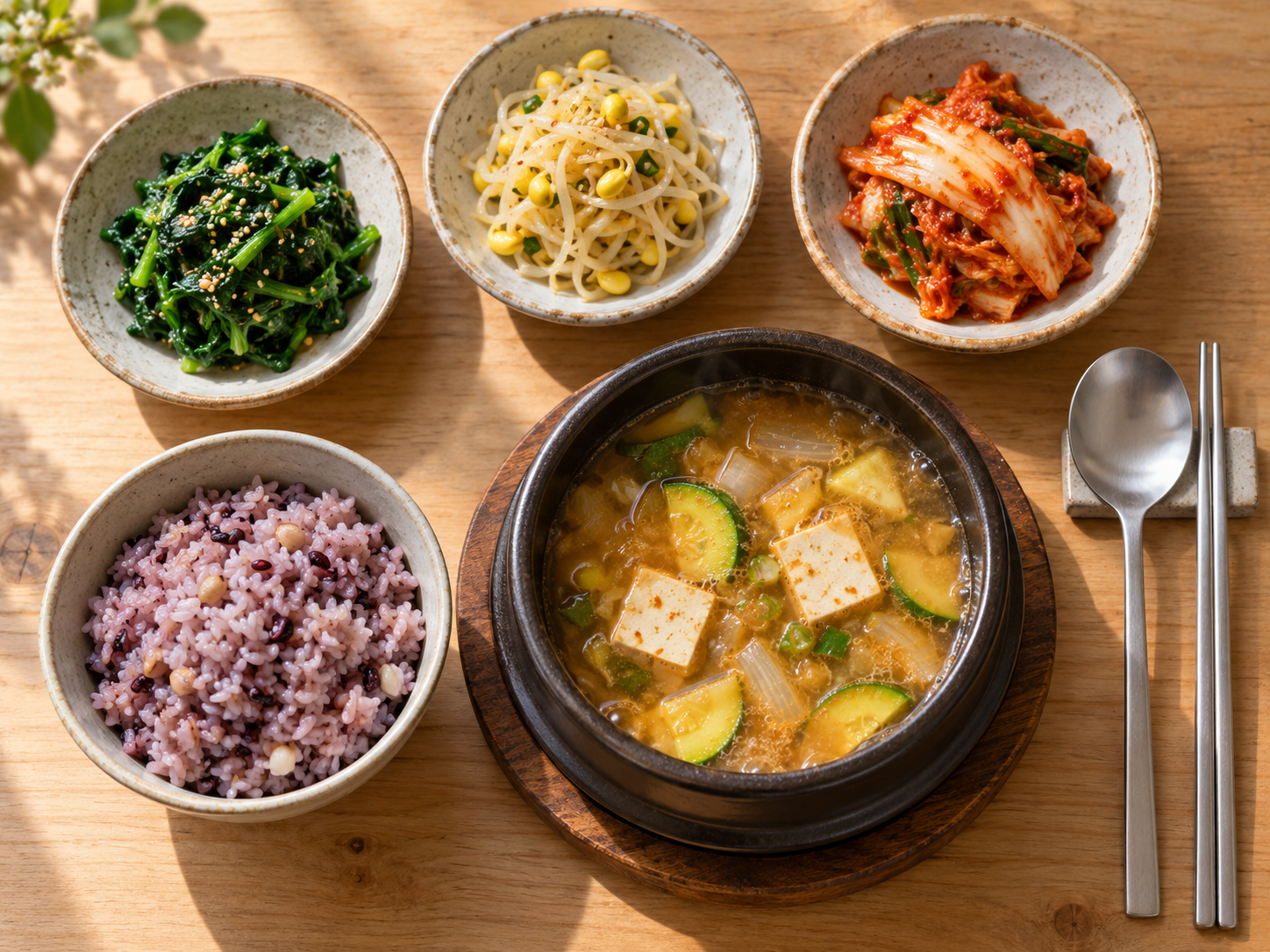
That qualification matters, because not every Korean dish fits the description. Plenty of the menu is white rice, wheat noodles, fried chicken, and sweet glazes. The eight dishes below were chosen because their main ingredients are whole grains, beans and soy, or vegetables, and because each one is realistic to make in an American kitchen.
8 Korean Dishes to Try
1. Bibimbap
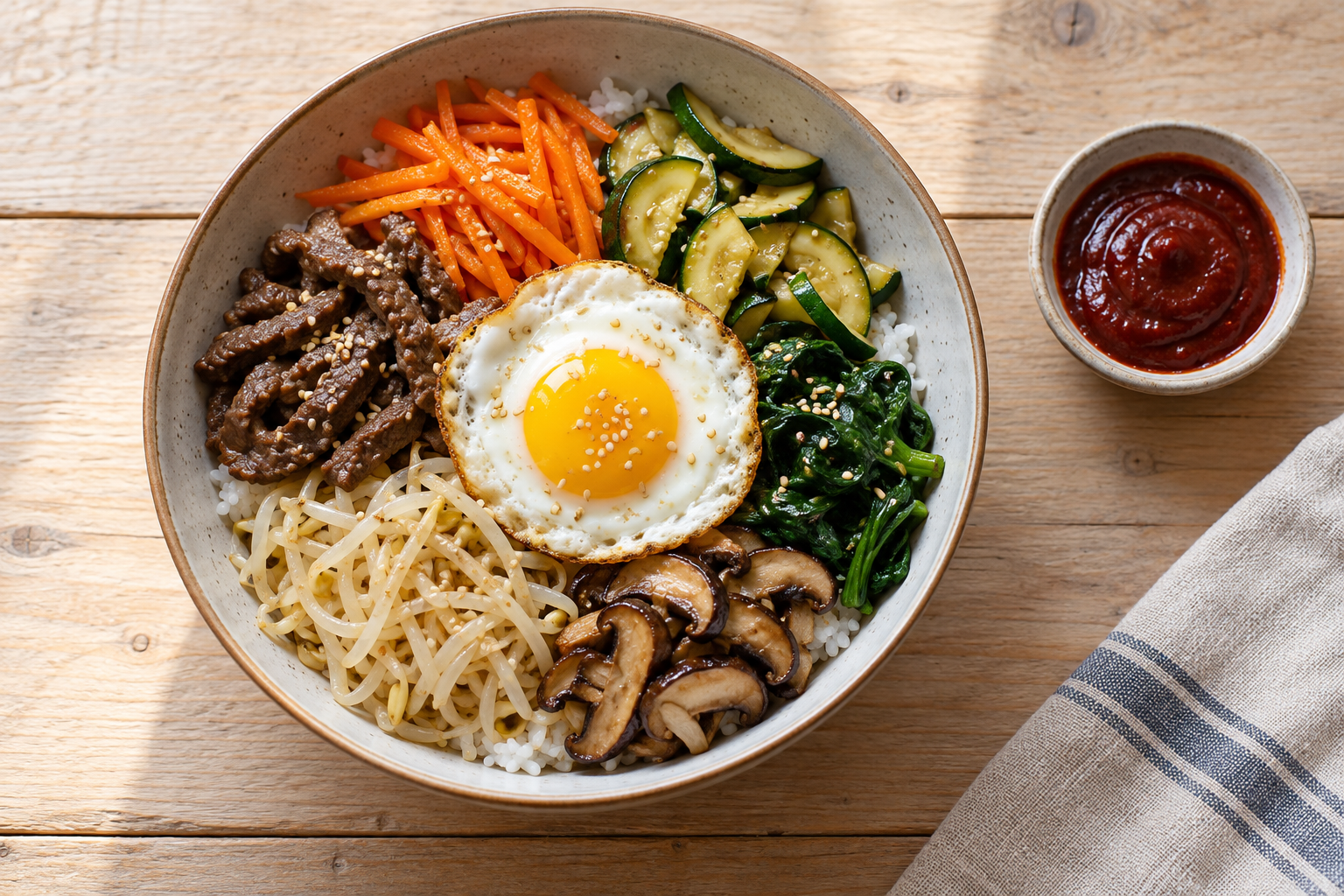
Bibimbap (비빔밥) translates, quite literally, as "mixed rice." A bowl of rice arrives topped with separate portions of namul, the seasoned vegetables described below, along with a spoonful of gochujang (red chili paste) and often an egg and a little beef. The rule at the table is simple: stir everything together before the first bite. The version served in a scorching stone bowl, dolsot bibimbap, adds a layer of crisp rice at the bottom. Most restaurants build it on white rice, so the easiest change at home is the base itself. Swap in the mixed-grain rice from the next entry, and the vegetables do the rest.
2. Japgokbap (Korean Mixed-Grain Rice)
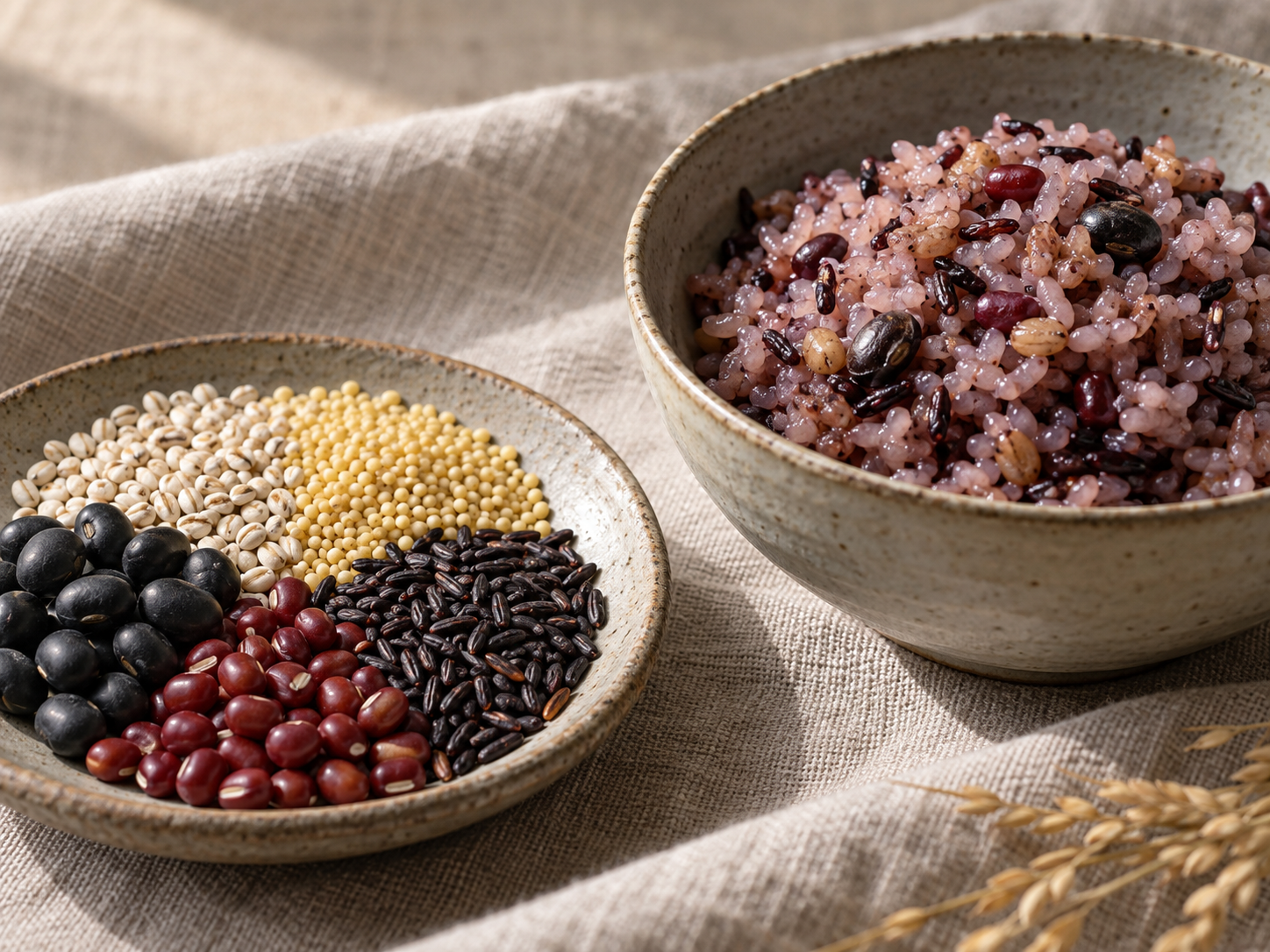
Japgokbap (잡곡밥) joins japgok, "mixed grains," with bap, "cooked rice." In many Korean households it is the everyday rice rather than a special one. The blend varies by family, but barley, millet, sorghum, black rice, black soybeans, and red adzuki beans appear often, sometimes tinting the whole pot purple. A close relative, ogokbap (오곡밥, five-grain rice), is eaten with namul on Jeongwol Daeboreum, the first full moon of the lunar year. Korean grocery stores in the U.S. sell premixed grain blends, which removes most of the guesswork. The beans need several hours of soaking, so start the night before and let a rice cooker handle the rest. Serve it as you would plain rice, next to everything else.
3. Kongguksu
Kongguksu (콩국수) is a summer dish: thin wheat noodles called somyeon in a chilled broth made by blending boiled soybeans with water. The broth is thick, pale, and nutty, and diners often season it with salt at the table. Kimchi on the side supplies the acidity the broth lacks. It is fair to say the soybeans carry this dish, since the noodles themselves are ordinary refined wheat. Home versions start with dried soybeans soaked for several hours and boiled only briefly, then blended with water and often a spoonful of sesame seeds or pine nuts.
4. Kongnamul Muchim
A word on banchan (반찬) first. Banchan are the small side dishes set out around the rice at a Korean meal and shared by everyone at the table. Many are served cool or at room temperature, and many are not spicy. Vegetables make up a large share of the category, although anchovies, fish cake, braised potatoes, and rolled omelet appear as well. That is why most guides to Korean side dishes, and most Korean banchan recipes, begin with vegetables.
Kongnamul muchim (콩나물무침) is among the most common. Soybean sprouts are boiled briefly, drained, and tossed with sesame oil, garlic, green onion, and salt; a spicier version adds gochugaru, Korean chili flakes. The result is mild and crunchy. Look for soybean sprouts, with their yellow bean heads, rather than thinner mung bean sprouts. Eat it a few strands at a time with rice, or use it as a bibimbap topping.
5. Namul
Namul (나물) is the umbrella term for seasoned vegetable dishes, and kongnamul muchim is only one of them. The most familiar Korean spinach banchan is sigeumchi namul (시금치나물): spinach blanched for well under a minute, shocked in cold water, squeezed dry, and dressed with soy sauce, garlic, and toasted sesame oil. The same method produces Korean vegetable side dishes from zucchini, bracken fern (gosari), bellflower root (doraji), and radish. Namul is eaten a spoonful at a time alongside rice, or piled onto bibimbap. Spinach is the most forgiving place to start; the only real mistake is leaving too much water in the leaves.
6. Doenjang Jjigae
Doenjang jjigae (된장찌개) is a stew built on doenjang, fermented soybean paste, and it may be the most ordinary dinner in Korea. Tofu is almost always in the pot, joined by zucchini, onion, potato, and mushrooms. It arrives bubbling and is eaten with rice and a few banchan. Traditional versions begin with an anchovy broth, but vegetarian versions made with water or vegetable stock are common. It is also the easiest dish here for adding more vegetables than a recipe calls for.
7. Korean-Inspired Grain Bowl with Kimchi
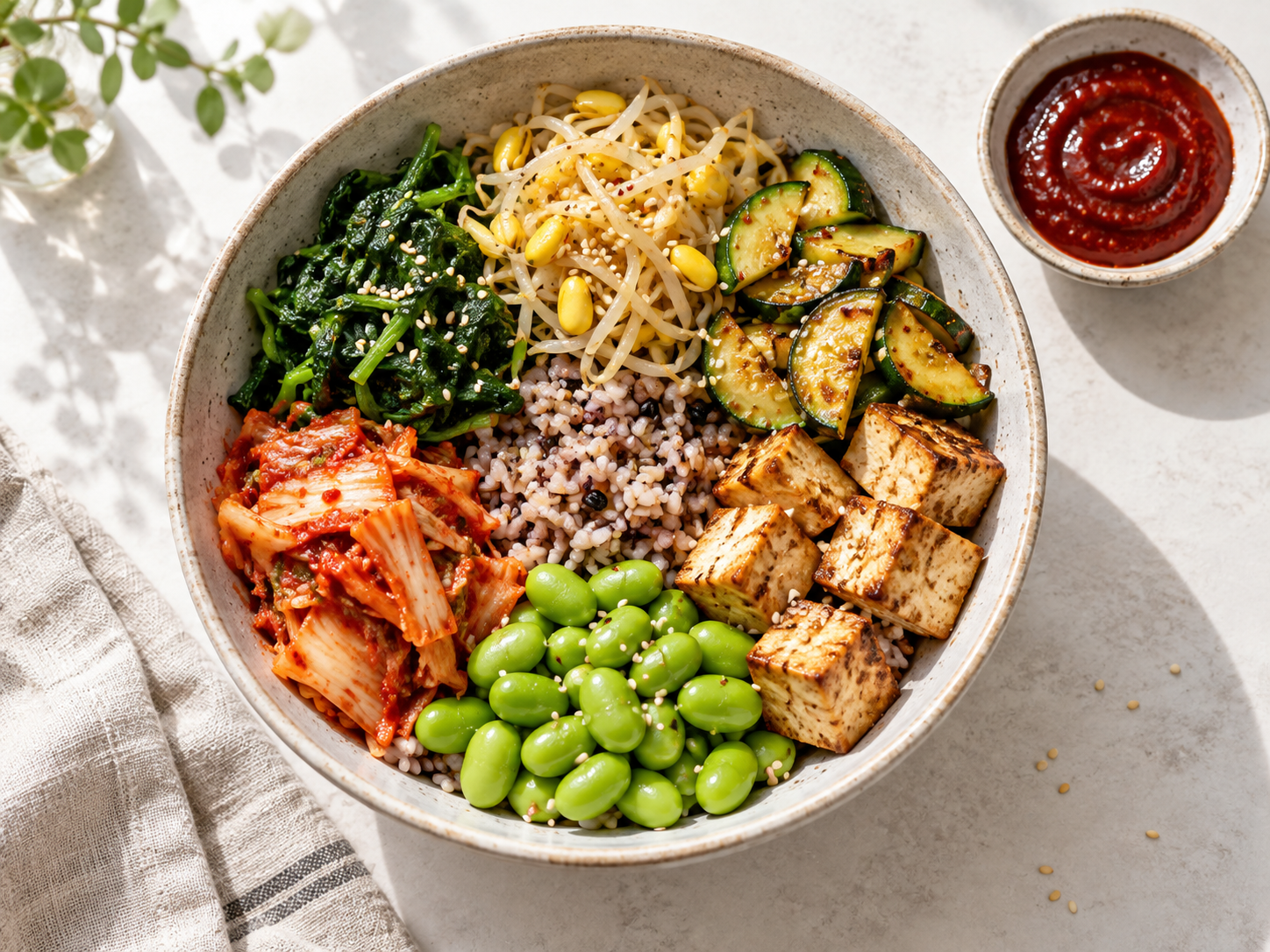
This one is not a traditional dish, and it is better to say so plainly. It is the meeting point of the entries above, arranged the way many Americans already eat lunch. Start with japgokbap or any cooked whole grain, add two or three namul, then tofu or edamame and a spoonful of kimchi. Finish with gochujang thinned with sesame oil and a little rice vinegar. The bowl packs well and makes good use of leftover banchan.
8. Miyeokguk
Miyeokguk (미역국) is a clear soup made with miyeok, a brown seaweed also known as sea mustard. The dried seaweed is soaked, chopped, and sautéed in sesame oil with garlic before simmering in beef or seafood broth. It has no spicy element, and it is served with rice like most Korean soups. It also carries more meaning than its short ingredient list suggests: Koreans traditionally eat it on their birthdays in honor of their mothers, because the same soup is served to women after childbirth.
How to Build a Korean-Inspired High-Fiber Meal
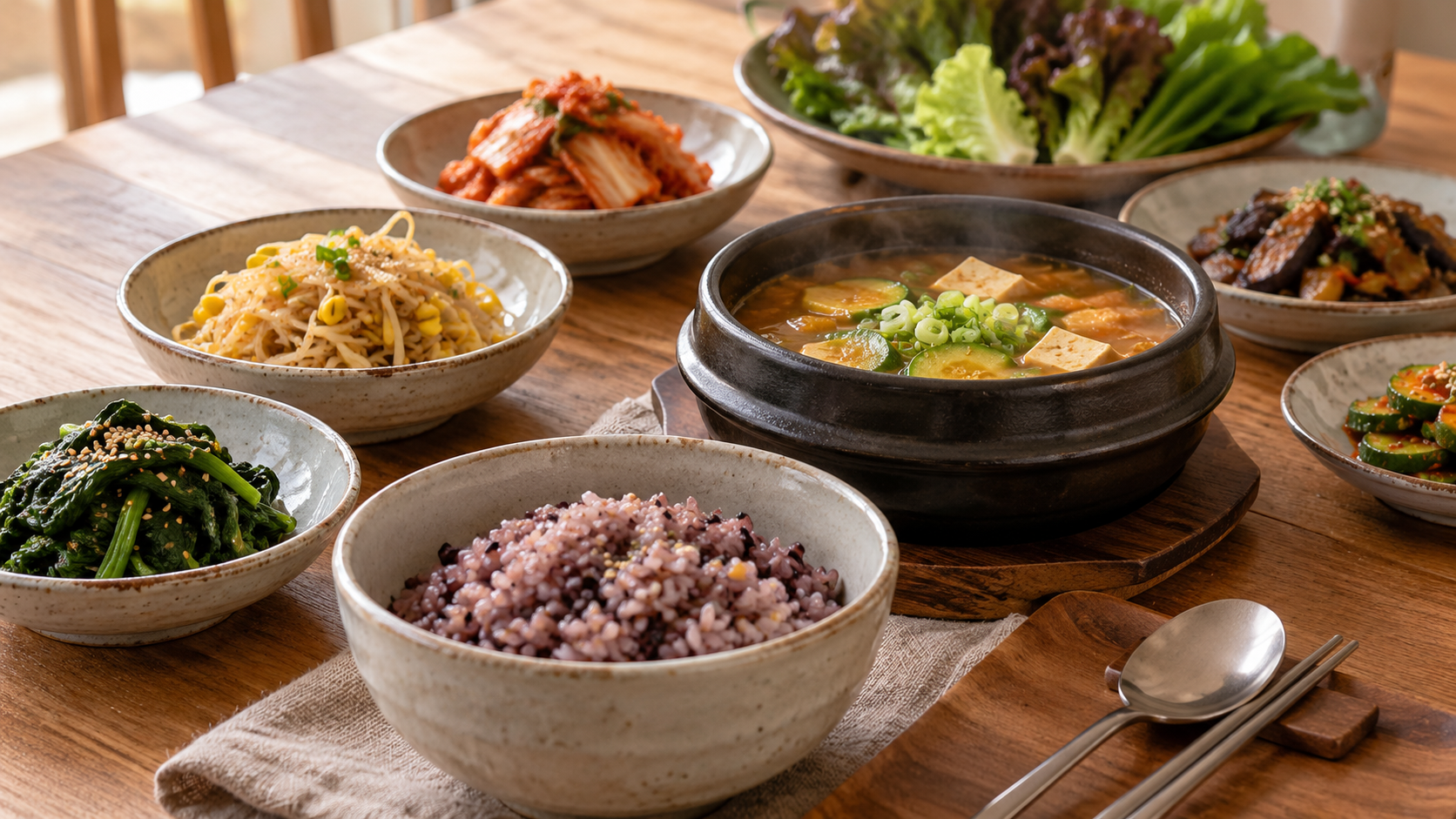
The structure behind most of these dishes is the everyday Korean meal: rice, a soup or stew, kimchi, and a few banchan. A common weeknight version is rice with doenjang jjigae, kongnamul muchim, and sigeumchi namul. Adapted for an American kitchen, the formula has four parts:
- Grain base: japgokbap, brown rice, or barley.
- Vegetables in more than one form: at least one namul, some kimchi, and whatever goes into the stew.
- Beans or soy: tofu, soybean sprouts, edamame, black beans cooked into the rice, or a doenjang stew.
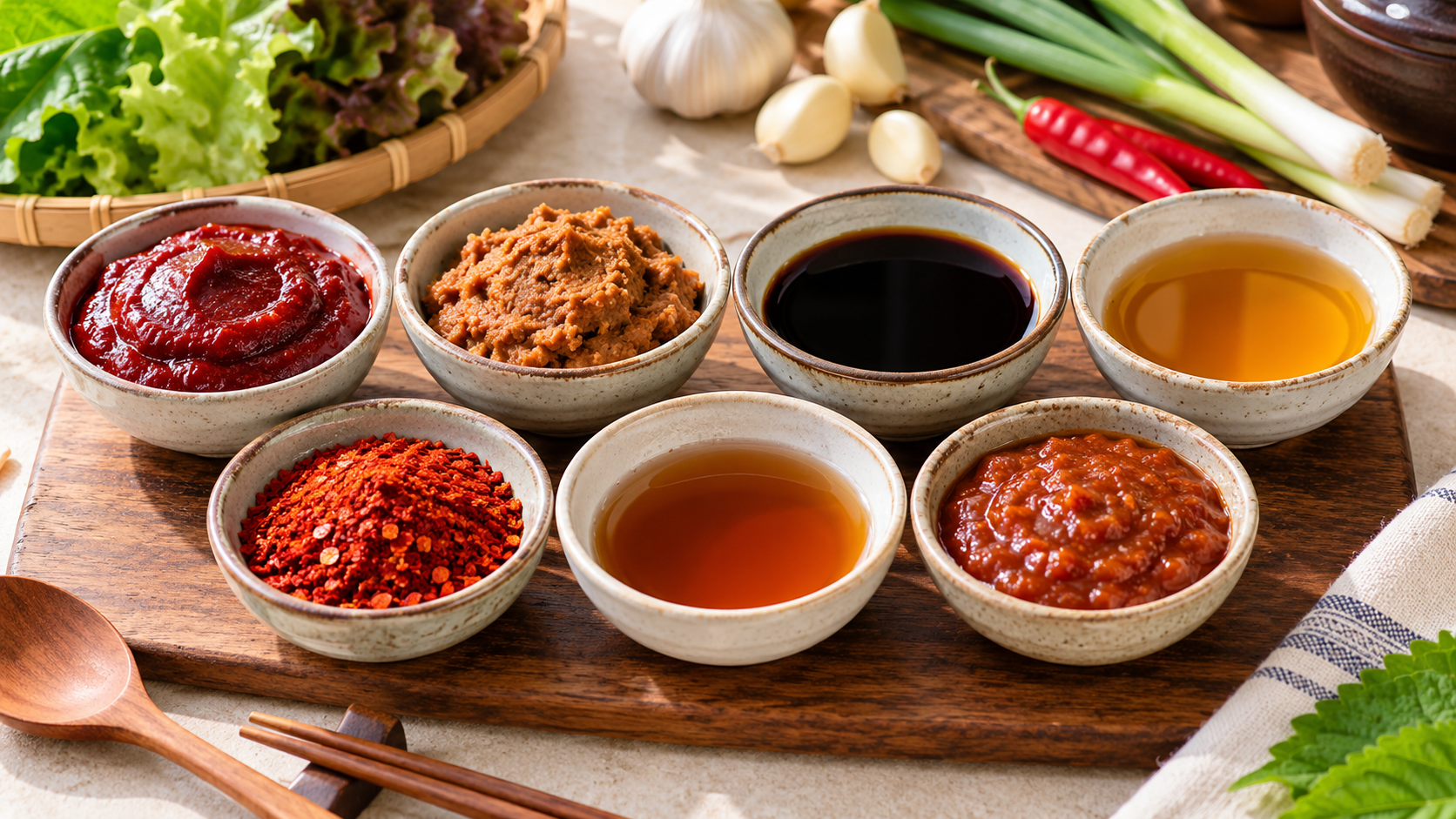
- Korean flavors: sesame oil, garlic, soy sauce, gochujang, and doenjang. These five cover every dish on this list.
The practical approach is to cook in batches. Two namul made on Sunday, mixed-grain rice portioned in the freezer, and a jar of kimchi turn a weeknight dinner into a few minutes of assembly.
None of this requires treating Korean food as a special diet. What makes these dishes worth knowing is their variety: several small plates of different vegetables, beans hidden in the rice, and soy appearing as sprouts, paste, tofu, and broth. Start with one pot of japgokbap and one namul, and the rest of the table becomes easier to picture. The natural next step is the pantry, beginning with gochujang and doenjang, the two pastes behind several of the dishes above.