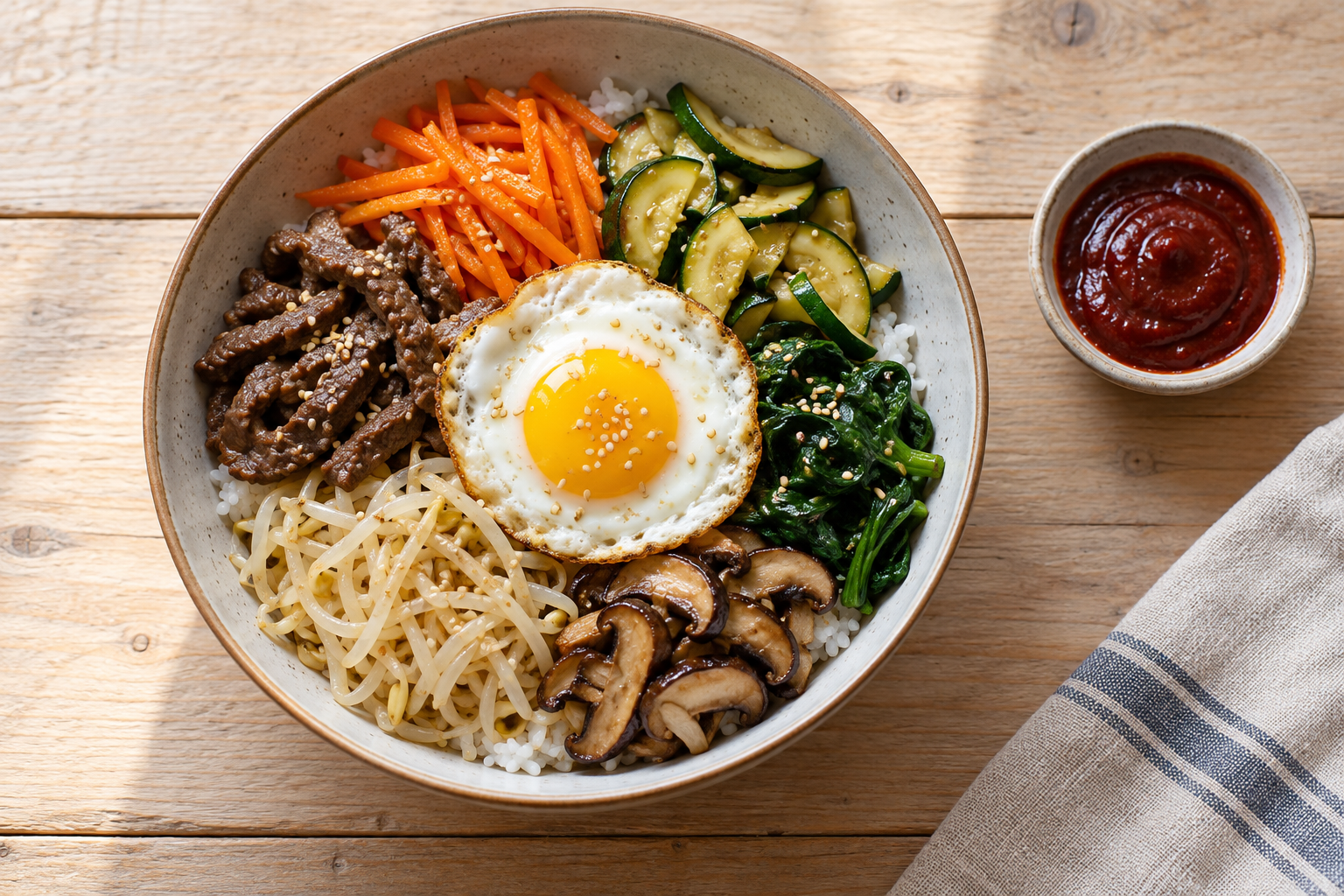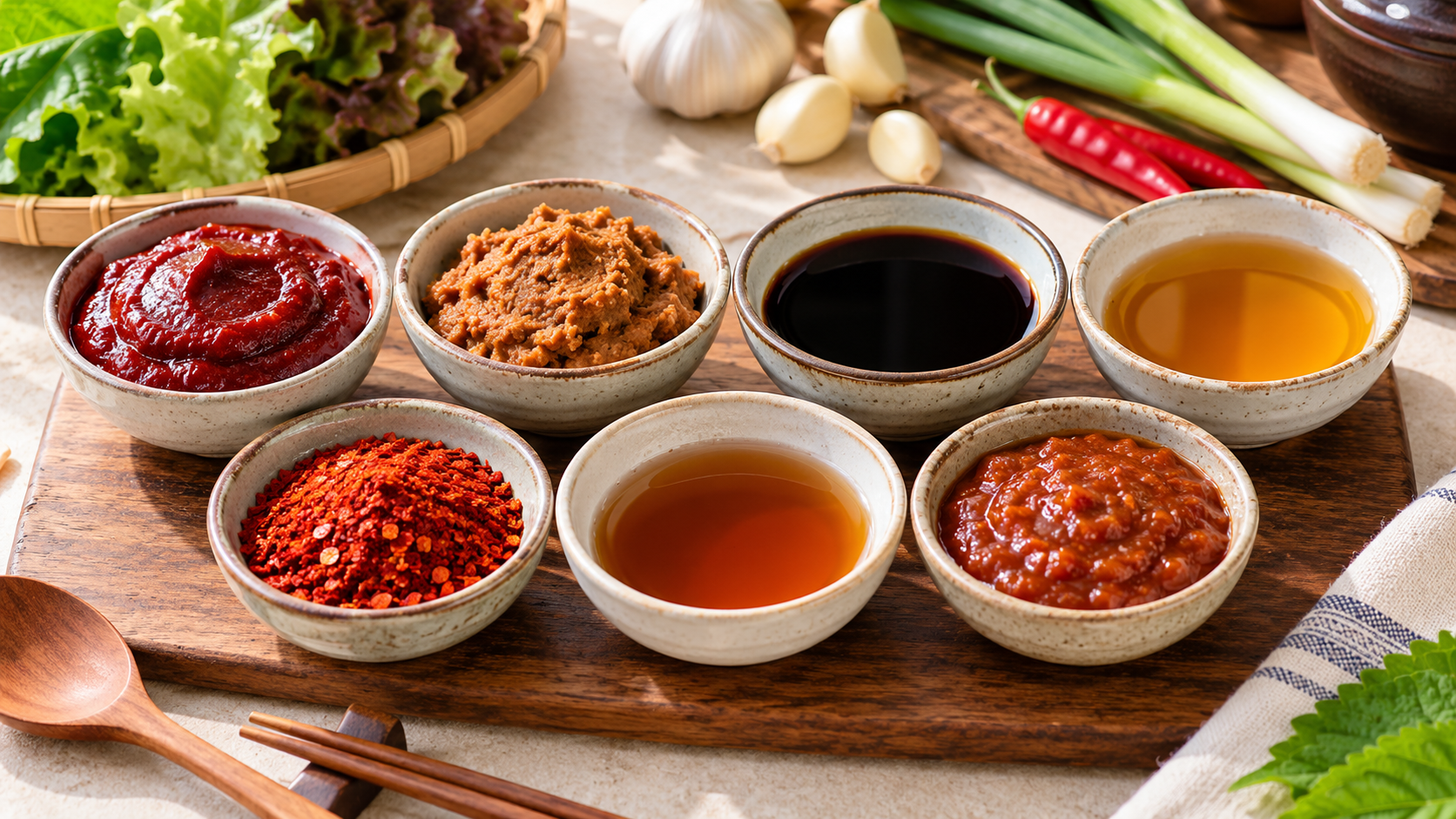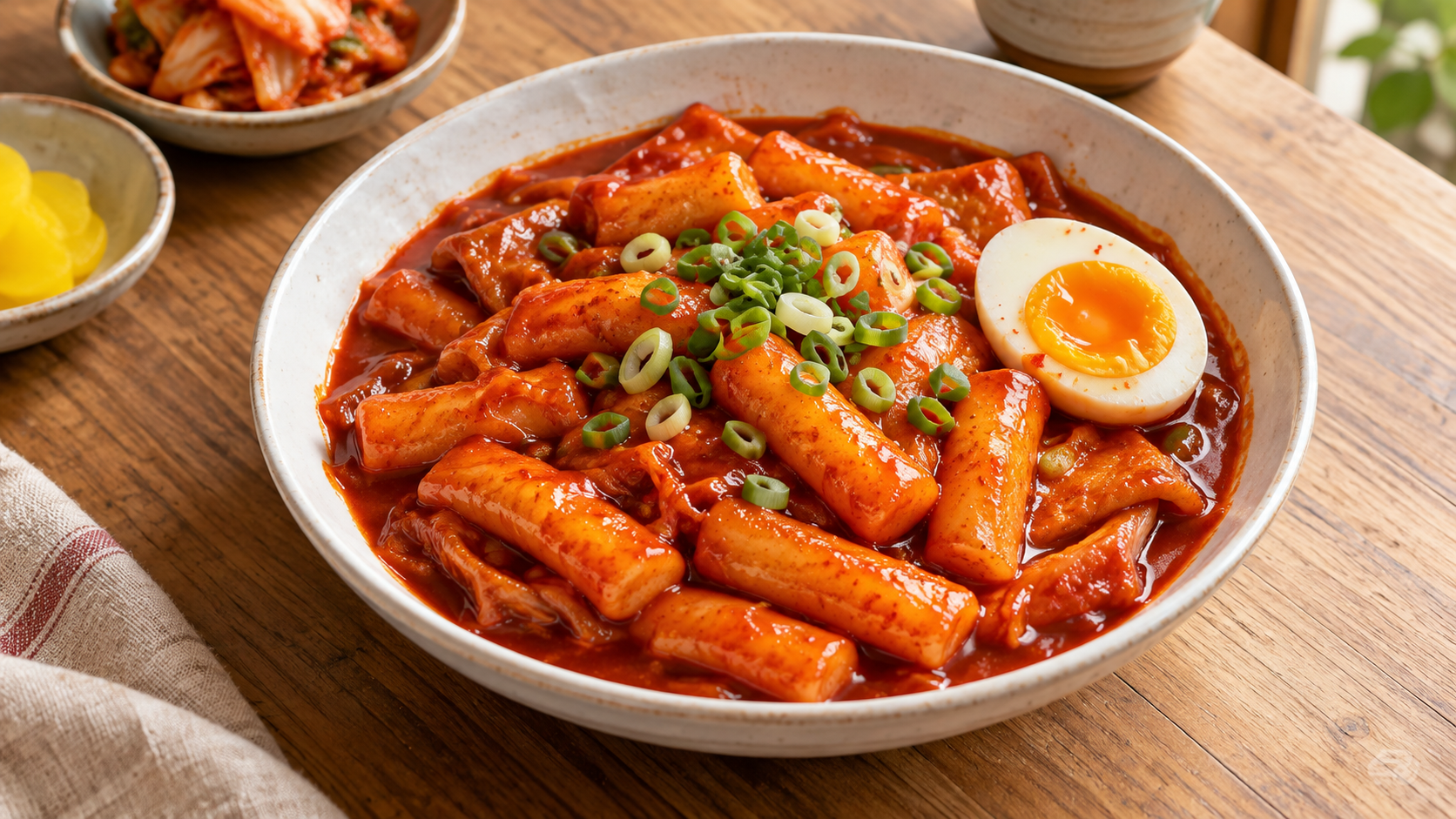
Banchan are the small shared dishes served with rice, soup and a main dish at a Korean meal. Learn how they work at home and in restaurants, what common names mean and what to check before you eat.
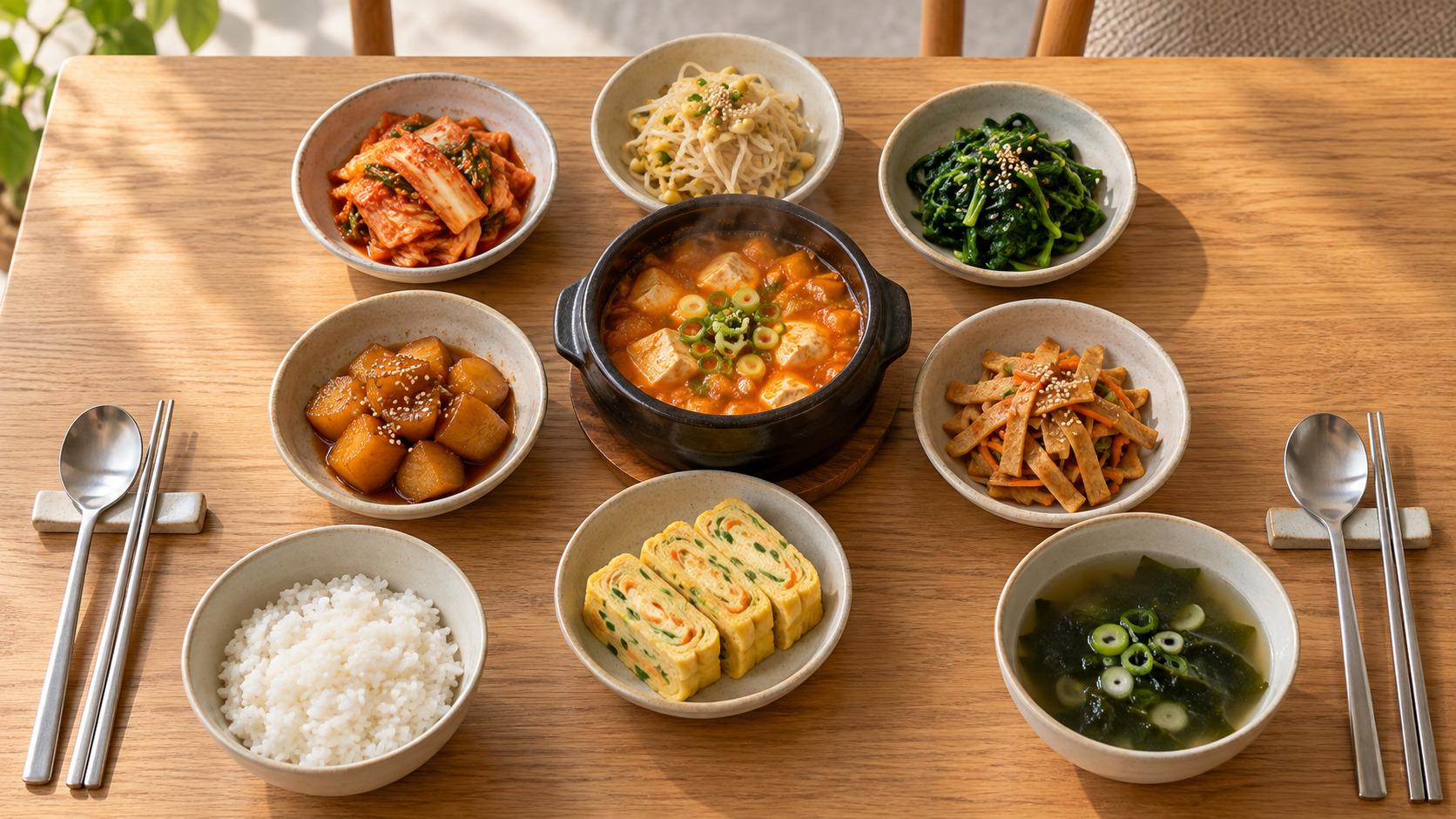
Banchan, pronounced roughly BAHN-chahn, are the small dishes served alongside rice, soup and a main dish at a Korean meal. They are usually placed in the middle of the table and shared, while each person has an individual bowl of rice and often a bowl of soup. Kimchi is banchan, but so are seasoned bean sprouts, rolled omelet and soy-braised potatoes. The word names a broad category rather than one recipe.
English often uses banchan as a collective noun or an unchanged plural, although banchans also appears. More important than the grammar is the role these dishes play: they help turn separate foods into one shared meal.
Why “side dish” and “appetizer” do not quite fit
“Side dish” is the standard English translation, and it is a useful shortcut. The difference is that a Western side often belongs to one plate, while banchan usually belong to the table.
Banchan may arrive before a restaurant’s main dish because many are prepared in advance. That timing does not make them a separate appetizer course. They normally remain on the table and are eaten throughout the meal with rice, soup, stew or grilled food.
A cool cucumber dish can offset a hot stew, while a salty braised dish pairs naturally with plain rice. This balance of flavors, temperatures and textures helps explain why several small dishes can matter as much as one large side.
How a Korean table with banchan works
A common arrangement places rice and soup in front of each diner, with banchan and any shared main dish in the center. Korean meals are often served all at once rather than in courses, so diners move among the dishes as they eat.
There is no universal number of banchan. A simple home meal may have only a few, while a restaurant set meal may have more. The selection changes with the season, the cook, the region and the main dish. A larger spread is not automatically more authentic.
Some home cooks prepare selected banchan in batches and refrigerate them for later meals. Storage time depends on the ingredients and preparation, so follow recipe-specific food-safety guidance, use clean utensils and discard food that shows signs of spoilage.
Banchan you are likely to meet
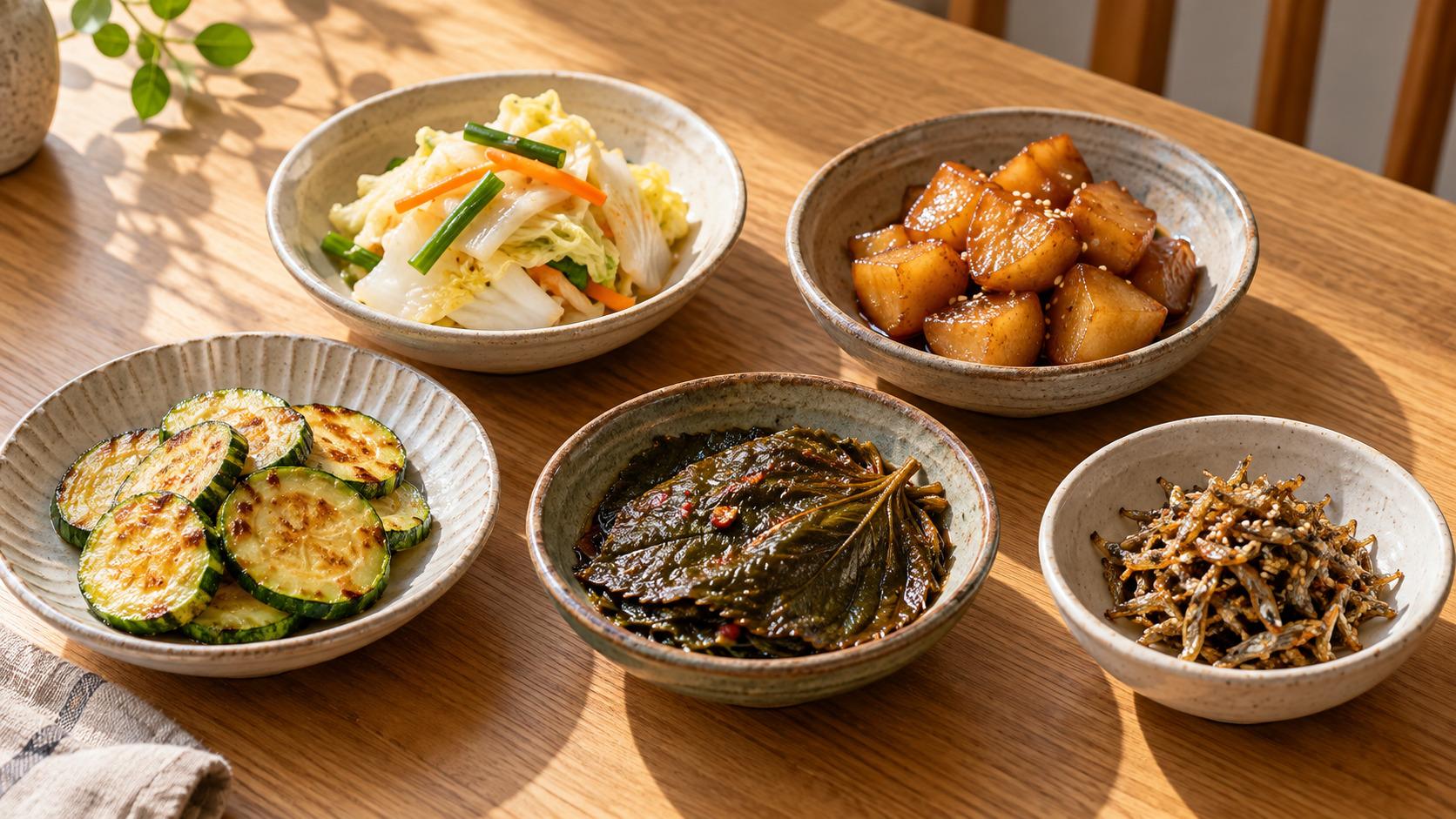
Kimchi: Salted and fermented vegetables, commonly napa cabbage or radish, with seasonings that may include chili flakes and garlic. Not every kimchi is spicy; white kimchi is made without chili flakes.
Namul: Vegetables that may be blanched, sauteed or served raw, then seasoned. Soybean sprouts and spinach are familiar examples.
Jangajji: Vegetables such as garlic, peppers or perilla leaves preserved in soy sauce, vinegar or another seasoned liquid.
Jeon: Ingredients such as zucchini, tofu or fish that are often lightly coated and pan-fried. A larger pancake can be served as a separate dish, while small pieces may appear as banchan.
Myeolchi-bokkeum: Tiny dried anchovies stir-fried in a savory or sweet-savory glaze, sometimes with nuts or seeds.
Eomuk-bokkeum: Sliced fish cake stir-fried with vegetables and a seasoned sauce. Recipes vary, so the same name does not guarantee the same ingredients.
How banchan names describe cooking methods
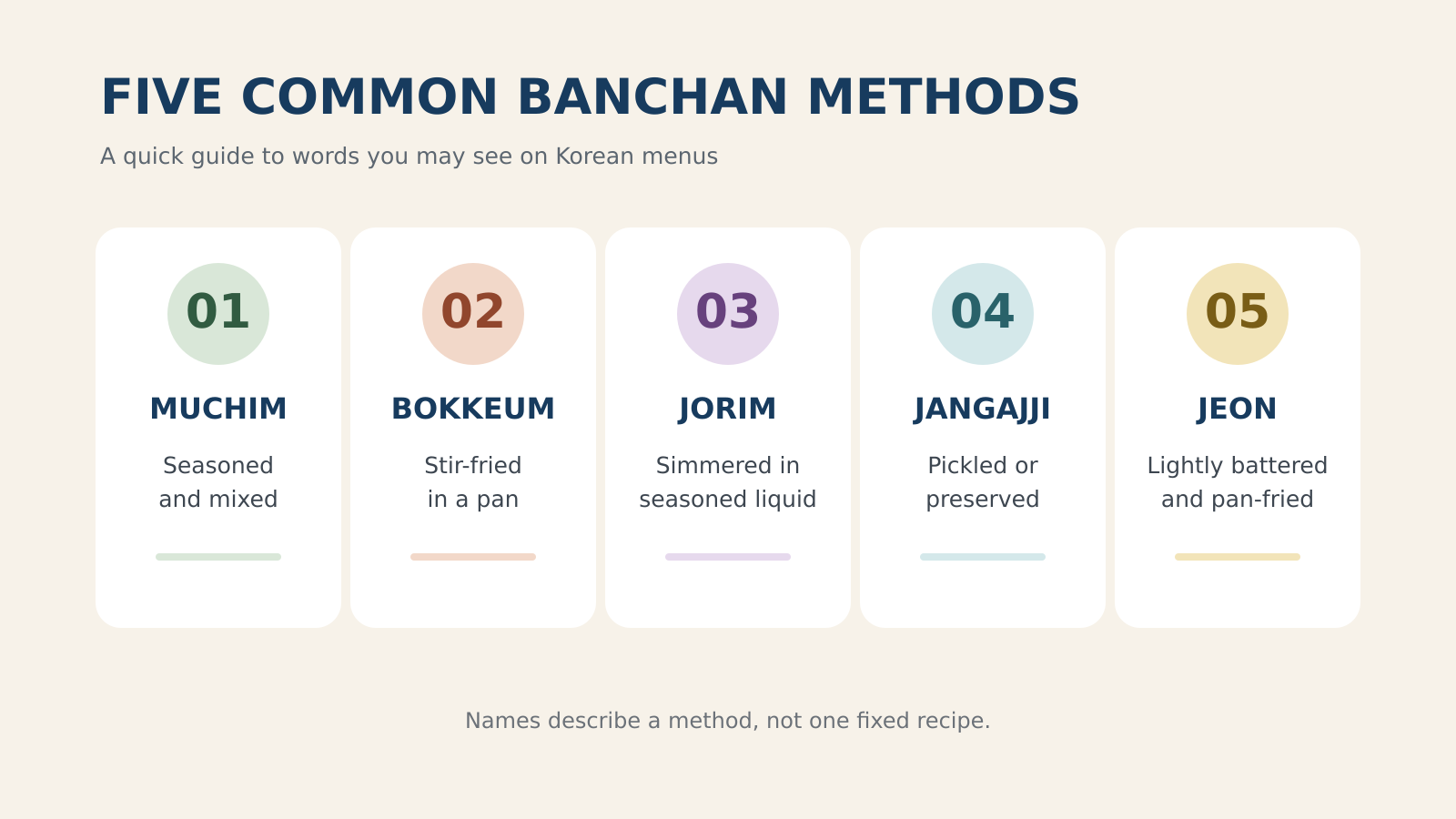
Many names contain a preparation term. Learning a few of them makes Korean menus easier to read:
Muchim means ingredients are seasoned and mixed, either raw or after brief cooking.
Bokkeum refers to stir-frying in a pan.
Jorim describes simmering ingredients in seasoned liquid until the flavor is absorbed or the liquid reduces.
Jangajji refers to vegetables preserved or pickled in a seasoned liquid or paste.
Jeon generally refers to ingredients that are lightly battered or coated and pan-fried.
These words describe methods, not fixed formulas. Two kitchens can prepare the same named dish with different seasonings.
Home banchan and restaurant banchan
At home, the table may combine something freshly cooked with dishes prepared earlier. At restaurants, the kitchen usually chooses banchan to suit the food ordered.
A Korean barbecue meal may include kimchi, pickled radish and seasoned vegetables alongside other accompaniments for wrapping and dipping. Not every item served with grilled meat is necessarily called banchan. A soup restaurant may offer only kimchi and cubed radish kimchi, while a baekban restaurant is built around rice, soup and a changing assortment of side dishes.
Banchan are often included with a restaurant order, but refills are not guaranteed. Policies vary: some restaurants refill selected dishes without charge, some limit refills, some charge and others use a self-service station. Ask politely and request only what you expect to eat.
Allergies and dietary questions
Appearance is not enough to identify every ingredient. Vegetable kimchi may contain fish sauce or salted shrimp, and vegetable dishes may be seasoned with anchovy stock. Soy sauce makes soy a concern and many, though not all, soy sauces also contain wheat. Jeon may contain wheat and egg. Fish cake contains fish and may also contain wheat, egg or soy. Sesame oil and sesame seeds are common, and sesame is one of the nine major food allergens recognized in the United States.
Recipes differ by kitchen and brand, so vegan, vegetarian and gluten-free status cannot be determined from a dish’s name alone. At a restaurant, explain the specific allergy and ask about the dishes on the table, including sauces and stocks. For packaged banchan, read the ingredient list and allergen statement each time you buy.
Eating banchan for the first time
Try a small portion first and eat it alongside rice or the rest of the meal. If a shared serving utensil is provided, use it to move food to your own plate. Practices differ among households and restaurants, so watching the table and following the host’s lead is a sensible approach.
A spoon is commonly used for rice and soup, while chopsticks are used for banchan. Avoid searching through a shared dish for a preferred piece, and do not return food once it has been moved to your plate.
Frequently asked questions
Is banchan free at Korean restaurants?
Banchan are often included with an order, but refill and extra-charge policies depend on the restaurant.
Is all banchan spicy?
No. Seasoned spinach, soybean sprouts, rolled omelet, braised potatoes and white kimchi are examples that may have little or no chili heat.
Is banchan vegan or gluten-free?
Some dishes may be, but the name or appearance cannot confirm it. Ask about sauces, stocks and cross-contact, or read the package label.
What is the plural of banchan?
English commonly uses banchan as a collective or unchanged plural, but banchans is also used.
Banchan show a distinctly Korean way of organizing a meal: individual rice and soup surrounded by small shared dishes. Once you understand that structure, the table stops looking like a main dish with random extras and starts to read as one complete meal.
Image credits: K Gallery original AI-generated images and original graphic.