Tteokbokki may or may not be gluten free. Learn what to check in the rice cakes, gochujang, soy sauce, fish cakes, packaged kits, and restaurant preparation
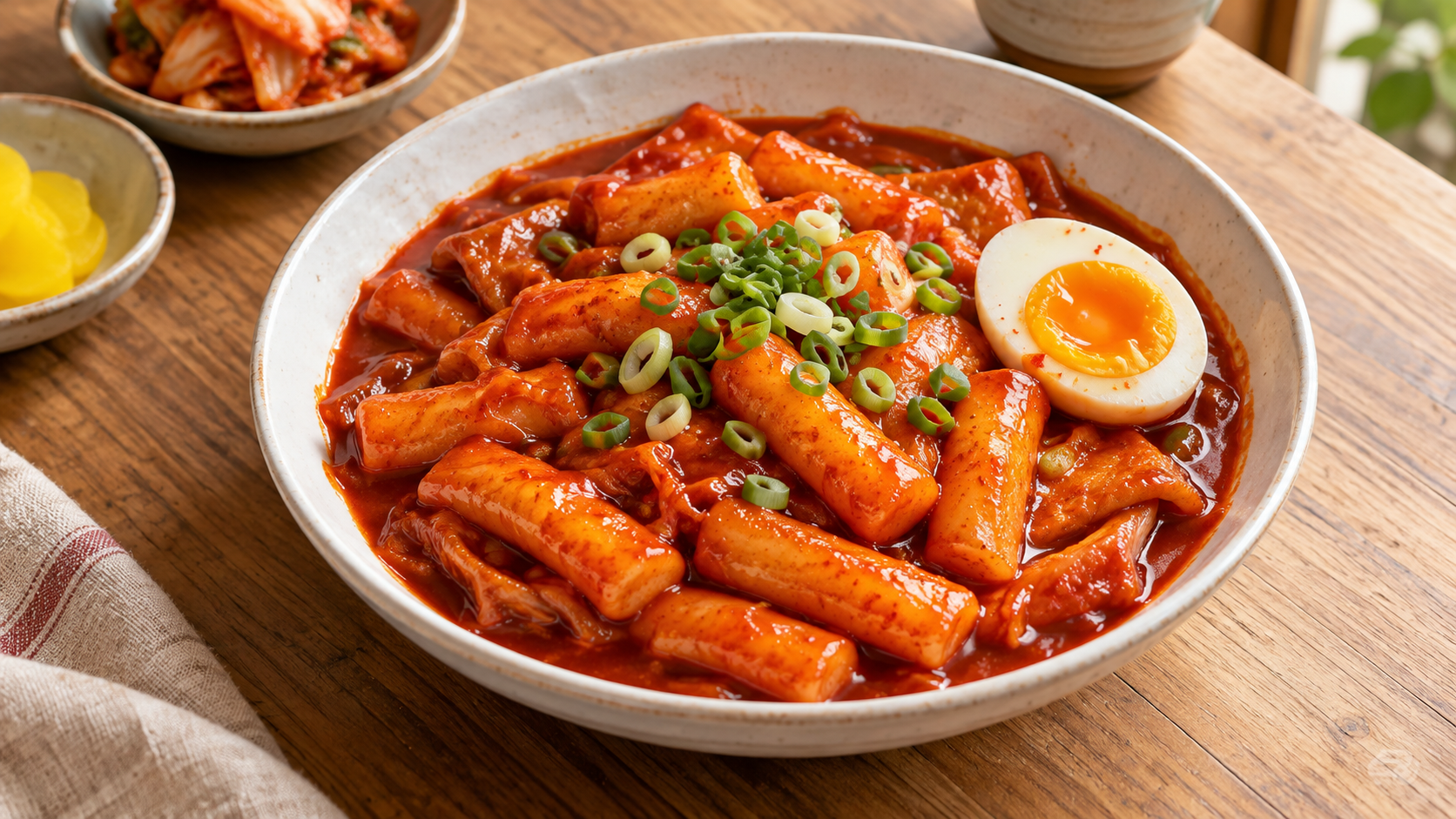
Tteokbokki may be gluten free, but you cannot tell from the name or appearance alone. The answer depends on the rice cakes, the sauce and add-ins, and the way the food is prepared. Rice itself does not contain gluten, yet a finished bowl can contain wheat, barley, or rye in several less obvious places.
For someone avoiding gluten by preference, that may mean checking a few ingredients. For someone with celiac disease or a wheat allergy, cross-contact and complete allergen information can also matter. The safest approach is to judge each product or restaurant preparation separately.
Rice cakes are not all the same
Tteokbokki is a Korean bunsik, or casual snack food, built around chewy cylindrical tteok. Rice-based versions are often called ssal-tteok, while mil-tteok is made with wheat flour. Mil-tteok contains wheat and is not gluten free.
Rice cakes made only with rice, water, and salt use ingredients that are naturally free of gluten. However, a packaged product may include additional starches or may be produced where wheat is also handled. Shape, color, and texture are not reliable ways to distinguish rice tteok from wheat tteok, especially after the pieces are coated in sauce. Check the package label or ask for the exact product used.
Where gluten can appear beyond the rice cakes
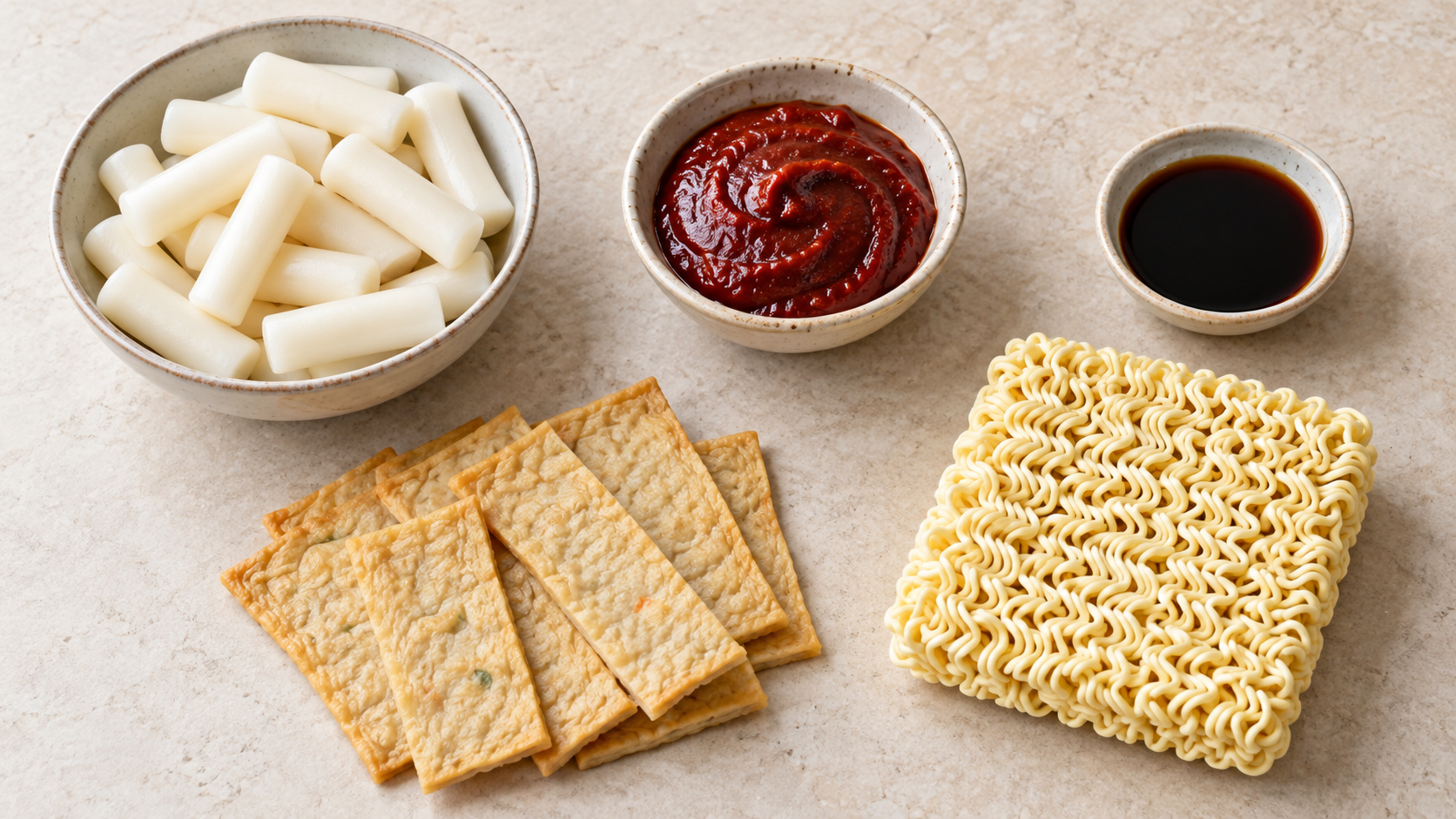
Even when the tteok is rice-based, the sauce and add-ins need their own check.
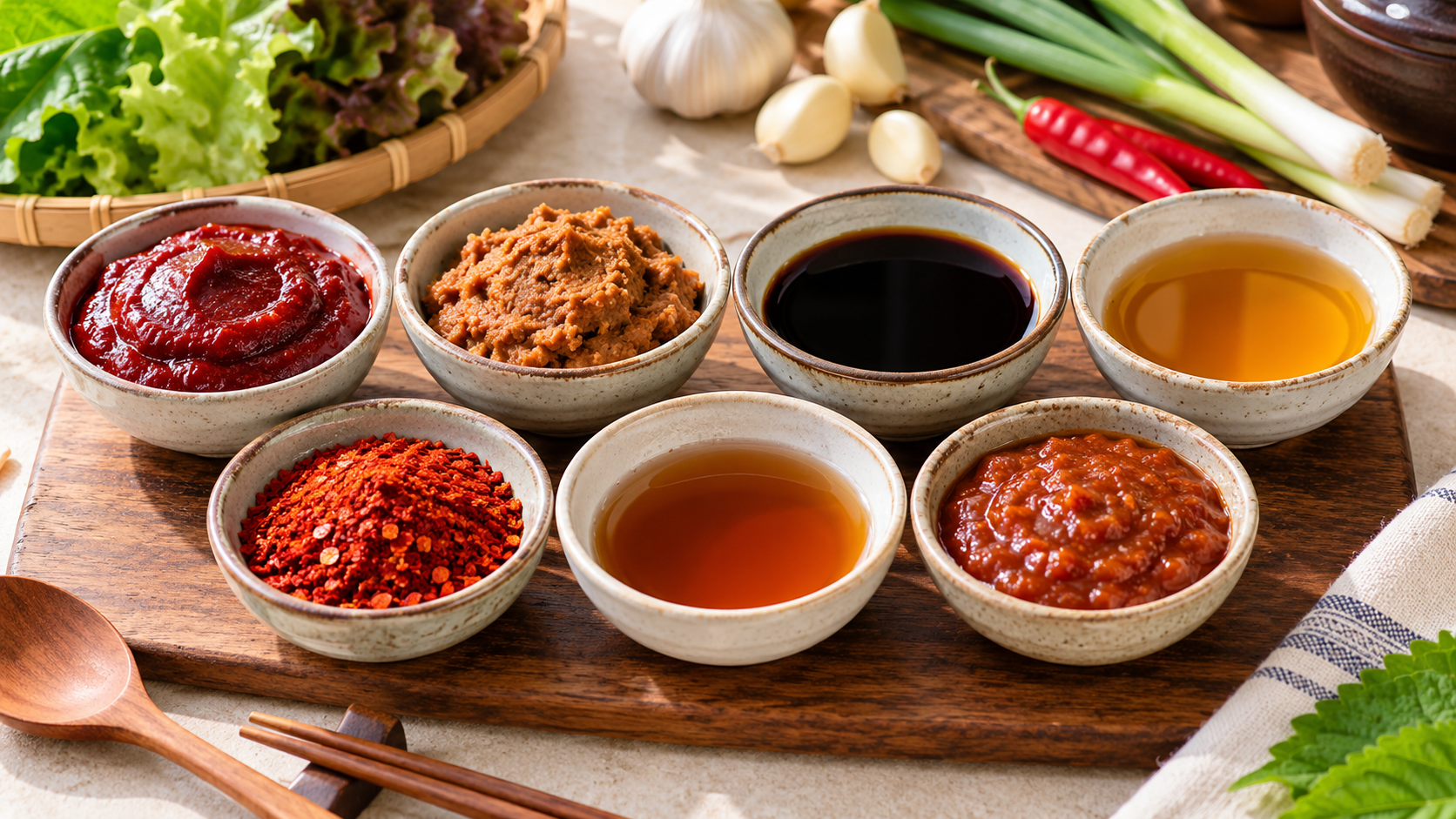
Gochujang. Recipes vary. Some commercial gochujang contains wheat or barley-derived ingredients, while other products are formulated and labeled gluten free. Do not assume that every red pepper paste has the same grain base. Read the complete ingredient list and look for a gluten-free claim when that level of assurance is needed.
Soy sauce. Conventional soy sauce is commonly brewed with wheat and may appear in the sauce or broth. Use a soy sauce labeled gluten free. Tamari can be made without wheat, but the word tamari alone is not proof; select one that is specifically labeled gluten free.
Eomuk, or Korean fish cake. Many packaged fish cakes use wheat flour or another starch as part of the mixture, although wheat-free products also exist. Fish cakes can also raise other allergen questions involving fish, soy, or shellfish, depending on the recipe. Check the exact label or leave them out.
Noodles and sides. Ramyeon added to rabokki normally contains wheat. Mandu, battered twigim, seasoning powders, broth concentrates, and some cheese or topping packets may also introduce gluten. Each packaged component needs to be checked rather than judged by the main dish.
What to ask at a restaurant
Restaurant tteokbokki can be harder to evaluate because the ingredient labels are not in front of you and cross-contact may occur. A pot or broth may be shared with fish cakes or noodles, and the same ladle, tongs, cutting board, or counter may be used for wheat-containing food. Fried items can introduce another concern when the fryer is shared.
In the United States, FDA gluten-free labeling requirements apply to packaged foods. FDA recommends that restaurants using a gluten-free claim be consistent with the federal definition, while state and local authorities also play a role in restaurant oversight. A menu claim or a quick verbal answer does not explain the kitchen process by itself.
Ask which rice cakes, gochujang, soy sauce, broth, and fish cakes are used. If you need to avoid cross-contact, also ask whether the pot, utensils, prep surface, and fryer are shared. If staff cannot confirm the ingredients or process, choose another dish or follow the plan provided by your clinician or dietitian.
Celiac disease, wheat allergy, and gluten sensitivity differ
Celiac disease is an autoimmune disease triggered by gluten from wheat, barley, and rye. Avoiding cross-contact is part of medically necessary gluten-free management.
A wheat allergy is an immune reaction to wheat proteins and can cause rapid, potentially serious symptoms. It is not identical to celiac disease: barley and rye contain gluten but are not wheat. Someone with a wheat allergy should follow their allergist’s instructions and check other allergens that may be present in the dish.
Non-celiac gluten sensitivity is used for symptoms associated with gluten-containing foods when celiac disease and wheat allergy have been excluded. Evaluation and individual tolerance should be discussed with a qualified healthcare professional.
This is why wheat-free and gluten-free are not interchangeable. A wheat-free product may still contain barley or rye.
How to check a packaged tteokbokki kit
Instant cups, frozen trays, and meal kits can contain separate packets for rice cakes, sauce, seasoning, and toppings. Check the complete package rather than reading only the rice-cake ingredients.
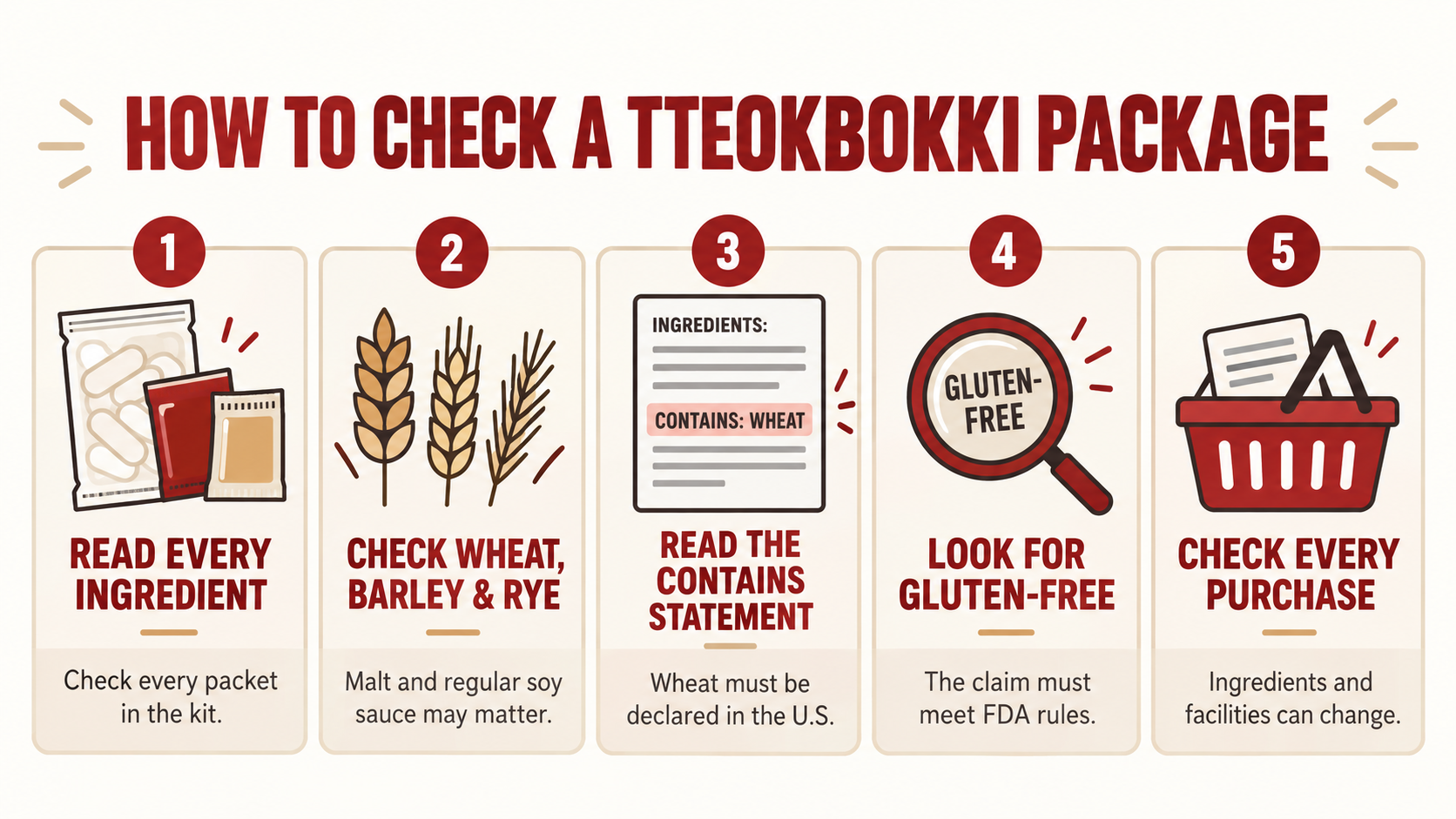
1. Read the full ingredient list for wheat, barley, rye, malt, conventional soy sauce, and other grain-derived ingredients.
2. Check the “Contains” statement when one is present. In the United States, wheat is a major allergen that must be declared, but barley and rye are not included in the nine major food allergens.
3. Look for a gluten-free claim when appropriate. FDA requires foods using that voluntary claim to meet its definition, including less than 20 parts per million of unavoidable gluten.
4. Do not treat the absence of a voluntary “may contain wheat” or shared-facility statement as proof that cross-contact cannot occur.
5. Read the label every time you buy. Ingredients, suppliers, and manufacturing arrangements can change.
Making gluten-free tteokbokki at home
Home cooking gives you the most control. Choose rice cakes whose ingredients and gluten-free status fit your needs. Use gochujang and soy sauce labeled gluten free, or tamari that is specifically labeled gluten free. Check the broth or seasoning packet, and omit fish cakes, noodles, dumplings, and fried toppings unless each product has been verified.
Keep preparation surfaces, pots, utensils, and serving tools separate or thoroughly cleaned when cross-contact is a concern. Garlic, scallions, eggs, and vegetables can add flavor and texture without relying on wheat-based additions, provided any packaged ingredients are also checked.
Frequently asked questions
Are Korean rice cakes gluten free?
Some are. Rice cakes made from rice and other gluten-free ingredients may be suitable, but wheat-based mil-tteok is also used in Korea. Check each product label and consider cross-contact according to your needs.
Is gochujang gluten free?
Some gochujang is labeled gluten free, while other products contain wheat or barley-derived ingredients. The product name alone is not enough.
Is restaurant tteokbokki safe for celiac disease?
That depends on the exact ingredients and preparation process. Shared pots, utensils, surfaces, and fryers can create cross-contact, so ask detailed questions and follow your healthcare guidance.
Is wheat-free tteokbokki the same as gluten-free tteokbokki?
No. A wheat-free dish can still contain barley or rye, both of which contain gluten.
Image credits: K Gallery original AI-generated images