Compare kimchi and sauerkraut by ingredients, flavor, texture, and uses, then learn what labels reveal about vegan options, live cultures, and sodium.
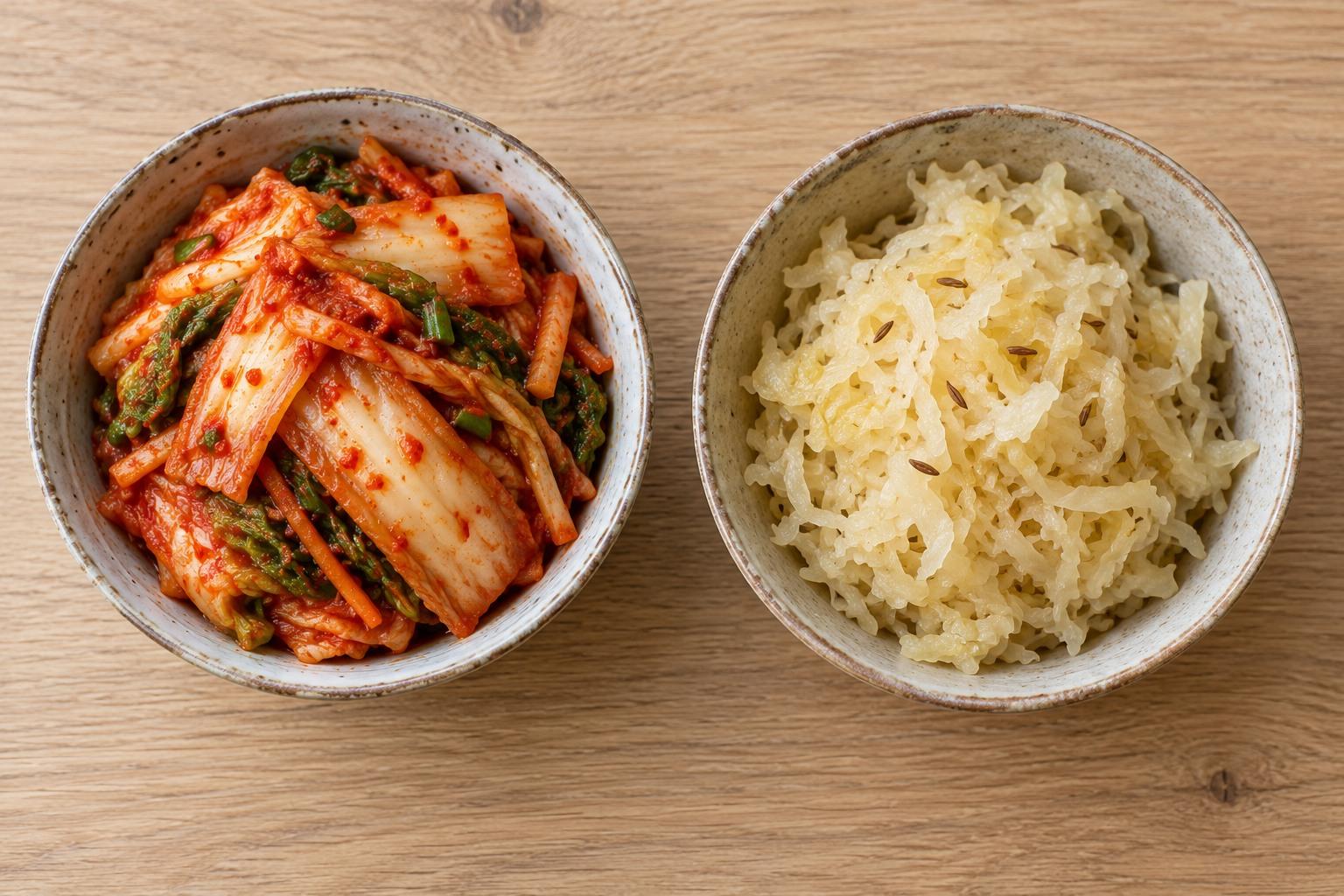
The kimchi vs sauerkraut comparison is not a choice between two versions of the same dish. It usually means napa cabbage kimchi versus shredded cabbage sauerkraut. Both develop acidity through lactic acid fermentation, yet their vegetables, seasonings, flavors, textures, and everyday uses are different.
There is no automatic winner for health or live cultures. The better choice depends on the specific product, your diet, and how you plan to eat it.
Kimchi vs sauerkraut at a glance
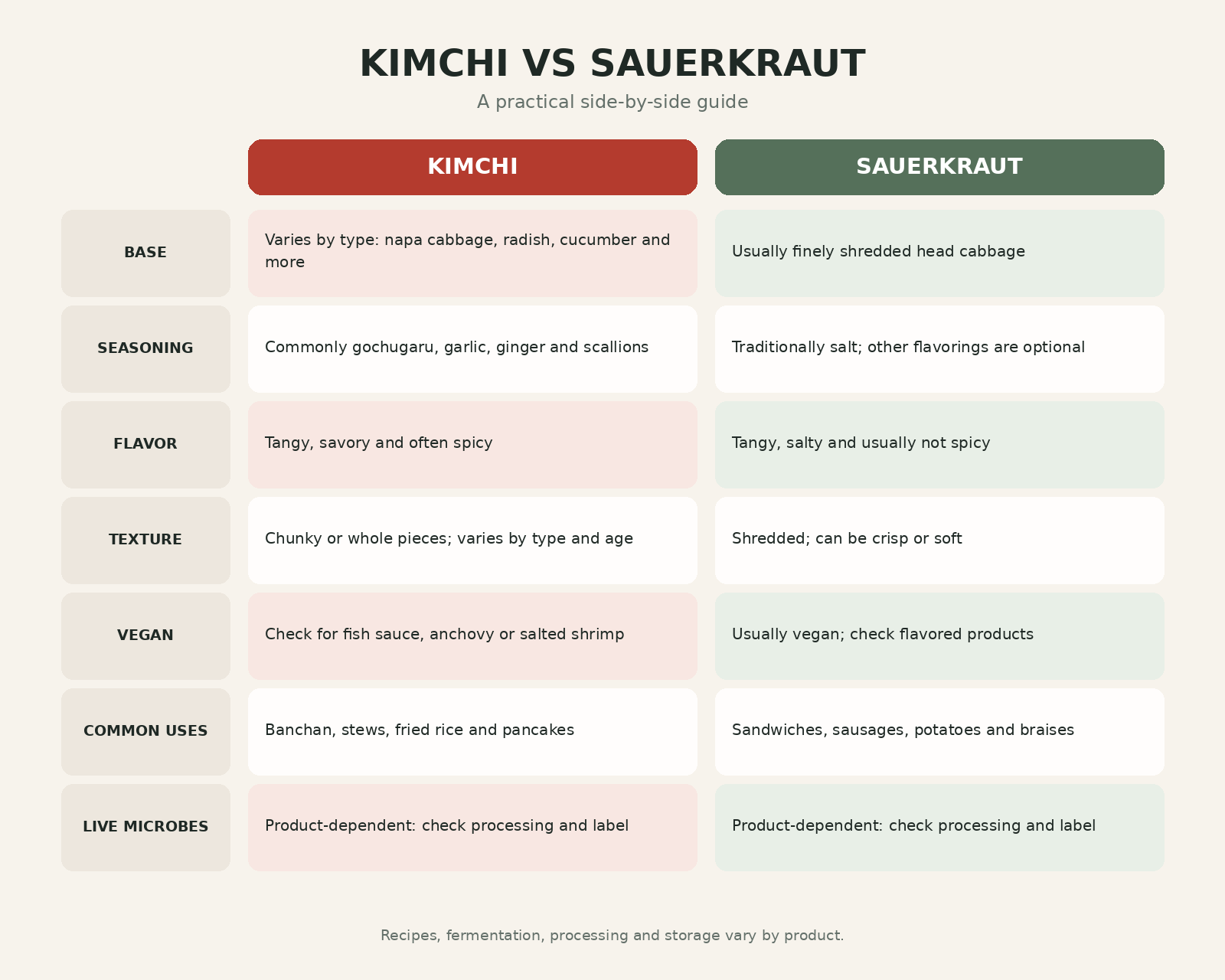
The chart below compares the versions most commonly sold in American grocery stores. Kimchi is a much broader category, and both foods vary by recipe, fermentation time, processing, and storage.
Kimchi is a category, not one cabbage recipe
Sauerkraut is traditionally made from finely shredded head cabbage and salt. Kimchi refers to a family of seasoned fermented vegetables. Baechu-kimchi, made with napa cabbage, is the red version many US shoppers recognize, but it is only one type.
Kkakdugi uses cubed radish, while oi-sobagi uses cucumber. Baek-kimchi, or white kimchi, is made without red pepper powder, and dongchimi is a mild radish kimchi in a watery brine. That is why describing kimchi as “spicy sauerkraut” misses both its range and its seasoning.
Ingredients and vegan status
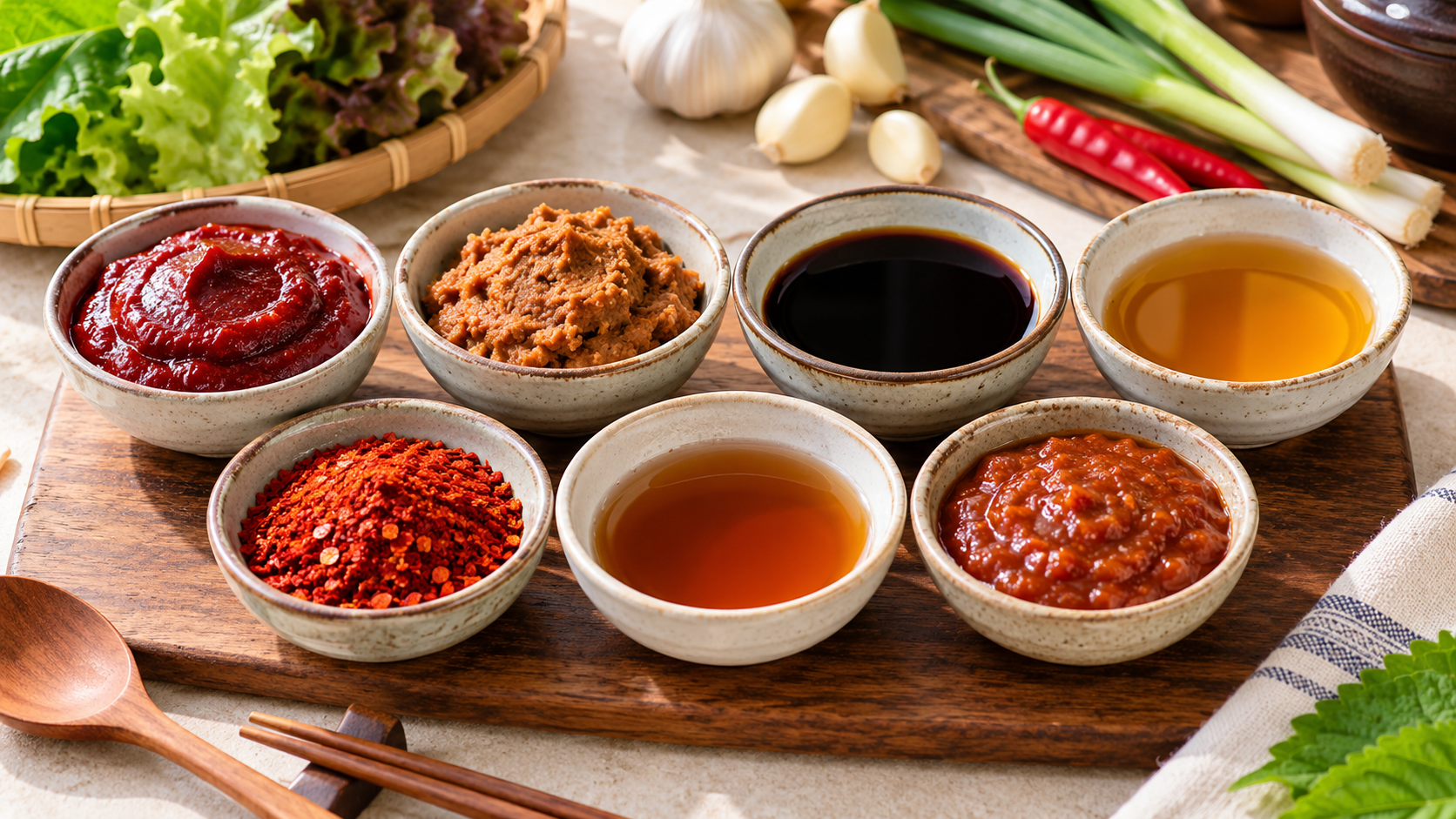
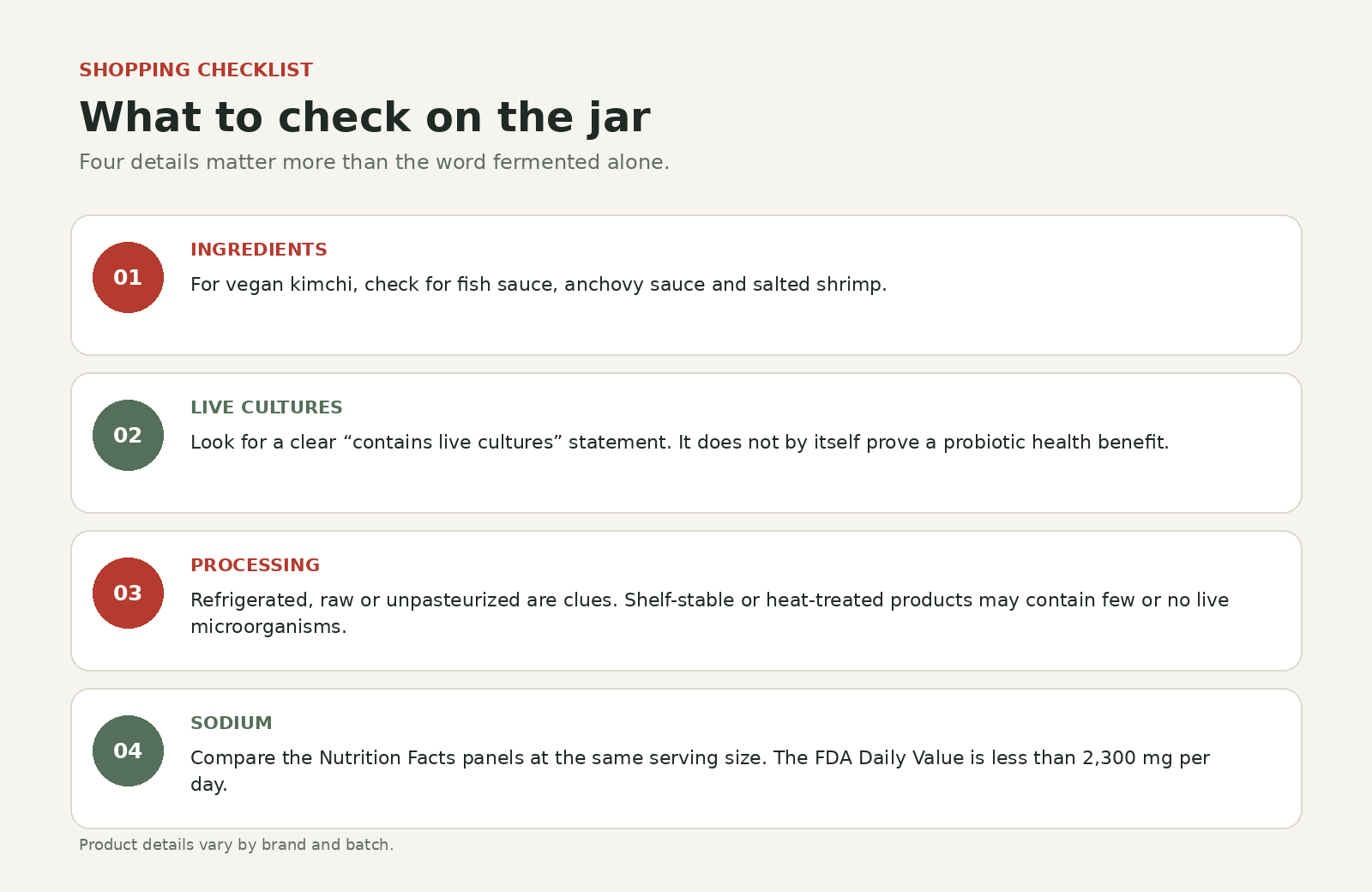
A typical napa cabbage kimchi may include gochugaru, garlic, ginger, scallions, radish, and a fermented seafood ingredient. Fish sauce and salted shrimp are common, but they are optional rather than required in every kimchi. Vegan kimchi is widely available, so the ingredient and allergen labels—not the color of the jar—should decide whether a product fits your diet.
Plain sauerkraut is usually made from cabbage and salt and is generally vegan. Flavored versions can add wine, bacon, or other ingredients, so packaged products still deserve a quick label check.
Taste, texture, and common uses
Sauerkraut is usually tangy, salty, and straightforward. Its cabbage is finely shredded, and the texture can range from crisp to soft depending on fermentation and processing. It works naturally with sausages, pork, potatoes, sandwiches, and slow-cooked dishes.
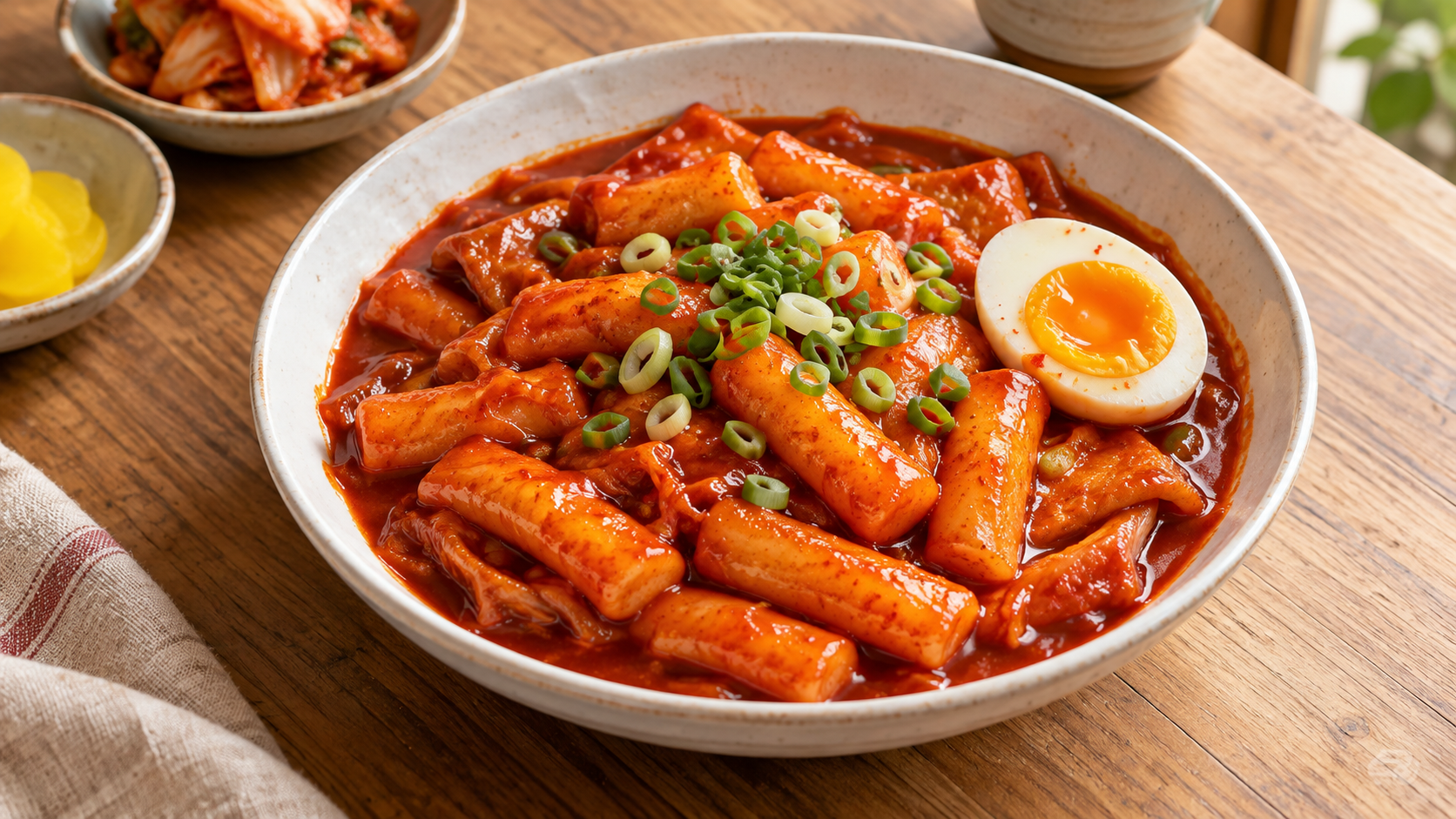
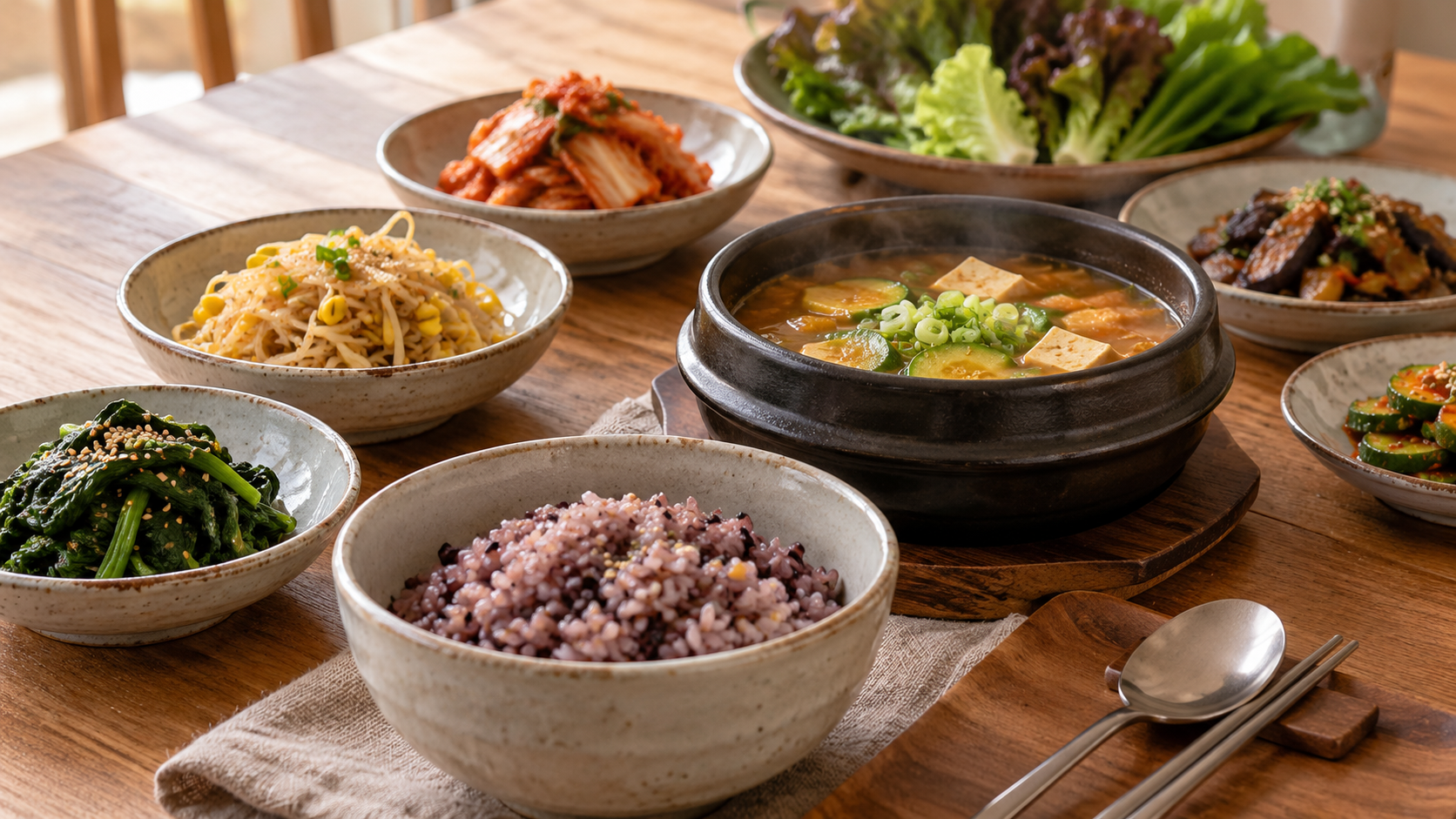
Napa cabbage kimchi is commonly savory, garlicky, tangy, and spicy, although the heat level varies and some kimchi contains no chili. Its leaves and stems create a chunkier bite. It is served cold as banchan and also cooked in kimchi-jjigae, fried rice, pancakes, and other dishes. As kimchi ages, it generally becomes more acidic and is often especially useful for cooking.
Live cultures: read beyond the word fermented
Fermented does not automatically mean probiotic. To qualify as a probiotic, microorganisms must be alive when consumed, present in adequate amounts, and supported by evidence for a specific health benefit. Most fermented foods are not sold with that level of strain-specific evidence. Some products also contain few or no live microorganisms by the time they are eaten because of heat treatment, processing, storage, or age.
If live cultures are your priority, start with a clear statement such as “contains live cultures” and check whether the product was heat-treated after fermentation. A label statement is useful product information, but it does not by itself prove a probiotic health benefit. Refrigerated, raw, or unpasteurized products are useful clues rather than guarantees. Contact the manufacturer when the label is unclear.
Cooking can substantially reduce the number of live microorganisms, depending on temperature and time. Cooked kimchi and sauerkraut can still be enjoyable foods, but they should not be treated as guaranteed sources of live cultures.
What about sodium?
Salt is central to both foods, and sodium varies widely by recipe and brand. Compare the Nutrition Facts panels at the same serving size instead of assuming one category is always lower. The FDA Daily Value for sodium is less than 2,300 milligrams per day; 5% Daily Value or less per serving is considered low, while 20% or more is high.
Which one should you buy?
Choose kimchi when you want layered seasoning, garlic, possible heat, and a side dish that can later move into rice, stew, or pancakes. Choose sauerkraut when you want a simpler cabbage flavor for sandwiches, sausages, potatoes, or braised dishes.
For a vegan purchase, inspect kimchi for fish sauce, anchovy, or salted shrimp and check flavored sauerkraut for animal ingredients. For live cultures, compare processing and label information. For sodium, compare equal serving sizes. Those product-level details are more useful than declaring either food universally healthier.
Frequently asked questions
Is kimchi just spicy sauerkraut?
No. Kimchi is a broad category of seasoned fermented vegetables, and many types use vegetables other than cabbage. Some varieties, including baek-kimchi and dongchimi, are not spicy.
Is all kimchi vegan?
No. Many recipes use fish sauce or salted shrimp, while others are made specifically as vegan kimchi. Check the ingredient and allergen labels.
Which has more probiotics, kimchi or sauerkraut?
You cannot determine that from the food name alone. Live microorganisms depend on the recipe, processing, storage, product age, and individual strains. Fermented food and probiotic food are not interchangeable terms.
Does cooking destroy the live cultures?
Cooking can substantially reduce live microorganisms, depending on the temperature and cooking time. If live cultures are your goal, use an appropriate unheated product.
Can I substitute kimchi for sauerkraut?
Sometimes. Kimchi can add heat, garlic, and savory seasoning to sandwiches or sausages, while sauerkraut can provide acidity and cabbage texture. The substitution will noticeably change the flavor, so start with a small amount.