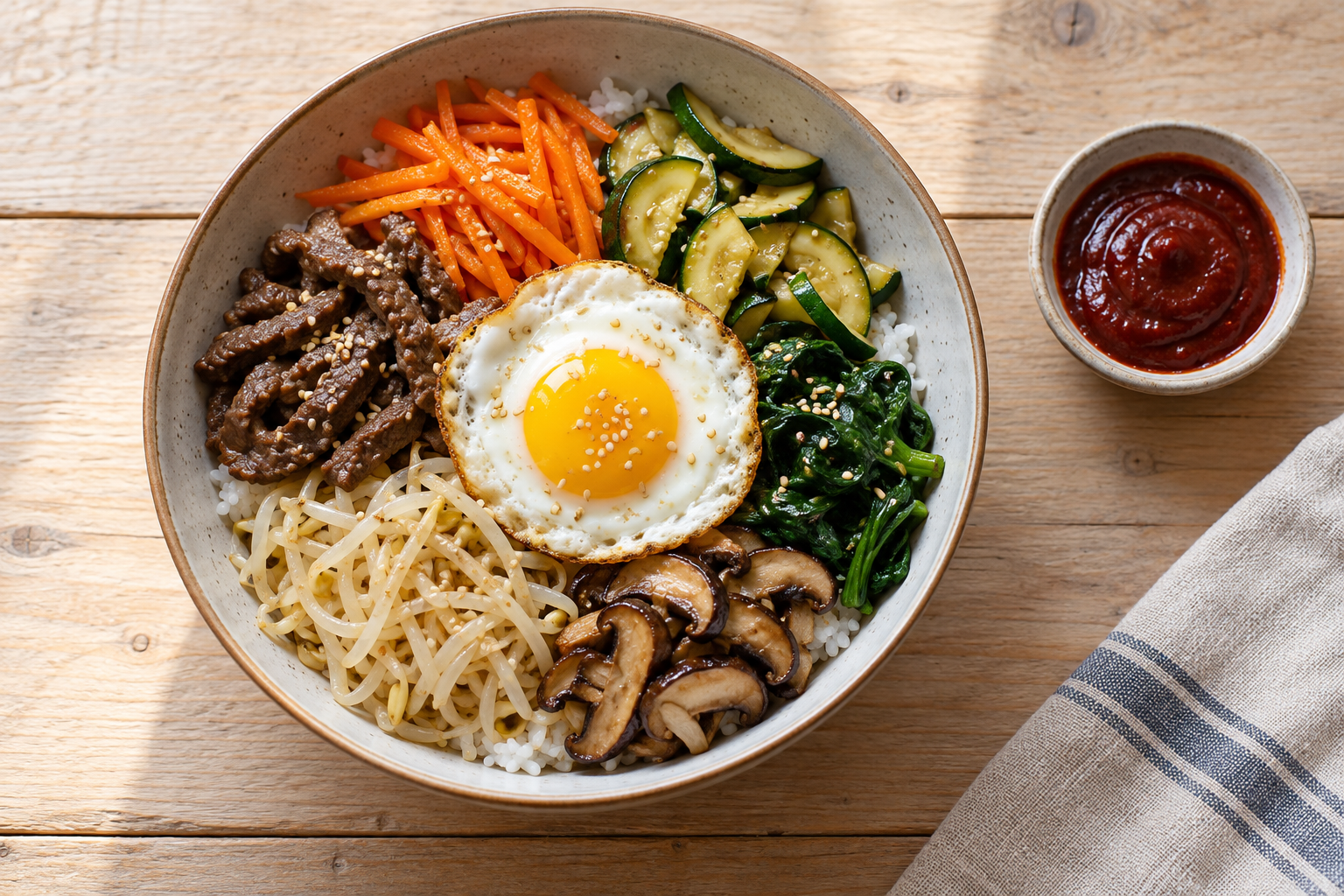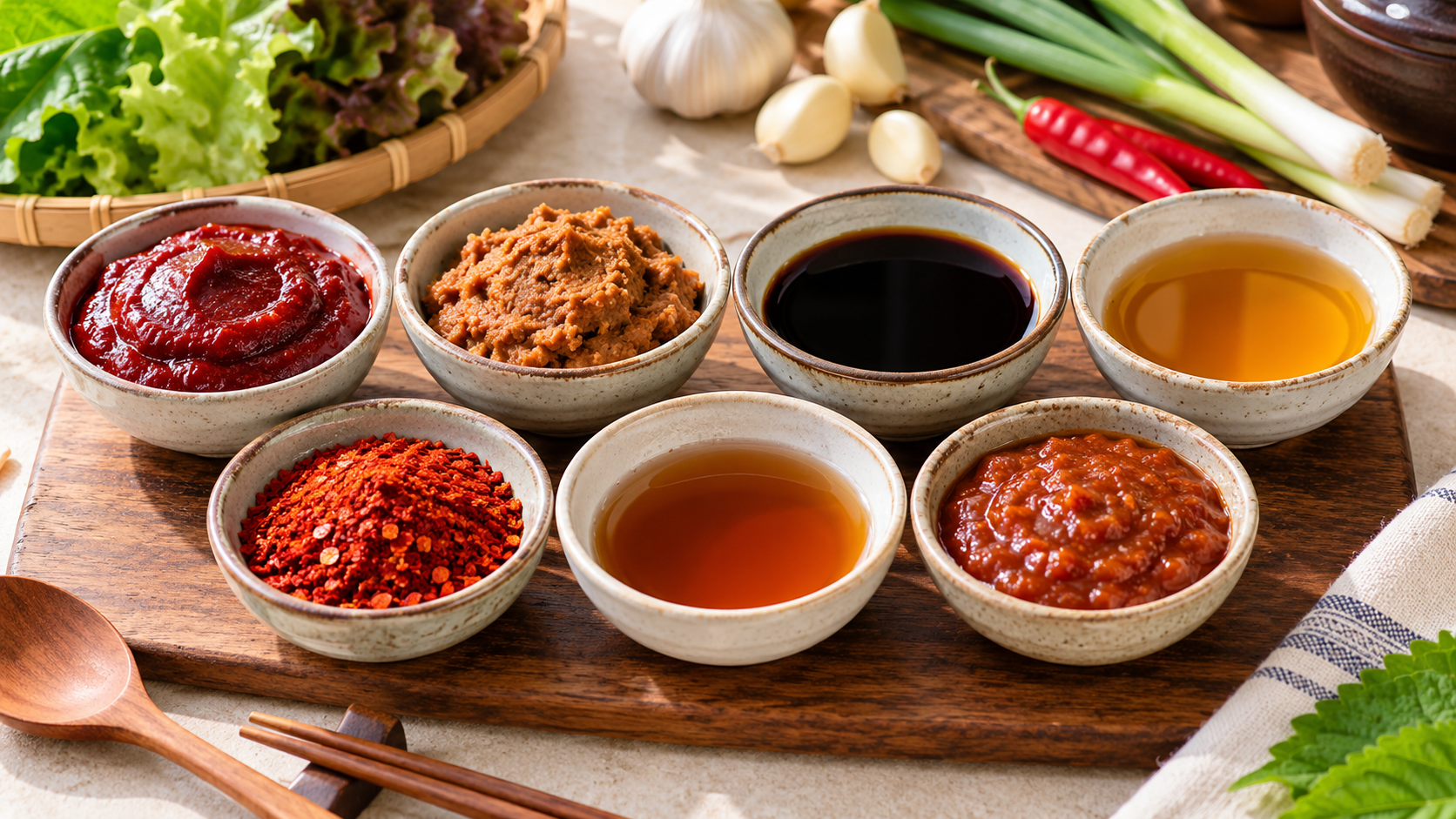
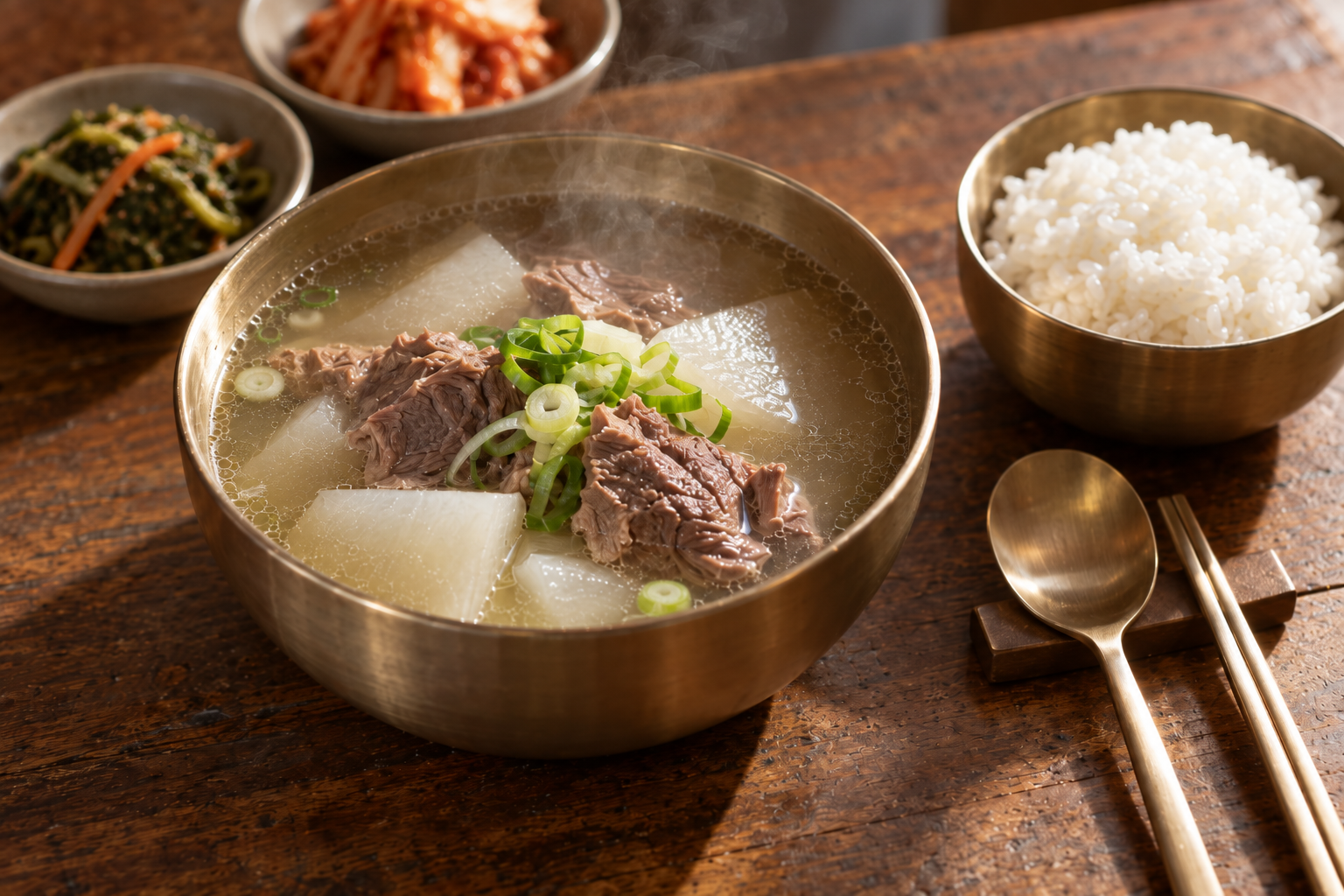
There is a technique in Korean soup shops called toryeom (토렴), and I think about it more than is reasonable. The cook puts cooled rice in a bowl, ladles hot broth over it, pours the broth back into the pot, and repeats that four or five times until the rice comes up to temperature. That is the entire method. It exists because rice used to be made once a day in one big pot, so it could not stay hot, and soup was how you brought cold food back to warm.
I start there because it answers what people are really asking when they look up Korean comfort food. The answer is not a dish. It is warmth, given on purpose, to somebody who needs it. Which is why there is no single best one, and why the whole question sorts itself out the moment you ask a different one: what kind of day was it?
Why the soup is not optional
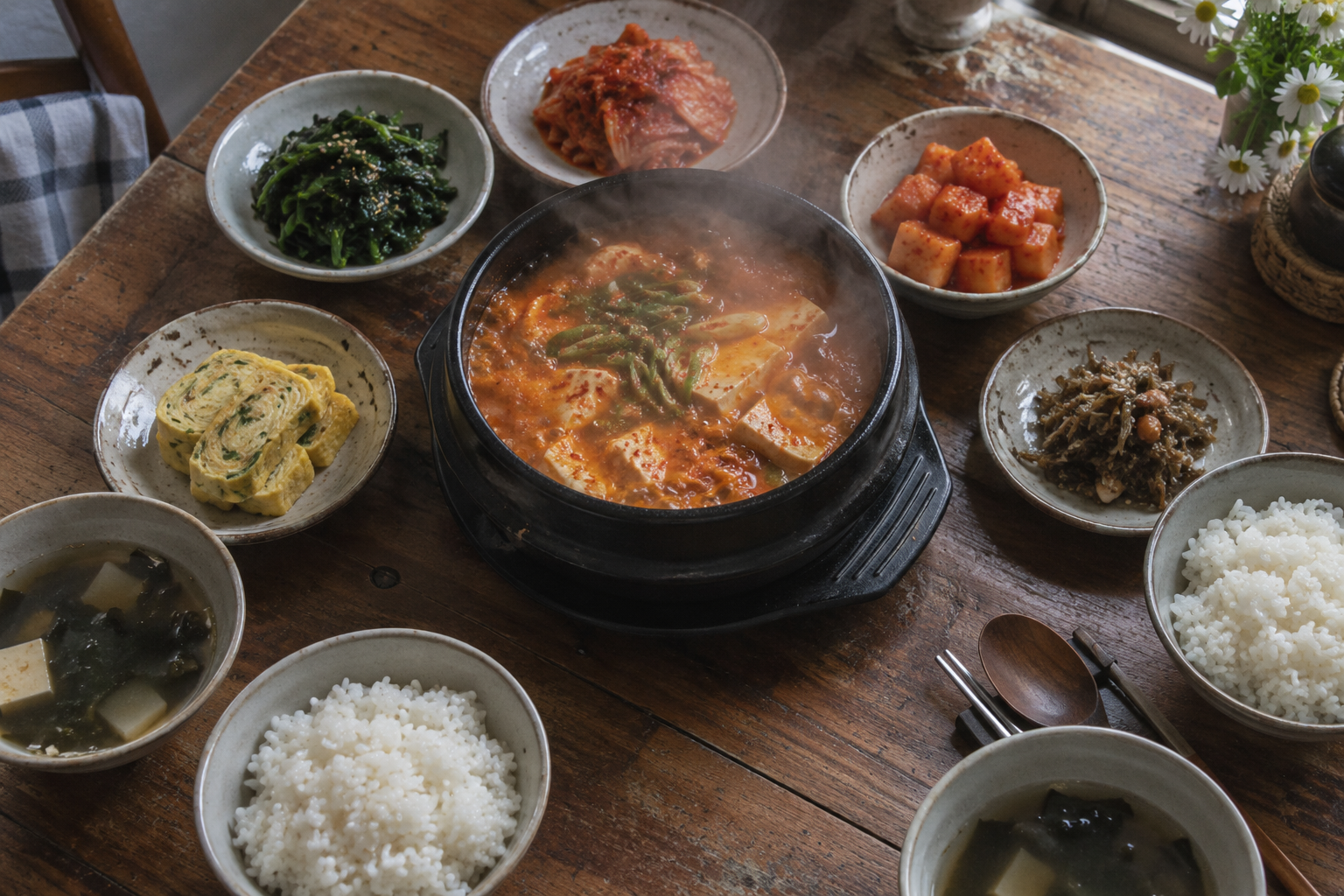
The everyday shape of a meal is rice plus something wet, and Korean has separate words for the wet part depending on how it behaves. Guk is thin, comes in your own bowl, and you can put your rice straight into it. Jjigae is thicker and saltier and arrives in one pot set in the middle of the table, and everybody reaches in with their own spoon. That second part matters. The pot is not portioned out. Comfort gets built as something you do together, at a table, with the heat still going.
Then there is the word people say out loud while the broth is still scalding. Siwonhada (시원하다). Its dictionary sense leans toward cool, which throws learners, because nobody uses it about a cold drink half as often as they use it about boiling soup. The older sense is closer to unblocked, cleared out, relieved. English has no single adjective for a person drinking hot broth in August and feeling better about their life. The closest it gets is comforting.
The people you eat with
The Korean word for the members of a household is sikgu (식구), and it means, plainly, the mouths that eat together. Family is defined by the table. Jipbap, home food, is its own category rather than a cuisine. Nobody markets it as a style of cooking. It is the thing you miss.
Juk works the same way. In Korea, rice porridge is not a staple anyone eats by preference. It is what shows up when you are sick, or eight years old with a fever. Someone makes it and brings it to you. In the older custom, when a household lost someone, neighbors sent over pots of juk, because the family was not going to cook and somebody had to say something without saying it.
Which is also why the greeting is what it is. Bap meogeosseo. Did you eat. It is not curiosity about your lunch.
The season and the hour decide it
Comfort tracks the calendar. On the winter solstice, plenty of households still make red bean juk with small glutinous rice balls dropped in, and there is an old line that you do not turn a year older until you have had it. In the worst of summer, people deliberately eat scalding soup in the heat, which sounds like a joke and is not.
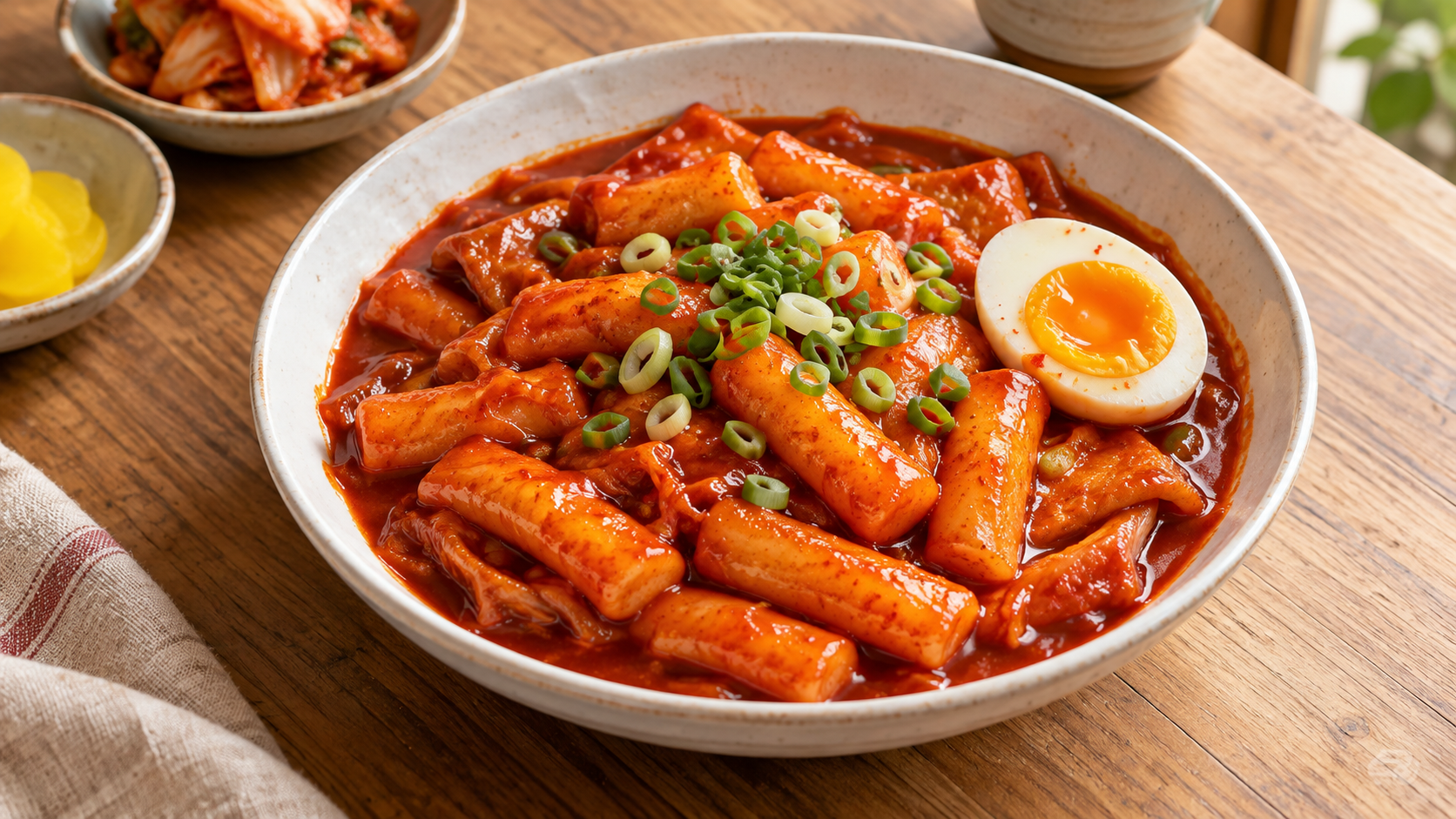
The hour decides too. Tteokbokki, rice cakes in red sauce, belongs to the snack shops outside schools, where a shared pan costs almost nothing and half the point is the sitting around. Gukbap, rice in broth, belongs to markets and bus terminals and the walk home after a shift that ran long, when you are hungry with no plan and no interest in making one. Ramyeon belongs to the night. In 2024 people in Korea averaged around 79 servings of instant noodles each, second in the world per person, which reads less like trivia than like a description of how many nights end that way.
So there is no best one
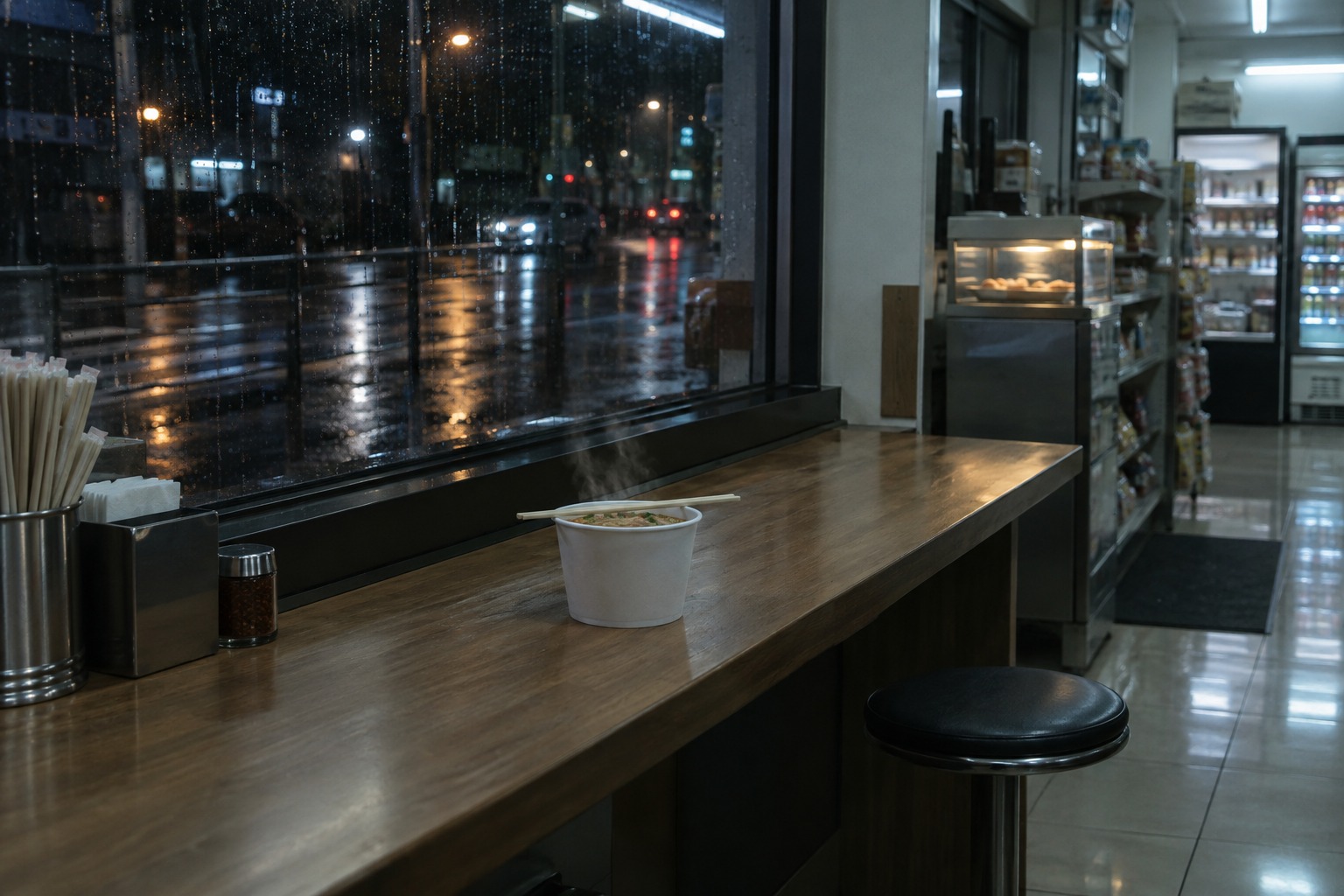
What counts as comfort food has moved, and I do not think it got downgraded. Convenience stores keep small water-and-heat units on the counter so you can cook a packet of noodles standing up at midnight, and the version sold along the Han River in Seoul has picked up its own nickname. Delivery arrives at three in the morning. Pouches of stew go in the microwave for two minutes. Somebody living alone heating a bag of doenjang jjigae is doing the identical job that toryeom cook was doing, which is making something warm for a body that needs it, out of whatever is at hand.
The National Museum of Korea is running a special exhibition on the Korean table through October 25, and its framing is that everything the world now recognizes as K-food grew out of the plain daily meal rather than the famous dishes. That sounds obvious. It is not, if you have ever tried to answer the best Korean comfort food question with one dish.
So the next time someone in Korea asks whether you have eaten, take it seriously. Answer honestly. Somebody will do something about it.