Korean food condiments start with seven staples. Learn how gochujang, doenjang, soy sauce, and four more taste, how spicy each one is, which dishes they belong in, and what to buy first.
From LA:ON to Your Kitchen
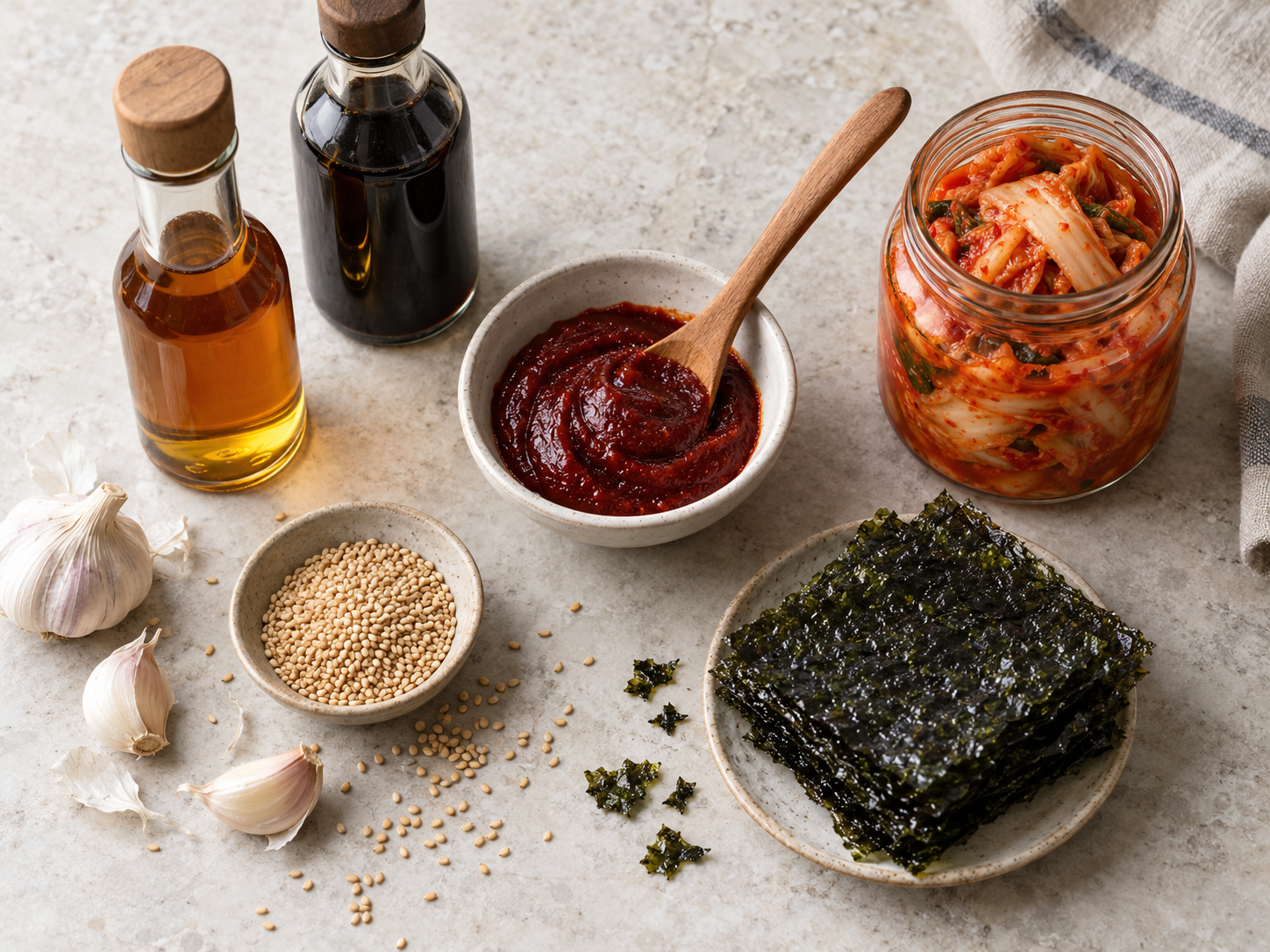
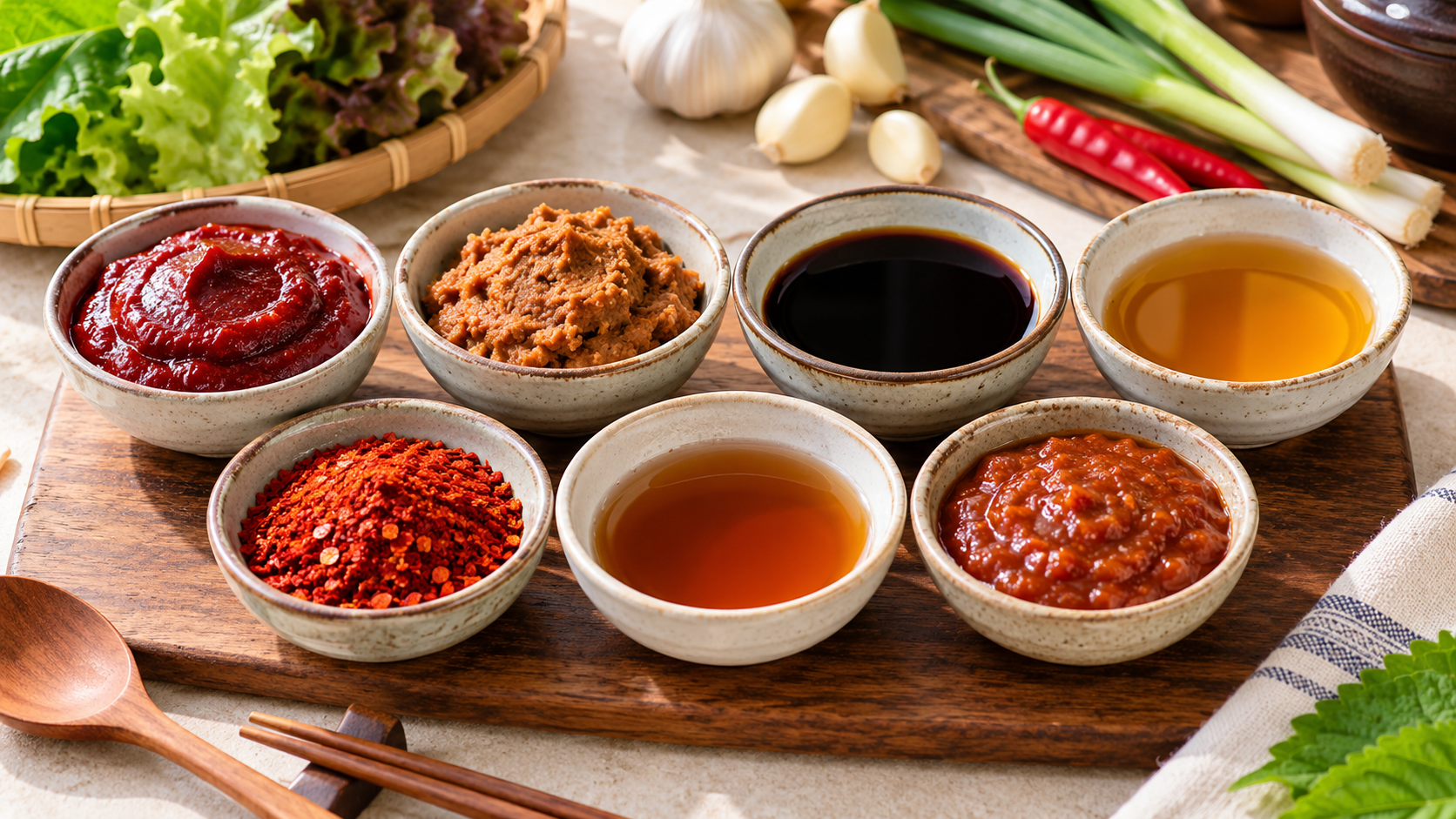
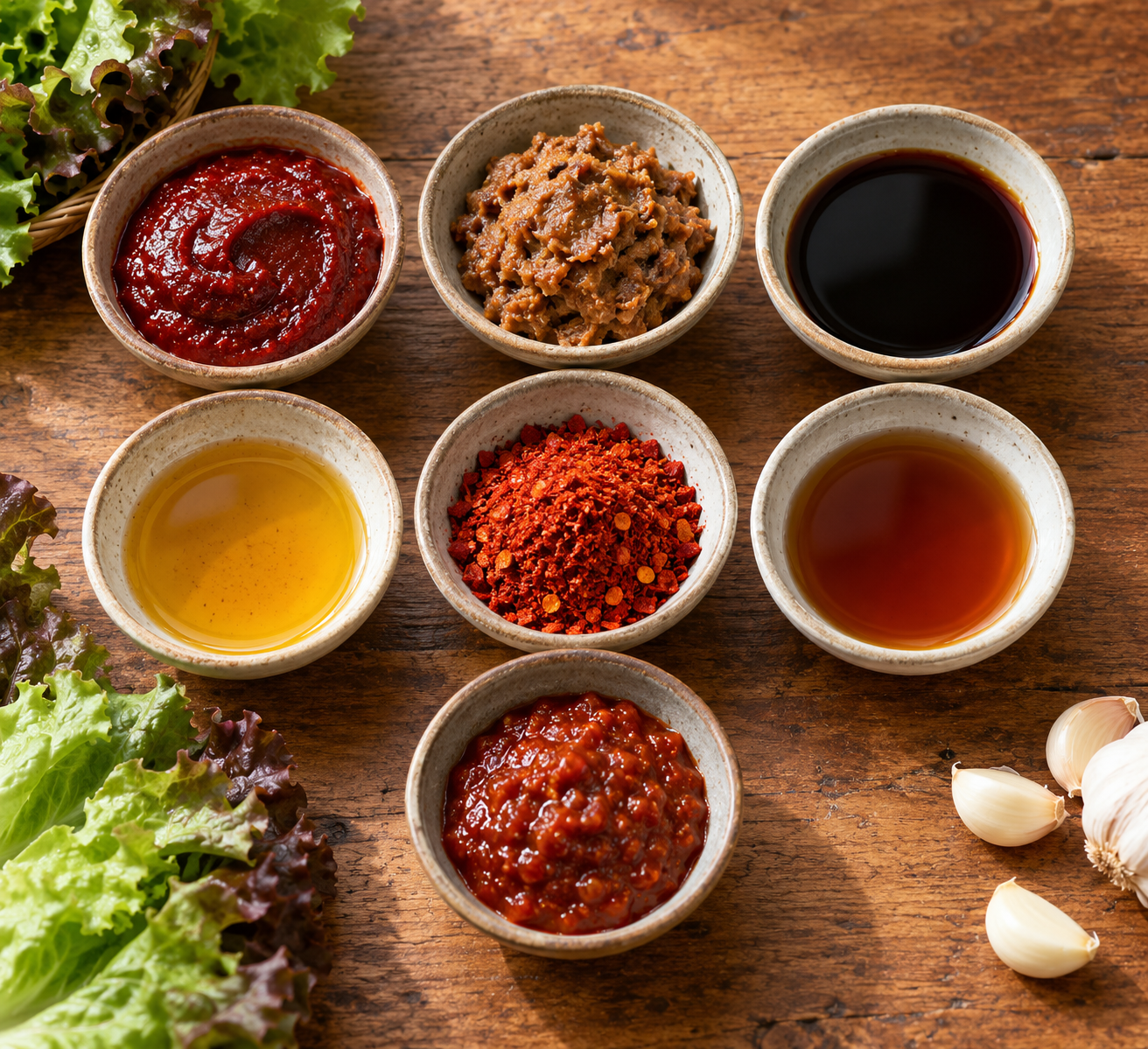
Korean food condiments come down to a short list: gochujang (chili paste), doenjang (soybean paste), ganjang (soy sauce), sesame oil, gochugaru (chili flakes), aekjeot (fish sauce), and ssamjang (dipping paste). Learn what each one tastes like and which dishes it belongs in, and most beginner Korean recipes stop looking mysterious.
Plenty of people meet these flavors in a restaurant first. In Los Angeles, there is now another route. On October 9, 2026, the Korean Cultural Center Los Angeles opened LA:ON, a free space on the first floors of the center and the adjoining Korea Center on Wilshire Boulevard. It pairs a permanent lounge for Hangeul, hanji paper, and contemporary craft with rotating pop-ups, and visitors can scan QR codes to look up the brands and products on display. A K-Supermarket season devoted to Korean food and everyday goods is scheduled for November 24 through December 12.
The center's food programs point in the same direction. A K-food workshop it hosted with CJ Foods in April 2026 put doenjang-guk, a simple soybean paste soup, on the menu next to bibimbap and galbijjim. An earlier program in October 2025 had participants build bibimbap while tasting and comparing different jang, from young soy sauces to long-aged ones. Tasting is a good start. The next step is a few jars in your own refrigerator.
What Counts as a Korean Condiment?
In English, "condiment" usually means something added at the table, like ketchup. Korean cooking uses the word yangnyeom (양념) for seasoning in a broader sense, and its most important members are the jang (장), the fermented soybean-based sauces and pastes. Ganjang, doenjang, and gochujang are all jang. They are less often a final touch and more often the base of a dish, stirred into the pot before anything else.
Around the jang sit seasonings that are not fermented soybean products: a chili powder, a pressed oil, a fish sauce. Together they make up the core of a Korean pantry. Not every Korean dish is spicy, and not every dish leans on fermented paste. Bulgogi gets its savory sweetness from soy sauce, and a bowl of rice with a drizzle of sesame oil has no heat at all.
7 Essential Korean Condiments

Gochujang (고추장), Korean chili paste
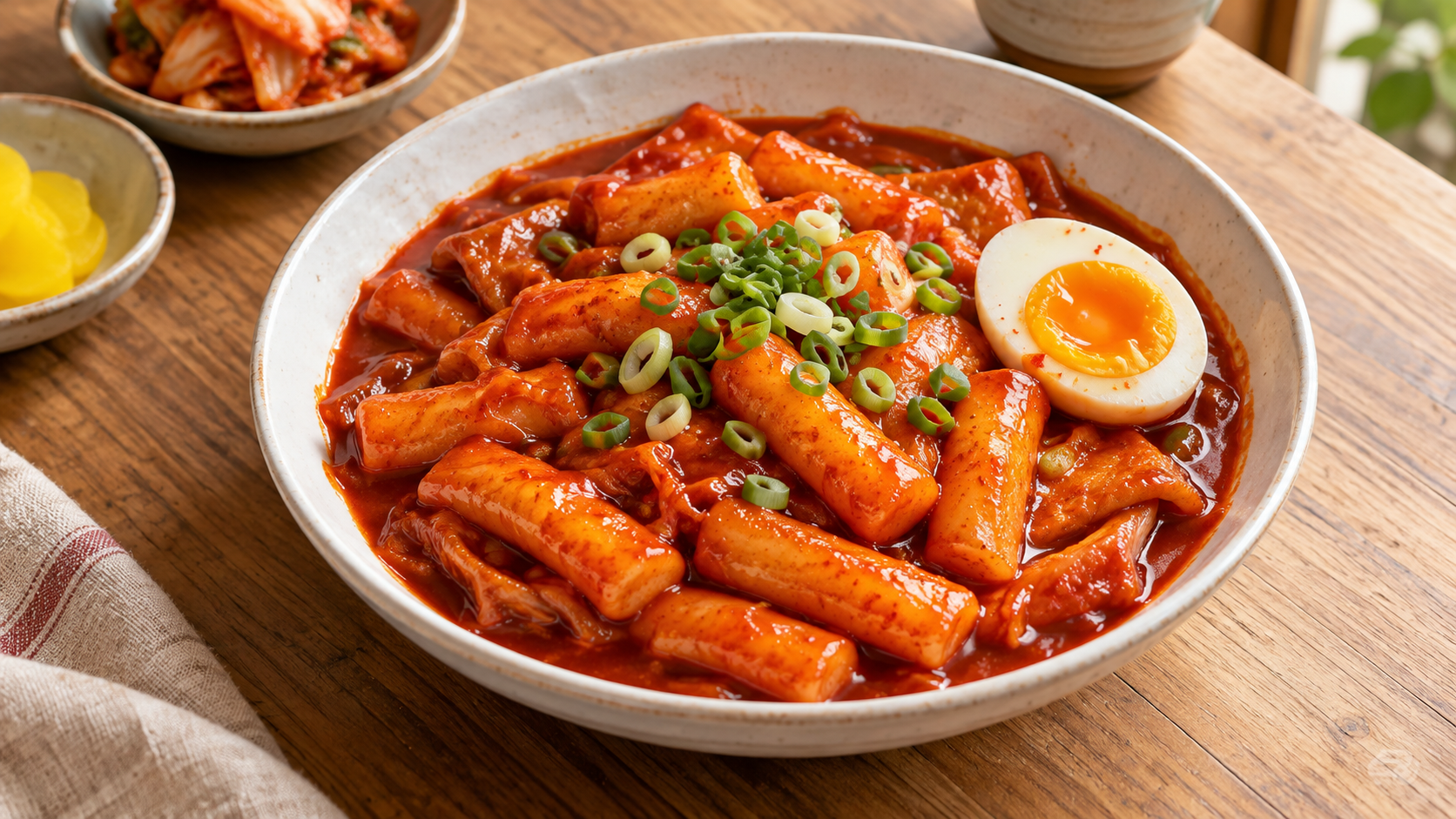
A thick, sticky red paste made from chili powder, glutinous rice, fermented soybean powder, and salt. It is spicy, slightly sweet, and deeply savory, and the rice is what gives it that sweetness. Heat ranges from mild to very hot depending on the product. You will find it in tteokbokki, in the sauce served with bibimbap, and in marinades for grilled pork and chicken.
Doenjang (된장), fermented soybean paste
Made from fermented soybeans and salt, doenjang is often compared with Japanese miso, but it tastes earthier and more pungent. It is salty and savory, not spicy. Its main job is soups and stews: doenjang-guk and doenjang jjigae are the two most common.
Ganjang (간장), soy sauce
Korean kitchens usually keep two kinds. Regular soy sauce (labeled jin-ganjang or yangjo-ganjang) goes into marinades, braises, and dipping sauces. Soup soy sauce, guk-ganjang, is saltier and lighter in color and is meant for soups and seasoned vegetables. Neither is spicy. Bulgogi, japchae, and braised dishes depend on it.
Chamgireum (참기름), toasted sesame oil
Strictly speaking an oil rather than a sauce, but few Korean pantries go without it. It is nutty and fragrant, with no heat. It is added near the end: over namul (seasoned vegetable side dishes), into bibimbap, and into dipping sauces.
Gochugaru (고춧가루), Korean chili flakes
Dried Korean red chilies, ground either coarse or fine. Coarse flakes cover most everyday cooking; fine powder is used mainly for making gochujang. It brings a clean, bright heat and is the main source of spice in kimchi and many stews. Heat varies by product.
Aekjeot (액젓), Korean fish sauce
A salty, strongly savory liquid made from fermented anchovies (myeolchi aekjeot) or sand lance (kkanari aekjeot). It is not spicy. Its biggest role is in kimchi, and a small splash also seasons soups and side dishes. Because of it, most kimchi is not vegetarian.
Ssamjang (쌈장), dipping paste
A ready-mixed blend built mainly on doenjang, usually with gochujang, garlic, and sesame oil. It is savory with a mild kick. Its home is ssam: grilled meat wrapped in lettuce or perilla leaves with a dab of ssamjang. It also works as a dip for raw cucumber or green chili.
How to Use Korean Condiments
Two pairs cause most of the confusion for new cooks, so they are worth separating carefully.
Gochujang or gochugaru?
Both are made from red chilies, but they behave differently. Gochujang is a fermented paste with sweetness and body, so it thickens and coats; it suits glazes, tteokbokki sauce, and anything you want sticky and rich. Gochugaru is plain dried chili, so it adds heat and color without sweetness; it suits kimchi, soups, and quick seasoned vegetables. Many recipes use both, with the paste for depth and the flakes for a cleaner heat.
Doenjang or ssamjang?
Doenjang is an ingredient. It is meant to be cooked, most often dissolved into broth. Ssamjang is a finished table sauce that already contains doenjang along with gochujang and seasonings, so it is usually eaten as it comes. Using ssamjang as a soup base tends to make the soup sweeter and spicier than intended; using plain doenjang as a dip works, but it is saltier and sharper on its own.
For first experiments, a few combinations go a long way. Ganjang with sesame oil and garlic makes a basic marinade for beef or mushrooms. Gochujang thinned with a little ganjang, sugar or honey, and sesame oil becomes a quick bibimbap sauce. Doenjang dissolved in water or light stock is the start of the soup below.
Try It at Home: Doenjang Soup
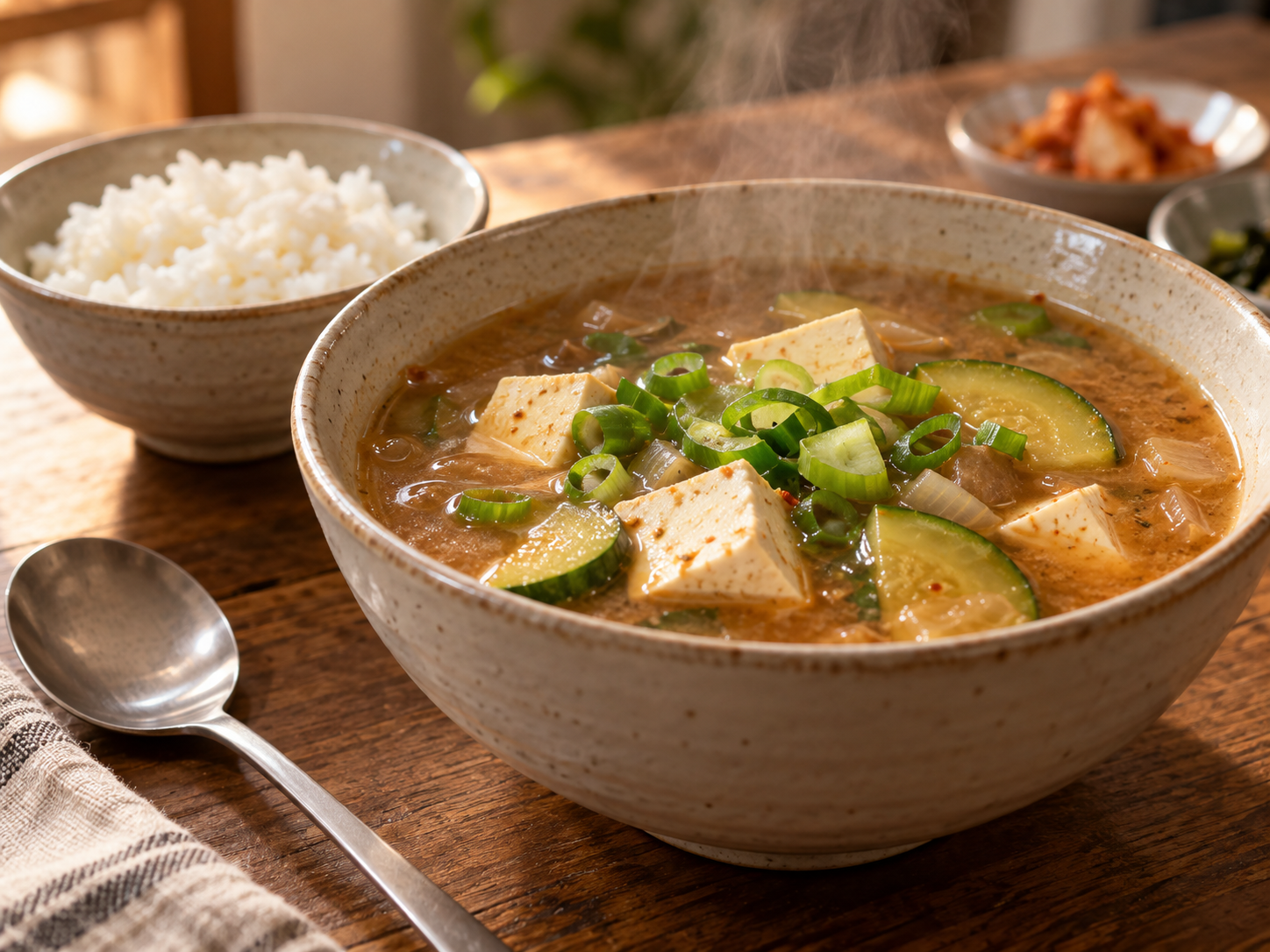
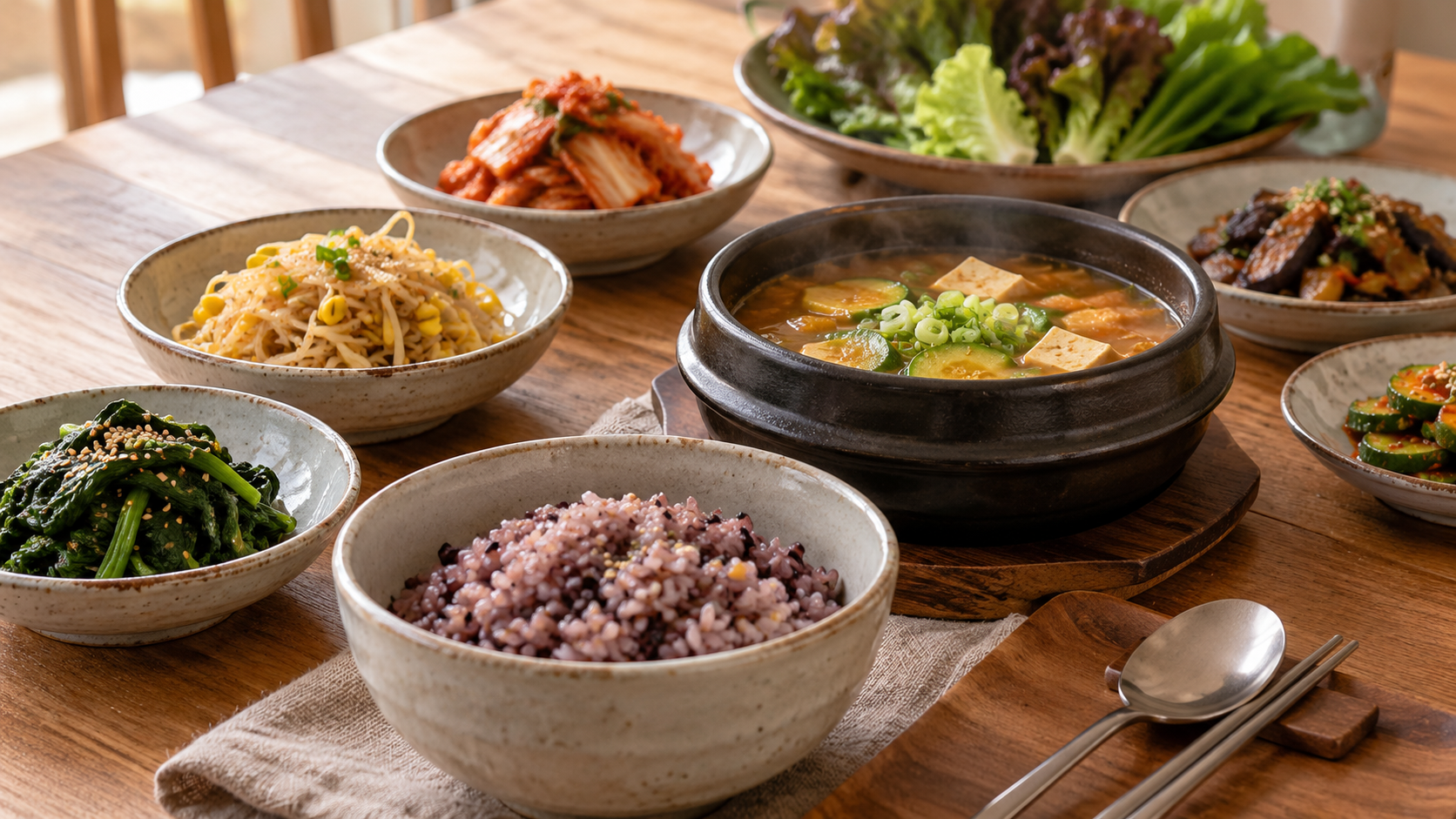
Doenjang-guk (된장국) is everyday soybean paste soup, the same dish on the menu of the LA workshop. It is a good first recipe because it needs only one condiment and no chili. Doenjang jjigae, the stew version, uses less liquid and a more concentrated broth; the method is similar.
Serves 2 to 3
- 4 cups water, or anchovy and kelp stock
- 2 to 3 tablespoons doenjang
- 1/2 onion, sliced
- 1 small zucchini, cut into half-moons
- 1/2 block firm or medium tofu, cubed
- 2 cloves garlic, minced
- 1 green onion, sliced
1. Put the water or stock in a pot and stir in the doenjang until it dissolves. Pressing it through a small strainer helps break up the lumps.
2. Add the onion, bring to a boil, then lower the heat and simmer for about 5 minutes.
3. Add the zucchini and garlic and simmer for 3 to 4 minutes more.
4. Add the tofu and cook just until it is heated through.
5. Taste. If the soup needs more salt, add a little more doenjang or a few drops of guk-ganjang.
6. Turn off the heat and scatter the green onion on top. Serve with rice.
Stock made from dried anchovies and kelp is the traditional Korean soup base and gives a rounder flavor. For a vegetarian version, simmer kelp alone in water and leave out the anchovies.
Build Your Korean Pantry
There is no need to buy all seven at once. A sensible order:
1. Gochujang, for the widest range of dishes.
2. Doenjang, for soups and stews, and because it is half of ssamjang.
3. Ganjang. If you already own a naturally brewed soy sauce, that will do for marinades; add guk-ganjang once you start making soups regularly.
4. Toasted sesame oil, which finishes almost everything above.
Gochugaru and aekjeot are worth adding when you begin making kimchi or spicier stews. Ssamjang can wait, since a mix of doenjang and gochujang with garlic and sesame oil gets you close.
If your regular supermarket has an international aisle, start there. The full range is easiest to find at a Korean grocery store. Before buying, check these points:
- The heat level on gochujang. Many Korean-made tubs show a five-step scale from Mild to Extreme Hot; if yours does, beginners should start at the milder end.
- The full name of the soy sauce, since soup soy sauce and regular soy sauce are not interchangeable.
- The ingredient list and the "Contains" statement.
- Container size. A small tub is easier to finish while it is fresh.
Storage matters once a jar is open. Manufacturers generally direct that gochujang and doenjang be refrigerated after opening, and it is normal for the paste to darken slowly as it keeps fermenting. Gochugaru is best kept in the refrigerator, because it can turn moldy at room temperature. Keep sesame oil tightly capped away from heat and light. For soy sauce and fish sauce, follow the storage line on the bottle.
Allergens deserve a close look, because these condiments cluster around several of them. In the United States, packaged foods must declare nine major food allergens, including soy, wheat, fish, and sesame, which was added in 2023. Gochujang, doenjang, ganjang, and ssamjang are soybean products, and many gochujang and soy sauce products also contain wheat; gluten-free versions exist, but only the label can confirm it. Aekjeot contains fish, sesame oil is sesame, and ssamjang may combine several of these in one jar. Read every label, even for a brand you have bought before.
Bring Korean Flavors Home
LA:ON was built on the idea that culture becomes more personal once you can take a piece of it home. A Korean pantry works the same way. Start with gochujang and doenjang, cook one pot of doenjang-guk, and the next restaurant menu or K-Supermarket shelf will read less like a list of unfamiliar words and more like a set of choices you already understand.