Every November the internet produces another few hundred lists of desserts that supposedly break from tradition. Open one. It is pumpkin, in a bar. Open the next. It is pecan, in a cookie. The pan changes. The pantry never does.
These Thanksgiving dessert ideas change the pantry. Korea runs a fall harvest of its own, built on persimmons, chestnuts, pears, and jujubes, and the American dessert table has mostly never met any of them. Thanksgiving falls on November 26 this year, so there is time to practice.
Why most non-traditional Thanksgiving desserts are not
Search "non-traditional Thanksgiving desserts" and you get twelve to forty recipes assembled from the same six ingredients: pumpkin, pecan, apple, cranberry, cinnamon, maple. Cheesecake instead of pie. Blondies instead of pie. Trifle instead of pie. It is a format change wearing a flavor change's coat.
Look, the dessert has a job, and the job is specific. It follows a heavy meal that started at four in the afternoon. It survives a car ride. It gets finished a day early, because the oven is booked solid. And it works for the aunt who takes two bites and the cousin who takes four slices.
Korean fall sweets fit that brief almost by accident. Most are served cold or at room temperature. Most are sliced small. Almost none of them need an oven.
There is also a geography problem worth naming. Asian Thanksgiving desserts get written up mostly through a Japanese, Taiwanese, or Chinese lens, which is how butter mochi and mango sago ended up on American holiday tables while Korea sat the whole thing out.
Korea's harvest table already looks like this
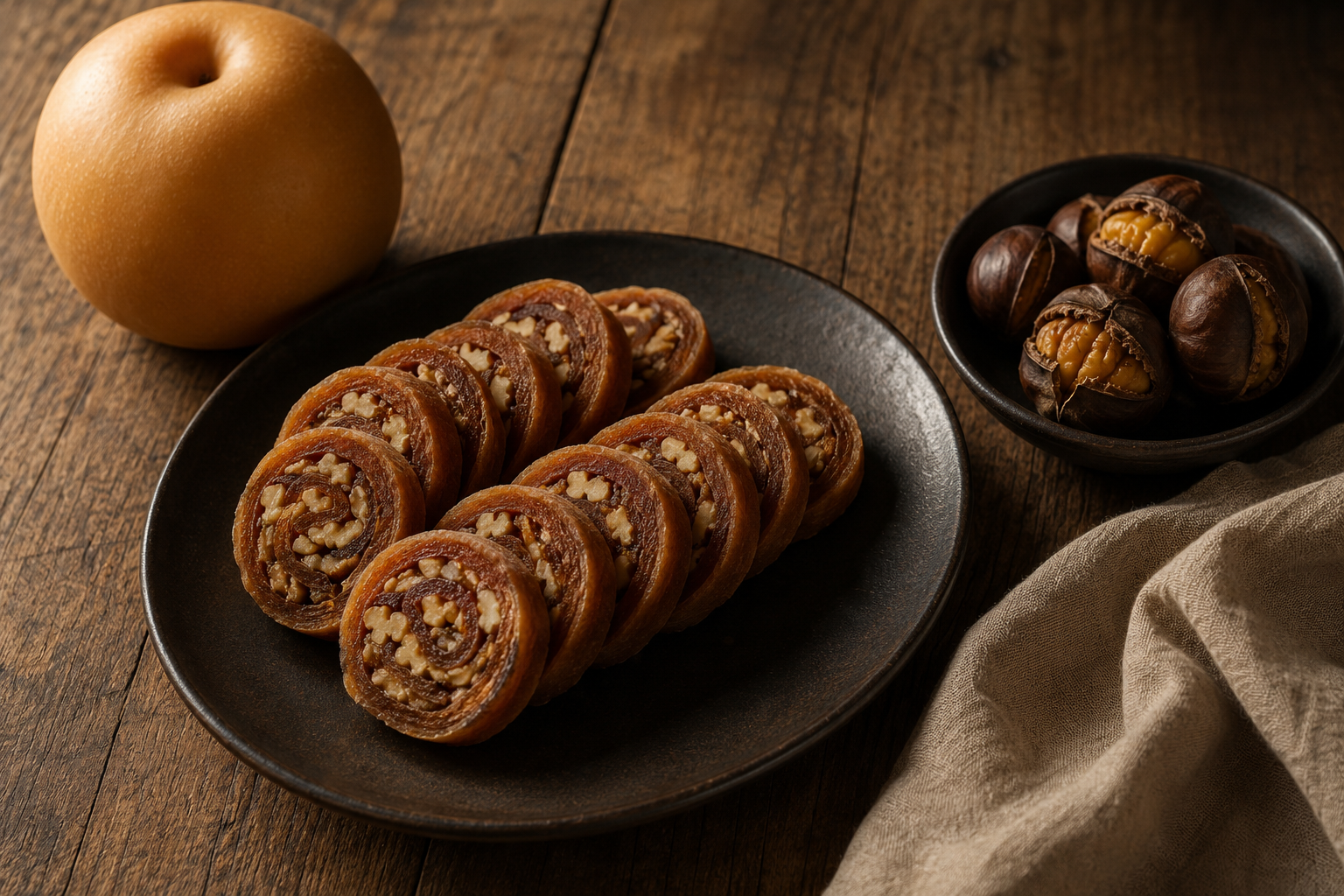
Korea has its own harvest holiday, Chuseok, usually landing in late September or early October. Families who still set the formal ancestral table follow a row-by-row arrangement, and one entire row is reserved for fruit and sweets: jujubes, chestnuts, pears, apples, dried persimmons.
Read that list again. It is a Thanksgiving dessert spread that took a different road out of the same field.
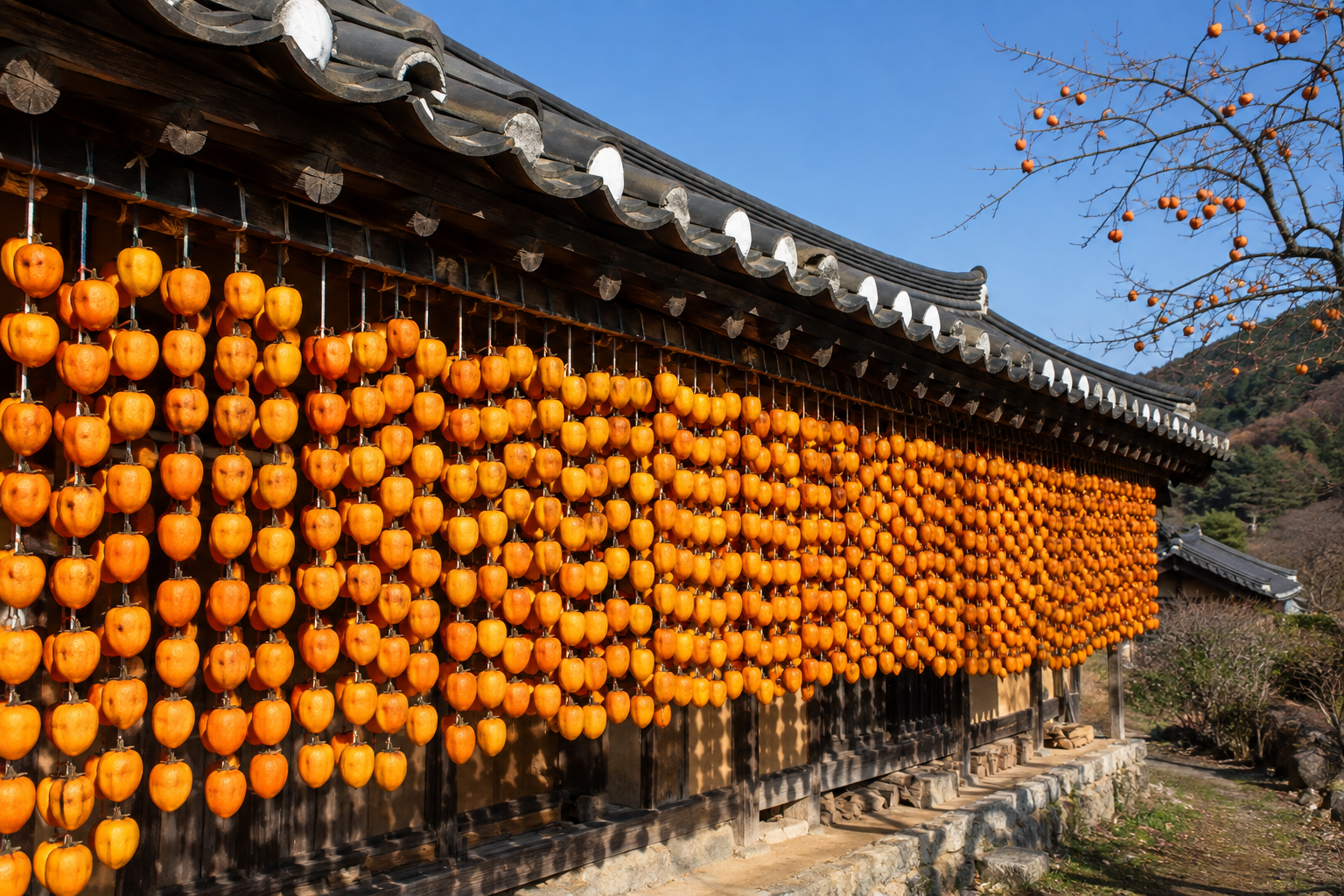
The season backs it up. In Sangju, the town that dominates Korean dried persimmon production, farmers begin hanging peeled persimmons in mid-October and leave them through weeks of cold nights and dry sun. Roasted chestnut carts appear on Seoul streets as soon as the temperature drops. Gongju and Buyeo have built local economies on chestnuts. Songpyeon, the half-moon rice cake families shape for Chuseok, is often filled with chestnut or sesame and steamed over a bed of pine needles.
The sweetness works differently too. Korean desserts lean on honey, grain syrup, and the sugar already sitting in the fruit, which is why they taste less like frosting and more like the thing they are made of.
None of this is a museum piece, either. Korean twenty and thirty somethings have spent the past few years queuing at rice cake shops and honey cookie specialists, a shift the local press calls the halmaenial trend, from the Korean word for grandmother stitched to millennial. The sweets came back smaller, less sugary, and repositioned as something you eat next to coffee.
5 Korean desserts for your Thanksgiving table
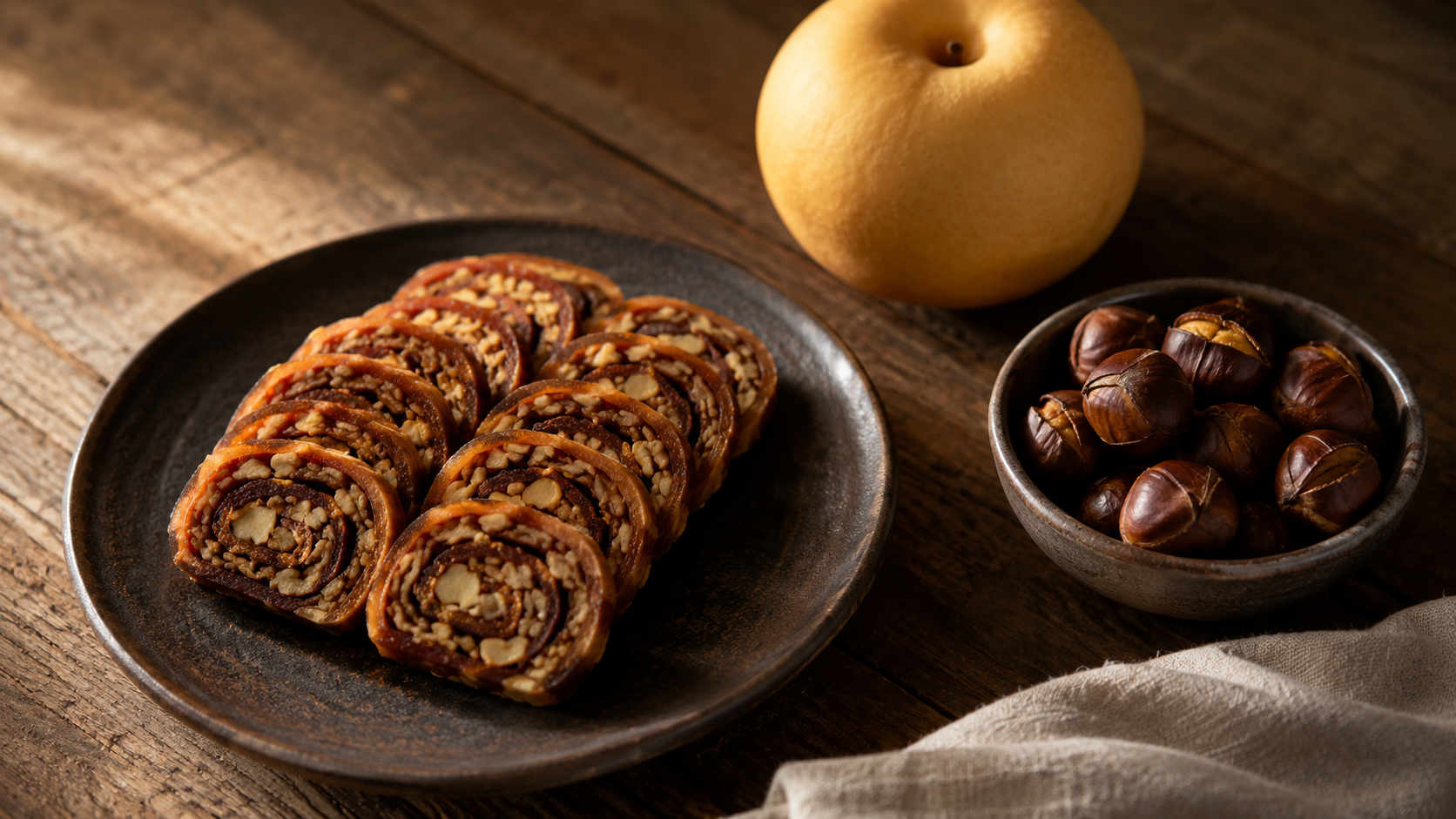
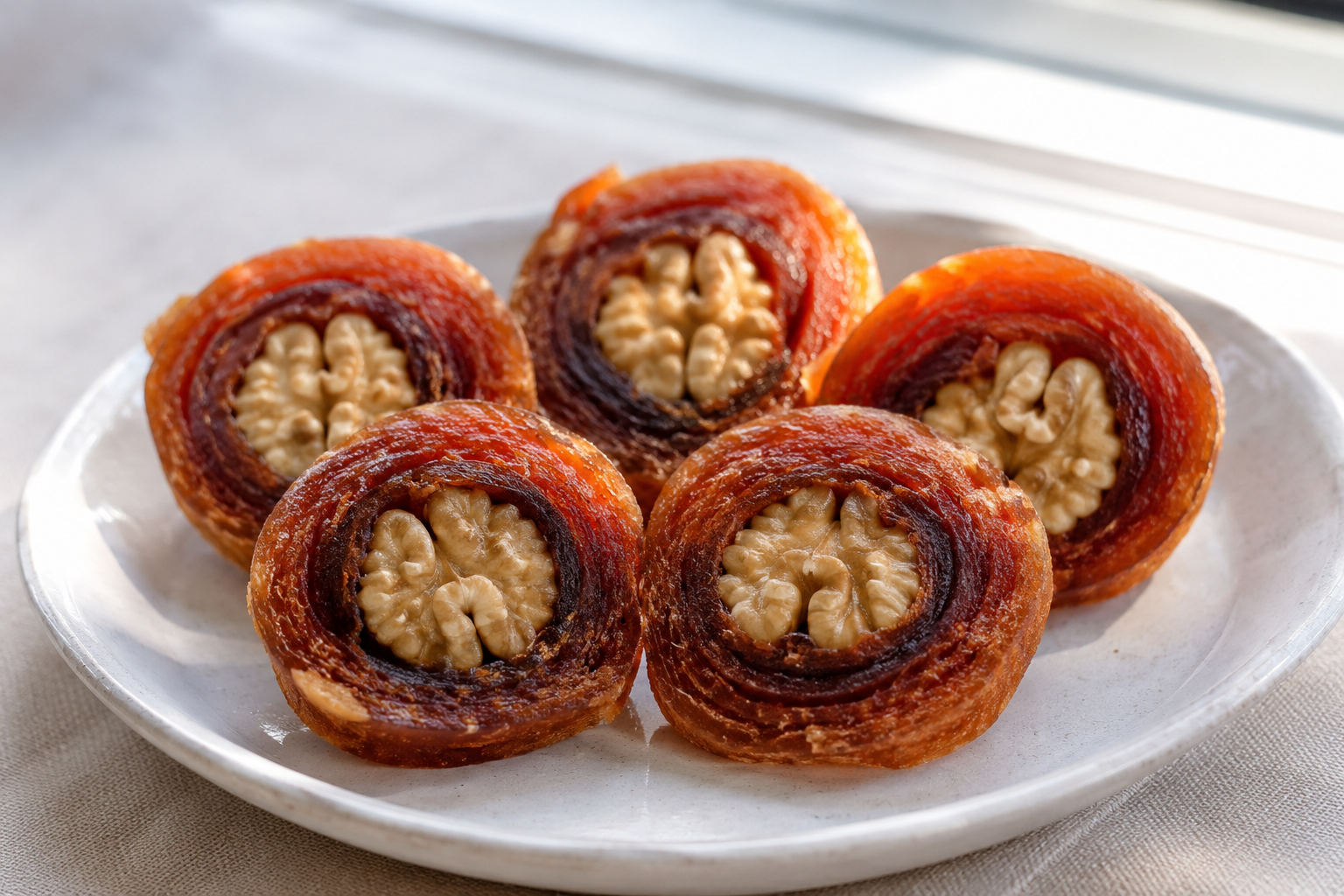
1. Gotgam-ssam: dried persimmon rolled around walnuts
Gotgam is persimmon peeled and air-dried until it turns dark, chewy, and faintly jellied, with a white bloom on the surface that is the fruit's own sugar pushing its way out. For gotgam-ssam you slit one open, pack it with walnut halves, roll it tight, chill it, and slice it into pinwheels.
Two ingredients. No oven. Better on day two.
If you have had a date and walnut roll you are in the right neighborhood, except gotgam is darker, less sticky, and nowhere near as sweet. Dried persimmons live at H Mart and most Korean groceries, often in the frozen case.
2. Chestnuts, which is where your pecan pie person goes
Korea eats a serious amount of chestnut, and the version worth stealing is bonibam: chestnuts simmered slowly in syrup with the thin inner skin left on. That skin, boni, holds a faint tannic edge that keeps the whole thing from collapsing into candy. Spoon it over vanilla ice cream, fold it through whipped cream, or pile it onto a meringue the way Seoul cafes do every autumn with chestnut mont blanc.
Same nut-and-caramel register as pecan pie, minus the corn syrup slab underneath.
3. Yaksik: the rice cake that behaves like a fruitcake
Glutinous rice steamed with chestnuts, jujubes, and pine nuts, then seasoned with honey, brown sugar, sesame oil, and a little soy sauce. The soy sauce sounds wrong in a dessert and does precisely what salt does in caramel.
Yaksik comes out dense and sliceable, keeps for days, and travels in whatever pan you made it in. The name translates roughly to medicine food, which tells you how Koreans have historically felt about honey. It is also naturally gluten free, which quietly solves one guest.
4. Baesuk: poached Korean pear with ginger and honey
The royal court version cuts a Korean pear into wedges, pushes a few black peppercorns into each one, and simmers them with ginger and honey until tender. Chill it, scatter crushed pine nuts on top, serve it in its own liquid. The home version hollows out a whole pear, fills the cavity with honey and ginger, and steams it.
Either way, this is the dessert people actually finish after a four-hour dinner. Korean households also use it as a cough remedy, which is a good thing to mention while handing someone a bowl. Asian pears show up in most American supermarkets by October.
5. Yakgwa: the honey cookie that came back
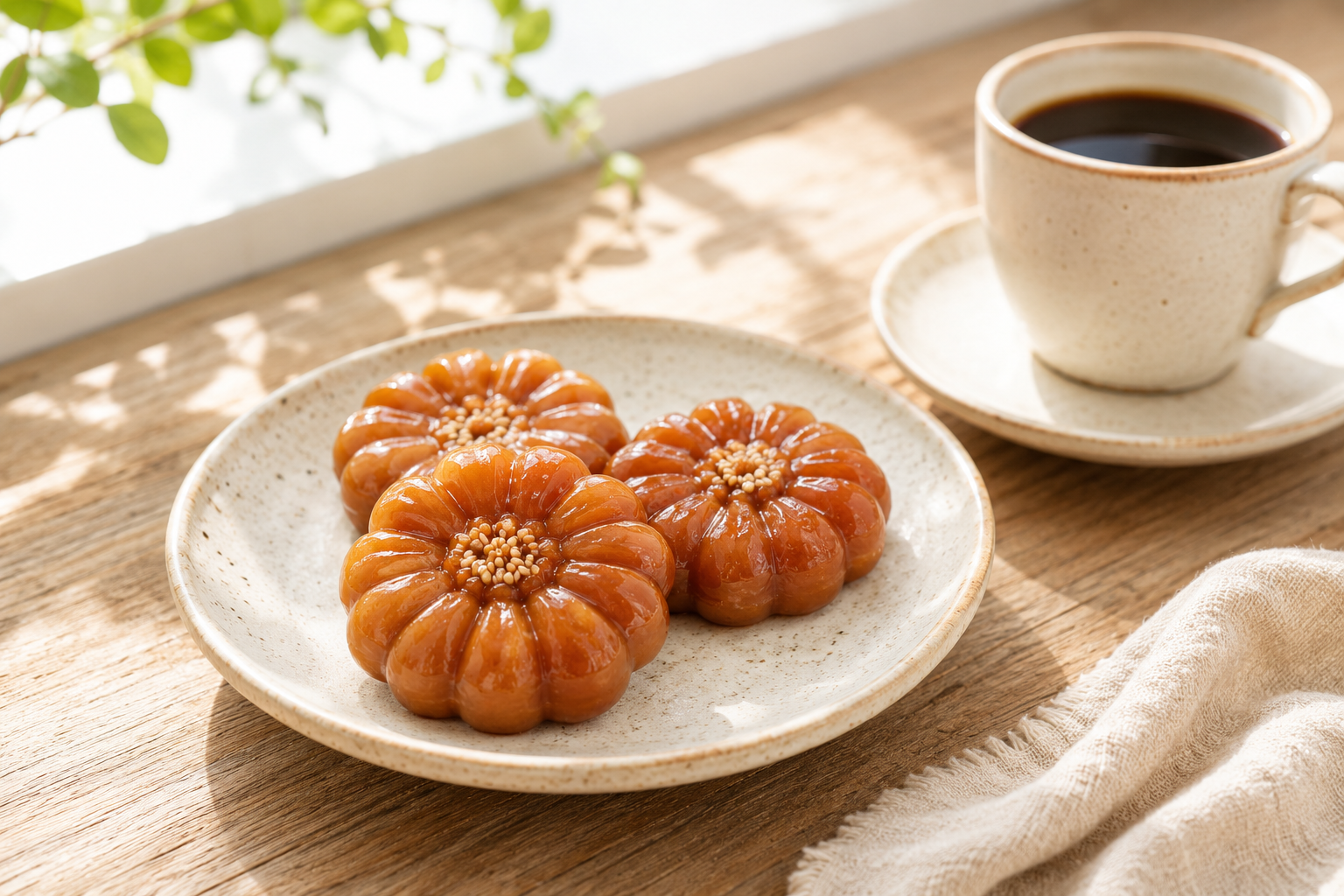
A wheat-flour cookie fried and then soaked in honey syrup with ginger and rice wine, pressed into a flower shape. It traces back to the Goryeo era, spent most of the last century as ritual and holiday food, and then returned. Ordering from a popular yakgwa shop before a holiday now involves enough frantic refreshing that Koreans named the behavior yak-keting, yakgwa spliced with ticketing.
Weirdly, it is easier to buy than to make. Korean grocery chains stock it, and it has moved into a growing number of Costco locations in the US. Serve it with black coffee and let the ginger do the cutting.
How Korean sweets differ from classic Thanksgiving desserts
- The fruit. Pumpkin's job goes to persimmon. A fully ripe hongsi, frozen and eaten with a spoon, sits closer to sorbet than to fruit and needs nothing added to it.
- The nut. Pecan's job splits between chestnut and walnut. Chestnut is starchier and far less oily, so it holds a dessert together without a syrup binder doing the structural work.
- The sweetener. Honey, rice syrup, and the fruit itself, with very little butter or cream anywhere in the picture.
- The temperature and the portion. Pie comes out of the oven in eight wedges. These come out of the refrigerator or a steamer, in small slices, meant to be eaten slowly alongside tea. On the one day of the year your oven is running a turkey for five hours, that is not a small detail.
Which Korean dessert should you actually bring?
- For the pumpkin pie loyalists: persimmon. Gotgam-ssam if you want something to slice, a frozen hongsi if you would rather hand someone a spoon.
- For the chocolate and nut crowd: chestnut. Bonibam over ice cream is the low effort version, chestnut mont blanc the ambitious one.
- For something completely different: yaksik. Nobody at the table has had it, and it still looks like it belongs there.
- For a lighter finish: baesuk. The pear does all the work.
- For the guest who reads every menu twice: yakgwa. Sweet, floral, faintly boozy, and it arrives with a story attached.
A taste of Korean fall on an American table
If you are collecting Thanksgiving dessert ideas this year, bring one. Not five. Put the gotgam-ssam down next to the pie and watch which plate empties first, then decide what you are doing next November.
Want to bring a little of Korea to your Thanksgiving table? Start with the ingredients: dried persimmons, a bag of chestnuts, one Korean pear, a box of yakgwa.