Foundations, cushions and lip tints now carry the same actives as serums. Skincare infused makeup is what the category is called, and this is why the line keeps moving: what skinification means, why PDRN turned up in a tinted moisturizer this year, and what K-beauty worked out back in 2008.
Makeup is being asked to do a job it was not originally designed for.
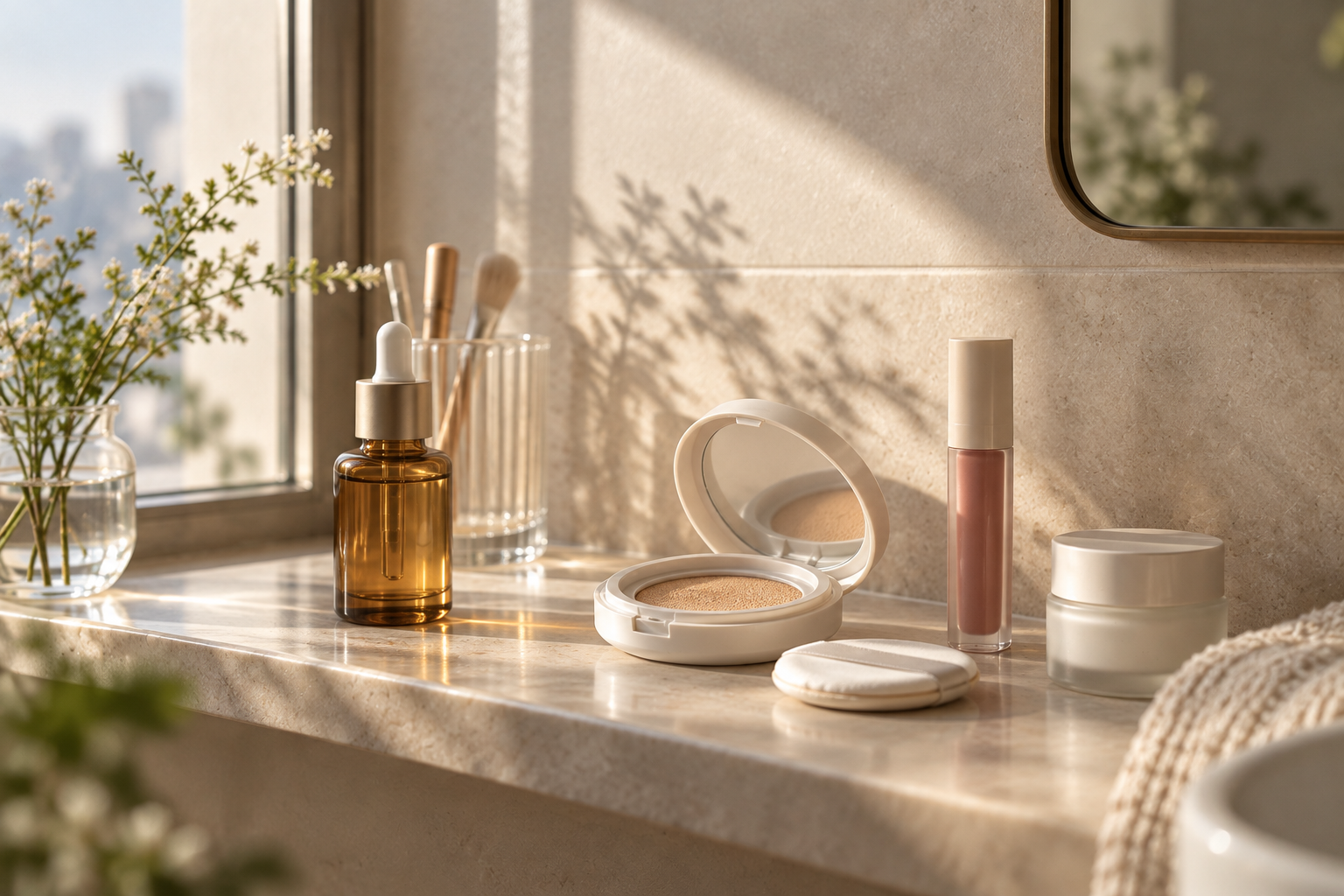
Read the ingredient list on a new foundation, cushion or lip tint and you will find the same names that show up in serums: hyaluronic acid, niacinamide, ceramides, peptides. The category has a name now, skincare infused makeup, and in the United States it has stopped being a niche.
The sales evidence is not subtle. When the US beauty market closed out 2025, analysts credited much of makeup's growth to hybrid formats that combine color with skincare benefits, with lip products leading the way. So the more useful question is not which product to buy. It is why the boundary between the two halves of a beauty routine keeps moving, and why K-beauty keeps being the place it moves first.
What "skinification" actually means
Skinification is the industry's word for skincare logic migrating into categories that used to be about appearance alone. It began in hair care, where scalp products started to read like facial serums, and it has since spread to body care, sun care and, most visibly, color cosmetics. In makeup it looks like a foundation built on a hydrating base, a cushion carrying UV filters, a cream blush that leans on emollients instead of powders, a lip tint that behaves like a treatment you happen to see.
The interesting part is not the ingredient list itself. It is that a product is now judged on two timelines at once: how it looks at nine in the morning, and what the skin looks like after wearing it all day. Formulators are candid about the limits. Stabilizing an active inside a pigmented base is harder than putting it in a serum, and brands are rarely required to disclose how much of it is in there, which is why a tinted moisturizer supports a routine rather than replacing one.
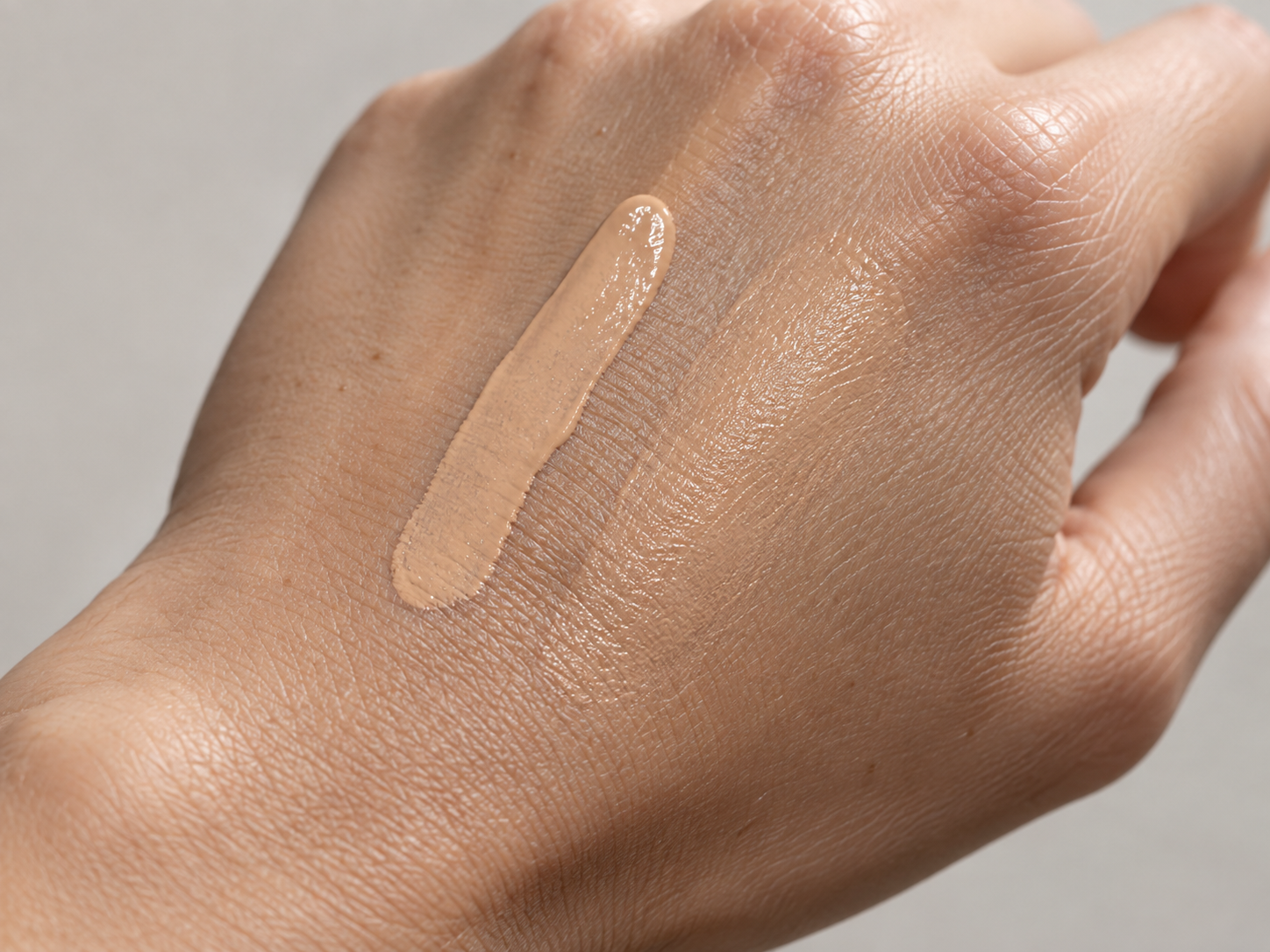
PDRN is the newest ingredient to make the jump
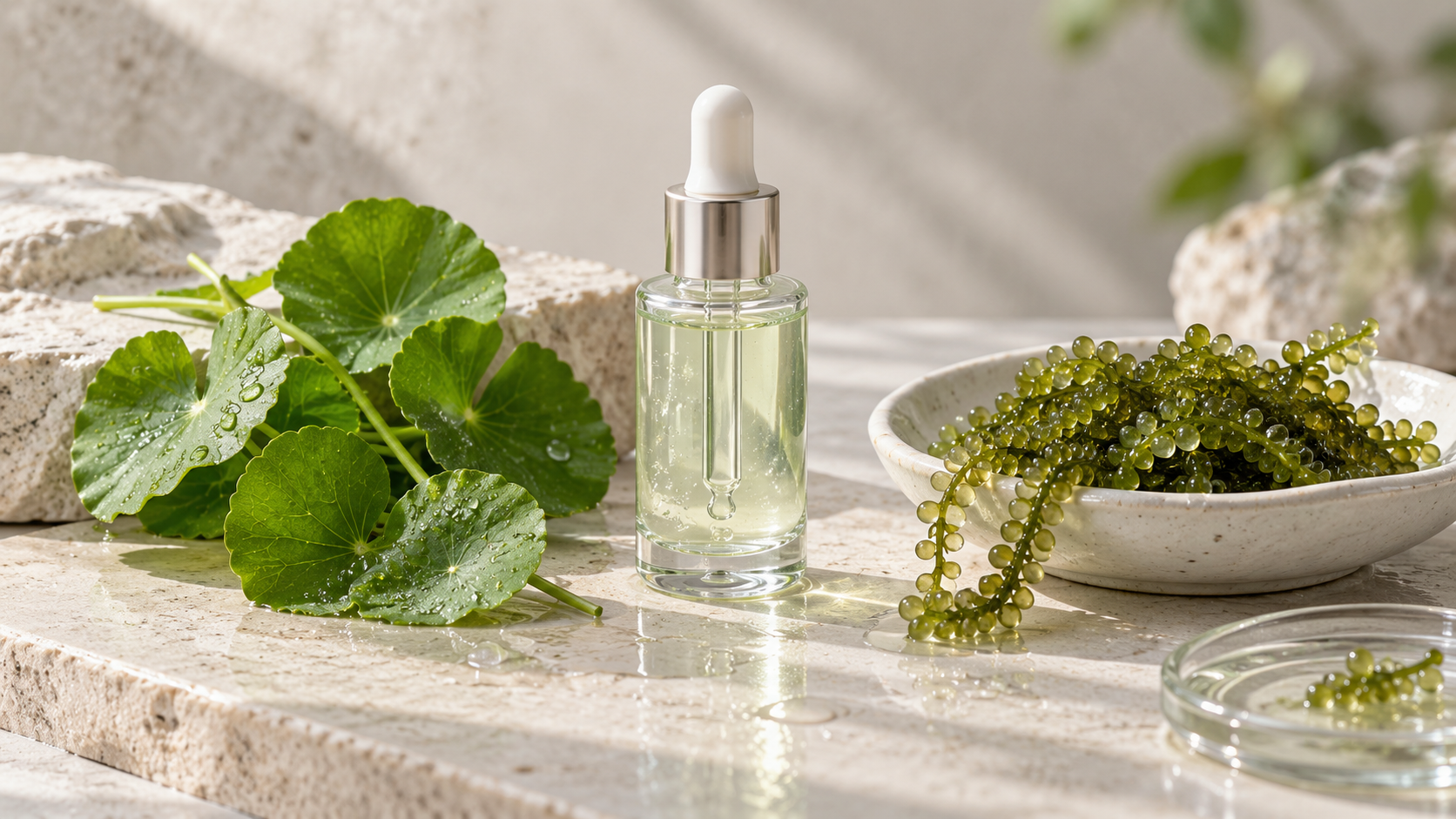
PDRN, short for polydeoxyribonucleotide, has been the K-beauty skincare ingredient everyone has talked about this year. It ran through serums, eye creams and masks, then turned up in sun care and even a scalp shampoo. By this September the trade press had started pointing at color cosmetics as the category where PDRN launches were accelerating fastest.
The clearest example so far is not a foundation but a tinted moisturizer. Mixsoon, a Korean brand better known for stripped-back skincare, made a ten-shade PDRN and collagen tinted moisturizer its first makeup product, released to US shoppers through Amazon this spring. The positioning is the tell. It was sold not as a foundation with an ingredient bolted on, but as the point where a skincare routine keeps going after the serum step. What PDRN is, and where it comes from, is a longer story we have told separately.
Why skincare ingredients keep moving into makeup
Part of it is plain expectation. Shoppers who spent several years learning ingredient names for their skincare shelf did not stop reading labels when they picked up a base product, and they now expect a foundation to at least be comfortable to wear for ten hours. US sales data from the past couple of years makes the shift legible in an odd way: prestige face makeup sold on moisturizing and brightening claims outgrew skincare sold on those same claims.
The rest is structural. Skincare and makeup were once two separate steps with two separate goals, and for a lot of people they have collapsed into a single sequence where the last skincare step and the first makeup step are hard to tell apart. Retailers have followed. Sephora now sells makeup with skincare benefits as its own shopping category, filed under skincare makeup hybrids, which is a quiet admission that customers stopped sorting the two themselves.
The ingredient is not the point
PDRN is having its turn, but the pattern is older than this particular molecule. Hyaluronic acid arrived in tinted moisturizers years ago. Ceramides and squalane showed up next, aimed at people whose skin was irritated by long wear. Peptides moved into concealers and lip products. Niacinamide became common enough in complexion products that it barely registers as a claim.
Watching only the hero ingredient means missing the actual change, which is that makeup's job description has been rewritten. Coverage and color are now the baseline rather than the whole offer, and the competitive question has become what the product does during the eight hours you wear it. The ingredient of 2027 will be different. The expectation behind it probably will not be.
What this says about K-beauty
None of this is new in Korea, which is the part worth sitting with. The cushion, still the most recognizable Korean makeup format, was not designed as a color product at all. Amorepacific developed it in the late 2000s to solve a sun care problem, a way to reapply sunscreen over makeup without a bottle or a mess, and the first IOPE Air Cushion launched in 2008 with sunscreen, base makeup and skincare formula soaked into one sponge. BB and CC creams followed the same logic. The hybrid came first, and the makeup category grew around it.
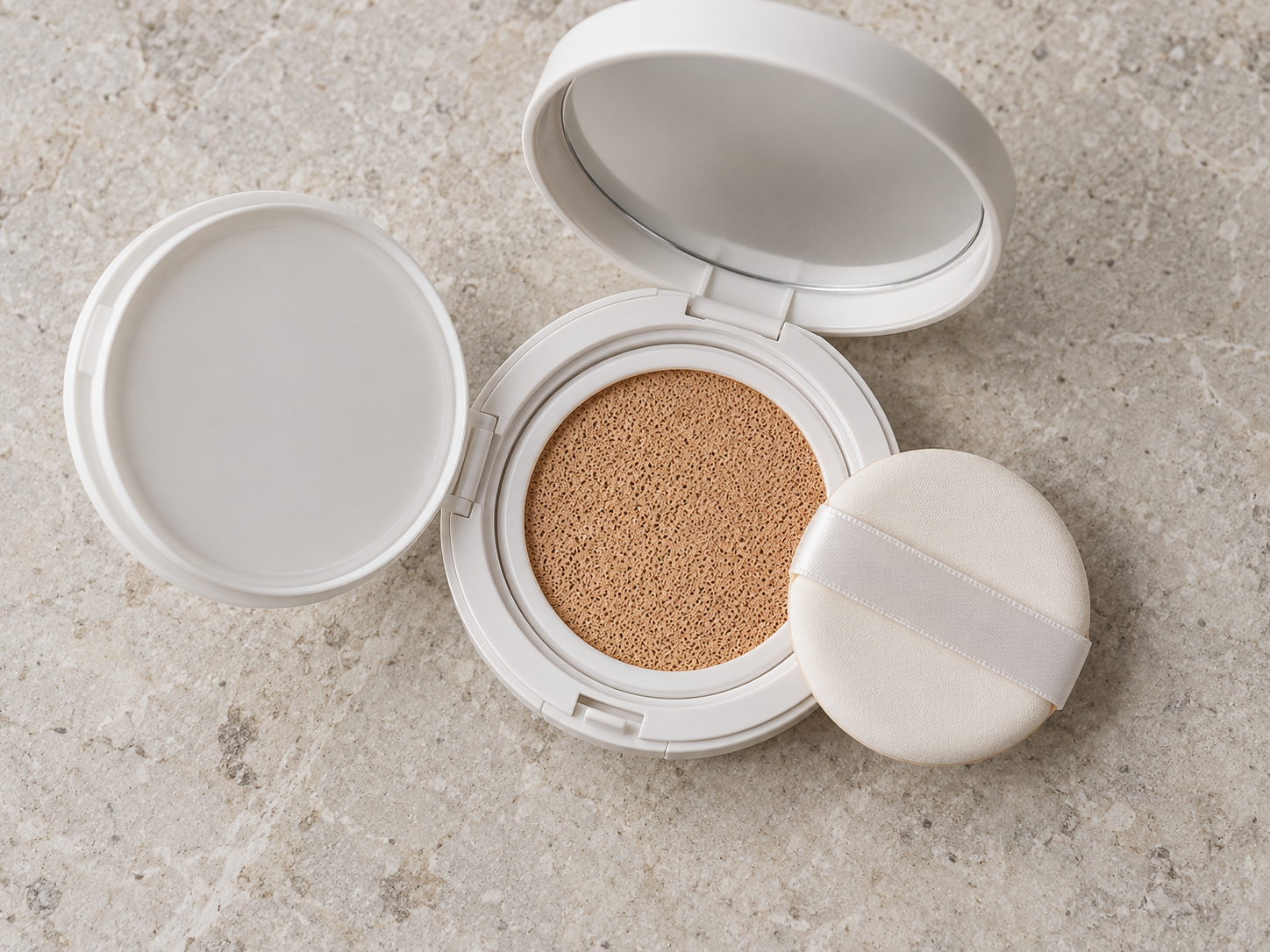
That history is why PDRN in a tinted base reads as a continuation in Seoul and as a novelty in New York. It also explains the timing of what is arriving on American shelves. K-beauty's US expansion has been overwhelmingly skincare until now, and the brands moving into Target and Sephora this year are the ones bringing Korean color cosmetics into that gap: lip oils, tints, cushions.
For a US shopper the practical upshot is small but real. The label on a base product is now worth reading the way you would read a serum, and the honest answer about concentration is that you often cannot know. Buy it for how it wears. Treat anything it does for your skin as the second reason, not the first.