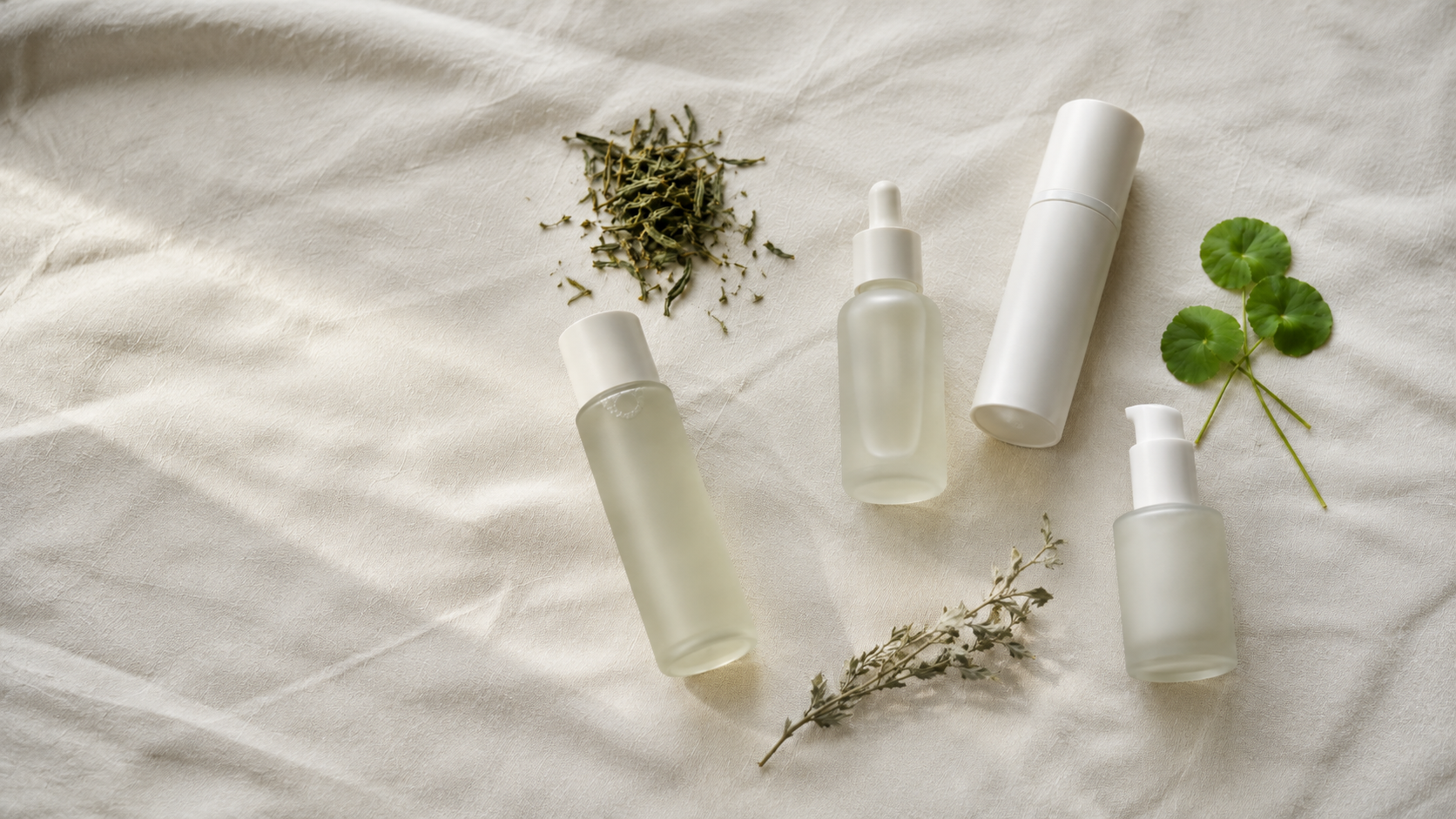
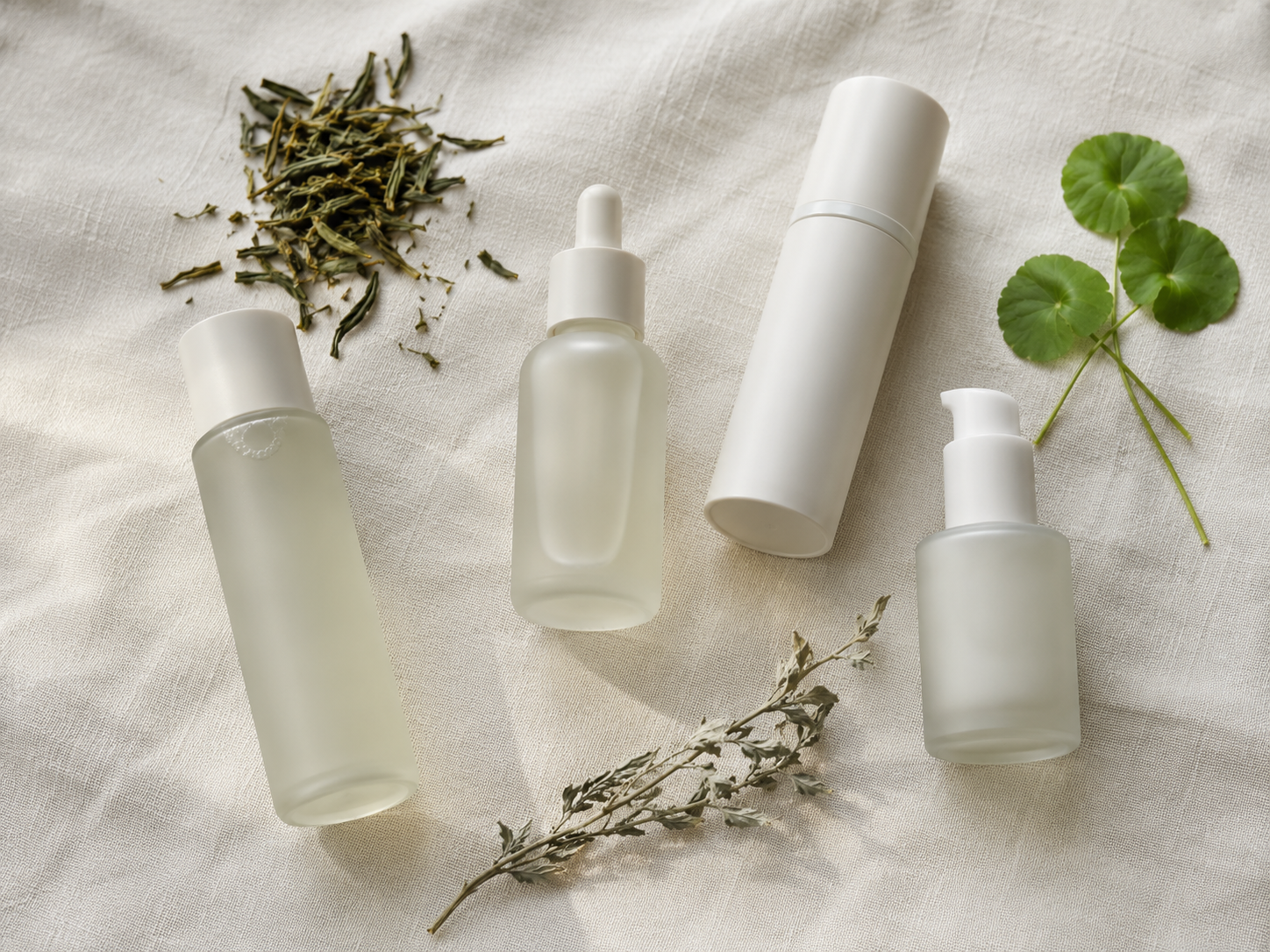
Green tea, centella and mugwort. The botanicals that anchor most Korean vegan formulas were never animal-derived to begin with.
The most famous Korean skincare ingredient in the United States right now is snail mucin. It is in the essence that went viral on TikTok, and it is not vegan. It comes from a living animal, which surprises people who assumed a product marketed as gentle and cruelty-free was also plant-based. Cruelty-free and plant-based are two separate claims, and neither of them means gentle. Learning to tell them apart is most of what this article is about.
Korean shoppers worked this out earlier than most markets, not out of superior ethics but because a decade of public argument about ingredient labels forced them to.
What the word vegan actually certifies
A vegan skincare product contains no animal-derived ingredients. That is the entire definition. It is a sourcing standard rather than a safety standard, and the distinction matters, because plenty of plant material is irritating. Citrus oils and several essential oils can sensitize skin over time. The vegan label says nothing about that either way.
What makes this difficult in practice is that animal ingredients rarely appear under names you would recognize:
- Beeswax is listed as Cera Alba
- Lanolin, from sheep's wool, sometimes appears as wool wax or wool grease
- Carmine, a red pigment made from insects, is also written as CI 75470 or cochineal
- Collagen, elastin and keratin in cosmetics are almost always animal-derived
- Squalene and squalane differ by one letter, and either can be sourced from shark liver or from olives and sugarcane, so the name alone will not tell you which
Cruelty-free sits on a different axis. It refers to animal testing, not to ingredients, which is why a snail mucin essence can accurately describe itself as cruelty-free while containing an animal secretion.
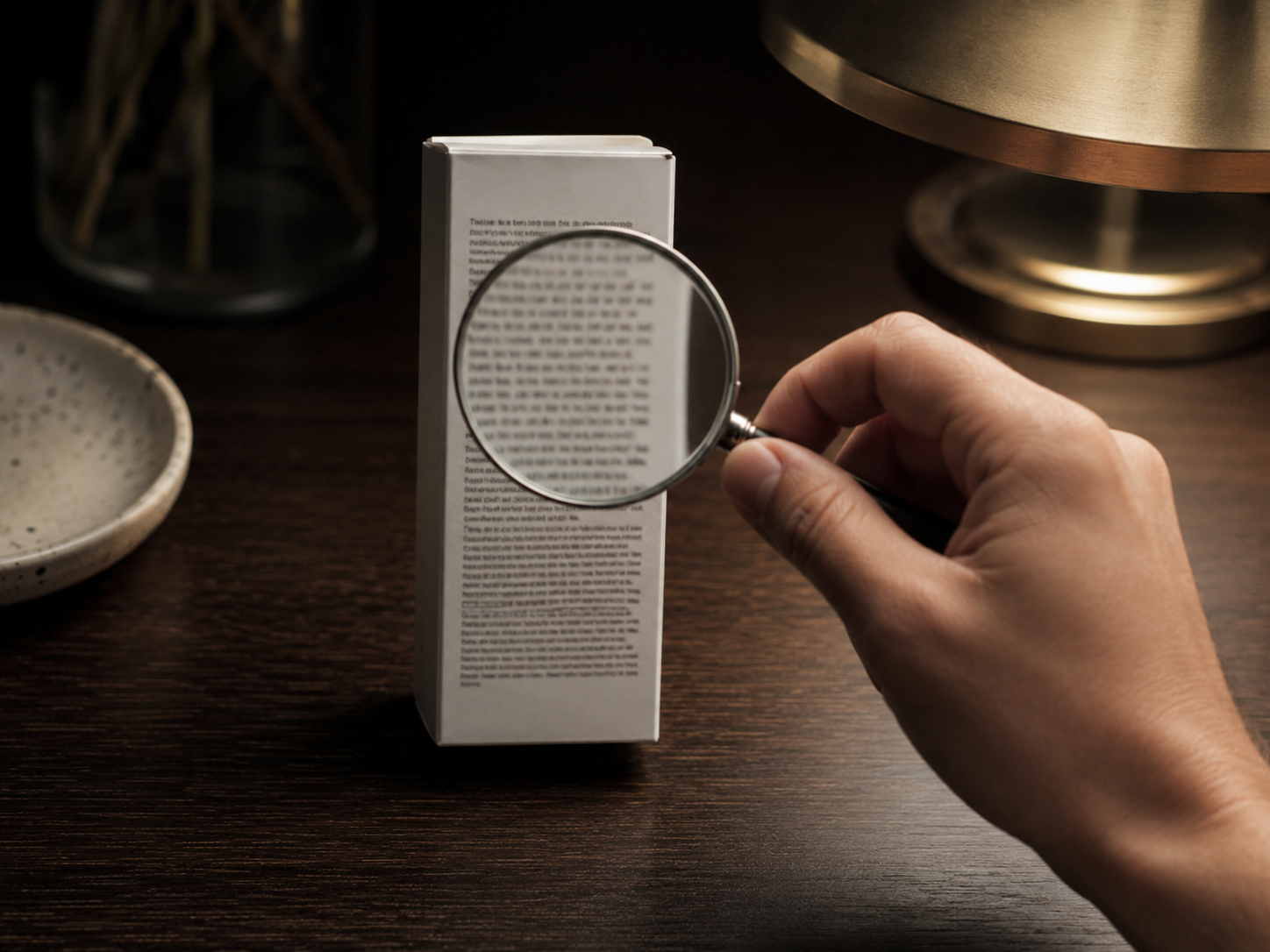
Reading the panel is the only reliable way to verify a vegan claim. The marketing on the front will not tell you.
Why Korean shoppers read ingredient lists like contracts
Korea has a word for this shopper: 스킨텔렉추얼, skintellectual, skin plus intellectual. The infrastructure behind the habit is an app called 화해 (Hwahae), short for 화장품을 해석하다, meaning "to interpret cosmetics." It reports around 10 million users in a country of roughly 52 million people, along with more than 10 million user-written reviews.
The instructive part came next. Hwahae originally built its ingredient screen on EWG Skin Deep hazard grades, and Korean brands started advertising products as all-green. Consumer groups and cosmetic scientists pushed back in public. The app was showing the hazard score without the data-availability score, so an ingredient nobody had studied looked as safe as one studied for forty years. At a 2020 forum on cosmetic misinformation, a Green Consumers Network representative noted that EWG grades are not accepted as cosmetic safety evidence in the United States.
This is the part worth borrowing. A whole consumer market learned in public that a single safety score is no substitute for reading the list. Hwahae now leads with allergen flags drawn from Ministry of Food and Drug Safety notices and skin-type notes based on Korean Dermatological Association guidance rather than one number. The shopper who came through that cycle is not looking for a badge to trust. She is looking for a source she can check.
Korean vegan skincare became easier to verify in 2024
There is a regulatory wrinkle that even Korean shoppers find confusing. In 2020 the Ministry of Food and Drug Safety made the Korea Agency of Vegan Certification and Services the only body whose certification could legally appear in cosmetic labeling and advertising. Marks from international certifiers such as EVE Vegan, V-Label and Ecocert effectively disappeared from Korean packaging. In July 2024 the ministry withdrew that notice and allowed private certifiers to operate their own systems, and the international marks returned.
The commercial backdrop explains the pressure. By that same agency's count, the domestic vegan cosmetics market grew from about 160 billion won in 2013 to roughly 570 billion won in 2022, with forecasts approaching one trillion. At Hyundai Department Store's vegan beauty floor, about 70 percent of visitors were under 30. Korean vegan skincare is not a niche shelf in Seoul. It is where the youngest buyers already are.
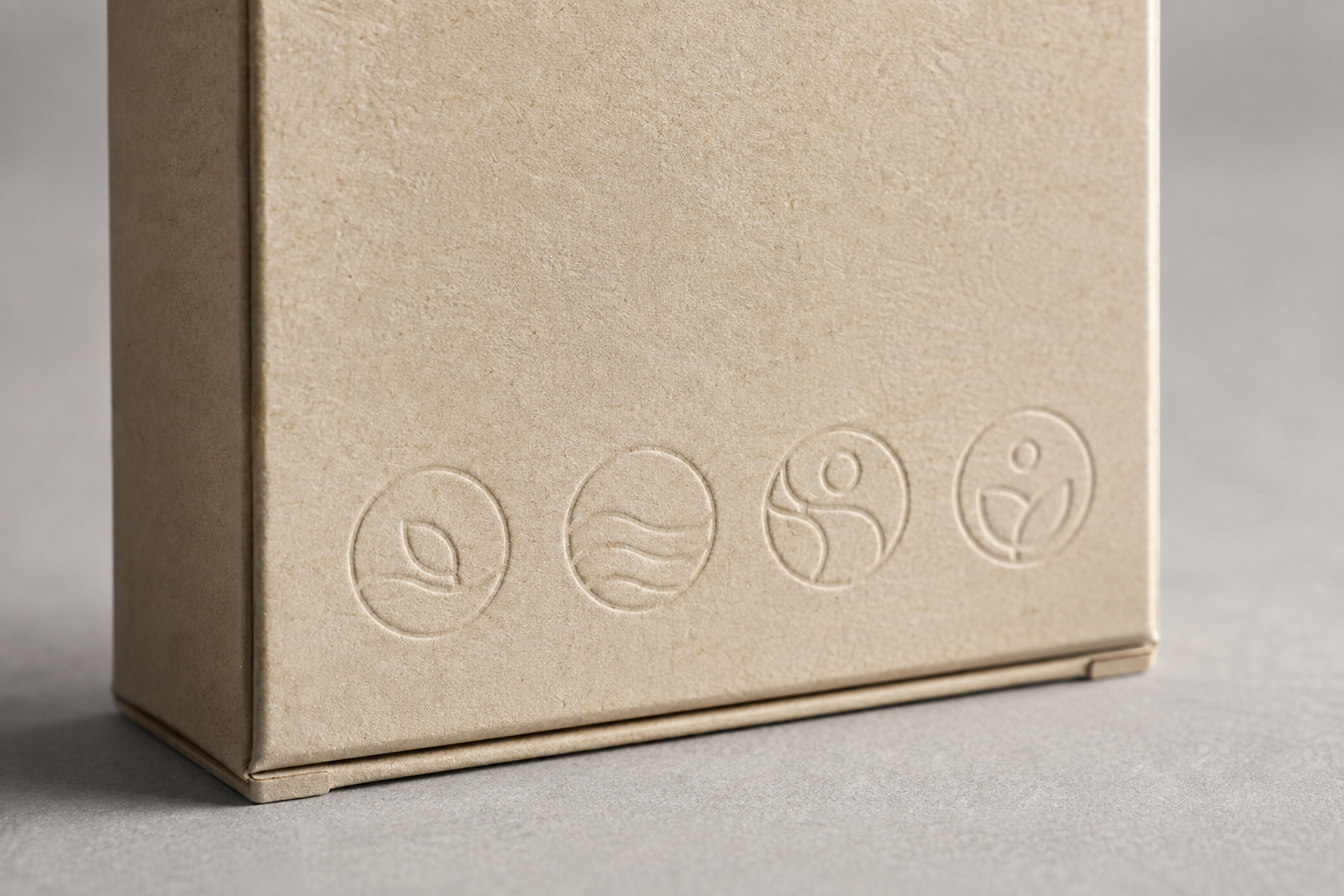
International certification marks returned to Korean packaging after the ministry withdrew its single-body rule in July 2024.
Where this fits in a night skin care routine
Evening is where most people notice the vegan skincare swap, because that is where the heaviest textures live. Balms, sleeping masks and lip treatments are the products most likely to carry beeswax or lanolin, which makes the night skin care routine the place where auditing pays off.
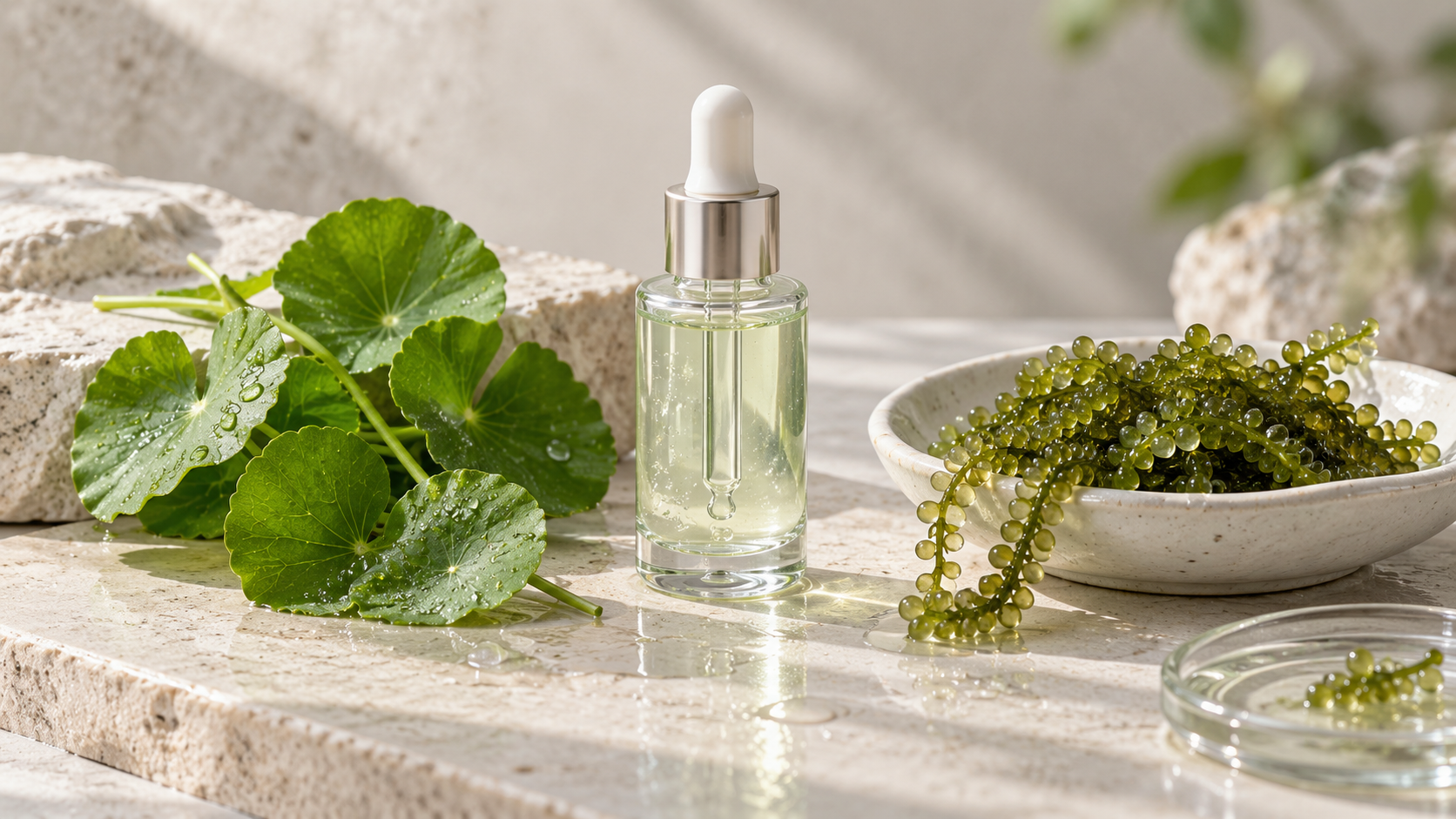
On the plant side, tremella mushroom extract and fermented soy do similar work to snail mucin for slip and water-binding, and hyaluronic acid and panthenol were already vegan. The Korean botanical actives that anchor most of these formulas were never animal-derived in the first place, which is why the swap is less disruptive here than in Western skincare. Green tea, mugwort (쑥), centella and rice are all plants.
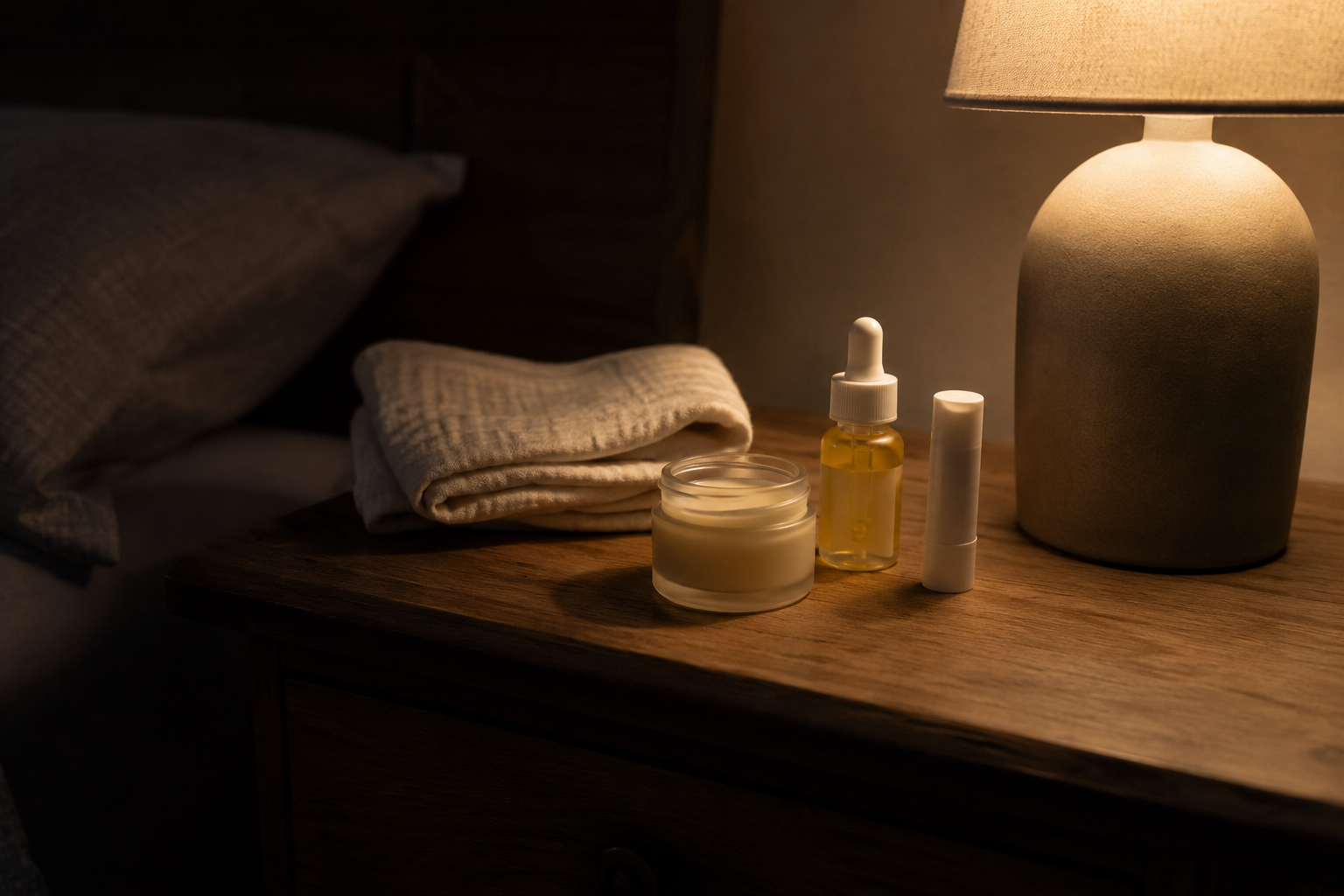
Balms, sleeping masks and lip treatments are where beeswax and lanolin usually sit, which makes evening the place to start auditing.
Melixir is a useful worked example. The Seoul brand formulates entirely for sensitive skin, holds B Corporation and PETA certification, and ships to the US through Amazon. Its lip butter shows the real problem clearly: conventional lip balm is built on beeswax, so the formulators built the texture on agave instead. That is what a sourcing standard looks like as a laboratory constraint rather than a marketing line.
One caution if you arrived here through the clean beauty aisle. The FDA has not defined "natural" for cosmetic labeling, does not define "organic" or "clean" either, and does not approve cosmetics at all. Clean beauty is a marketing category, not a regulatory one. The Modernization of Cosmetics Regulation Act of 2022, still phasing in, is the largest expansion of FDA cosmetics authority since 1938, but it does not police that vocabulary.
Which is the quiet reason vegan skincare appeals to the most particular shoppers. It is one of the few words on a skincare box you can check line by line against the ingredient list underneath it. It tells you less than the marketing implies, and more than almost anything else on the package.