Toner pads are pre-soaked pads whose effects depend on the formula and how they are used. Learn how hydrating, calming and exfoliating Korean toner pads differ, where they fit in a routine, and how to use them without unnecessary friction.
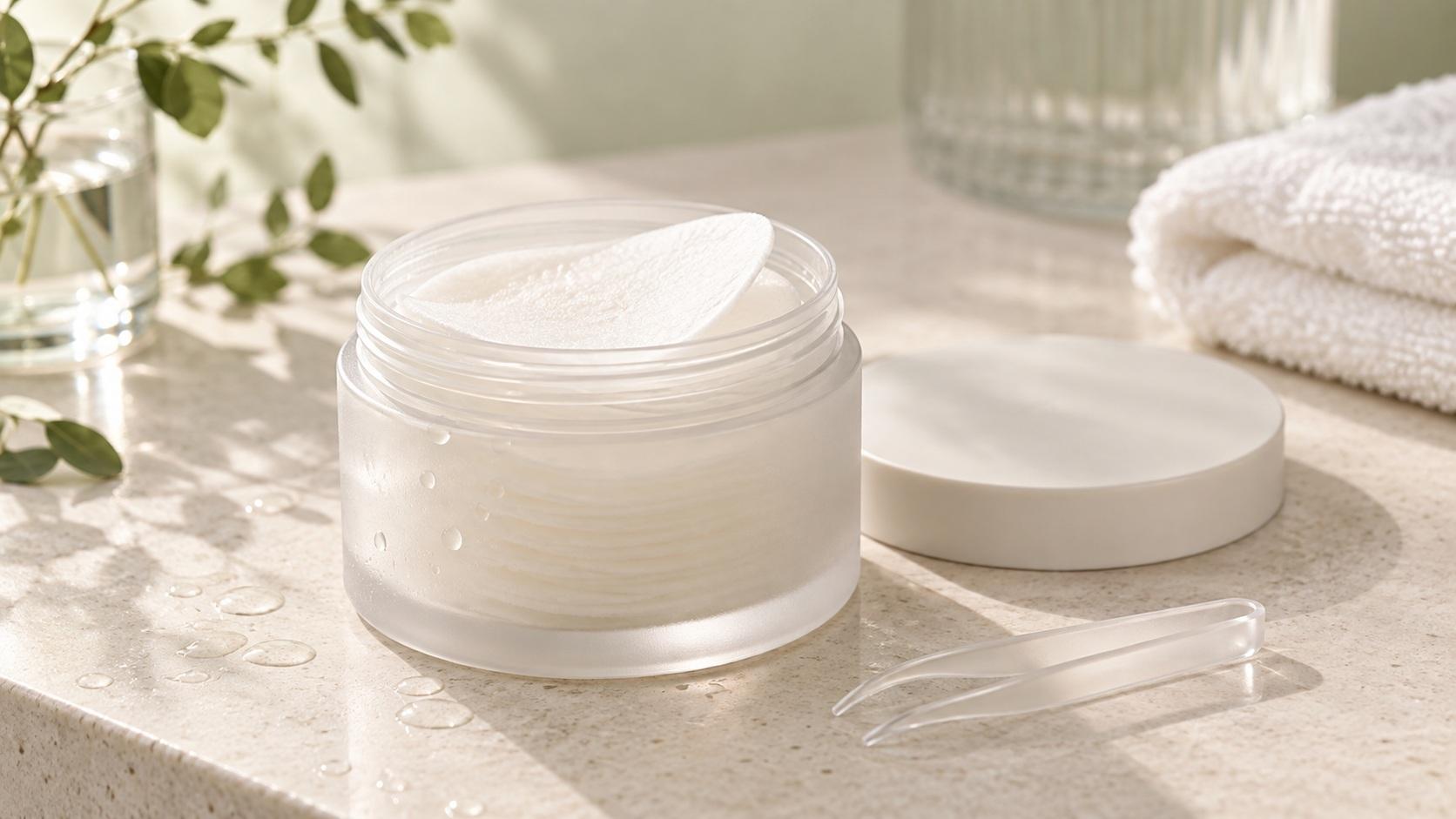
A toner pad is a single-use pad pre-soaked with toner or essence. What it does depends mainly on the formula: some pads add lightweight hydration, some are marketed to support skin comfort, and others use exfoliating acids to remove surface cells. The pad itself also matters because a textured surface and firm pressure can add friction.
That means toner pads are a delivery format, not one product with one guaranteed effect. To understand a jar, read its directions and ingredient list, then pay attention to how your skin responds.
Not every toner pad does the same job
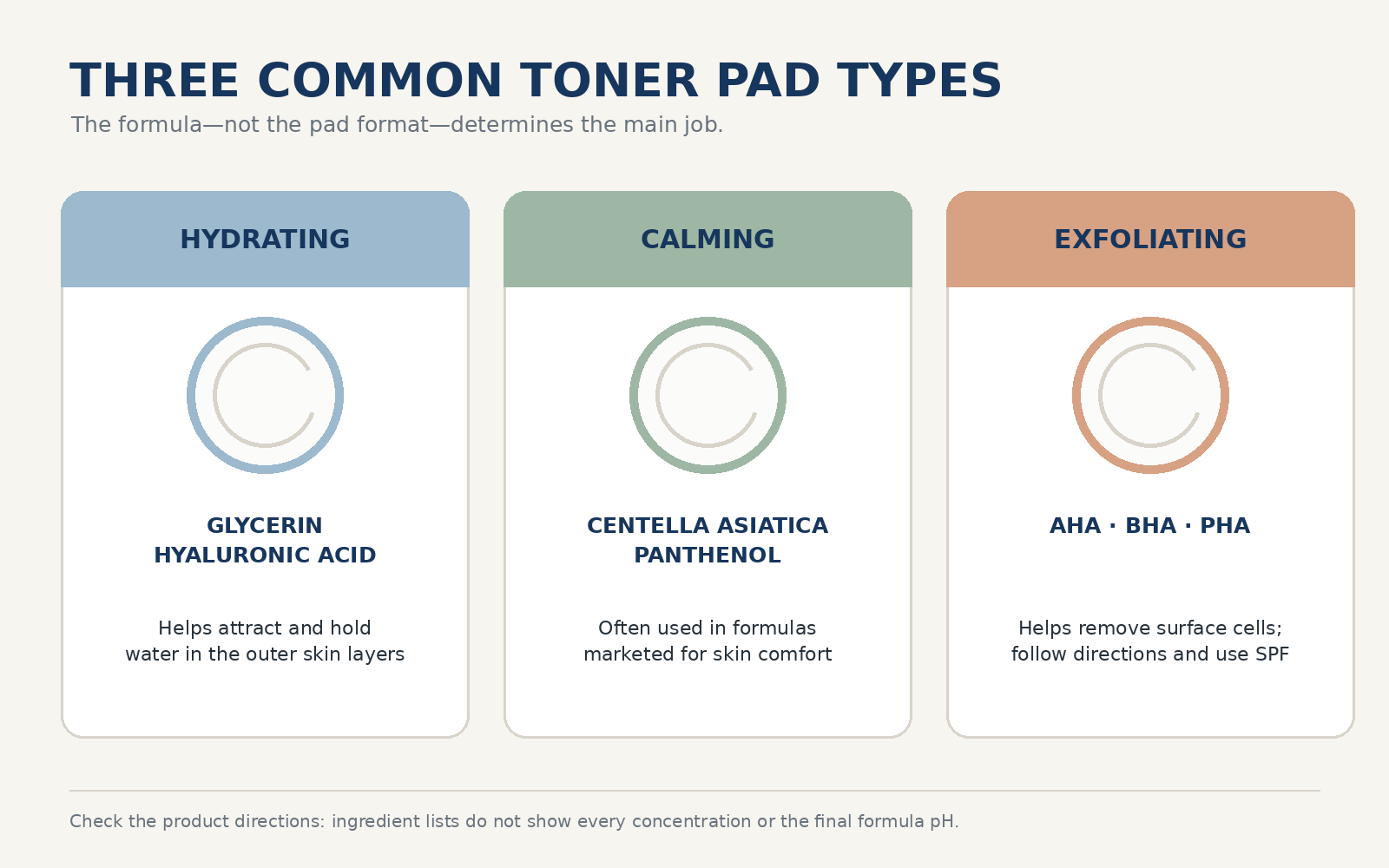
Most products fall into three practical groups: hydrating, calming and exfoliating. These labels are useful starting points, but they do not replace the product directions.
Hydrating pads may contain humectants such as glycerin or hyaluronic acid. The American Academy of Dermatology includes both ingredients among those commonly found in creams and ointments for dry skin. A toner pad can provide a light hydrating step, but it does not replace moisturizer, which helps reduce water loss from the skin.
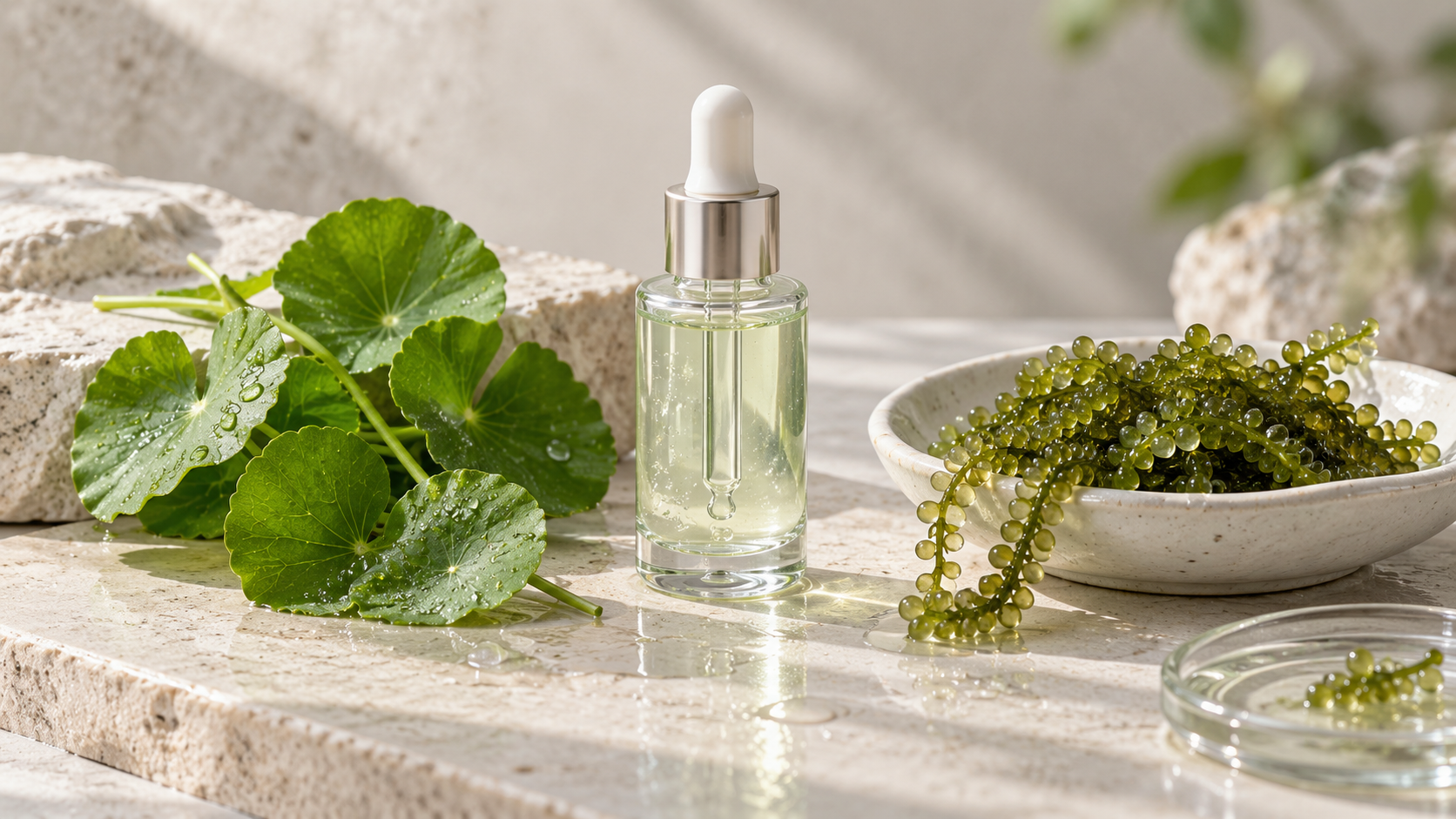
Calming pads are often formulated with ingredients such as centella asiatica, panthenol or ceramides. These ingredients are common in Korean products marketed for sensitive-feeling skin, but the word calming is not a promise that every formula will suit every person. A 2025 observational study evaluated a formula containing centella asiatica leaf extract, ceramide NP and panthenol in people with sensitive skin. It did not study toner pads as a category, so it should not be used to claim that all cica pads work the same way.
Exfoliating pads may contain alpha hydroxy acids, beta hydroxy acids or polyhydroxy acids. The U.S. Food and Drug Administration says the amount of exfoliation from an AHA product depends on the acid, its concentration, the product pH and the rest of the formula. The FDA also warns that AHAs may increase sensitivity to the sun and advises sun protection. For products containing salicylic acid or another ingredient marketed as a BHA, follow the label, test a small area first and stop if irritation or prolonged stinging develops.
Why toner pads fit naturally into K-beauty
Toner pads have become a recognizable product category in Korean beauty retail. Olive Young Global, the international storefront of the major Korean health and beauty retailer, gives pads their own shopping category. Korean brands also divide them by concern, including hydration, soothing and exfoliation.
The format is popular partly because it combines a liquid step and an applicator in one container. It can simplify a routine, but it does not make a routine more complete. A cleanser, moisturizer and daytime sunscreen remain more fundamental than adding a toner pad, and there is no requirement to follow a ten-step routine.
Two common ways to use toner pads
The first method is to swipe a pad gently over the skin after cleansing. This spreads the liquid and may physically lift some residue, but it should not be treated as a substitute for cleansing. Use light pressure rather than scrubbing.
The second method is to place pads on selected areas for a few minutes like small sheet masks. Innisfree, for example, describes a ten-minute mini-mask method for certain pads and says they may be cut with clean scissors to fit specific areas.
That is a brand-specific example, not a universal rule. Do not leave an exfoliating pad on the skin unless that product's directions explicitly allow it. A pad designed for wiping is not automatically designed for extended contact.
Where a toner pad goes in a routine
When the label does not say otherwise, toner pads are generally used after cleansing and before serum and moisturizer. In a morning routine, finish with broad-spectrum sunscreen.
Check the directions before deciding how often to use a pad. A hydrating pad and an acid-based exfoliating pad may require very different schedules. A toner pad does not replace cleanser, moisturizer or sunscreen, and it remains an optional step.
Toner pads versus bottled toner
A pre-soaked pad combines the liquid and applicator, while a bottled toner lets you choose whether to apply it with your hands or a separate cotton round. Pads can be convenient and portable. Bottled toner gives you more control over how much product and friction are involved.
Neither format is automatically more effective. The formula, directions and your skin's response matter more than whether the liquid comes in a jar of pads or a bottle. An ingredient list is useful, but it usually does not disclose every concentration or the final pH, so it cannot answer every safety or performance question by itself.
Pad texture and frequency matter
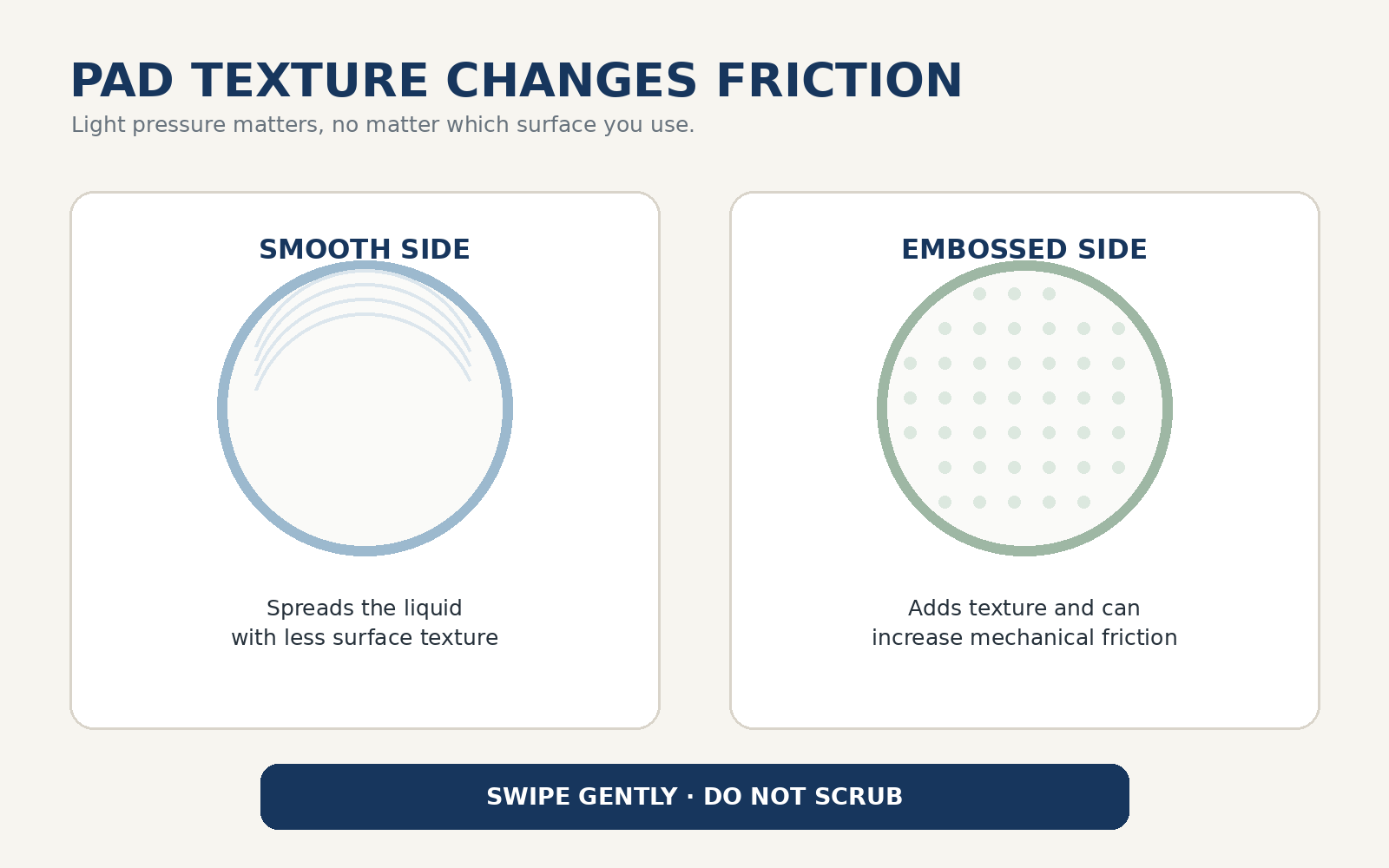
Some pads have a smooth surface, an embossed surface or two different sides. More texture does not mean better results. The AAD identifies pads as one form of mechanical exfoliation and advises gentle technique because aggressive exfoliation can increase irritation and, for some people with darker skin tones, the risk of dark marks.
Use short, light strokes and stop if your skin becomes red, sore, unusually tight or persistently irritated. Frequency should follow the formula and label. The AAD's general rule is that more aggressive exfoliation should be performed less often.
Keep the jar clean and test new products
Wide-mouthed jars are repeatedly opened and handled. The FDA lists consumer handling, including dipping fingers into a product, as one way cosmetics can become contaminated. Wash your hands, keep any included tweezers clean, close the lid promptly and never return a used pad to the jar.
Introduce one new product at a time. To patch test, the AAD recommends applying the product to a quarter-sized area twice daily for seven to ten days, using it for the same amount of time it would normally contact the skin. If irritation appears, wash it off and stop using it. Persistent or severe reactions should be discussed with a board-certified dermatologist.
Toner pads can be a convenient K-beauty step, but they are not mandatory. Choose one by its formula, directions and pad texture—not by the appearance of the jar or the assumption that every Korean toner pad is gentle.
Frequently asked questions
What do toner pads do that regular toner cannot?The format itself does not guarantee a unique skin benefit. A toner pad combines a liquid and applicator for convenience, while the formula determines the intended effect.
Can I use toner pads every day?Only if the product directions support daily use and your skin tolerates it. Hydrating and exfoliating pads should not automatically be placed on the same schedule.
Can I use the same pad as a wipe and a mini mask?Only when the directions permit both methods. Longer contact can be inappropriate for some exfoliating formulas.
Do I need toner pads for a Korean skincare routine?No. Toner pads are an optional product format, not a required K-beauty step.
Do toner pads replace cleansing or moisturizing?No. They are generally used after cleansing and before moisturizer, and they do not replace daytime sunscreen.